
NOTE: Something special for paid subs towards the bottom of this piece xx
Most creatives are taught or told to pick a side.
Art or money. Passion or commerce.
Integrity or survival. Purity or success.
The story almost always goes one of two ways.
You start thinking about money and the work gets boring.
You ignore it completely and the work disappears.
It’s framed like a moral decision. But the longer I’ve spent making things and building a company, the more I’ve realized something much simpler. The real skill is learning how to hold both at the same time without letting either one ruin the other.
We’ve heard this before of course, but I didn’t learn this from a book. I learned it standing in my kitchen about 11 years ago, mixing formulas into amber bottles and metal tins. Making a mess and not knowing what the fuck I was doing.
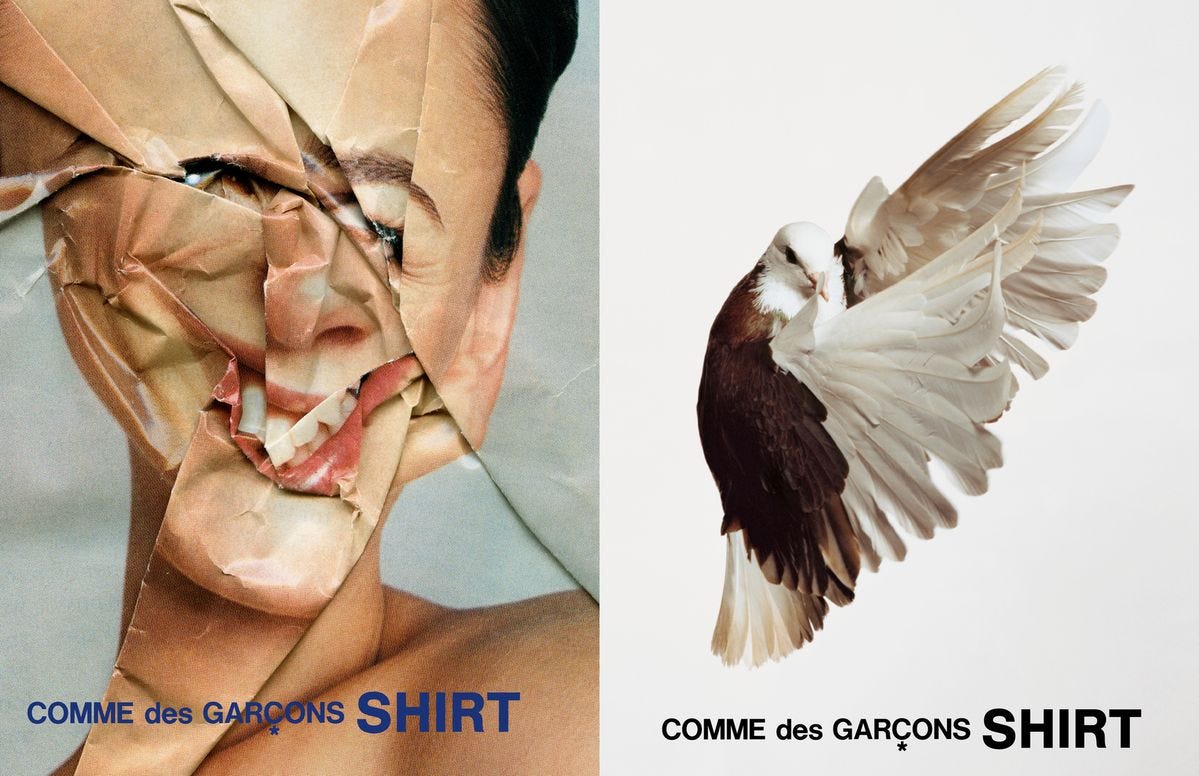
Before NOTO was a brand, it was just something I was making.
I was sourcing raw materials I only read about, working off instinct and experience, trying to create things I felt like I couldn’t find in the real world or on set. Mixing textures. Testing pigments. Pouring everything into apothecary-style droppers, tins, dark glass bottles that felt old-world and a little bit secret and very romantic.
I would bring them on set. Not as a product I anticipated to scale. Just as something I was using and wanted to play with.
I loved to and still love to play this little game: I wouldn’t tell people it was mine. I’d hand it to them, use it on them, and wait to see their natural reaction or lack of reaction.
That moment before they knew. That was always the most important part. I wanted a real reaction. Not a polite one. Not a biased one. Something instinctive. Something honest.
If they loved it, I knew I was onto something exciting.
If they didn’t, I knew I had more work to do. And that was also okay. Either way, it told me the truth. That’s how it started. Not as a business. As an organic response.
The shift into comerse came quietly. The first time a retailer asked me about margins instead of ingredients, I remember feeling my reaction it in my body before I understood it.
Artists aren’t supposed to think like merchants. That’s the mythology. The artist is guided by instinct. The merchant is guided by numbers. One makes meaning. The other sells it. For a while, I tried to keep those worlds separate. But the harsh reality is that’s not how it works.
The market doesn’t disappear just because you ignore it (I wish). And if you don’t understand how it moves, it eventually starts making decisions for you weather you like it or not. So the question isn’t whether the market exists. The question is who’s in charge.
The trick isn’t choosing between artist and merchant. The trick is making sure the merchant works for the artist.
Artists have always existed inside systems.
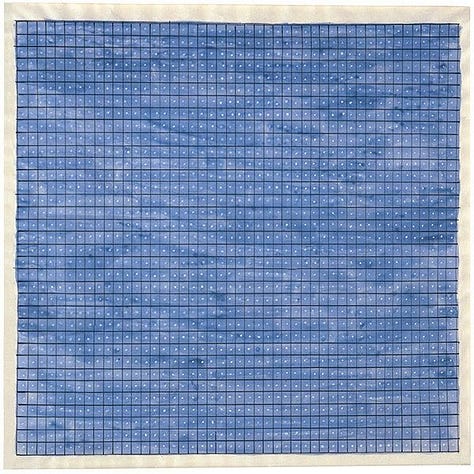
Agnes Martin repeated the same quiet language for decades, not because she was avoiding the art world, but because she knew exactly what she believed.
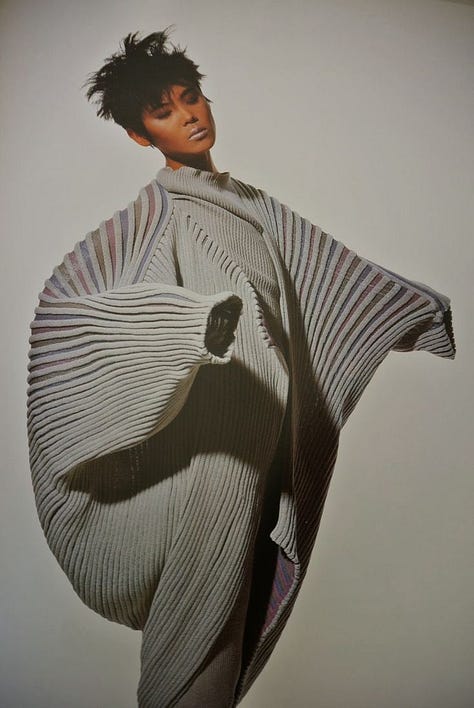
Issey Miyake turned clothing into something almost architectural. Technical, precise, but still emotional.
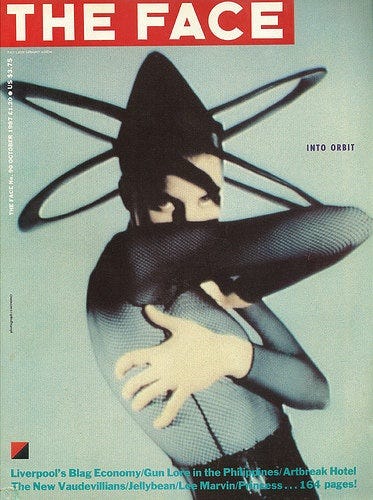
Magazines like The Face, early Dazed, Purple shaped entire cultural aesthetics while still operating inside the fashion system.
They didn’t pretend the system wasn’t there. They just refused to let it define the work. That’s the difference.
Annoyingly, the market rewards familiarity. I hate that so much, but it’s true.
The closer something feels to what people already understand, the easier it is to sell. That’s why trends move so quickly. Something works, and suddenly it’s everywhere.
Flattened. Repeated. Safer each time.
But art behaves differently. Art often rewards curiosity. The things that actually shift culture usually feel a little strange at first or you may even hate it at first. They take a second to land. They carry the fingerprint of someone’s very specific way of seeing. That tension is where most people get stuck.
Ignore the market entirely and your work disappears all together.
Follow it too closely and the work becomes lost in the sea of everything else.
I don’t think either outcome is very interesting or fun. Maybe the interesting work happens somewhere in the in-between.
Over time, I realized something else.
Excitement doesn’t feel the way I thought it would. I’ve discovered for myself, when I am excited about something - I am actually quite quiet. Internal even. I’ve had to explain this to my wife a few times. It’s a weird thing I do.
It’s not loud. It’s not chaotic. It’s calm. It’s clarity. It’s that quiet, immediate sense of: yes, this is right. And then everything opens up. The visuals. The textures. The way it could live in the world. It starts building itself.
That’s the feeling I trust now.
Not pressure. Not urgency. Not performance.
Clarity.
When that clarity gets replaced with strategy, you can feel it.
Sometimes the artist disappears and everything becomes optimized. The products get safer. The language gets smoother. The work starts chasing trends instead of exploring ideas.
I remember someone once suggesting we simplify a formula to increase margins.
It made sense on paper. It also made the product worse. It was a solid no for me.
Other times the merchant disappears entirely. The work becomes beautiful but unsustainable. More of like an art project that can’t scale, and you go broke playing around.
Neither extreme lasts very long. What lasts is the tension.
This is where things get more precise.
Because having a point of view is easy in theory.
Protecting it when money, growth, and opportunity enter the room is something else entirely.
I’ve been offered versions of growth that didn’t feel aligned. More scale. More expansion. More money. And I realized something that surprised me.
Not all growth creates a life you actually want to live.
As a founder, especially when your name is attached to what you’re building, the business isn’t separate from your life. It shapes your day-to-day. Your energy. Your relationships to time, to people, to yourself.
So the question becomes: not just “will this grow the business?”
but “what kind of life does this create?”
And for me, it doesn’t have to look one way. I finally understand that. But it took a lot of reflection and practices to get there.
Over time, I’ve developed a few quiet ways of checking whether the artist is still leading.
I come back to these often. Not as rules. More like pressure points.
Get a pen and paper or print this out cause you will want to do this exercise, maybe even more than once.
Comments
Nothing yet. Say the first thing.
Sign in to join the conversation.