
On the day of the solar eclipse last week, I went to the immersive Bowie extravaganza ‘You’re Not Alone’ at the Lightroom in London.
For an hour, we were locked inside a giant kaleidoscope of sound and vision – ‘floating in a tin can,’ whirling through space.
I emerged, blinking into the sun just before it dipped behind the moon for a few moments.
At the end of the last century, Bowie befuddled Jeremy Paxman with his predictions about the internet: ‘it’s an alien life form. Is there life on Mars? Yes, it’s just landed!’
A generation later, we have an alien intelligence. Though Jaron Lanier definitely had a point – referring to a machine that steals, mashes up and spits out a synthesis of the work of millions of humans as intelligent is a bit of a stretch.
Bowie always referred to himself as a writer – not a singer, musician or performer. He was a voracious bibliophile – or as he put it, ‘a born librarian with a sex drive.’ The written word was the wellspring, triggering ideas for new characters, new songs.
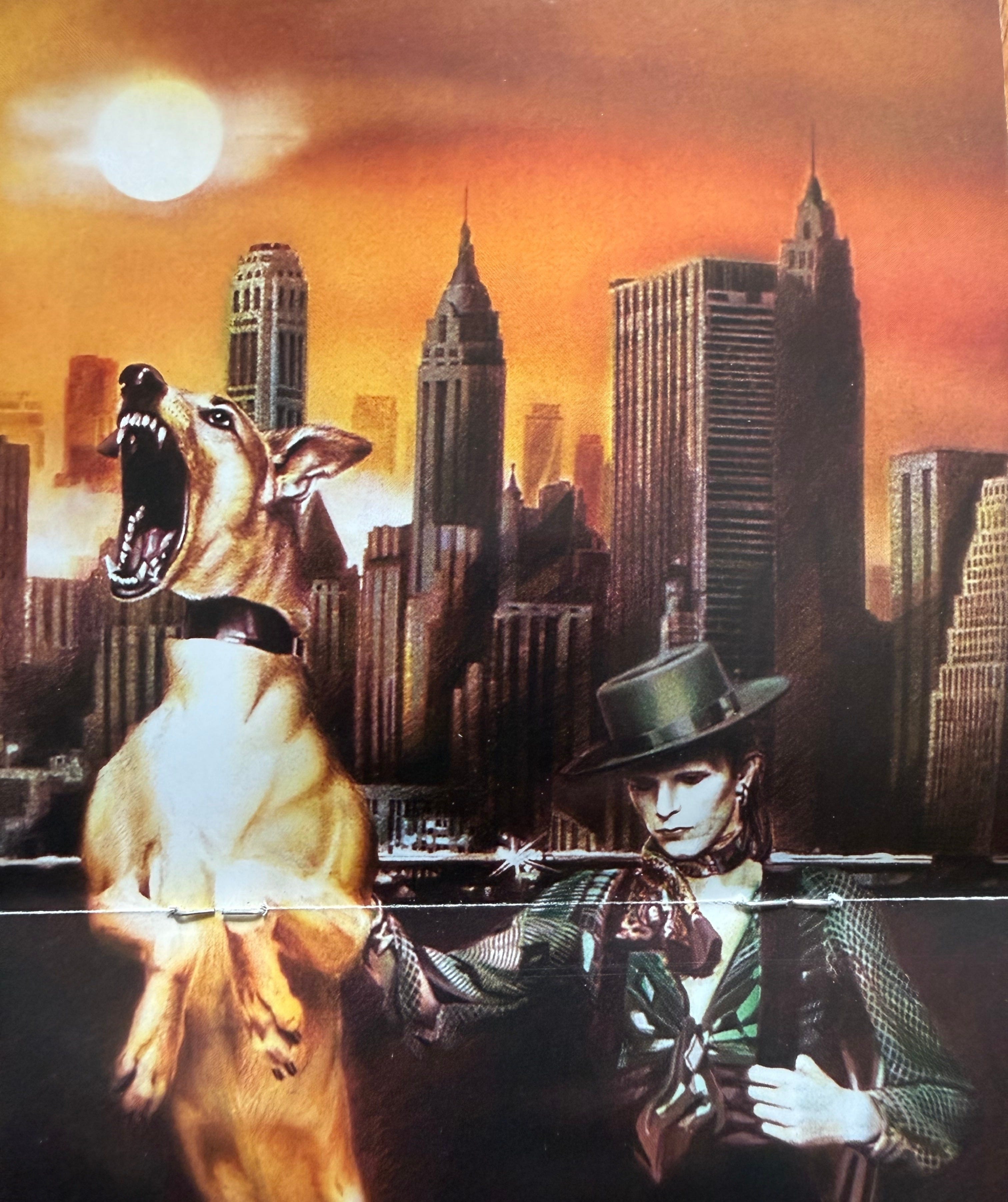
In 1974, he became obsessed with George Orwell’s 1984. His plans to bring it to the stage didn’t work out (he didn’t get permission from Sonia Orwell). What actually emerged was the dark masterpiece Diamond Dogs, set in a dystopian Manhattan – in my view, one of his greatest albums.
In his 1946 essay ‘Why I Write’, Orwell cited four reasons – egoism, aesthetics, history and politics:
‘Looking back through my work, I see that it is invariably where I lacked a political purpose that I wrote lifeless books and was betrayed into purple passages, sentences without meaning, decorative adjectives and humbug generally.’
For Orwell, clear thinking was the key to clear writing, and bad writing made clear thinking impossible. Writers, he said, need to step up and take responsibility – be brave enough to show the reader who they are and what they believe.
Looking at it the other way round, Joan Didion once said: ‘I write to find out what I am thinking.’
Reading, writing, thinking – a self-fuelling virtuous cycle.
Like many, I write to know what I think about something, what I feel about it, at that point in time. Including this post. Writing forces you to question yourself, surface and interrogate hidden assumptions, clarify ideas so they make sense and you can convey and discuss them.
Delegating writing to AI is anathema to all this – an abrogation of the writer’s responsibility.
To be clear, I am not referring to AI use for other tasks – certain types of research, literature reviews, data crunching, synthesis, summary, comparative work. It can reduce drudgery by automating grunt work – sorting and processing mountains of data in a few seconds. It can help with translation, grammar and spelling, especially for non-native speaking authors. This in turn could open up space and time to focus on creativity, critical thinking, empathy and compassion.
I’m more interested in what AI is doing to commentary, perspectives, letters and creative writing in general. What it’s doing to considered opinion.
The considered word both requires and compels thought. Writing by someone who has ‘skin in the game’ – lived experience, expertise or a view or opinion. Not a machine.
Immanuel Kant defined the Enlightenment as ‘man’s emergence from his self-imposed immaturity…his inability to use one’s understanding without guidance from another.’
The omnipotent guides of the past were gods, kings and feudal lords. Now we’ve invented another.
Using AI for commentaries, op-eds, essays, blogs and social media commentary is enfeebling – like opting for a prosthetic because you don’t like exercise. If we stop thinking and writing, we stop discovering, our ability to reason declines.
AI doesn’t know what you’re thinking now, in this very moment. It cannot know you better than you do. For me, the most compelling writing emerges when a writer shifts gears, changes her/his mind, delves into new territory. LLMs don’t do that.
This summer, I’ve become engrossed in Chris Packham’s BBC documentary series ‘Evolution’. Episode 3 focused on the brain and asked – how did the dolphin get so smart? Packham does a brilliant job of explaining the drivers of evolution…the slow-burn incremental change interspersed with sudden quantum jumps triggered by shocks. A three-billion-year odyssey, from light-sensing cells to conscious thought. All the while, the brain growing, changing, developing.
‘AI has been quietly colonizing our inner lives…establishing, at pace, one of the most terrifying dependency cultures in human history’ Matthew D’Ancona, New World
If we continuously offload more and more tasks to something else, we’re not using our brains as much. AI as Anti-Intellectual. Muscles and organs (including the brain) atrophy if they’re not used.
It’s already happening. A recent MIT study used electroencephalography to monitor the brain activity of essay writers given access to AI, Google, or nothing at all. AI users showed the lowest cognitive activity, often struggling to quote their work. They became lazier, copying entire blocks of text in their essays. Researchers concluded: ‘We believe that the longitudinal studies are needed in order to understand the long-term impact of the LLMs on the human brain, before LLMs are recognized as something that is net positive for humans.’
This is on top of what extensive habitual screen use is doing to growing children’s brains.
AI is a black box. It produces knowledge, but it doesn’t deepen understanding. It makes mistakes (‘hallucinations’) but we often don’t know when. We don’t know how it reaches its conclusions. If we slavishly follow its advice, we jettison reason, we’re back in the realm of faith: in dubio, pro machina.
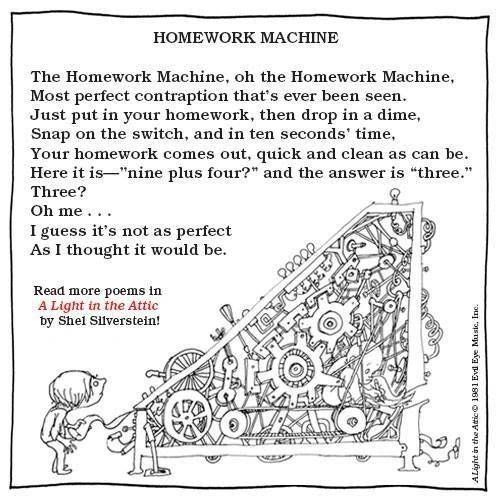
It’s a weird irony that most people are reading more words, but they’re not in long form which means they’re not capable of nuance, development of ideas, critical thinking. This is post-literacy.
Then there’s ethics…let’s consider theft, plagiarism, pulping and deception.
Writers are having their work stolen. In the food world, Marion Nestle has had a particularly rough time with pirates and hijackers. My book has been reproduced under a fake cover…and subjected to a bizarre online conversation between two AI bots for half an hour.
The Carlson Lab has agreed on a blanket ban on the use of generative AI for writing. It’s the black box again – LLMs often regurgitate original wording from papers. A user will never be sure they’re not plagiarizing someone.
Anthropic and other AI giants are buying thousands of rare books, scanning them, feeding them to LLMs before pulping the originals. Second-hand books are bought in mass orders and shipped to distant warehouses.
AI is also unethical when it’s used to deceive – when it becomes another tool for corporate capture.
In an excellent recent paper, Itai Bavli and colleagues suggest there are new tactics used by corporations to maximise profit and infiltrate policy decisionmaking:
Knowledge capture in which AI extends and intensifies the production and interpretation of evidence by commercial interests.
Regulatory and policy capture in which AI is deployed to protect commercial interests (rather than public health) by enabling better targeting of lobbying and messaging. Any government adopting an AI system is opening itself up to bias that may derive from training data, information sources and algorithms used (remember the infamous fake citations of MAHA’s first report!)
Shaping the public narrative via the use of new conversational AI that amplifies misinformation – for example, the tired old ‘it’s your personal responsibility’ line. Apparently the more persuasive it gets, the less accurate it is.
In addition to these three mechanisms, the platforms themselves represent an entirely new infrastructure that influences how information is produced, recommended, accessed and made visible.
The paper goes on to propose a framework for assessing AI commercial determinants of health – for each of the mechanisms, suggesting data and evidence to examine and questions to ask.
Academia and publishing are grappling with the challenge of providing guidance.
One big issue relates to using AI as an editor. Can it even be done? Nick Hagar thinks not. AI can offer suggestions and acting as a sounding board, but it cannot work in documents. A human editor ‘builds a collaborative surface, one where everyone working on the document can see how proposed changes fit into the draft, think about the best way to address feedback, and trace the history of the project. LLMs can’t engage with that process.’
Journals have had to get up to speed quickly after being flooded with submissions. One journal editor came back from a week’s holiday to find 14 submissions from the same ‘author’ on his return.
Most of the focus is on disclosure, transparency and specificity. It’s not enough to say a submission is AI-assisted, we need to know where and how it assisted. Emerging guidance for authors includes suggestions for building an audit trail.
Scores of commentaries now append disclosures like this: ‘After using Claude, the corresponding author reviewed and edited the content as needed and takes full responsibility for the content of the publication.’
(The corresponding author!)
The BMJ, for example, recently released guidance that’s:
‘intended to safeguard rigour and integrity—making humans accountable for content and preventing publication of the hallucinated (fake) references, misleading conclusions, zombie text, homogenized thought, and hyper-polished but soulless submissions that our experience shows come from AI.’
And then there’s creative writing, both non-fiction and fiction. Authors are advised to scrutinize publisher guidelines for clauses on AI use. For most, submissions cannot use AI for anything other than specified research, spelling and grammar.
Looking ahead in creative writing, we’re likely to see greater value attached to secrets, live interaction, memoir, weirdness, immediacy, the development of a distinct voice, with a human with a life behind it. Point of view, developing human connections. Tacit knowledge that you get by doing something or experiencing it firsthand, wherever you may be. Stories from places with no training data.
‘Til next month!
Comments
Nothing yet. Say the first thing.
Sign in to join the conversation.