

Possibility used to feel like freedom. Now, it can feel like overload.
We have access to more information, more tools, more paths, and more ways to build a life than ever before. We can learn almost anything, make almost anything, and change direction at nearly any point. That is liberating, but it is also overwhelming. When the possibilities are endless, it becomes harder to decide what we actually want, choose a direction, and stay with it long enough to see where it leads.
For people who did not grow up inside this level of access and acceleration, the new world can be difficult to get a foothold in. Younger people are navigating something different but no less complicated. They have grown up with extraordinary choice, and that choice can create its own form of paralysis. When every path appears possible, it becomes harder to know which path is yours.
We no longer have to decide what we want to be forever. We can change careers, develop new skills, start over, and become different versions of ourselves across a lifetime.
But we still have to decide what we want to do next.
At some point, possibility has to become direction.
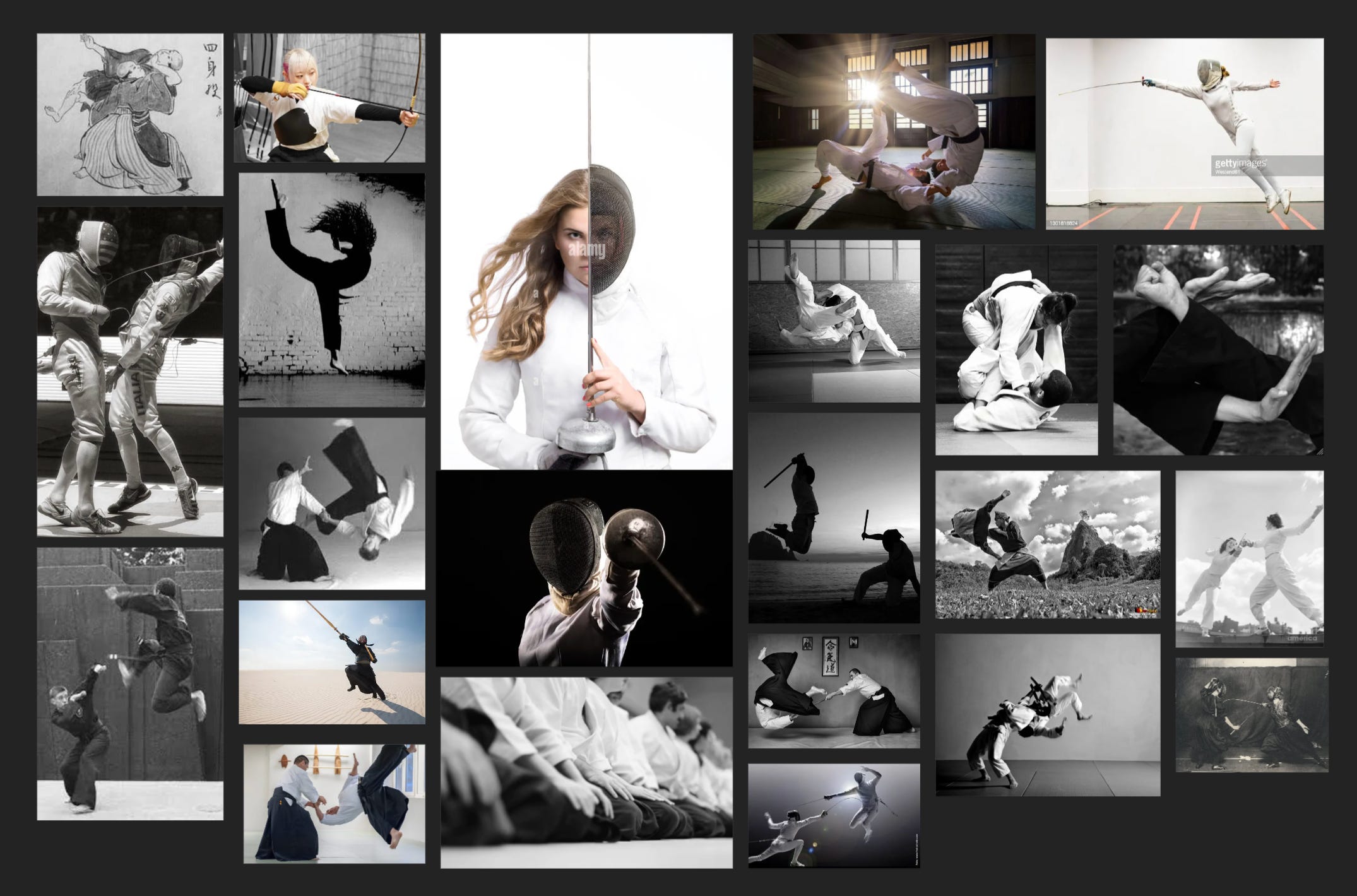
This is where mood or vision boards can become much more than a collection of images.
I have made hundreds of mood boards over the years for creative teams, professional projects, personal work, and intention-setting in my own life. Over time, I began to notice not only what I placed on the boards, but what happened when the right combination of images, words, colors, textures, and ideas began to emerge.
A well-made mood board does not simply show what you like. It reveals what you are drawn toward.
It can help you move beneath the noise of everything you could choose and toward the feeling that has energy for you. It helps you notice the images that stay with you, the patterns that repeat, and the ideas that create a response before you have the language to explain why.
There is a real skill to building one. It is not just finding attractive images and sticking them on a page. The strongest boards create coherence. They hold a feeling, form a world, and draw you toward something that may not yet exist, but that you can already begin to sense.
Before there is a plan, there is often a feeling. Before there is a roadmap, there is a destination.
Think about planning a trip. At first, you may only know that you want to go somewhere warm, quiet, beautiful, or unfamiliar. As you gather images, the possibility becomes more specific. You begin to see the landscape, the pace, and the feeling of the place.
The destination starts to become real before you arrive there.
A mood board can do the same thing for a creative project or a life direction. It gives visual form to something that is still becoming. It helps answer: What am I moving toward? What do I want this to feel like? What do I want to be true when I arrive?
Once the destination begins to take shape, the problem changes.
You are no longer only asking what you want. You are asking how to get there.
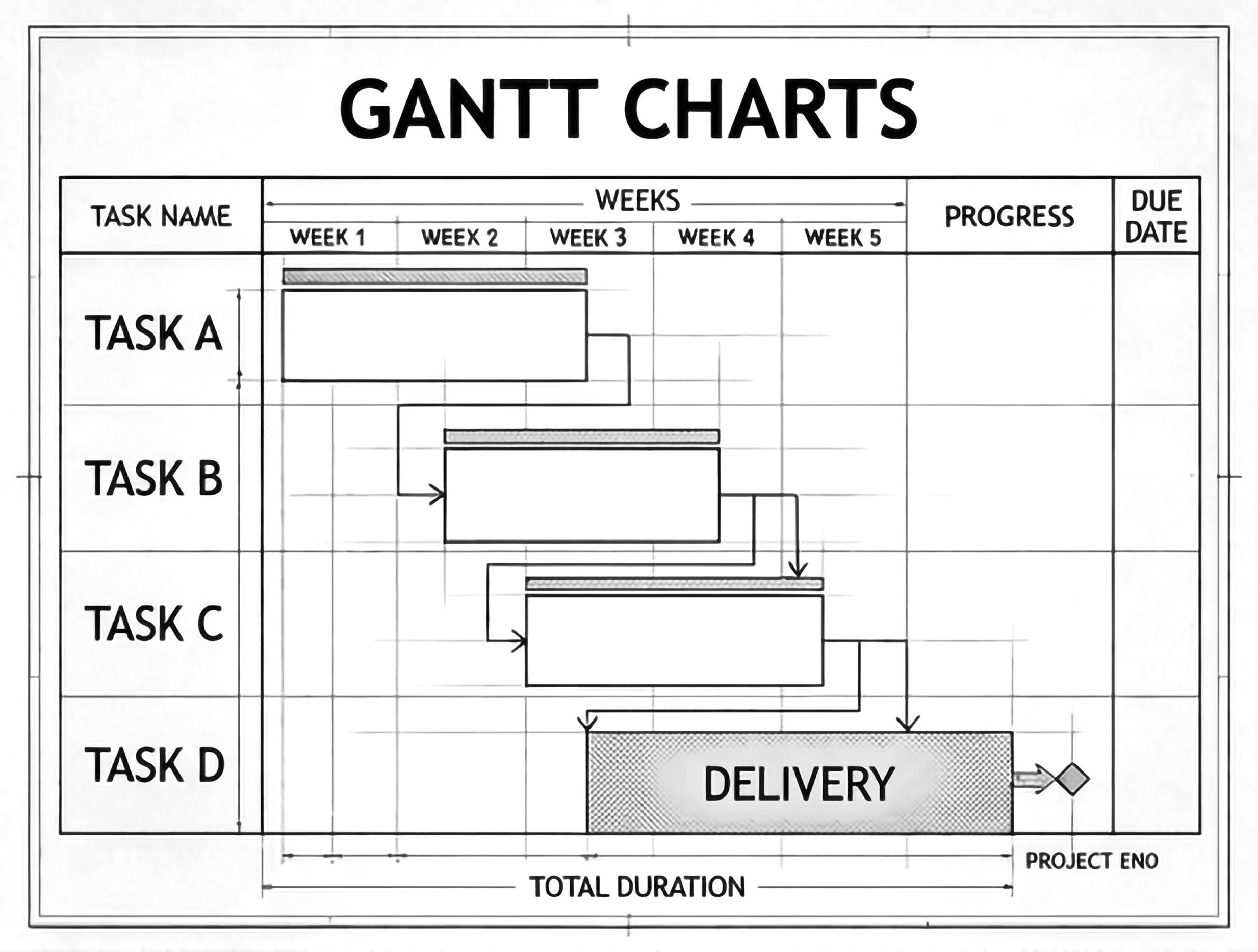
This is where a Gantt chart becomes useful.
I used Gantt charts heavily throughout my career to manage projects, teams, timelines, dependencies, and multiple streams of work. I have also used them to organize personal creative projects and break large ideas into steps that can actually be completed.
A Gantt chart takes something abstract and places it across time. It helps you see what needs to happen first, how long each stage might take, where other people are needed, and where the project is likely to stall.
Without that structure, projects can start to spin. There may be activity everywhere, but no clear movement toward completion.
A Gantt chart creates a visible path from where you are to where you want to go. It helps you pierce through to the destination.
I wrote about this idea in my piece in The Nonlinear Path: reaching a goal can be like breaking a board in martial arts. You do not focus only on the surface in front of you. You focus beyond it, through it, toward the point on the other side.
The mood board helps define that point. The Gantt chart helps you build the force, sequence, and follow-through needed to reach it.
The mood board does not disappear once the plan begins.
It belongs at the beginning because it helps define the intention, but it also belongs at the end because it becomes the destination the plan is trying to reach.
The Gantt chart is the roadmap. The mood board is the place on the other side of it.
This matters because plans can become mechanical. They can turn into lists of tasks and deadlines that gradually lose contact with the original idea. The mood board keeps the feeling alive. It reminds you what you are making and why.
The plan should not replace the vision. It should carry it.
Possibility is powerful, but it cannot remain endless forever. At some point, we have to choose. Not for the rest of our lives, and not with absolute certainty, but clearly enough to take the next step.
A mood board can help us find the signal, clarify the intention, and give the destination form. A Gantt chart can help us turn that destination into stages, timing, support, and action.
Together, they can help us go from possibility to plan, and from plan to done.
Are you still shaping the vision, or are you ready to move something toward completion?
Comments
Nothing yet. Say the first thing.
Sign in to join the conversation.