
New here? Start with Johann Gottfried Seume Stroll to Syracuse project.
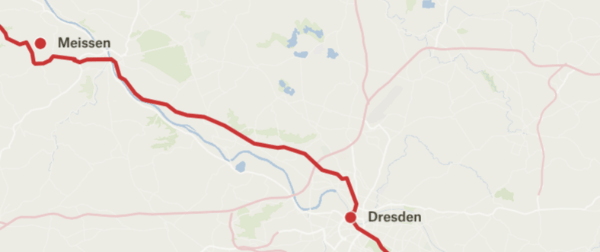
December 1801: Seume arrives in Dresden, noting the ‘gloomy, unfortunate, dehumanised faces'.
The city displeases him, he complains of the lack of street signs, he’s seen better arranged towns in Poland. He visits the theatre: ‘a regular botching’ and the opera: ‘in nearly every part I could not help recalling a better performer elsewhere’, neither greatly impress him.
He finds the courtly atmosphere of Dresden oppressive, heavy, formal and is keen to get on his way. He visits the Austrian embassy for a passport to the Habsburg lands, signed by Metternich, and then sets off to visit a friend, the painter Josef Grassi, in a rural location just south of the city.
With Dresden out of the way Seume continues along the Elbe in the direction of Pirna.
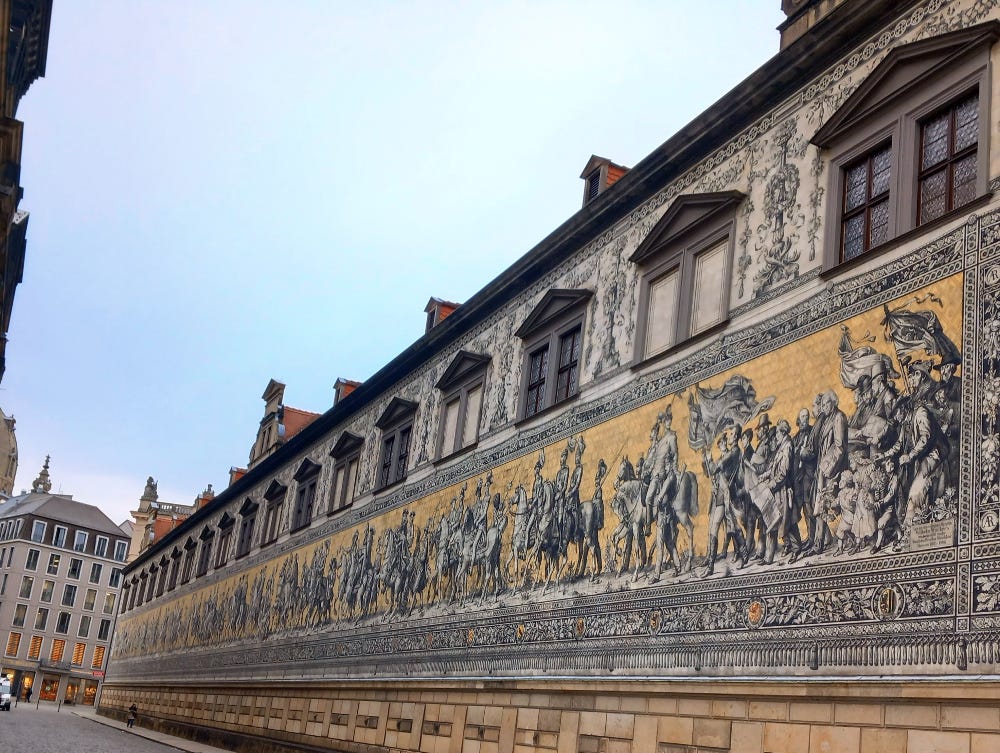
January 2025: While the court of Dresden is now only to be found on the Fürstenzug1, the city still projects a grandeur by way of its old town, the river and the bourgeois villas in outlying districts.
Unlike Seume, I was very impressed with Dresden.
I left my AirBnB in the neighbourhood of Neustadt and dropped in at the nearby Pawlow punk bar for a beer before catching a tram to Loschwitz, located on the slopes north of the Elbe river.
The contrast between Neustadt and Loschwitz is striking. The former bohemian and edgy with walls covered in graffiti. The latter an oasis of quiet respectability, striking villas on steep streets leading down to the river.
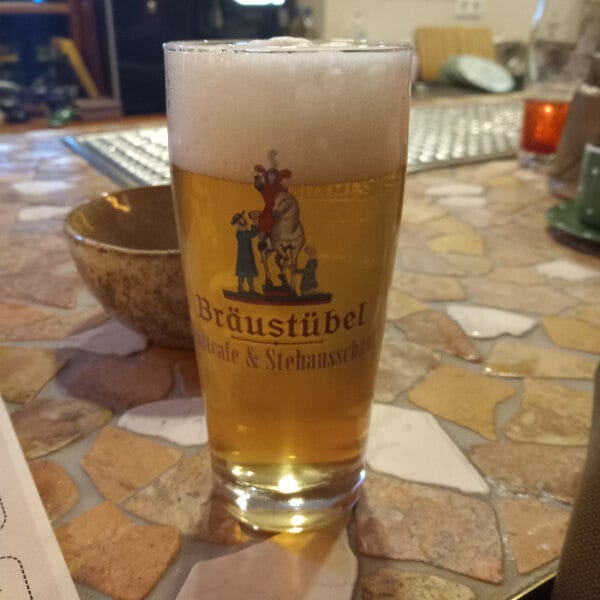
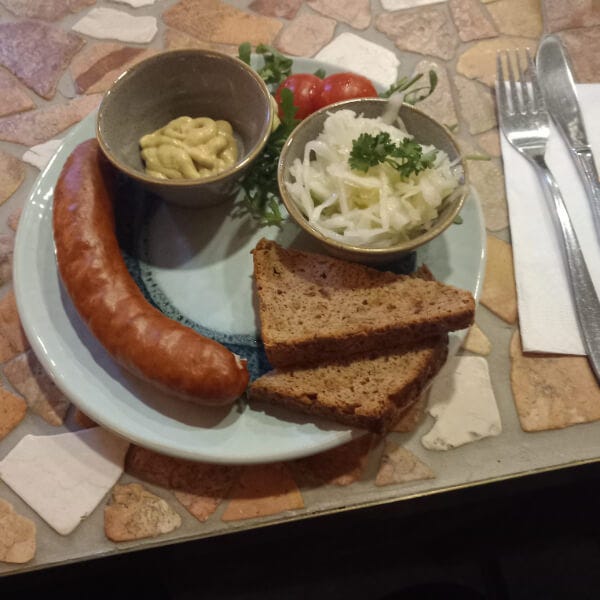
I ate at the Bräustübel Dresden, a charming little ‘Bar, Food & Culture - Living Room’. Very welcoming and friendly with excellent food and beer.
On my one full day in Dresden I walked south across the city to the suburb of Plauen to the see the Hegereiter, Dresden’s oldest stone arch bridge. It was here on 11 December 1801 that Seume crossed the river Weißeritz on his way south out of the city. From the bridge he made a detour to visit the home of the portrait painter Joseph Grassi.
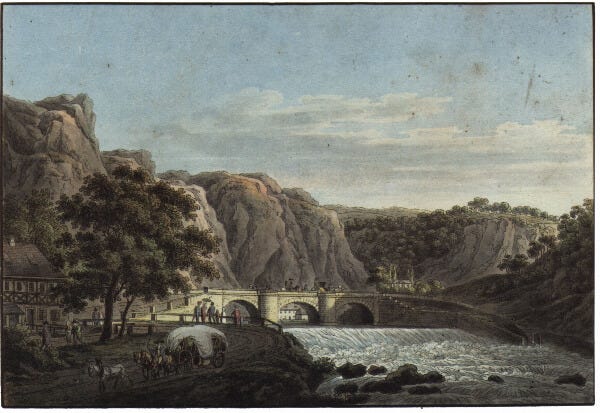
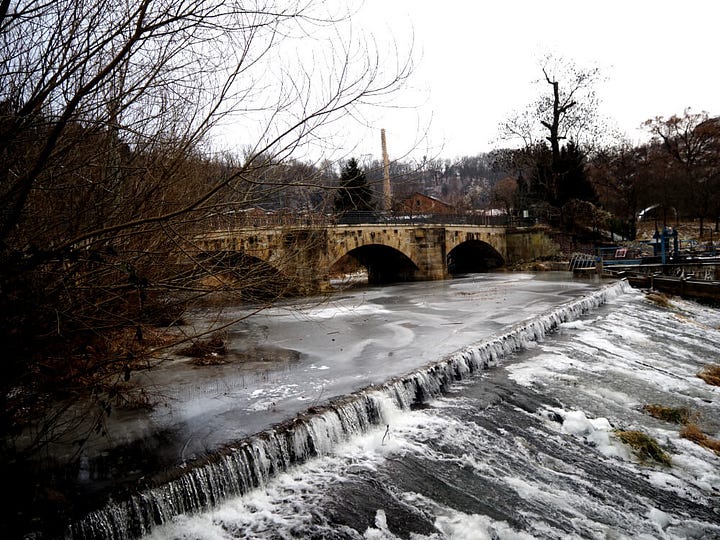
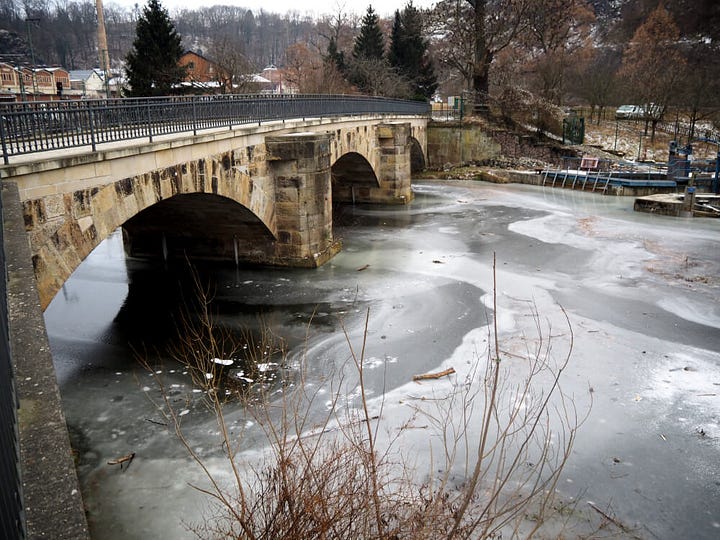
Sadly the rural scene in the above picture no longer exists, happily the bridge does.
On my second night I returned to Loschwitz to check out another interesting looking restaurant. Unfortunately it was closed so I crossed the Elbe by way of the ‘Blue Wonder’ bridge to the neighbourhood of Blasewitz where I enjoyed a hearty meal at the Schiller Garden, one of the oldest restaurants in Dresden.
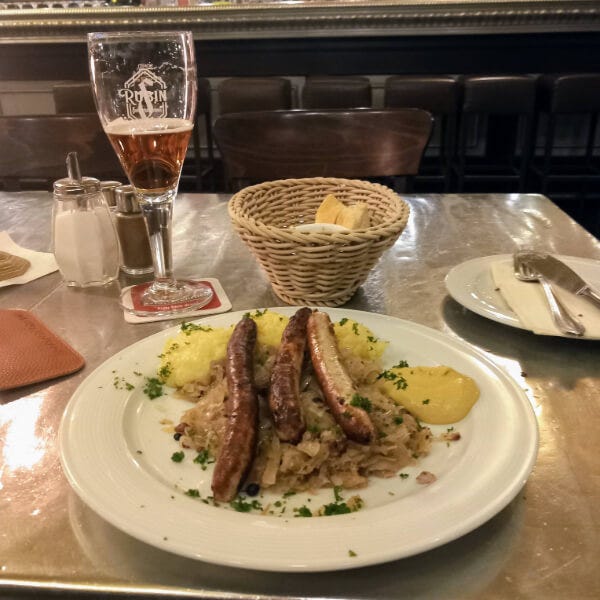
The next morning I awoke to snowfall. My train to the airport left at 10am which gave me just enough time to walk to the old town to take some photos. The snow continued to fall as I trudged across the Elbe for the last time
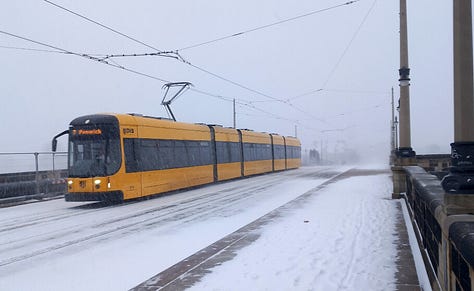
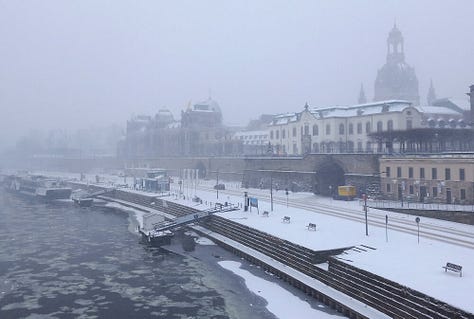
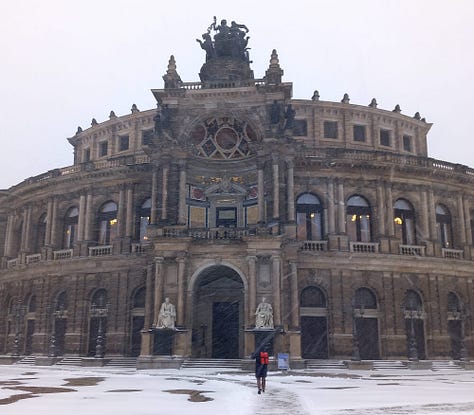
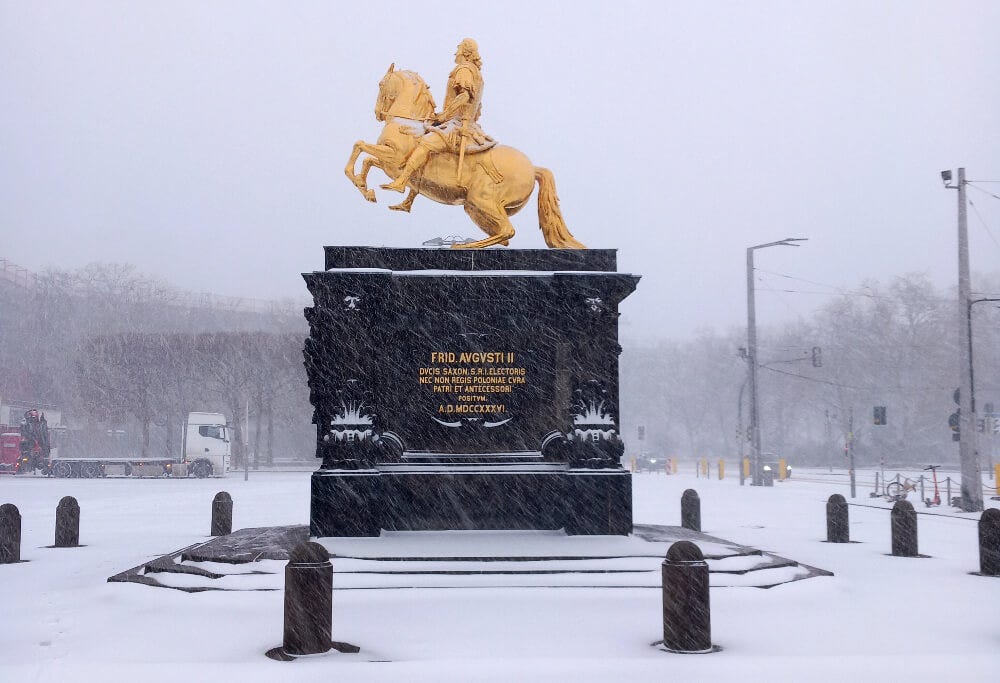
And there he was, the Golden Rider, Augustus the Strong, perched on his horse, resplendent against a white backdrop.
And with that I headed home.
Stage 1 — Grimma to Dresden
Stops on this stage:
Onwards!
Next: Stage 2 — Dresden to Prague
The Fürstenzug (Procession of Princes). A wonderful mural portraying a mounted procession of the rulers of Saxony from 1127 to 1904. Painted between 1871 and 1876, it was later transferred onto approx 23,000 Meissen porcelain tiles, it is probably the largest porcelain artwork in the world.
No posts
Comments
Nothing yet. Say the first thing.
Sign in to join the conversation.