
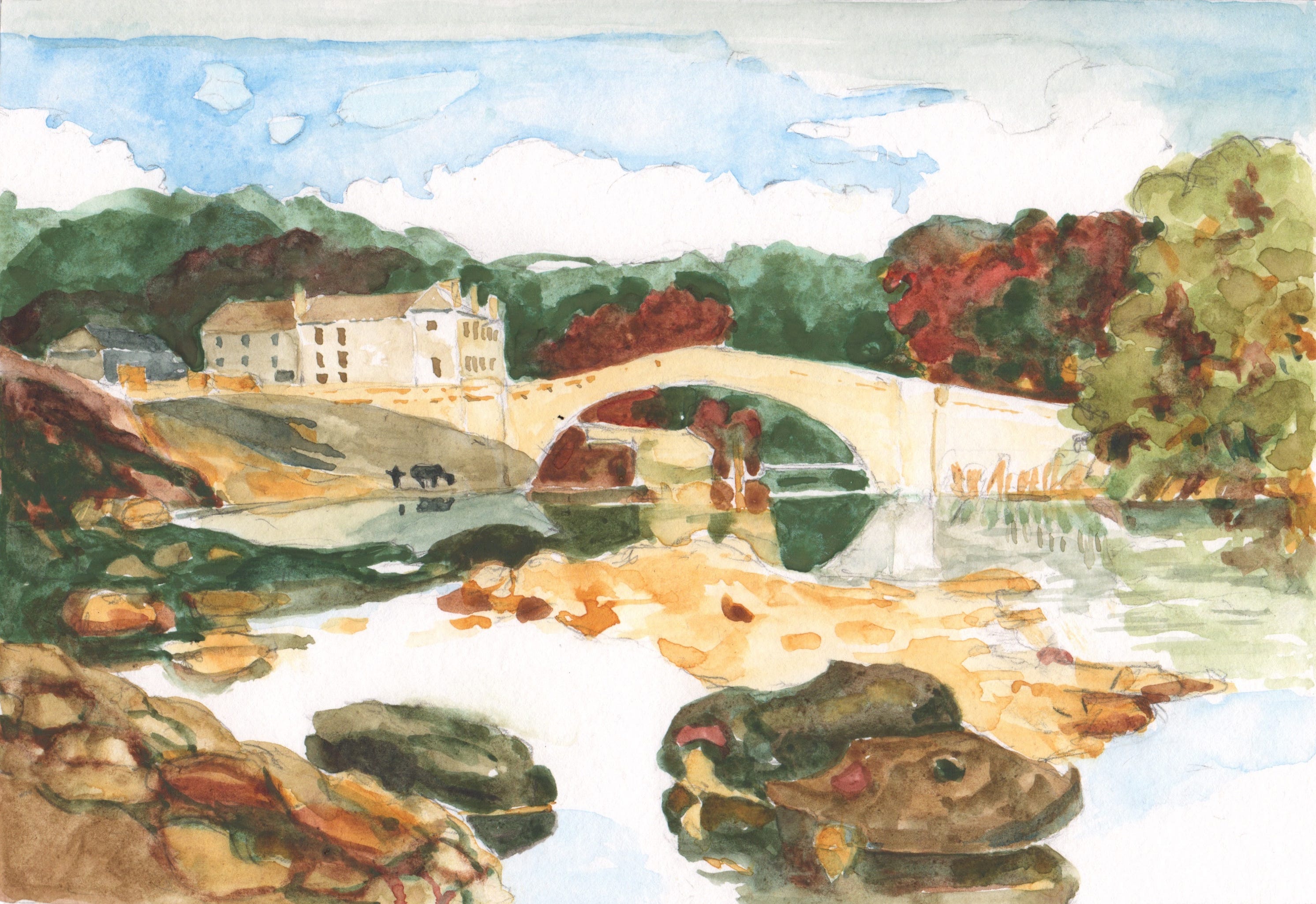
I made this watercolor copy of John Sell Cotman’s 1805 Greta Bridge as a demo for one of the lessons in my Watercolor Through History course.
Cotman is renowned as one of the great pioneers of watercolor but he started by drawing on his own as a boy, unprompted and almost obsessively. This early drawing practice shaped his path through life.
Because his father disapproved of his desire to become an artist, rather wanting him to enter his draper’s business, Cotman left for London at 16, where he found work on commission from printmakers and was then employed to hand tint prints for the lithographer and publisher Rudolph Ackerman. My guess is that it was through developing skills in aquatint for Ackerman that Cotman learned to watercolor.
In London, Cotman rubbed shoulders and practiced drawing in clubs and out of doors with Thomas Girtin and J. M. W. Turner, amongst others. He met and developed relationships with patrons.
Patron and friend Francis Cholmeley invited Cotman, still in his early 20s, to spend three summers with his family at Brandsby Hall in Yorkshire. On his last visit, an invitation to nearby Rokeby Park took him to the River Greta, where he made his two well-known Greta Bridge watercolors, around 1805 and 1810.
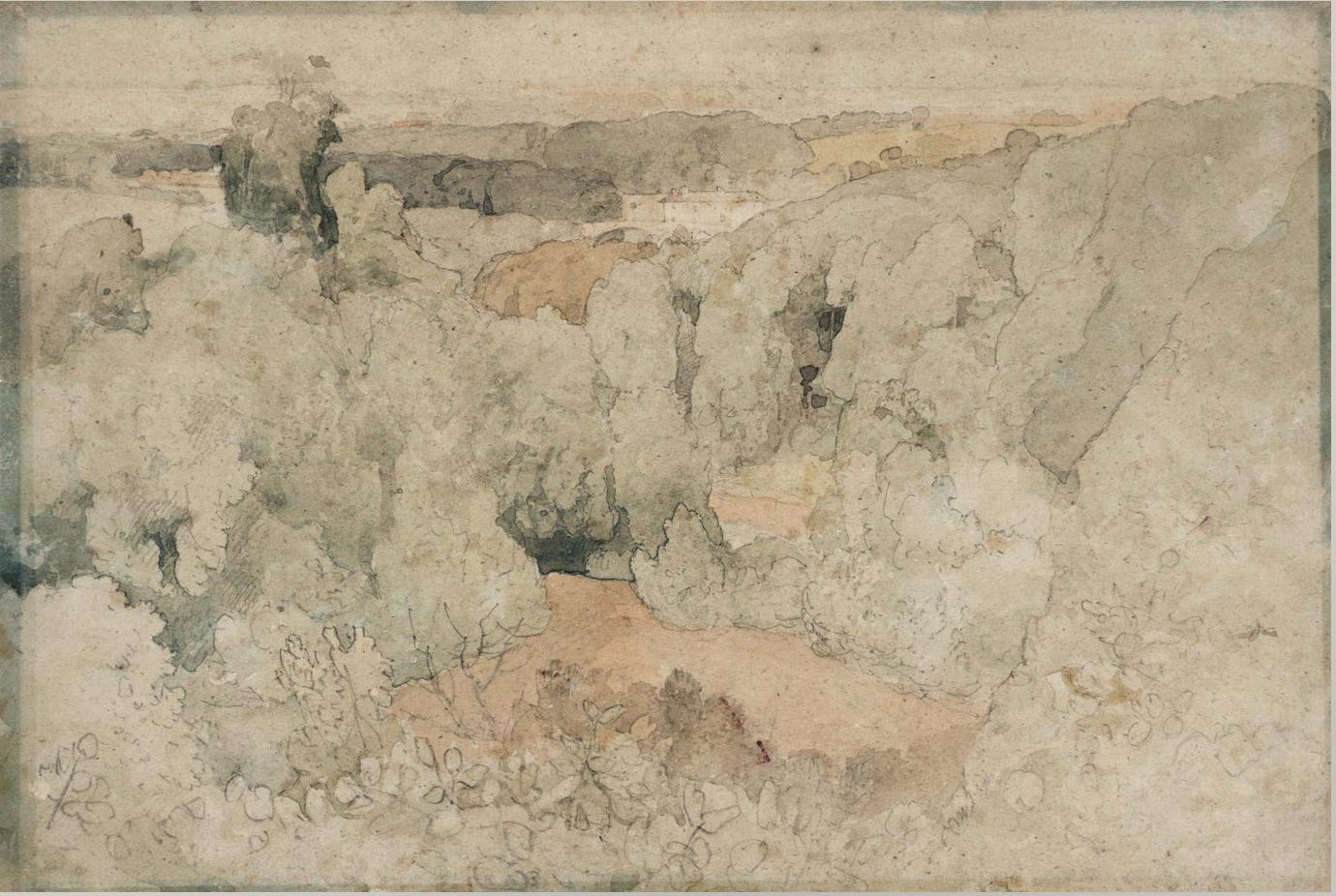
Although Cotman was lauded throughout the 20th century as one of the most influential watercolor landscape painters, during his lifetime he was unable to develop adequate commissions and sales to earn a proper living as an artist. As a result, he left London and independently developed ways to earn his living by teaching drawing so that he could support himself as an artist, along with his growing family.
He tutored patrons’ family members and developed a subscription library from which students could borrow and copy his drawings. Eventually, he was named Master of Landscape Drawing at King’s College School in London. Cotman was endlessly resourceful and worked diligently, but earning a living was always a struggle.
Cotman was so well thought of during the 20th century that Winsor & Newton named their student grade watercolor line after him. These budget watercolors are far superior to those that Cotman himself used and which, because of unsolved fugitive color issues and other technical details, have faded to mostly dull greens and browns.
My copies of historic watercolors are often much brighter and more cheerful than what’s left of the originals today. Joyful color is my natural proclivity with watercolor painting but it’s also the exceptional quality of paints I have to work with.
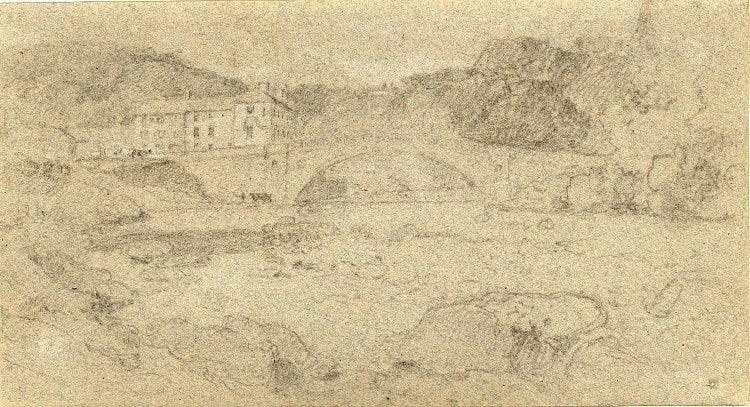
I have far better paints to work with than Cotman did but we’re basically using the same graphite for drawing. Watercolor has changed over the centuries. Drawing has not.
In John Berger’s brilliant book, Permanent Red: Essays in Seeing, his chapter on drawing begins as follows:
“The basis of all painting and sculpture is drawing.
For the artist, drawing is discovery. And that is not just a slick phrase, it is quite literally true. It is the actual act of drawing that forces the artist to look at the object in front of him, to dissect it in his mind’s eye and put it together again; or if he is drawing from memory, that forces him to dredge his own mind, to discover the content of his own store of past observations.”
In many of my courses, we develop drawing and watercolor skills by copying historic masters’ work while learning about their lives, milieu, and works. One part of each of those lessons is a series of long-form demo videos in which I make a copy of the lesson’s featured drawing or painting, often both, complete with a blow-by-blow account of my thoughts and experience while doing so, including more than a few deep, unconscious but audible sighs.
To learn more and be notified of openings in my online drawing and watercolor courses, click here to sign up and receive a gift of my Drawing Primer so you can start practicing right now.
Drawing is fundamental. It’s a practice that you have to do yourself. But it certainly helps to have good guidance, examples, feedback, and camaraderie to sharpen skills and enhance learning.
Like drawing, teaching is a practice. I enjoy teaching drawing and watercolor and curating my courses through the lens of history. It’s a challenge for both me and my students. I always learn a lot and feel better for having performed my demos. I think my students do, too.
No posts
Comments
Nothing yet. Say the first thing.
Sign in to join the conversation.