
Last year I ended December reflecting on challenges in transitioning to AI Governance and AI Safety. I’m ending 2025 feeling at least a couple of years older 😂: so much has happened this year that I feel like I’ve lived through several timelines at once.
So, here’s a semi-chronological recap of both the life experiences and the hands-on work that shaped my trajectory this year.
2025 was the year I leveraged writing to form a voice, a mission that mattered not only to me but to my field: AI Safety for AI Governance. And, without this foundation, I believe that none of the other outputs I describe below would have materialised.
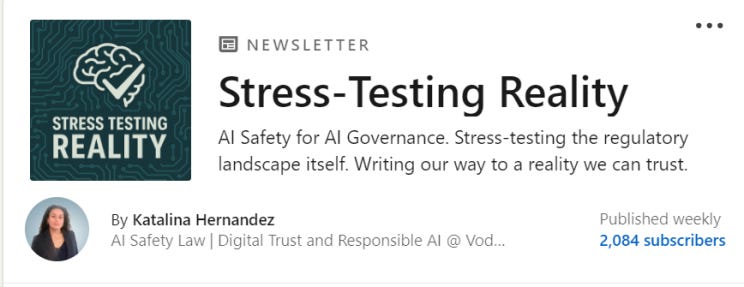
This is why the list starts here, with Stress Testing Reality: a Substack and LinkedIn newsletter launched at the beginning of this year. The idea behind it was clear: keeping tech lawyers, AI governance professionals, and data protection officers informed on AI safety advances and their implications for legal, regulatory, and industry practice.
With it came my AI Safety for Tech Lawyers series, which received a lot of positive feedback and became something I’m genuinely proud of: a curriculum now being adopted by institutions for legal AI safety training. There’s something deeply satisfying about seeing an idea you had turn into something other people find valuable enough to teach. Thank you Edward Tsoi, Nia Gardner and Elsa Donnat for helping me make this happen, and Demetrius A. Floudas and Kathrin Gardhouse for the extremely useful feedback you provided on the posts and on the curriculum itself!
I also had the privilege of joining Phi / AI as a contributing writer to help cut through the noise and hype cycles, and focus on the deeper questions of technology and AI’s impact on society. Thank you Karin Garcia for this initiative and your support (and Haihao Liu 刘海昊 for making me a part of it!). Phi/AI’s core mission is to cut through the noise and hype cycles and truly informed concerned readers of the implications of new technology on their lives. And I carried this philosophy with me on everything I did next.
This year would not have been the same without my time at CEEALAR, the research centre where I was grateful to stay and work from over the summer, currently managed by the lovely Attila Ujvari. This granteeship gave me the space and support to dedicate more time to independent research at the intersection of Law and AI Safety!
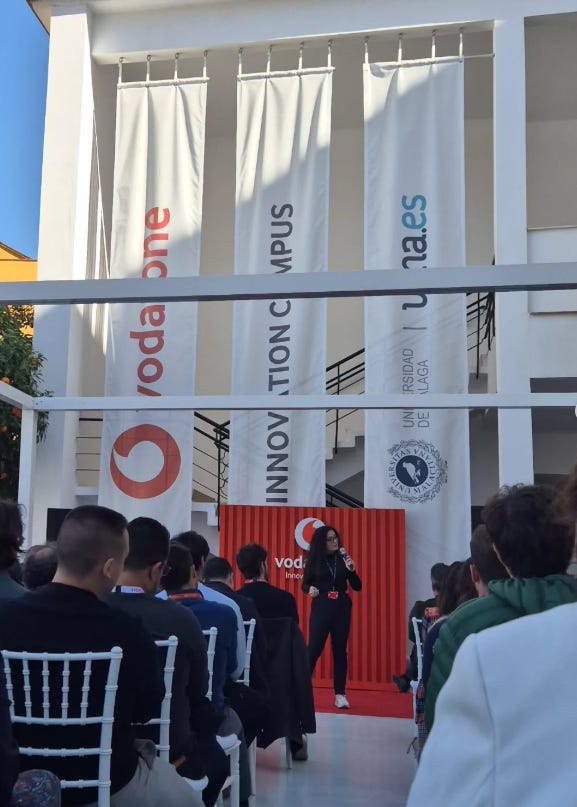
During this time, I completed my preliminary paper on the Law-following AI framework, pioneered by Cullen O’Keefe from the Institute for Law & AI (LawAI). I focused on the framework’s policy feasibility while grappling with technical challenges and the debate between law alignment and value alignment. I was honored to present this research during Singapore Management University‘s Computational Legal Studies Workshop this past September (with thanks to Jerrold Soh for the invitation!).
I formed incredibly valuable connections through the London Initiative for Safe AI, where I’ve met researchers working on technical AI safety, alignment, interpretability, and control. Seeing how these research objectives impact regulatory governance and policy has been eye-opening.
I joined the Women in AI Governance (WiAIG)™ community, where I’ve been able to form connections with and learn from other women in this field. WiAIG hosts monthly talks (that you can join online) diving into different topics, from dissecting the latest regulatory challenges to learning how red teaming a foundation model is done.
I was extremely grateful to participate in the WiAIG webinar “How much can we really know about AI safety without interpretability?” organized by Yelena Ambartsumian. This came from an organic conversation where we both realized how little we were actually discussing this problem among legal professionals.
Diving deeper into the implications of the alignment problem for legal governance and attempting to tackle downstream liability issues under the EU AI Act (deeply inspired by Philip Hacker’s paper “Regulation of Fine-Tuning”) made me truly see the value of legal research in the light of AI safety, and how important it is for regulatory challenges to be informed by it.
But it also made me realise even more why the work of industry standard bodies like CEN CENELEC or ISO is indispensable: the operationalisation of these research agendas, the ideals behind AI Safety and AI Governance, the real ground-level impact.
When I’ve had a chance to actually implement legal and AI Safety research into my daily work (seeing what works and what breaks at translation to daily practice) made me realise something crucial.
No matter how good I become at tackling research questions, I won’t have any impact if I don’t find a way to share my learnings and create actual industry best practices.
And this realisation is leading to something HUGE coming in 2026: AISLA, the AI Safety Lawyers‘ Association. Stay tuned! ;).
A key objective for me this year was to upskill from both a legal and technical AI Safety perspective. I believe anyone in the tech and data protection sphere is feeling the pressure:
To obtain the latest certification, to always have the answer to everything, to be “at the forefront” of AI Governance or “become irrelevant.”
One of the biggest realisations I’ve had this year? Stop spending money, time, and energy on expensive courses or resources out of fear. Instead, focus on building your existing areas of specialism and pursuing the topics you need to master to be the best professional you can be.
A very valuable experience was completing the AI Governance Track with the European Network for AI Safety, based on BlueDot Impact’s AI Governance curriculum (you can read this all for free, but I do encourage you to take the guided course if you can).
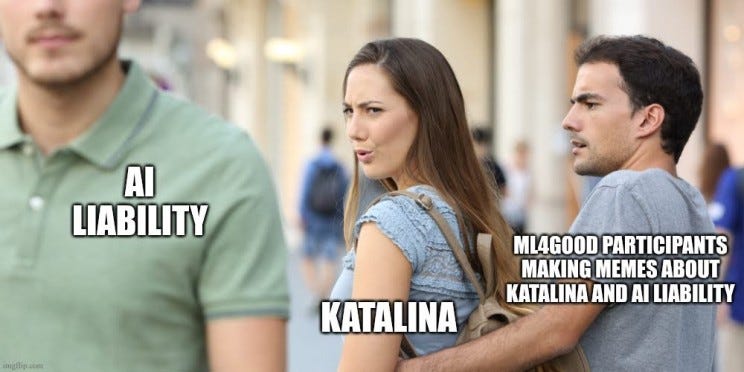
I also completed the Governance bootcamp hosted by ML4Good in July, which was a true game changer: 10 days of intense learning where we completed sessions focusing on both technical AI Safety and on policy and legal training (subscribe to Stress Testing Reality for updates on upcoming trainings for Lawyers in AI Safety!).
I’m also grateful for James Kavanagh and AI Career Pro: AI governance training that doesn’t just prepare you to pass a certification (cough AIGP), but actually gives you real-life training on the challenges you’ll face as a Data Protection and AI Governance professional in the tech sector.
Having led the Government engineering team at Microsoft Azure and the Responsible AI Assurance team at AWS, James understands that teaching students how to pass an exam is, frankly, part of the problem. So he decided to found his own training centre that focuses on skills and practical implementation. Please check out James’ blog, “Doing AI Governance,” where you can find free resources.
But here’s the truth: as grateful as I am for the courses and certifications I’ve taken, I think the biggest knowledge-building asset for me this year has been simply diving into the problems I want solutions for, conducting firsthand research, reading papers about topics that interested me, and discussing them with people with similar interests.
No certification or course replaces the experience of stress-testing what you think you know and having other people challenge your perspective.
As every DPO out there knows, 2025 has been a real roller-coaster for our profession. One of the biggest lessons I am taking away is in relation to the infamous “human in the loop”: while we build solid and scalable regulatory practices, let’s not forget the importance of actually being the human.
And at VOIS Vodafone Intelligent Solutions, I’ve been fortunate to live this out as part of our digital transformation and commercialization journey. I wanted to dedicate a heartfelt thank you to my manager, Ilda Kokona, for bringing action-oriented leadership and new ideas to the team, but also for being the type of person that makes me want to keep fighting for human-centric innovation. I’m extremely grateful to be part of this Responsible AI team: individuals who aren’t only committed to compliance but to AI technology that genuinely benefits people and meets high standards for safety and security.
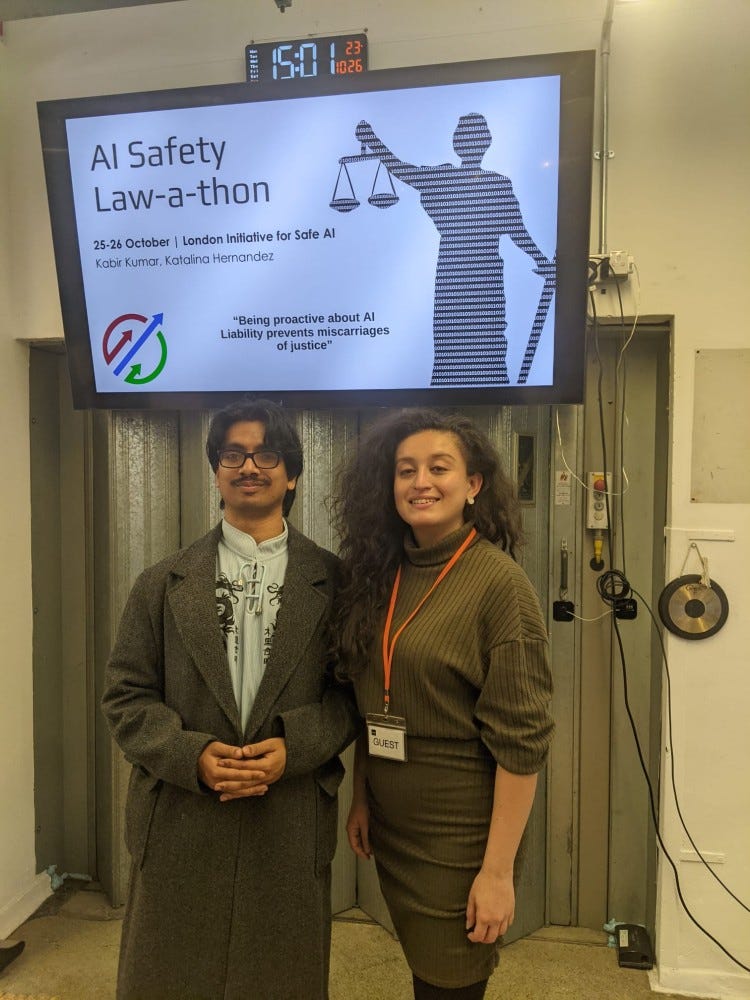
In October, I collaborated with Kabir Kumar in organising the AI Safety Law-a-thon: bringing together technically-minded researchers and legal professionals (barristers, solicitors, compliance officers, data protection lawyers). We stress-tested solutions for downstream liability issues that lack strong frameworks, legally or technically. Organizing these challenges together and planning future iterations was a highlight. Thank you, Kabir and AI-Plans.com, for the wonderful work you are doing. I can’t wait to see what else you create this year.
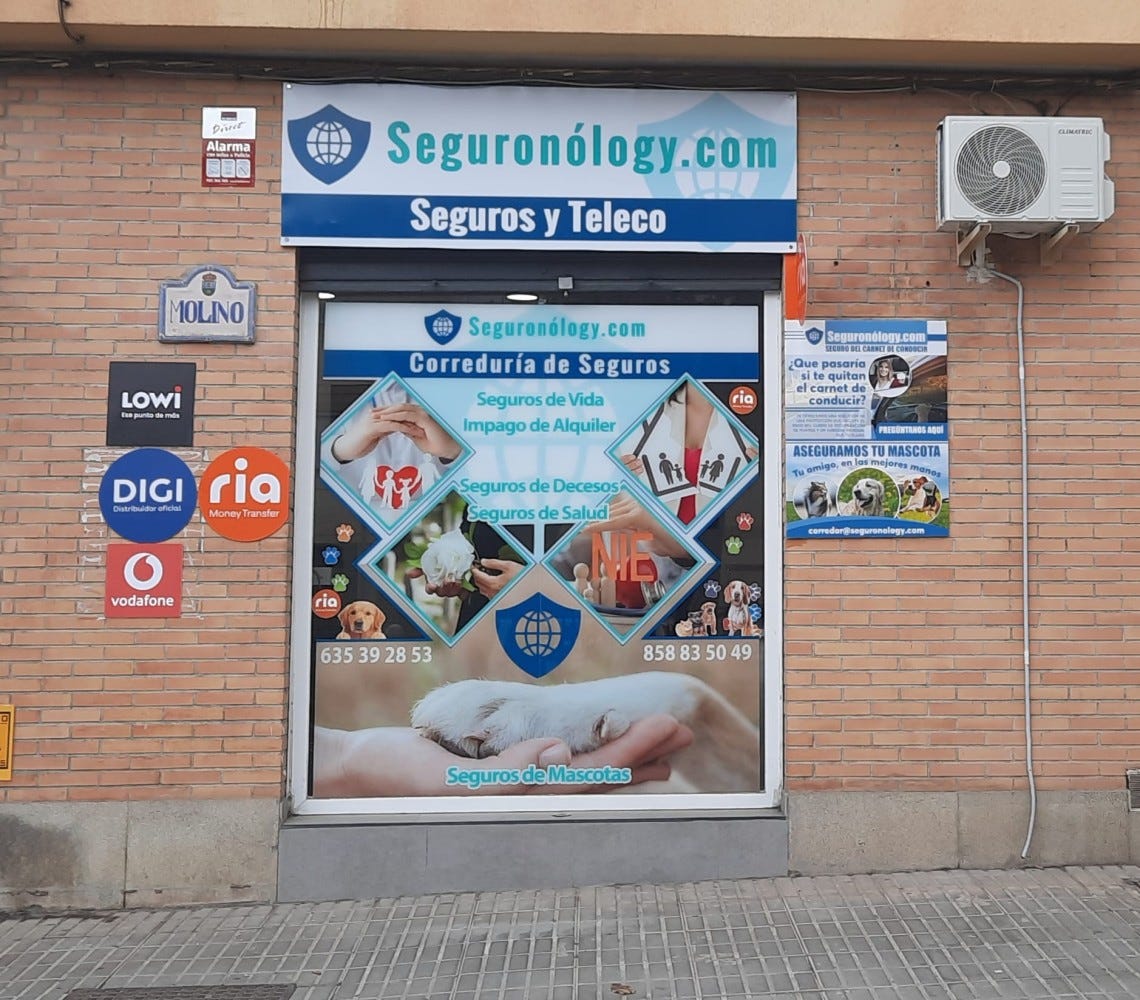
I would also like to recognise the hard work of my parents, Hammel Jesús Hernandez Taborda and SANDRA DELGADO CASTELL in launching Seguronólogy in Granada, Spain. Any self-employed person in Spain (”autónomo”) knows how difficult it is here to self-start, and my parents have sacrificed a lot this year in order to provide other hard working families with such an important service (insurance) as brokers, which allows them to truly fight for the best interest of the client instead of serving the interest of a single insurance company. Thank you for your example, and for teaching me to work hard for the people and the causes that really matter.
Of course, I couldn’t end without mentioning one of the most important partnerships of my life: Mateusz Bagiński, one of the greatest gifts that my AI safety journey has brought me. The programmer that taught me how think like an AI safety researcher.
To everyone I’ve met this year: thank you for the conversations, inspiration, calling me out when I veered off track, sending useful resources, keeping me accountable, and helping me be at my best.
Wonderful friends, colleagues, mentors and role models like you keep me motivated.
Be it via conversations, opportunities you referred me to or training you provided, you shaped my trajectory this year: Carey Lening, CDPP, Isabel Barberá, Nita Farahany, Evan Benjamin, Gergő Gáspár, James Kavanagh, Mihaela Horga, Joël Naoki Christoph, Charbel-Raphaël Segerie, Auriane Tecourt, Michał Kubiak, Stuart Winter-Tear, Kabir Kumar, Jonas Freund, Cullen O’Keefe, Anna Magpie.
Next year, I’ll continue to be here for you through challenges, learning, and especially delivering at the quality this field deserves.
Signing off for now.
Merry Christmas and Happy New Year!
No posts
Comments
Nothing yet. Say the first thing.
Sign in to join the conversation.