
December 27, 2022. Agra.
Prashant X is alone in a room. Not meditating. Not journaling. Not doing any of the things people romanticize about solitude.
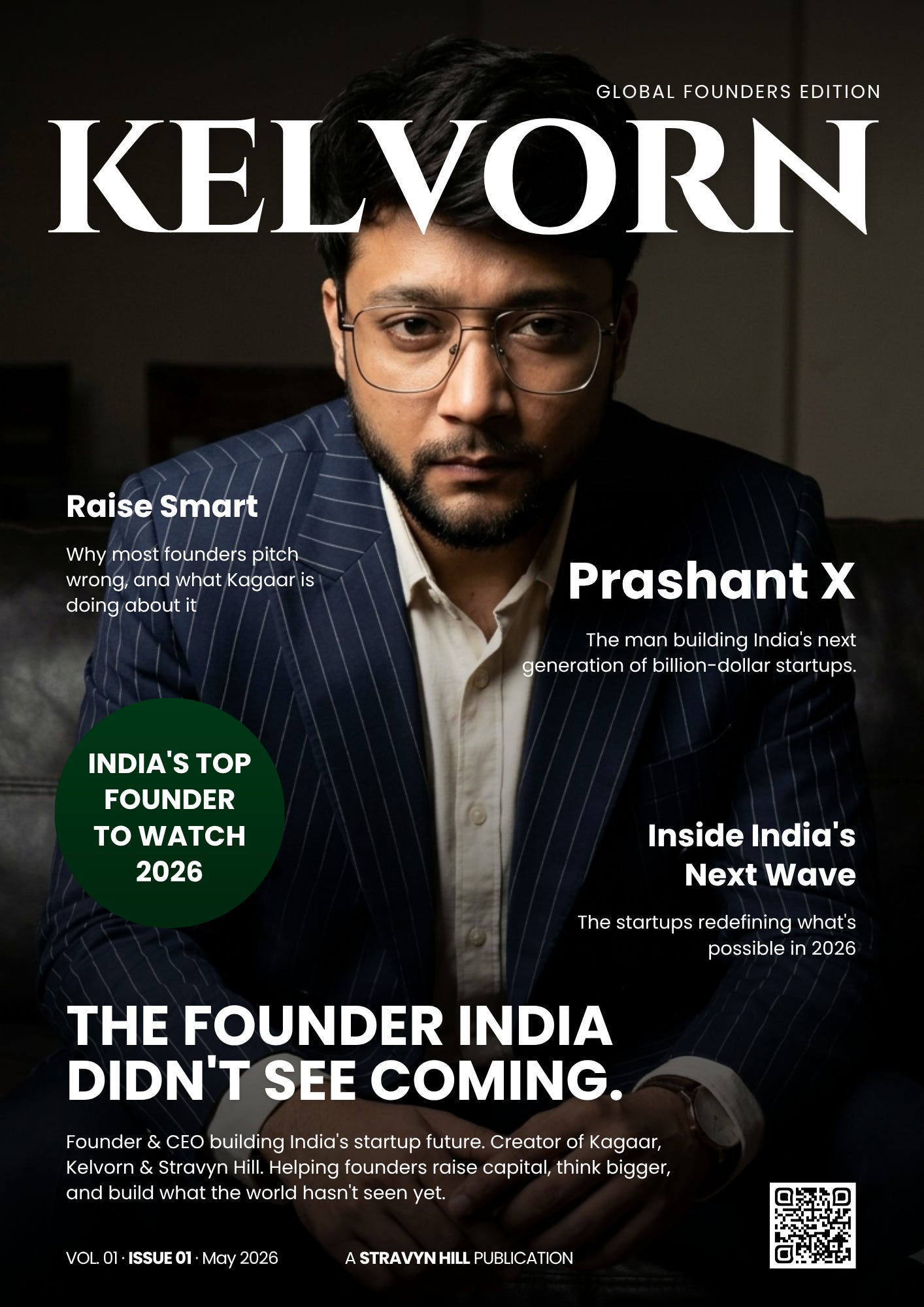
He’s having the kind of internal conversation that doesn’t have a name but every founder eventually knows. The one where you stop performing confidence and ask the raw question: did I just waste the last several months of my life?
The neobank concept he’d spent everything on was finished. Over a hundred investors had received his pitch. Two responded.
Not with interest.
Just with words.
The other ninety-eight didn’t bother.
And if you’ve ever sent a cold email into that particular silence, you already know -- no response is the most complete response of all.
Thanks for reading! This post is public so feel free to share it.
He’s twenty. First semester of a computer science program he’s already mentally checked out of. No funding. No founding team. No fallback.
What he does have is a question that keeps surfacing no matter how many times he tries to set it down.
If the path from idea to company is this broken, this punishing, this indifferent to genuine effort -- why does it still work exactly this way?
On December 27, 2022, that question has no market value.
Today it has 5,000 users, a magazine with global reach, and a consulting firm built around it.
What Prashant’s public profile skips over is the part that actually explains everything else.
Before the milestones. Before the momentum. Before there was anything worth announcing. He ran Kagaar entirely on his own.
Product decisions, engineering, design, outreach, operations -- everything that a full team would normally divide among itself, compressed into one person working irregular hours in a room most people would find suffocating.
He was finishing the day at one or two in the morning. Back at the desk by six. Not because some productivity framework told him to. Because the work didn’t stop needing to get done just because he was tired.
His close friend Shivam watched this from the beginning. He wasn’t surprised by the drive. He wasn’t surprised by the grind. What actually stayed with him was something simpler and far more revealing.
Through all of it -- zero team, zero traction, zero external validation -- Prashant never once looked at job listings.
Sit with that for a moment.
Zero team members isn’t just lonely. It’s the kind of number that makes the whole enterprise feel like a delusion. Most people at that point don’t need someone to talk them out of it. The silence does that work on its own.
There’s a chapter in Kagaar’s history that doesn’t make it into the highlight version.
In the span of a single week, eight or nine people left. Not a gradual attrition. Not a planned restructure.
A sudden, total departure that left the operation exactly where it had started -- with one person and an idea that hadn’t stopped being real just because everyone else had stopped believing in it.
Most people, at that point, would have treated it as information. The market has spoken. Time to pivot. Time to pause. Time to do literally anything other than try again from scratch with the same concept.
Prashant did the thing that defies clean logic and makes complete sense if you understand what actually drives him.
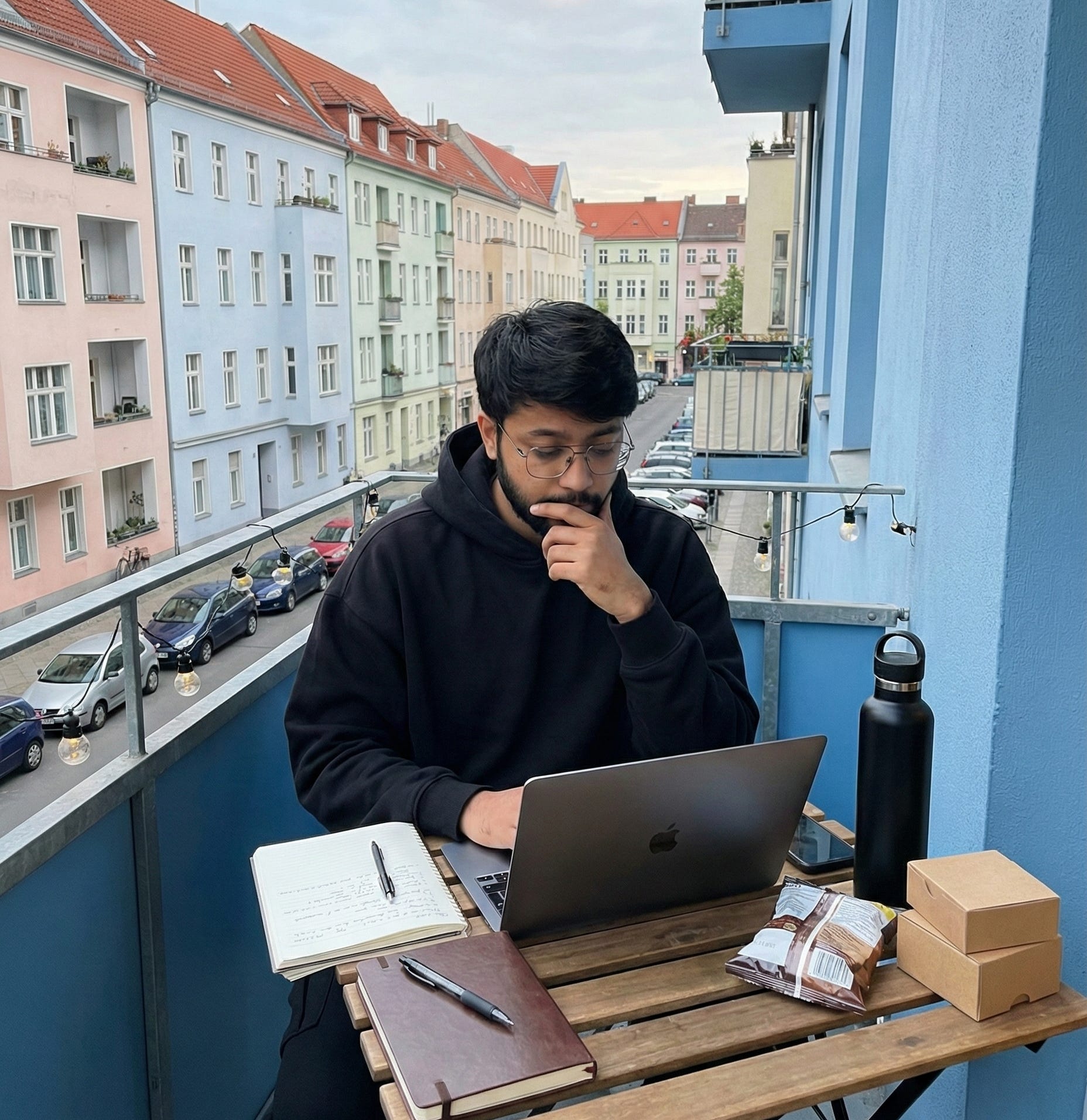
He went back to the beginning. Same problem. Same mission. Different approach. He asked the only question worth asking when everything collapses: what does rebuilding actually require?
No announcements. No dramatic reframe. No pivot into something safer. Just the quiet, unglamorous act of starting over, because the problem Kagaar existed to solve hadn’t resolved itself just because his team had disappeared.
Thirteen months after that December room, Prashant launched Canvas India.
A digital publication. Founder stories. Substantive editorial. Built, like every other thing he’d touched, without a team at the start.
Sixty-three founders featured. Thousands of readers. Strong organic search presence. It found its audience not through aggressive distribution but because the work itself was worth reading.
A year later, Canvas India became Kelvorn. Not just a rebrand -- a repositioning. Global scope. Global readership. The kind of platform where getting featured signals something meaningful, not just a mention in a list somewhere.
The publication you’re reading right now is that platform.
By conventional startup thinking, Prashant’s global strategy and growth consultancy -- Stravyn Hill -- is a distraction.
Focus is the religion of early-stage companies. Pick one thing. Compound on it. Don’t touch anything else until it’s scaled.
Prashant operates by different reasoning. The reasoning of someone who spent years watching founders struggle not just with execution, but with direction -- and found himself solving that problem informally, in conversations, long before he built a formal structure around it.
Stravyn Hill exists because people were already asking for it. Fully bootstrapped. No outside capital. No blessing from conventional startup dogma.
This is the pattern that runs through everything he’s built. He doesn’t wait for conditions to align. He identifies a real problem, confirms it’s actually real, and moves.
Seven to eight hours of sleep. Non-negotiable. Health before output. Because the person doing the building matters as much as the thing being built, and you can’t subtract from one indefinitely without the other eventually failing.
He learned this through direct, personal cost. Relationships that absorbed the weight of his schedule. A body that kept an honest record of every late night while his mind told itself everything was fine.

The behaviors that get celebrated in founder culture -- the sleeplessness, the sacrifice, the obsessive singular focus -- are often the exact behaviors that degrade the quality of the work itself.
Prashant knows this now in a way you can only know it by having lived through the consequences. He’s saying it out loud so the next person doesn’t have to pay the same tuition.
The vision that lives underneath Kagaar, Kelvorn, and Stravyn Hill is the same vision that was sitting in that Agra room in December 2022. Just larger now, and no longer just a question.
A complete ecosystem for founders. Every resource, every connection, every tool -- consolidated, accessible, not gated by geography or background or who you already know.
Not only for Indian founders. For every founder anywhere who has sent something out into the silence and wondered whether continuing made any sense.
Prashant’s answer, if you ask him, is that it almost always does.
You just have to stay in the room long enough to find out. - Prashant X
If you’re a founder, builder, creator, or operator with a story worth telling, Kelvorn is now accepting feature applications.
Whether you’re building quietly behind the scenes or scaling something meaningful across industries, we’re always looking for ambitious people creating work that deserves deeper attention.
And if this story stayed with you, share it with someone building through uncertainty right now.
If you found this story valuable, don’t forget to like, share, comment, and subscribe.
Every share helps these stories reach more ambitious builders, creators, and founders trying to figure things out one step at a time. Powered by Stravyn Hill
No posts
Comments
Nothing yet. Say the first thing.
Sign in to join the conversation.