
I’m back in the throes of book revision these next few months. As inspiration for me (and hopefully you), I’m inviting a series of artists, journalists, and researchers to speak with me about their work. Some of these brilliant thinkers have helped me see my book’s themes—community, kinship, colonial legacy—in new light. Others have shown me new ways to not only write but also live, to pursue both rigor and joy in the professional and personal.
This week, I spoke to Gioncarlo Valentine, a brilliant photographer and writer whose work I got to know through his substack, Something Personal. Gioncarlo is a true multi-hyphenate, applying the same stunning artistry to photographing Michael B. Jordan or Ocean Vuong that he brings to creating “searing” images of young Black men. Gioncarlo also penned the most tender essays on birds and the Black photographic archive that I’ve ever read. So much talent in one body should be illegal, but since it’s not, I wanted to ask him how he learned to articulate this vision of the world so distinctly in his writing and image-making.
In our conversation below, we talked about how a career in social work led him to art, the precarity of being a Black artist–even and perhaps especially a celebrated one–and the power of friendship and books to see us through this period of national and moral decay.
Raksha
I wanted to start with your name. I read that you chose your name. I’m curious to hear the story of that.
Gioncarlo
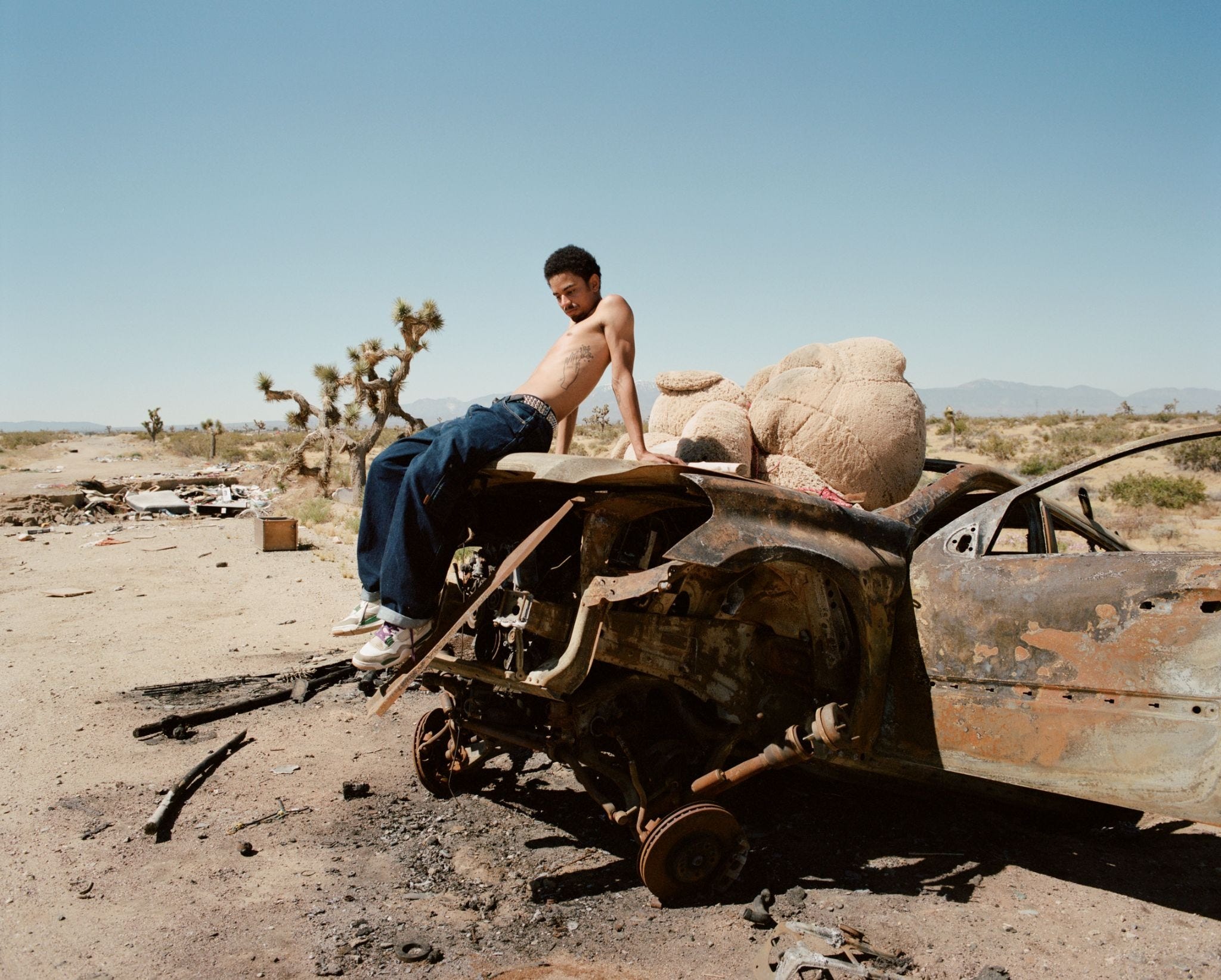
[Laughs] I wish it were more interesting. When I picked up the camera, it was at a time when a lot of photographers had monikers or “brand” names. In Baltimore, the photographer Glenford Nunez went by the moniker “Trust Your Photographer” and Andre Wagner went by “Abstract Elements.” That was like his Tumblr name. So I didn’t want to come into photography with my real name, because it wasn’t in vogue. I also always thought that I’d write under another name, like a nom de plume. I wanted a degree of separation between my family, my legal name, and my work as an artist. Because at some point I wanted to write about experiences of sexual assault, I wanted to write about the difficulty of my upbringing, and so on.
I’m also trans and non-binary, and I never felt comfortable or confident with the name change element when I was living with a feminine presentation as a woman. So I wanted to come up with a name that could contain all of these things. I also started out in photography with another person. We were gonna be a duo. We wanted to do an Inez and Vinoodh thing. It’s so stupid [laughs]. There’s this show, Noah’s Arc, that we were big fans of, and there’s a scene where they’re listing all the people that Ricky, a character on the show, has slept with. And so that became a refrain, where we would say all those names kind of jokingly throughout the day. Like, maybe we should go by Michael, Darius, Giancarlo... And we both stopped at Giancarlo and were like, wait. But we couldn’t decide who would get the name, so we both went by Giancarlo. He picked Giancarlo with an “A,” the appropriate spelling, and I picked Gioncarlo with an “O,” the inappropriate spelling.
It’s a pain in my ass to this day, because everyone spells it incorrectly, but I’ve lived into it now. When I moved in 2014 [from Baltimore, where I grew up] to New York, everybody knew me through my work on Instagram and Tumblr, and so they were calling me by this name that was actually a moniker. I didn’t want to keep correcting people, so I just let it rock. And then it became like Beyoncé’s Sasha Fierce thing, where all the power, all of the bravery, all of the perfectionism could be embodied in this way. And now it is the only name that I really go by in the world, except for at home.
Raksha
I love that. I love that you birthed this name for artistic purposes, but then you became this name.
I also know that you have a background in social work. I was curious about your journey from social work to what you do now.
Gioncarlo
I worked as a case manager in New York and Baltimore, often with LGBT youth and people with chemical and alcohol dependencies and mental health issues and chronic illness. Working with folks with needs that represent the background that I come from kept me in line with what I wanted to do ultimately. It taught me how to listen to people, how to meet people where they are, to not be as judgmental. To be clear, I can be judgmental, but mostly in the friendship space, not in the professional sphere.
Through it all, I saw myself as doing storytelling work: case notes and active listening and spending great durations of time with people and helping connect them to resources was all about telling stories. And outside of work, I was also always photographing and publishing writing.
I’m trying now to figure out how to make this work more concretely impactful. Working in a shelter and getting somebody literal housing and literal resources is immediate. Honoring the work or lives of certain folks [through writing and photography] is also impactful, but it can take a while for it to feel that way. Attending to the Black archive as a photographer and sometimes as a writer is really great, but it’s not immediate.
Raksha
That makes sense. I think we have somewhat of a similar journey. Before coming to writing and journalism, I was an aid worker, mostly in East Africa. People see that as a big leap but the transition felt so natural to me. Most of my jobs in aid work were research-based, like talking with different communities about what programs or resources they needed. I spent most of my days doing interviews, spending lots of time with people, sometimes doing focus groups. But unlike your social work, the line from me to actually getting them resources was so long and convoluted that it often didn’t pan out.
I kind of like that journalism doesn’t promise to help people in a concrete, tangible way. I feel that’s more honest.
Gioncarlo
Oh, the bureaucracy in social work was similar. That’s why I never went back into that sphere. When I was working at the Ali Forney Center in New York, I’d see the young people coming to the center in Harlem standing outside the turnstiles at my train station in the Bronx, asking for money for food or swipes. Of course I would give it to them, but then I’d be reprimanded for it, because we were not supposed to give them things directly. That kind of bureaucracy tainted every one of those kinds of jobs. In theory, the rules are meant to keep people safe, but it’s not beneficial in a situation like New York with hungry children on the street. It just became something I couldn’t explain away anymore.
Raksha
I want to talk about the wonderful PBS mini-documentary that you star in and that everyone should watch. Was there anything that didn’t make it into the film that you still think about or feel some sort of connection to?
Gioncarlo
Some very technical things. Like, there was a scene at Yaddo when I was in residence that I thought was really beautiful that didn’t make it in. There was a scene in the car in Baltimore with my friend Jermaine that I thought looked really beautiful, but I don’t know that they felt it was necessary to the story. For the sake of beauty, I would love to see them colored and treated and maybe shown somewhere.
Raksha
I’m sure it was strange to have the spotlight trained on you that way. I’m curious if you’re still feeling some sort of way about it?
Gioncarlo
I think I’ve gotten into a better place with it, in that it was a remarkably beautiful gesture from somebody I love beyond language. Zeshawn [Ali, the filmmaker] is just the most special person in my life. Him pointing his lens towards me was the honor of a lifetime. But I do see a connective tissue between this film and what happens to Black women when they win Academy Awards. When they win, they stop getting the really good roles.
Raksha
Oh, like Halle Berry.
Gioncarlo
All of them. No Black woman got an Academy Award and then saw their careers skyrocket. It almost becomes a death note. And that is not meant to erase the brilliant work that these women are still trying to do, but it is obvious that they do not get the opportunities that everybody else gets when they win. So the idea of this documentary almost felt like a threat. The series [that the documentary is part of] follows emerging cultural icons on their journeys to becoming masters of their artistic disciplines. But the series started with real masters like Miles Davis, Richard Avedon, Dorothea Lange. So I was like, girl, this feels a little too compilation album, it feels a little too Greatest Hits. After that, the Hits stop coming.
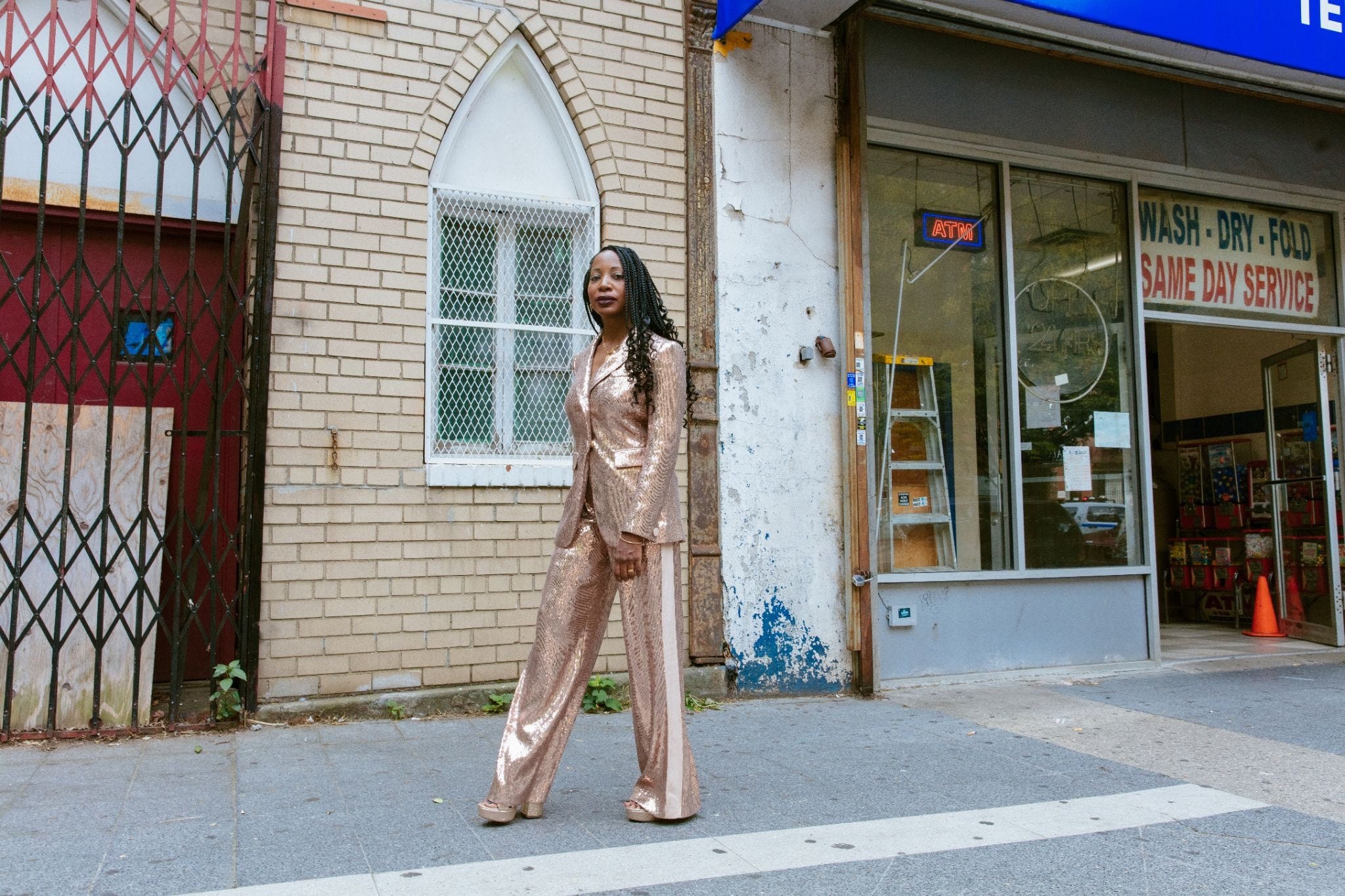
And that’s exactly what happened. Jobs dried up for me a great deal in 2024 and then almost entirely in 2025. I’ve had to consider other modalities of living as a photographer, ones not predicated on other people’s approval or interests. This has also given me time to tend to my archive. When I was working for magazines and doing editorials, once the job was done, I would be so worn down that I’d rarely return to that work. So I have 10 years’ worth of work that I haven’t critically engaged with. What does that represent? How is it all working together? What is the story that I’m telling? What are the themes and the connective tissues?
It’s really meaningful that at the 10-year mark of living in New York and working professionally as a photographer, I get this honor, given to me by somebody who I love. But the period that comes after, which is the now, is fascinating. When you’re a young, fresh artist with a new voice, a new body of work, they’re obsessed with you, and then later, when you’re approaching death, they’re obsessed with you. But that enormous period in between, your 30s, your 40s, however long you live, what do you do?
If you read Notes from the Woodshed by Jack Whitten, you see somebody shouting through that period of obscurity. Many, many artists, specifically Black artists, have these periods where they’re no longer easily sellable. And don’t let them be difficult. We love reading about artists who were challenging, who could be temperamental, but don’t let you actually be a mercurial artist, one with boundaries or self respect.
Raksha
You’re making me realize how naïve I was. I thought the documentary would open doors for you and do great things for your career. It’s depressing–though maybe not totally surprising–to hear that actually, it marked it in this other way. Do you think it also coincides with the media losing interest in “diverse” perspectives?
Gioncarlo
My first rule of thumb--and history has affirmed this over and over again--is that anything that is happening to the larger public is happening much worse to Black people. The move away from DEI is affecting all folks of color. But it’s a very specific, pointed hatred by which it is affecting Black people and Black queer people. Almost none of my Black artist friends are getting consistent work and support at this moment. If there is a tilt towards even a slight bit of conservatism, like if trad wives are selling, everything is going to get into trad wives. Even the publications that pretend to be liberal are going to give you a conservative tilt, because that’s what’s selling. The more intersectional identities you have, the harder it is. The timing of it is more blistering for me because of the documentary.
A lot of the people still getting work also haven’t said a word about Palestine. They haven’t used their platform once to speak about any real shit that’s happening in the world, to advocate for the lives of the people who are being fucking wiped off the face of the earth. I’ve been told that certain publications will not hire me again because of my relationship to Palestine.
At this point, even if I wanted to get a “real” job, the reality is that I have a high school diploma. Sure, I write for the New Yorker occasionally, so it seems like one should cancel out the other. But the AI that is scanning your job application will see that you don’t have this credential, and you won’t even enter the pool of candidates.
Raksha
I’ve heard you talk before in interviews about how you’re self-educated as a writer: no English degree, no MFA. But what I love about your writing is that it sounds so distinctly you. I say that even though we’ve never had a conversation before. How did you develop your voice on the page? Is that something you even think about?
Gioncarlo
It’s a double-edged sword. I will always be very insecure that I don’t have a degree in writing, because the writing world simply invalidates the girls who don’t have the degree. I know a person who has a wing of a university named after him, and has written bestsellers, but is still insecure that he does not have a degree. Plus, where you went to school shapes the commerce of so many experiences in the world–your job, your network, etc.
On the other hand, I have been affirmed into believing that I have a unique voice as a writer. I’ve been told I sound distinct in a way that a lot of people with MFAs don’t. I think about this a lot with photography: the MFA destroys photographers. Where one is supposed to go and broaden their understanding, it just destroys them. It becomes monolithic. It becomes bright and blown out and clean and sanitized. I cannot tell you how many photographers whose work I loved when they first began, that first 10, 20 years of their work, and then they go into the MFA and it becomes wall text photography, where you need to have its value explained to you. I think that happens absolutely the same way with writers. If you fill your brain with so many voices, how do you hold on to your own?
I have no conscious intention behind my voice. I really am quite selfish in that I write and read for a very particular kind of pleasure. I don’t read anything because I have to.
In the last three or four years, my reading life has taken off in a really intense way. I’m usually reading for the same effect no matter what I’m reading, which is commiseration with grief, and how artists survive difficult times. I recently read Yiyun Li’s Things in Nature Merely Grow, where she writes about living through and living with the unthinkable suicides of her two sons. I’m also re-reading Stacey D’Erasmo’s book The Long Run, which is literally about how she, and the people she interviewed, survived as artists.
Like my reading, my writing is also self-indulgent in a way, because it’s so much about my interior life and my observations.
Raksha
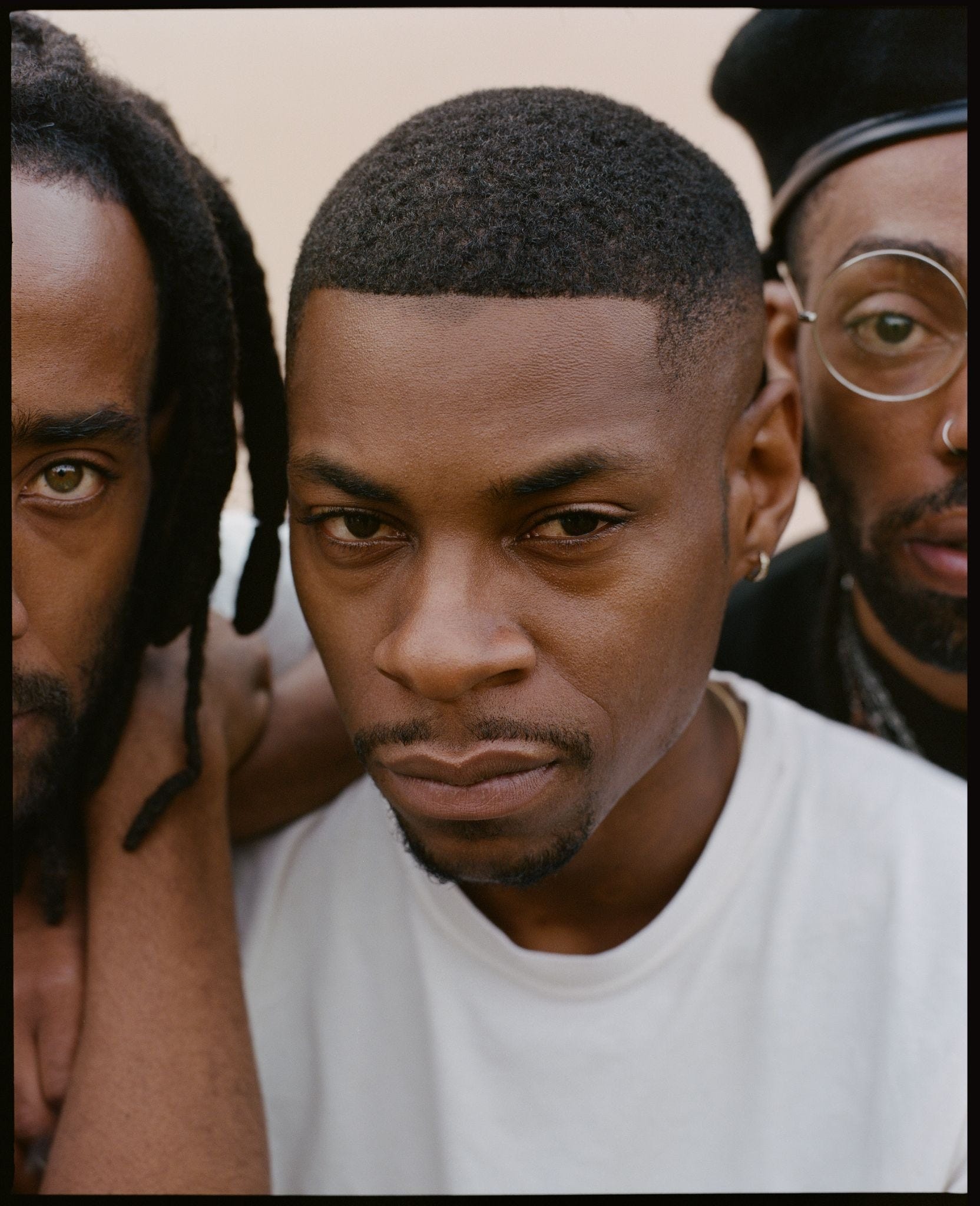
I haven’t found your writing self-indulgent at all—in fact, the opposite. I’ve been so moved in particular by how you write about friendship and how it seems to be such a central and grounding force in your life. In a conversation with the writer Casey Gerald, you called friendship a “dire thing.” And Casey called you a demanding friend—as a compliment, not a putdown. And I was like, I want to be a demanding friend! And I want friends who demand things from me! But I feel some shame around that, maybe because our culture doesn’t encourage that kind of accountability in platonic relationships. So how do you build that?
Gioncarlo
The queer tradition of friendship is family. Many queer people are abandoned by their family because of their queerness, and so they build a family of their own. That is the tradition that I operate from. Also, my mother, Queen and love of my life that she is, was deeply under-resourced and deeply inadequate when it came to many important parts of mothering. So I had to build my world from my community of friends.
I had a conversation with a friend of mine this morning. They’ve endured a lot of suffering in life, and they were like, “I really want to be more like you.” But I was trying to make it clear to them that, “baby, that grass, I know it seems greener over here, but it’s not.” When you are uncompromising and won’t tolerate suffering and fiercely advocate for yourself, you will be punished regularly. That’s part of the reason I haven’t worked much at all in the last 12 months.
The same thing applies to friendship. Yesterday, a close friend was running a little late to see me, and he told me he felt like he was rushing late to a job interview because I do friendship like it’s my job. I try to always be on time. I take it seriously. Because of that, I regularly lose friends.
One friend lost a friendship recently and said they thought of me. I was like, girl, not me being the grim reaper of friendship in your mind! [Laughs]
Raksha
Because you’re too demanding?
Gioncarlo
Because having demands on friendship ultimately puts a clock on them. Especially with straight people, particularly straight men. I have many straight male friends who do not know how to be in friendships that require the same level of commitment and dexterity that romantic relationships require. And I get it. It’s easy to fall into this kind of homogenous heteropatriarchal life. One day, you simply don’t have the energy for friendship after working all day and coming home to your partner. So I try to offer a lot of grace, but also I’m very clear. I don’t operate at all in ambiguity. To many people, that reads as demanding. I read it as exacting.
Raksha
To close, I want to know what’s giving you joy right now, aside from your friends?
Gioncarlo
That’s going to be hard to answer, because it’s just not a period of joy, especially if you subtract time with friends. Being in friendship with people is my highest calling, and my best use.
I recently got into the Kenyon Review Writers Workshop which I’m pretty excited about. I’ll be heading to Ohio in June. There’s some joy there.
Another thing that brings me joy is when I’m in a really good flow where I’m reading two books at a time that are either speaking to each other or against each other in an interesting way. I usually read every single day for three or four hours, usually three minimum. That’s what unemployment gets you [laughs].
Raksha
Binge reading is so great for your brain.
Gioncarlo
I hope so. It’s definitely essential to my writing. I’m writing an essay on my love of Aaliyah. I’m approaching it in this “Forty-one false starts” way that Janet Malcolm did in her profile of the painter David Salle. Outside of my mom, Aaliyah is the most important figure of my life. So the forty-one false starts format allows me to make forty-one attempts that ultimately do not get to the bigness of her but offer me some interesting vantage points. I’m also writing about her in the context of an Epstein moment.
Reading is like feeding the beast for me. I need to be reading a great book in order to write well. But I think that’s it for joy. Friendship and books are kind of the only things keeping me afloat.
Raksha
Do you have a sense of what you want this next chapter of your career and life to look like?
Gioncarlo
I don’t know. I’ve been shopping around this manuscript—I mean the laziest shopping you have ever seen in your life! I’ve sent it to exactly one publisher and one agent.
Raksha
Wait, is it fiction or nonfiction?
Gioncarlo
It’s a collection of essays. I have no interest in fiction. I’m a nonfiction girl. But it’s tough. IMy insecurity around institutional things makes me feel like an imposter. I’d need to finish two essays — the Aaliyah essay and one more — before getting it into more hands. I’m taking my time with that. Other people can turn a book around in a certain time frame, and I can barely get out of bed in a certain time frame. So I don’t want the pressure of a book deal too early. It’s a sad, beautiful thing I’m writing.
Raksha
I love sad, beautiful things.
Comments
Nothing yet. Say the first thing.
Sign in to join the conversation.