
The tulips don’t care about war. In Denver, their red heads are already pushing through the dirt, reaching for the sun, indifferent to missiles and murder on this soil and elsewhere. The crabapple and cherry trees, already in full white and violet bloom, don’t seem to care either. Or perhaps I’m mistaking silence for apathy. Why should their cycles of growth and decay be in tune with those of our society anyway?
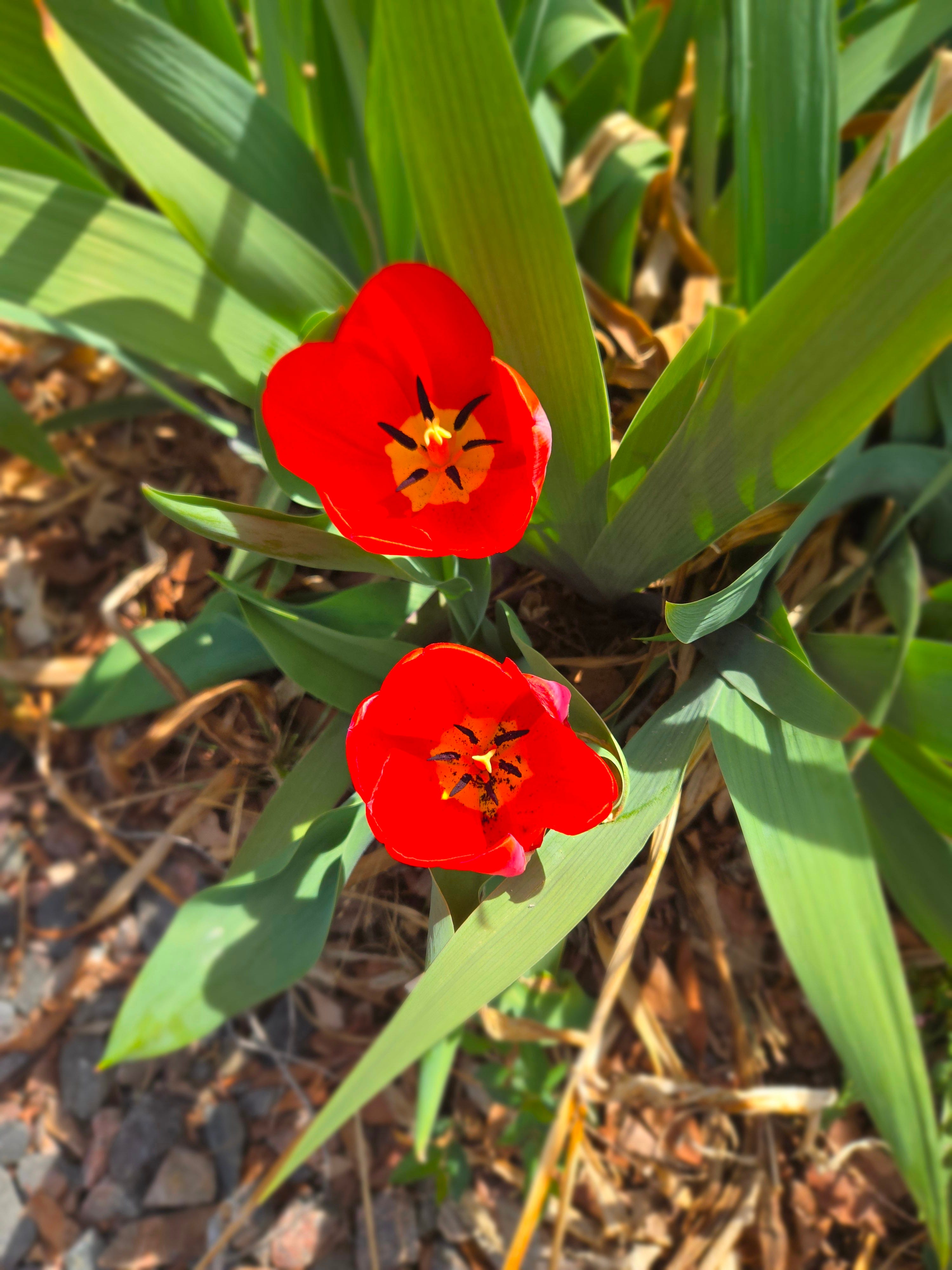
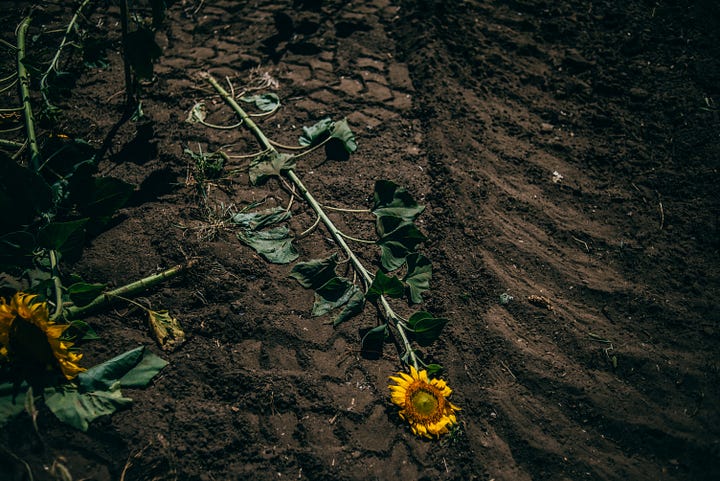
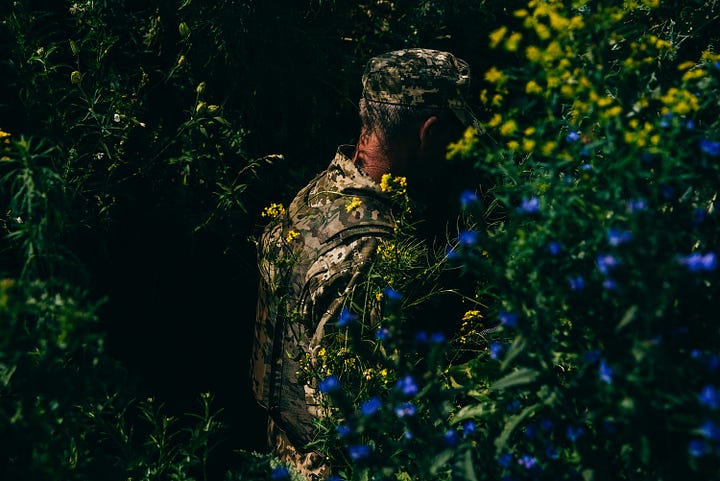
Perhaps it’s good that they blossom even as America’s root rot threatens to fell the whole wretched tree. The plants bear truer witness to history than us anyway, our heads turned toward the sun of rising gas prices and the moon of our own narrow interests. Before the media got there and long after they left, sunflowers stood, eyeing the tanks that rolled in on the Russia-Ukraine border and did what tanks do. Here, the Japanese Maples in the White House garden keep watch on the President and his catastrophic whims night and day, day and night.
More often than you’d think, plants not only watch history unfold but shape it, like a gardener with her shears: in Afghanistan, the Taliban and America waged two decades of war over fields of opium poppy. In 2025, Israeli settlers assaulted Palestinian olive farmers and destroyed their groves more than 150 times.1
You can’t separate a tree, a flower, or a garden from either the violence or gentleness that surrounds them.
What do we owe these flora and fauna? At the very least, I think we owe them our attention. They must have stories to share: of bloodshed, of climate change, of birds, of the humans who cared for them or brutalized them. I don’t want to anthropomorphize, to pretend these species loved or hated us or felt any emotion at all—towards us or anything else. But we know they reflect the conditions in which they grow: the width of a tree ring is a record of that year’s temperature and rain; western prairies still show scars of the mass hunting of buffalo by early settlers (without the bisons’ particular grazing and trampling patterns, the prairies shrunk, losing their spectacular biodiversity, becoming a husk of their former selves).
If the plants have stories to tell, then it’s up to us to decipher them.
From the kitchen window facing into the garden, I saw my mother was already up, watering. Above her, the sky was shot through with pink and gold filaments. The nutty scent of the coffee she’d brewed filled the kitchen.
It was 2023, and I was back in Calgary for a week. My mother still lived in the same 3-bedroom suburban house where I’d grown up. Normally, we would have argued about this: why didn’t she downsize? But I was trying on this trip to meet her where she was at rather than where I wanted her to be. Metaphorically, this meant avoiding common topics of contention: my aversion to lentils, a staple of South Indian food, one she didn’t know how to cook without; her paranoia of being hacked that led her to unplug the wifi router anytime she wasn’t using the internet; downsizing. And on a more literal level, this meant spending time with her in her garden, her favorite place on this earth.
Outside, her bare feet sunk into the grass. Her eyelids fluttered closed as she directed the hose this way and that, towards the peonies and tulips here, the kale and cherry tomatoes there, the apple tree in the back. I knew she found more peace and pleasure in her garden than anywhere else in the world. But it was difficult for me to share in this tranquility.
Like all gardens, my mother’s garden was not a neutral space but deeply entangled in the afterlife of empire. This began, of course, with the theft of this land from its indigenous inhabitants: the Blackfoot Confederacy (comprised of the Siksika, the Piikani, and the Kainai First Nations), the Tsuut’ina First Nation, the Stoney Nakoda (including Chiniki, Bearspaw, and Goodstoney First Nations), and the Métis Nation. But it didn’t end there.
Empire’s brutality had carved her flowers’ path to Calgary. Take her tulips: most species were native only to Asia. In the early 17th century, profits from the Dutch East India Company enriched shareholders to the point where they could turn their attention from survival to matters of aesthetic pleasure—including the tulip. They imported thousands of bulbs from Turkey, Greece, and Persia, preferring “broken” varieties that produced striped and speckled blooms.
Fine, that seemed harmless enough. But where did these massive profits come from in the first place?
They come from the Dutch East India Company’s savage military conquest of spice-growing regions across Asia, from Indonesia to parts of India. They came from the Banda genocide, wherein Dutch forces annihilated nearly the entire population of the Banda Islands in 1621, and from the massacre of 10,000 ethnic Chinese in Jakarta in 1740.
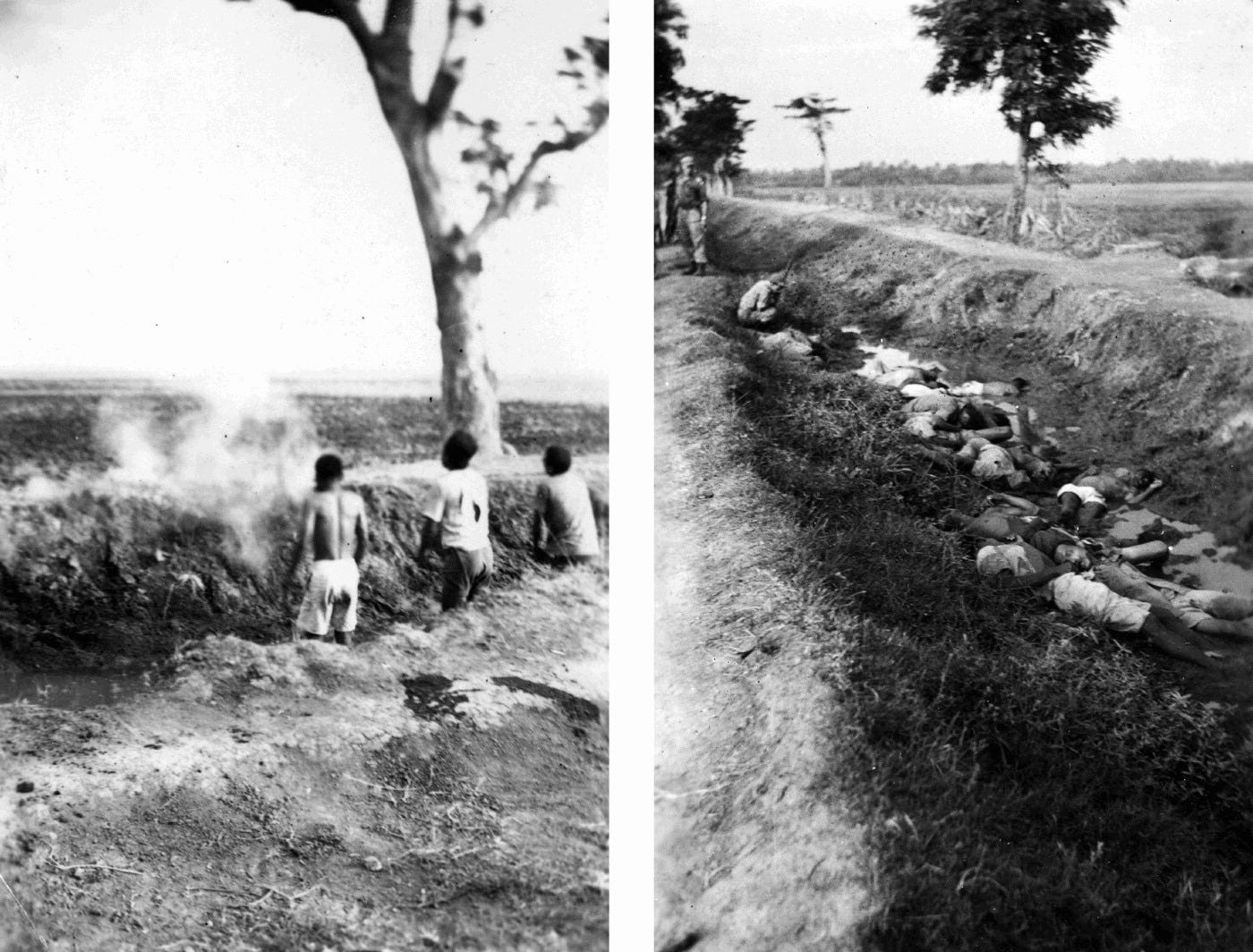
I didn’t know this history until 2012, when black and white photos of executions in Dutch-controlled Indonesia made international news. They were the first photos of atrocities in the colony to ever become public. An archivist in the Netherlands had found them in the trash. One photo showed three Indonesian men standing in a ditch, their shoulders hunched in terror. The picture was likely taken just before they were shot from behind. Another image showed two Dutch officers standing over a dozen brown bodies lying in a trench.
And from these trenches and bodies—tulips.
By 1642, these blood-soaked tulips blossomed not only in the Netherlands but also in the gardens of elite Dutch settlers in what is now Manhattan (then New Amsterdam).
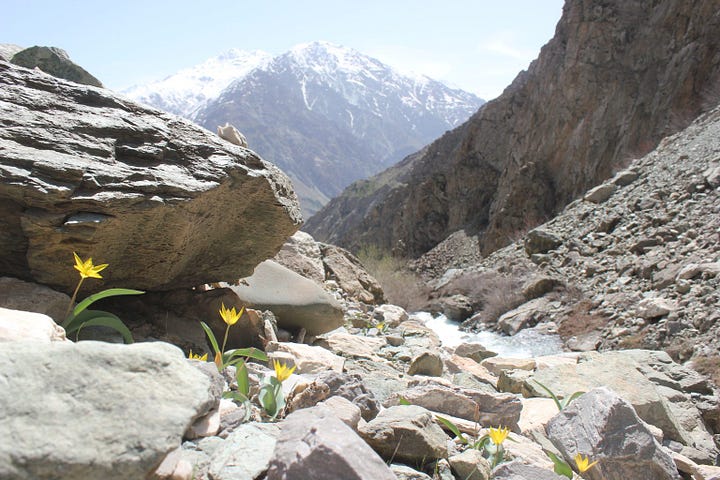
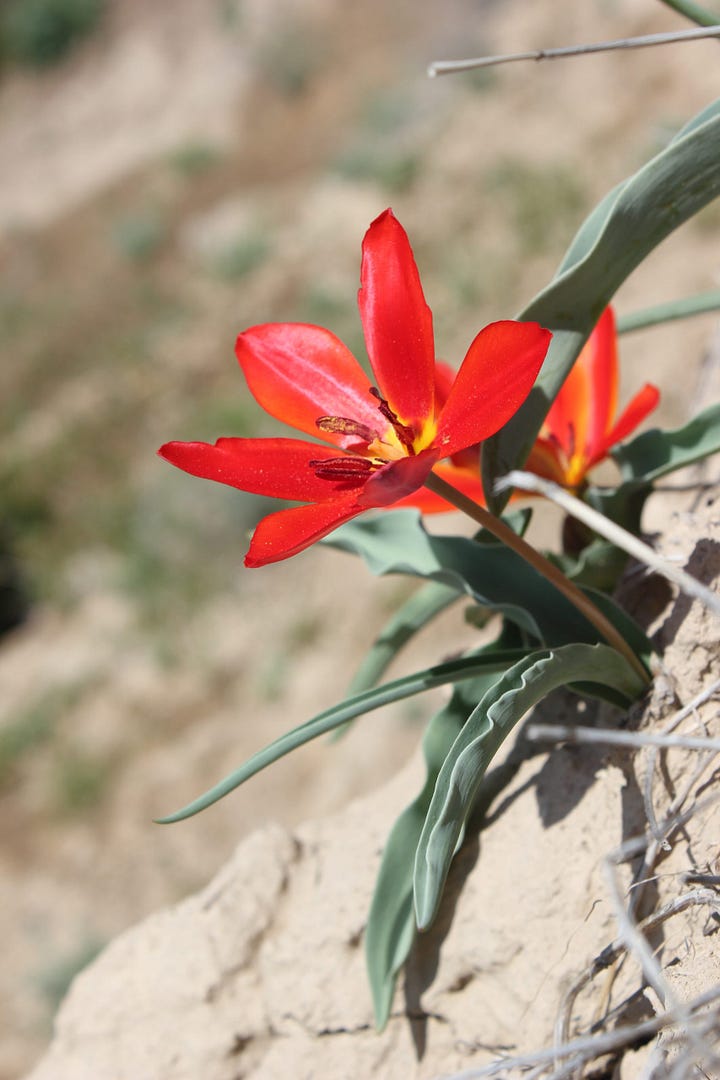
The tulips in my mother’s garden today—in most gardens around the world, for that matter—bear little resemblance to the wild tulips that still grow on barren hillsides in Turkey and Kyrgyzstan. The petals of these indigenous varieties are slimmer and more pointed, unfurling wide to form brilliant stars of color. These native varieties are also perennial, sprouting year after year with hardly any water and no fertilizer, altogether indifferent to human attention or regard. My mother’s tulips, on the other hand, depended on her, her faithful replanting of their bulbs every few years, her careful watering and generous feeding.
The garden as a whole was at once an oasis of tranquility and “a heap of disturbance,” as Jamaica Kincaid put it.2 The very idea of the garden—as opposed to the farm—was born only with the “discovery” of the New World, which enabled Europeans to extract food and resources from far away. Their land no longer had to be dedicated to growing crops and feeding cattle; now, it could also be a source of emotional and aesthetic fodder, brimming with ornamental flowers, elegant trees, and hypnotic ponds.
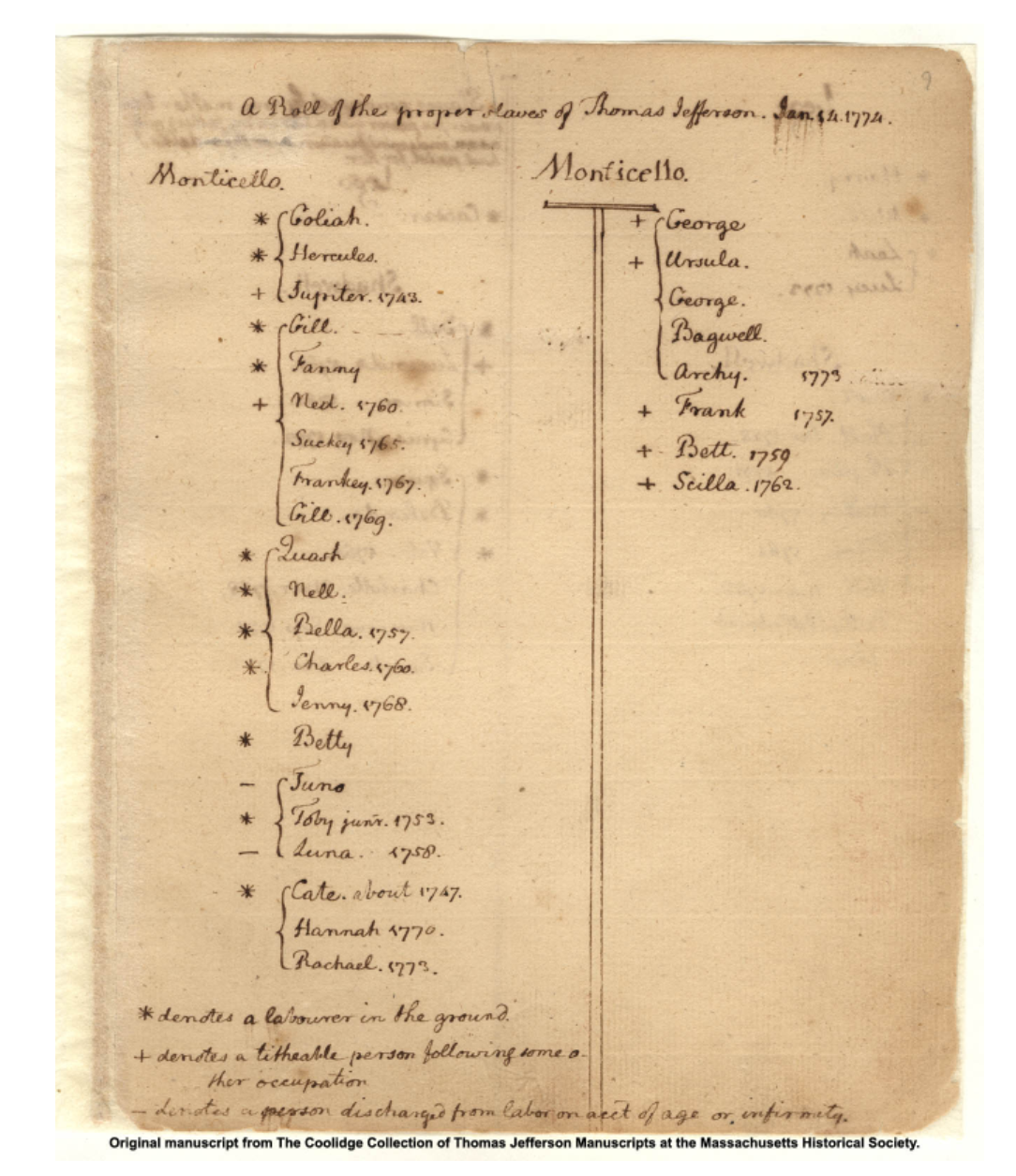
As Kincaid points out, nowhere is the distinction between “farm” and “garden” so clear as in Thomas Jefferson’s “Garden and Farm Books.” The entries in the Garden book are beautiful in their simplicity: “1766. Shadwell Mar. 30. Purple hyacinth begins to bloom.” “Apr. 13. Puckoon Bowers fallen.. “Apr. 16. a bluish colored, funnel-formed flower in lowgrounds in bloom.” In 1824, vegetables and fruits begin to appear too: peas, asparagus, corn, fruit trees. But it’s the “Farm” book that fills in how this bounty came to be: it lists Ursula, George, Jupiter, Davy, Minerva, Caesar, and Jamy; and the Hemingses, Beverly, Betty, Peter, John, and Sally. The enslaved sowed the peas, dug the trenches, planted the corn, collected the fruit, baked the cobblers. “On and on it goes,” writes Kincaid, “the garden emerging from the farm, the garden unable to exist without the farm, the garden kept apart from the farm, race and politics kept out of the garden.”3
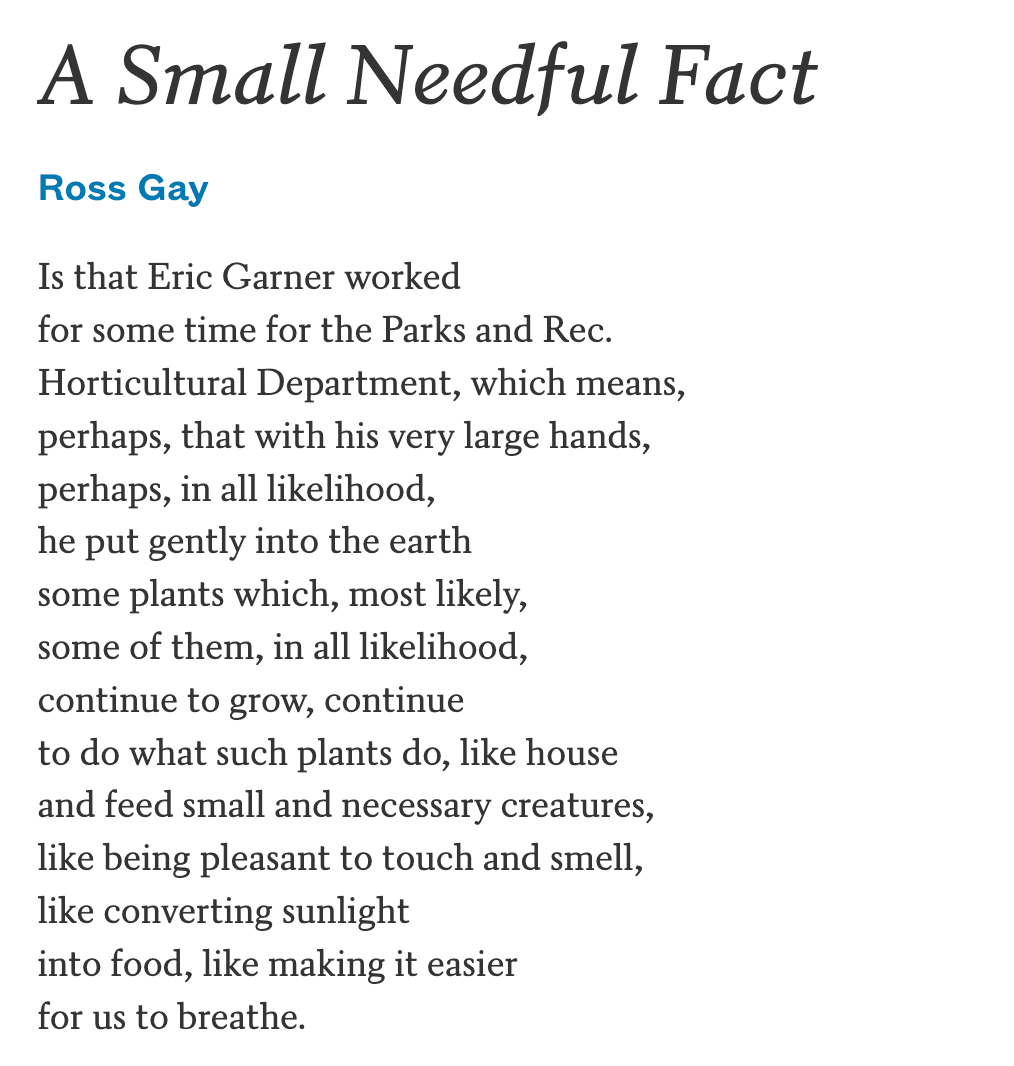
There are probably many ways to listen to plant life. Being in their presence, fully alive to their smells and sights and scars is one. That’s my mother’s way. Rifling through the archives for farm books and botanical catalogues is my way. And reading the poets who know our lives and histories to be entangled with foliage is another:
https://www.aljazeera.com/news/2025/10/25/israeli-settlers-attack-more-palestinians-as-olive-harvest-violence-surges
https://www.newyorker.com/magazine/2020/09/07/the-disturbances-of-the-garden
2001, Jan. 22. “Sowers and Reapers.” The New Yorker: 41-45.
Comments
Nothing yet. Say the first thing.
Sign in to join the conversation.