
Stranger’s Guide explores how politics, power and culture shape daily life across the globe. We believe that local writers, journalists and thinkers are best equipped to explain their political and cultural realities and we publish stories that ask us to listen to the complexities of the world.
Weekly Long Read is for everyone but it’s made possible by our paid subscribers. Thanks to those who support our work, and if you’re not yet a paid subscriber, today is the perfect day to join!
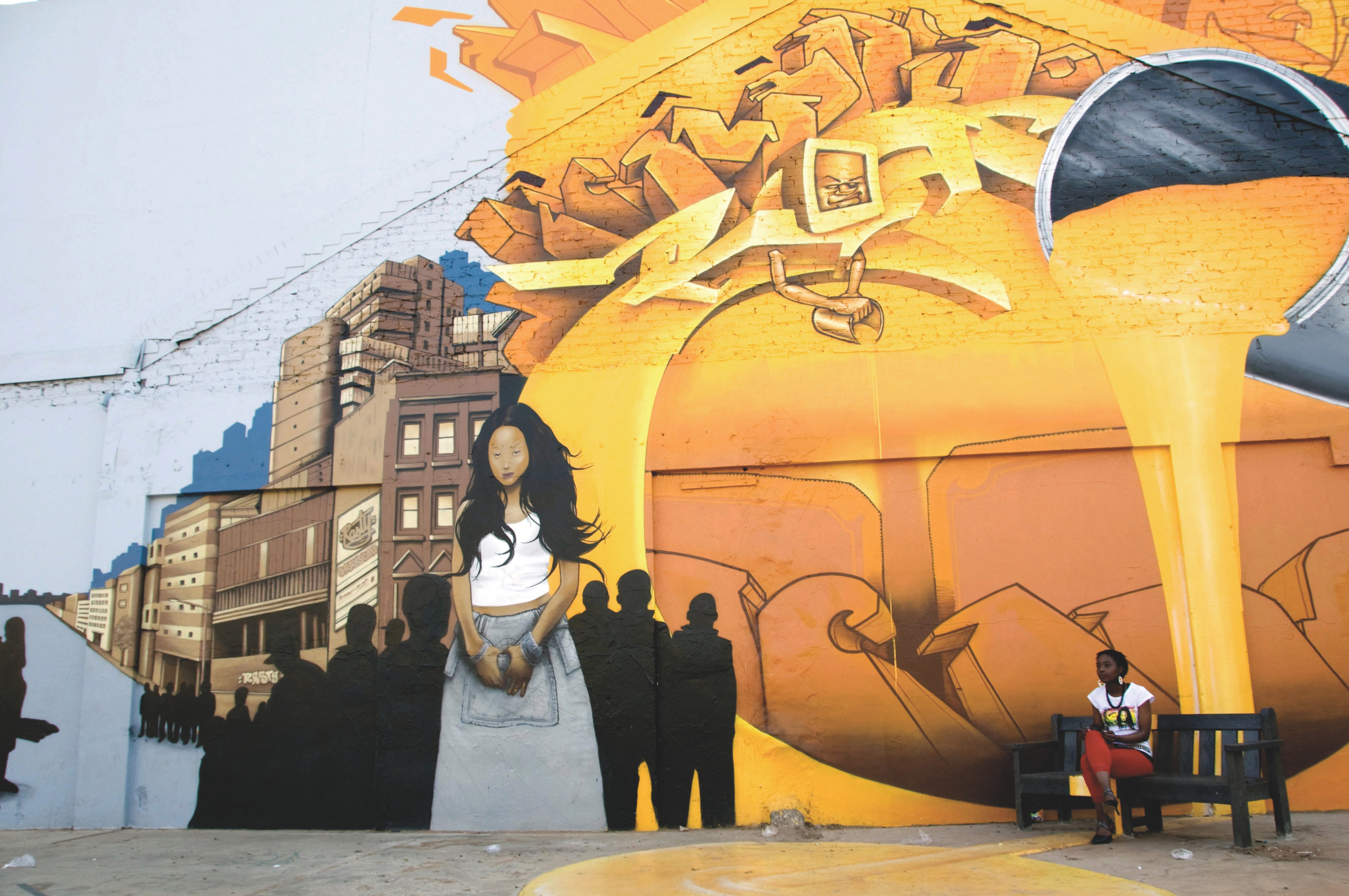
Yeoville is a neighborhood that sings to the heart. From the moment of my first sojourn in Johannesburg, I found myself drawn to the neighborhood’s vibrant, resonant streets. Beyond the front door of my student guest house right off of Raleigh/Rockey Street, I explored the neighborhood with gusto. I found a city so cosmopolitan, so alive: the Congolese barbers who gave the best haircuts, the café that served the fluffiest pastry, the bar with the best—and cheapest—drinks, the clubs with the most eclectic mixes. So much seemed possible at night in Yeoville; I wanted to be a part of that possibility.
And yet Johannesburg is often spoken of as a city of despair, marked by enormous inequality, horrific violence and the triumph of neoliberal capital. The journalist Adam Roberts suggests that popular nicknames for the city of Johannesburg point to important shifts in perspective. “Something, perhaps the lure of money, excitement, work, bright lights and opportunity, something continues to draw thousands of newcomers to the city every day. These people see hope in the city, not despair. They also have a different name for Joburg, one that sheds all connection with the old, white mining city and instead promotes its youthful, African, edgy reputation. They call the city Jozi.” Roberts argues that the nickname Jozi is not just a semantic change but a renaming that centers Black South Africans and reconfigures Johannesburg as a global African city. Anne-Maria Makhulu argues for the political significance of Johannesburg youth:
“This [the lack of Black people in central Cape Town] perhaps distinguishes Cape Town from other cities and, in particular, Johannesburg, where a growing Black middle class works and plays. But Johannesburg is also, cliché though it may be, genuinely an ‘African’ city in a way that Cape Town isn’t. Whatever people’s income brackets and employment status, one rarely gets the sense that Black residents of Johannesburg feel somehow unwelcome downtown or even in the swank Nelson Mandela Square in Sandton City Shopping Center. Johannesburg is abuzz with hip, young Black people of every class and income bracket.”
The city can be effectively divided into three major codependent areas: the northern suburbs, the inner city and the townships. Each of these three spaces has undergone significant changes post-apartheid.
The northern suburbs of Johannesburg are collectively the wealthiest part of the continent of Africa, and as such, they retain a colonialized, racialized hierarchy. Created in the 1960s out of what was once farmland, the northern suburbs were an illusive façade of late apartheid South Africa. Like much of urban South Africa, these suburbs were as much ideological as they were a result of shifting political economies. They represented the supposed efficacy of apartheid economic and social policy. They were made possible by the explosive growth of the post-World War II South African economy and the need to accommodate a growing, more prosperous white minority. Located north of the traditional city center and the original white, wealthy enclaves of Parktown and Westcliff, these growing suburban areas were significantly connected with “new money” elites who made their money not through the traditional route of the extractive economy, but through services, information and finance that were growing with the globalizing economy. Starting in the 1980s, these areas began to see extensive redevelopment as businesses and the outposts of global capital began to abandon the city center. As a result, the northern suburbs (Sandton in particular) became the site of residential and commercial wealth as a new downtown was created; this centered its development in Sandton City. Concurrently, upmarket shopping and leisure spaces that catered to the new and old bourgeoisie proliferated. Malls were key to these new leisure and commercial spaces because they restricted entrance to those who could afford to consume. Key to understanding these spaces is that Blacks, no matter how wealthy, were restricted from engaging with these areas as consumers or residents. They could only exist as laborers—in most cases, the domestic variety where men served as gardeners or manual laborers and women served as maids and cooks. This created a situation in which Black women (and, less often, men) resided in these suburban spaces behind the homes of the white families they toiled for, separated from their children and family members who resided either in townships or more often in the rural homelands. It was considered particularly liberal and enlightened to allow the family of the help to reside on the property. More liberal still were the few families who supported the children of their domestic workers by socializing them into middle-class schools, thus guaranteeing that these children of servants would be among the first to enter into the Black middle class post-apartheid. While the terms of inclusion were strictly unequal, what was clear was that even when the northern suburbs lacked Black residents, there were Black residents.
In the post-apartheid period, these areas have undergone change in their racial—if not their class—characteristics. The entrepreneur and urban developer Richard Maponya, with the help of white friends, was able to live in Sandton clandestinely, in violation of the Group Areas Act (the main policy that dominated urban spatial provision during apartheid). The act allocated central, well-developed areas to whites, while leaving peripheral, less developed areas to Blacks. By the early 1990s, with the easing of most apartheid laws, these areas began to experience various forms of racial integration. They became important signifiers of Black middle-class status, both for the amenities that they provided residents (consistent water and electricity; paved, wide roads; security, proximity to economic nodes and high-ranking schools) and for the sense that Black South Africans were reclaiming spaces of exclusion. Rosebank is perhaps one of the starkest examples of population shifts within middle-class suburbs in the area. While Rosebank is a small (0.82 km2), mixed-use neighborhood with significant commercial development centering on shopping and leisure activities, a population of more than 1,000 people live there, primarily in apartments and condos. During the 1990s, there were few Black people living in Rosebank. By the 2011 census, 49 percent of the population was Black. The effect of living in these spaces is both material and symbolic. Tweets by young, middle-class Black South Africans reveal this duality. Luyolo Mphithi tweeted this upon closing on his first place: “Bought my first property. Ugogo [grandmother] was stunned. Cause she wasn’t coming to this area as a domestic worker anymore.” The symbolic importance of his grandmother occupying the space as an invited guest of her grandson (rather than as a domestic worker) is powerful, particularly because many Black middle-class workers are unable to count on generational wealth for the down payments necessary to afford housing in these areas, must dedicate substantial percentages of their income toward supporting family members or are not well compensated enough by their companies to afford to purchase in these areas.
Nevertheless, the racial composition of many of the areas in Sandton has become increasingly Black, and according to the 2011 census, 35 percent of Sandton’s residents were Black. During the early 2000s, leisure spaces were demarcated by race and class. While a number of mixed-race venues developed in these northern suburbs, many of the spaces used music, door policies, cultural influencers (such as DJs and celebrities), dress codes and nascent social media platforms to frame their clientele more exclusively by race and class. While there is no actual demarcation of areas of Johannesburg as inner city, the term has come to be used to define the traditional central business district (CBD) and a number of suburbs that surround the CBD, particularly those suburbs that have shifted dramatically in both racial and class composition. These suburbs include Hillbrow, Berea and Yeoville, as well as the student-centered suburb of Braamfontein and the arts-oriented Newtown. The unique tensions of the simultaneous processes of investment and divestment that texture these neighborhoods are particularly important to the lives of residents and to the cultural landscape of post-apartheid South Africa. In the 1990s, as the Group Areas Act was enforced less, Black South Africans began to move to inner-city areas, particularly to the bohemian and countercultural spaces of Yeoville and Hillbrow. Both the apartment complexes of the CBD and the adjacent areas of Hillbrow and Yeoville underwent dramatic change as they increasingly became sites of Black migration into the city. This migration was threefold, merging Blacks from local townships, Blacks from elsewhere in the country (both other urban areas as well as rural areas) and African migrants from the rest of the continent. Around the same time that these areas were becoming increasingly Black and increasingly African, there was (white) divestment from these areas, in the form of commercial property as companies relocated to the northern suburbs (particularly Sandton) and residential disinvestment as buildings were abandoned.
Migrants to these inner-city neighborhoods might land in well-cared-for housing with full amenities, or they might occupy a building that had been abandoned by its white owners. As workers and homeowners passed through, regional demographics were in constant flux, full of make-do and possibility. Middle-class students and their Black bourgeois counterparts would eventually move on as their incomes and statuses rose. Many of the new migrants, from both South Africa and elsewhere, would also hope to eventually move out of these areas even if their choices were more constrained by their lack ofmobility in the post-apartheid economy. But the vibrancy and possibility of these neighborhoods remained as migrants came and went, hoping for a better life than whatever they had left behind could promise. This inner-city space represented a constantly shifting demographic intersection of community values and life trajectories that emerged in the post-apartheid transition. It was peopled with newly mobilized citizens circulating between employment in the northern suburbs, to social activities in the townships, to living in the CBD: a series of belongings that would have been impossible in the entrenched boundaries of apartheid. The inner city often negotiated the stark geographic contrast between the leafy northern suburbs and the townships/rural areas/other African nations. From the early 1990s to the early 2000s, these neighborhoods—contrary to the vision of the Group Areas Act that imagined these spaces as white-only zones—became almost exclusively Black. While initially a space where the Black lower middle class, students and Black new middle classes congregated to be closer to city amenities, the inner-city areas, particularly in abandoned buildings that had been taken over by residents, increasingly became a place for the working poor and their families, who could not afford other forms of accommodation.
Because acquiring abandoned postindustrial space was inexpensive, these inner-city areas often hosted the underground of South Africa’s music and art scene. You could never be sure the venue was legal as you slipped past security and listened to the latest poetry reading, deep house session, kwaito groove, hip-hop competition or jazz band, but it did not seem to make a difference. What was clear was that, unburdened from some of the costs associated with venues elsewhere in the city, the inner city had once again begun to nurture the creative underground of the city.
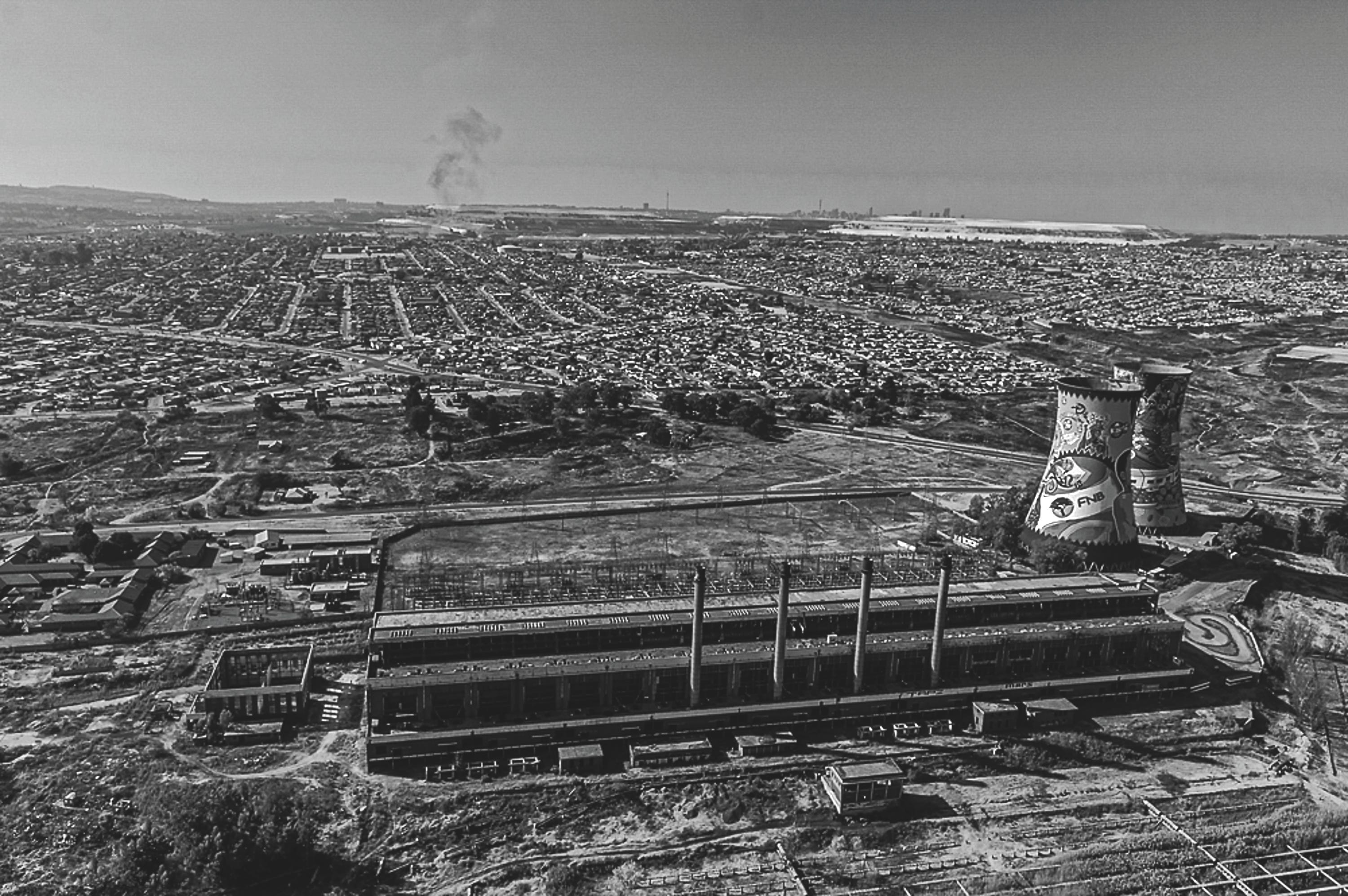
By the early 2000s, the city of Johannesburg (through the Johannesburg Development Agency) began to turn its attention back to the inner city, with a mind to redevelop these areas. Two processes were in motion. The first was the seizure and recapture of illegally occupied buildings with an eye toward redevelopment. Authorities perceived these spaces as harboring criminals, drug dealers, prostitute and purveyors of related urban ills. The second process was the designation of areas as redevelopment districts, with numerous real estate incentives typically available for white, wealthy investors to refurbish buildings and move into these areas as an alternative class of residents. These twin processes have probably been most prominent in the CBD areas of Jeppestown, Newtown and Braamfontein; Hillbrow and Yeoville have seen the mass evictions without the high measure of redevelopment. These complex and uneven forces of gentrification have had mixed results. In some areas, there have been concerted efforts to offer affordable housing, but that housing is typically still far more expensive than the previous inhabitants can afford. In Jeppestown, residents from the non-gentrified areas pass through these spaces in such a way that local businesses such as hair salons, corner stores and bars have shifted to accommodate them while high-end cafés, bars and restaurants have not. Club and party spaces, somewhere in between, have become an important way in which young Black South Africans would occupy and make space outside the confines of state- and corporate-mandated redevelopment. As Achille Mbembe writes, “The township both is and is not urban, it is proximate to the city while at its margins.” His observation frames understandings of township spaces: they are contradictory, capable of containing disparate truths and practices of quotidian life. In the post-apartheid moment, the government reconfigured city space so that the townships (mainly Alexandra and Soweto) have been integrated into greater Johannesburg. Yet the sense of being simultaneously of the city and distinctly apart from it remains. Significant upgrades in infrastructure and amenities have occurred throughout South Africa’s townships, yet the nature of privatized services has meant that poor families often struggle to access these amenities. Township space is highly variegated, ranging from the upper middle-class and wealthy enclaves of Diepkloof Extension to informal settlements nestled next to Freedom Square in Kliptown. The idea of the township landscape of poverty is complicated by the presence of Black middle-class areas and the capital they bring to bear.
Two seemingly disparate narratives concerning township space highlight the contradiction: on the one hand, a new infrastructure and an influx of previously unavailable amenities altered the landscapes of the townships, remaking them into livable spaces for the majority of their inhabitants (even as these spaces are increasingly privatized and commodified). On the other hand, it is clear that most township residents must find and secure income outside of the townships. Hence, township life requires a sense of perpetual motion. As Nsizwa Dlamini puts it, “The township is also a space in motion. People are perpetually moving and commuting. This sense of always being in motion is captured in the language of township residents, their dress code, and their music.”
From city center to township, Johannesburg is the sprawling home of parents and artists, natives and migrants, those striving and struggling alike. Their personal narratives combine to create the city’s story of dynamism and contradiction. Throngs still flock to the city for opportunity, some find instead despair. Like the whole of South Africa, Joburg is still finding her footing in the aftermath of a brutal past. But those who call her home are still looking for the gold.
XAVIER LIVERMON is an associate professor of Critical Race and Ethnic Studies at UC Santa Cruz. He is the author of Kwaito Bodies: Remastering Space & Subjectivity in Post-apartheid South Africa, from which his essay is adapted, and has published widely in journals including GLQ, Feminist Studies and Black Music Research Journal.
Comments
Nothing yet. Say the first thing.
Sign in to join the conversation.