
Stranger’s Guide explores how politics, power and culture shape daily life across the globe. We believe that local writers, journalists and thinkers are best equipped to explain their political and cultural realities and we publish stories that ask us to listen to the complexities of the world.
Weekly Long Read is for everyone but it’s made possible by our paid subscribers. Thanks to those who support our work, and if you’re not yet a paid subscriber, today is the perfect day to join!
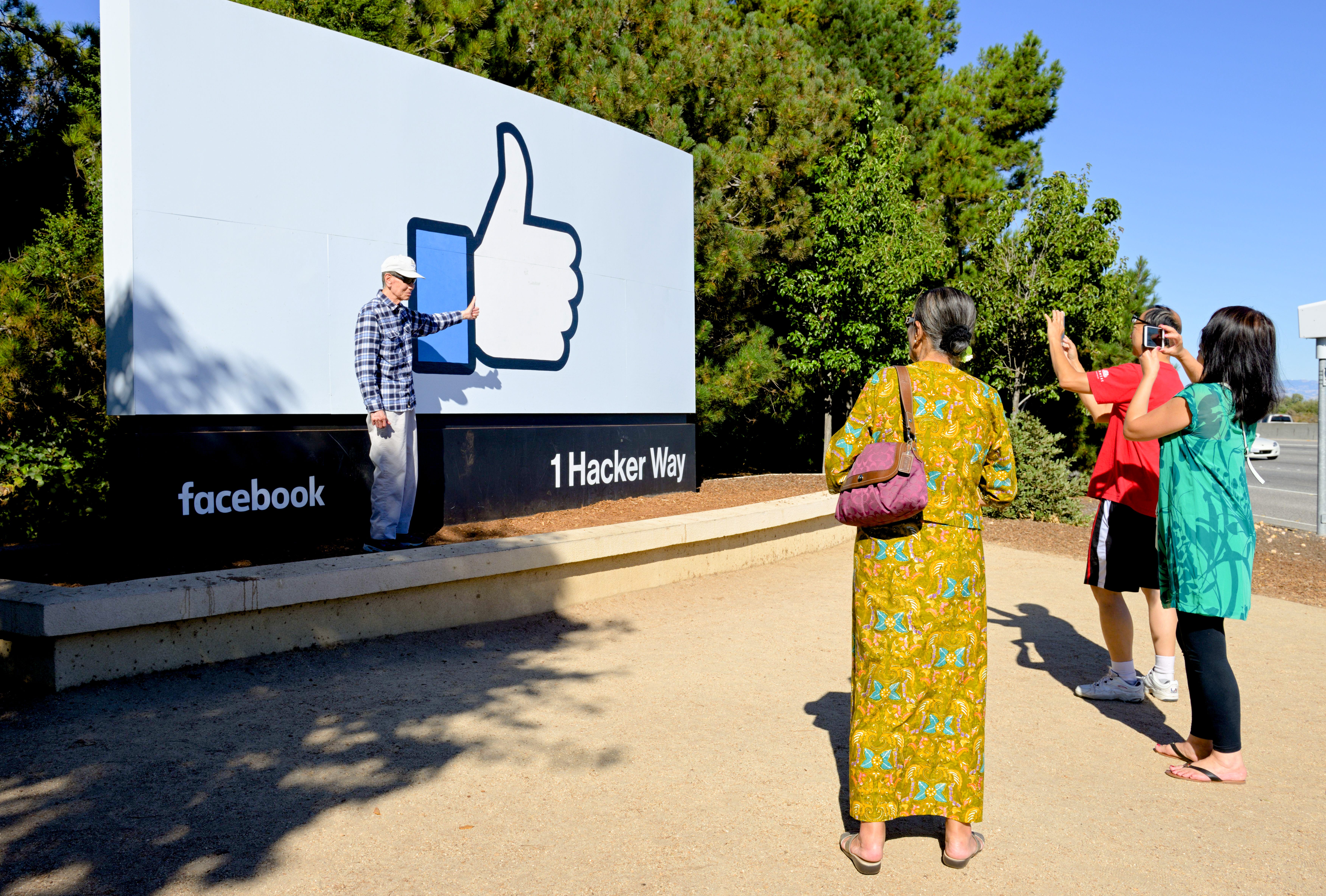
You already live in Silicon Valley, or maybe Silicon Valley lives in you. You’ve visited a thousand times, likely at least a dozen times today. One click to order your package. Tap twice to reply to a message. Scrolling your social media feeds? When you’re online, you’re here.
We already know the climate in Silicon Valley is unparalleled. The air is full of the heady scent of disruption, heavy with the ever-present belief that something better comes from upending that which came before. (Don’t breathe too deeply; there’s also a lot of smoke.) You’ll fit right in so long as you remember that convenience is good, friction is bad and growth is valued above all.
By growth, we don’t mean little green shoots poking through the dirt—how pedestrian!—but rather the size of your business: more downloads, more users, more data. And more growth means a higher valuation, which means the promise of more funding from those willing to gamble on you—a cycle that makes sense when you realize you are not too far from the birthplace of the California Gold Rush. A healthy dose of optimism is what makes all of this so intoxicating: Silicon Valley insists that you always have one foot on the edge of the future. The other is on the precipice of an apocalypse brought on by earthquake, wildfire or drought.
It isn’t the only place that occupies our imagination in this way. Hollywood, its sister to the south, is another global center whose culture casts a shadow so long that we all bask in its shade. Hollywood excels in telling us stories that became the building blocks of the American Dream: The good guys always win. Hard work reaps glorious rewards. You make your own success as an individual. The Hollywood dream factory constructed a vision of the West exported around the world, an image of the good life that lured so many immigrants to participate in the American experiment. Of course, Hollywood often conveniently deflects from those who remain tired, poor and yearning to breathe free. But this type of imagined place, and all it stands for, does exactly what it’s meant to do. It creates a map for how we tell stories about our reality. It tells us what is possible and what is meaningful. We know what that looks like for Hollywood: a neat and redemptive ending. So what does Silicon Valley give us?
How do we navigate the world when exposed repeatedly to slogans like “Move fast and break things” (Facebook) or observations from company founders like “To connect the world is to free the world” (Eric Schmidt of Google) or “Fear is the disease, hustle is the antidote” (Travis Kalanick of Uber)? Facebook’s slogan surely appeals to those who prefer the fiction of a blank slate to the reality of a messy history, or who have some interest in rejecting lessons learned the hard way. With Google’s approach, we erase what happens when we connect wolves to lambs. But this isn’t a one-off mistake. This is the optimization of profits standing in for values. Stanford philosopher Rob Reich explains how this overruns the values that a democratic society might otherwise embrace: “The quest to make something more efficient is not an inherently good thing. Everything depends on the goal or end result. [S]uddenly boosting screen time, increasing click-through rates on ads, promoting purchases of an algorithmically recommended item, increasing predictive accuracy in facial recognition, or maximizing profit leads to other important values being lost.” In practice, this can mean efficiency over due process, the strong over those in need of protection. When these platforms become unavoidable, these values become the architecture of our lives.
Real-world consequences result. For example, law professor Kate Klonick meticulously documents the early days of content moderation at social media platforms, illustrating how American free speech norms influenced company content-moderation policy. At Twitter, she observes, “the company established an early policy not to police user content, except in certain circumstances, and rigorously defended that right. Adherence to this ethos led to Twitter’s early reputation among social media platforms as ‘the free speech wing of the free speech party.’”
A hands-off approach creates space for all kinds of information to flourish, sometimes helpful and sometimes misinformed. Conveniently, a hands-off approach pays off: more content means more opportunities for engagement. Facebook whistleblower Frances Haugen explained to the US Senate, “the dangers of engagement-based ranking are that Facebook knows that content that elicits an extreme reaction from you is more likely to get a click, a comment or reshare. They prioritize content in your feed so that you will give little hits of dopamine to your friends, so they will create more content.” More engagement means more time on the platform, which means more opportunities to sell your attention to advertisers and profit. This pathway explains why radicalization thrives on these platforms, whether in the form of vaccine resistors or January 6 rioters, and is worth interrogating as we question whether the reality-shaping Silicon Valley architecture truly serves our democracy. Equally important is understanding how embedded values can obscure reality, not just amplify it. The Hollywood myth obscured the backstage and the supporting cast as crucial to the success of any performance. And the backstage, the subterranean level of Silicon Valley, is something that many of us have ignored, averting our eyes and scurrying to the other side of the street to avoid seeing the real people suffering real harm. Think of the gig economy drivers sleeping in Safeway parking lots, or the hospitals treating drivers who have had to postpone bathroom breaks lest the algorithm punish them, or the driver cheerfully promoted by Lyft PR for picking up a customer while en route to the hospital, in labor. That may be the true meaning of Uber’s “hustle is the antidote,” but it certainly does not escape the disease of fear and precarity.
It is so easy to overlook this cost when Silicon Valley convenience provides more food choice than an emperor would’ve had centuries ago and near-instantaneous access to personal drivers. For an artificially low price, we can pretend that we are at the top of the American “meritocracy.” How does convenience make it so easy to erase the labor, the effort and the toil of those who work to provide it? Beyond the staggering individual human cost, buying into the Silicon Valley mindset also presents structural challenges. How are the values of disruption and growth-at-all-costs giving us amnesia about what is truly scarce: time, our attention and the environment?
This is where our ever-powerful imagination can build toward a new architecture for Silicon Valley. Artist Ben Grosser, in his latest installation called Software for Less, reimagines social media platforms to optimize for a better future. One of his exhibits is called “Minus,” a social media network where each user can only ever make 100 posts in their life. Once you have posted 100 times, there is no going back. Imagine how such an architecture might have you embrace what is cherished and priceless, or how it might disincentivize fake-news content farms. What would Silicon Valley look like if we encouraged slowness and scarcity instead of growth? Or deletion instead of endless data capture?
Fascinatingly, California is leading the country in experiments in regulatory imagination: recent state privacy laws have provided residents a limited “right to be forgotten,” allowing for personal information to be deleted from a business database. We are in a moment of “techlash,” a backlash against the massive power tech companies wield over our lives. Whether it’s whistleblowers, Congressional hearings, blockbuster lawsuits, strikes or movements to quit platforms, this moment of imagination is transforming into real change.
To remake the architecture of Silicon Valley, we will have to focus on the values embedded in the very ground we walk on, excavating the hidden bones and making sense of how we got here. Once we do so, we can reorient toward a place built for justice and liberation. That’s not a place I’ve been, but in California of all places, our imagination will lead us there.
COURTNEY DESIREE MORRIS is a visual artist and assistant professor of Gender and Women’s Studies at the University of California, Berkeley. Her forthcoming book is, To Defend This Sunrise: Black Women’s Activism and the Authoritarian Turn in Nicaragua.
Comments
Nothing yet. Say the first thing.
Sign in to join the conversation.