
Quandamooka Country is home to the Goenpul, Noonuccal, and Ngugi peoples, who have lived on this land for over 60,000 years. Their relationship with Budjong Djara (Mother Earth) is one of respect, balance, and sustainability.
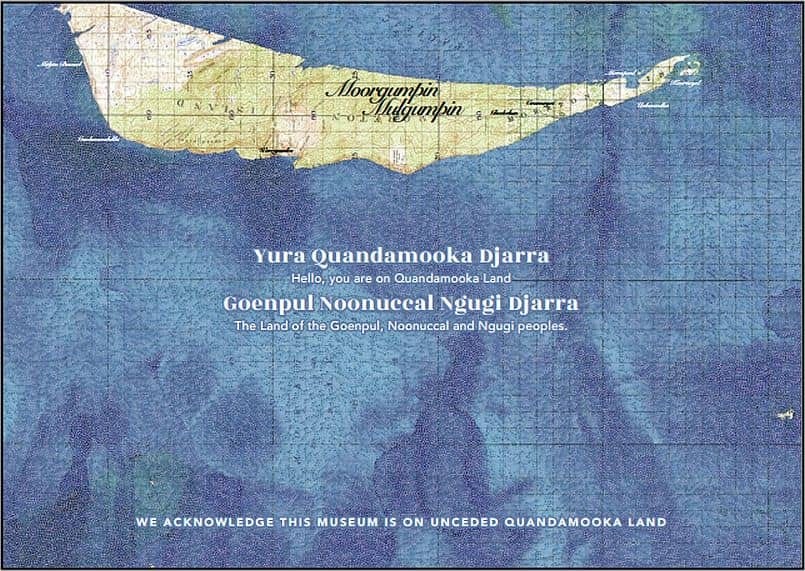
The Quandamooka People have long practised sustainable living, guided by signs from the natural environment. Their hunting, gathering, and fire management practices ensured the land remained pristine for generations. Budjong Djara provided abundant food, medicine, and resources, from seafood like kinyingarra (oysters) and yungan (dugong) to bush foods like midyims and yalabin (native raspberry). The lore of the Quandamooka People emphasises balance and interconnectedness, recognising that humans are equal to the plants and animals around them.
The museum’s “Ngali Dullan – We Remain” new permanent exhibition seeks to immerse visitors in a sense of the endurance of Quandamooka people since time immemorial. And to help to view the place and the histories of Minjerribah/Tjerrangerri through a non-colonial lens.
Ngali Dullan was facilitated by Megan Cope. The immersive installation uses maps and toponymy to depict Quandamooka-dja and Yarabin-dja (Moreton Bay Land and Sea Country), challenging colonial narratives and highlighting the effects of rising sea levels. Her work reimagines military maps, overlaying them with significant Quandamooka place names and stories, emphasising the importance of cultural identity and sustainability.
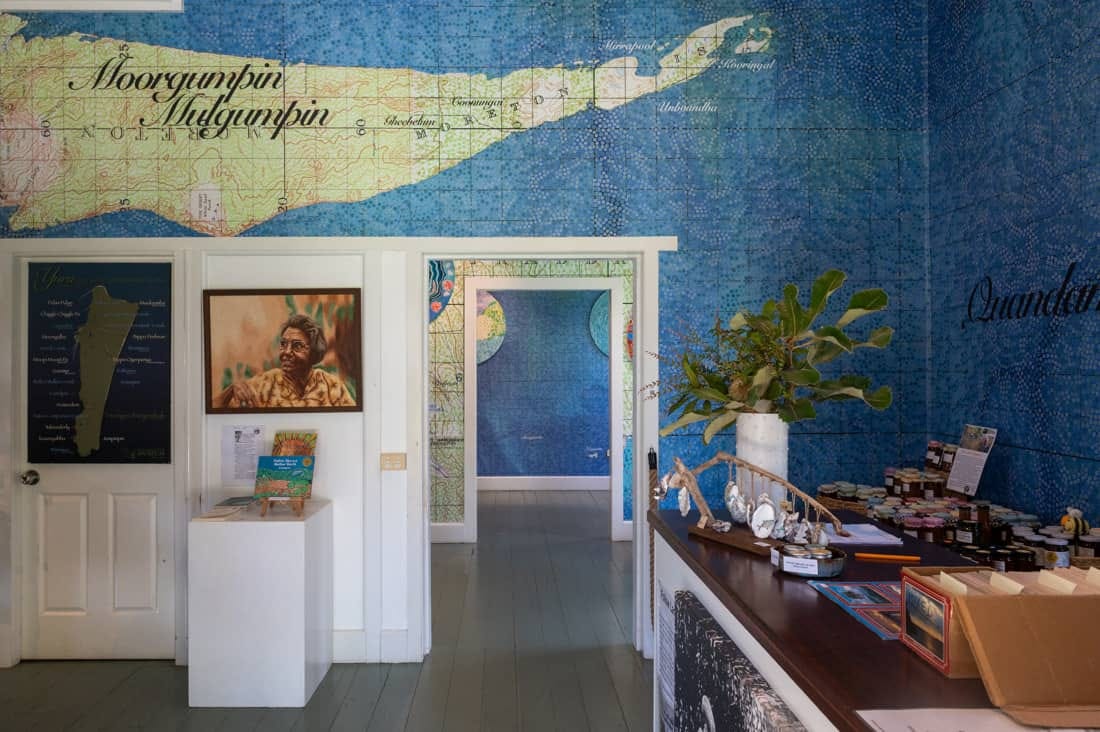
Six artists contributed original works to Ngali Dullan.
Nicky Karklis Jones, whose work reflects the active cultural practices of the Ngugi Clan, showcases the interconnectedness of people, land, and sea.
Nathaniel Chapman, explores the shared history and landscape of Quandamooka Country through vibrant visual narratives.
Belinda Close, who celebrates the special bond between the Quandamooka people and buwangan (dolphins) in her depictions of traditional fishing practices.
Elisa Jane Carmichael, who draws inspiration from the natural beauty of Mulgumpin and Minjerribah, weaves ancestral knowledge into her art.
Xoë Mazzoni, who combines contemporary techniques with timeless wisdom to bring First Nations stories to life.
The museum’s “Walking Together” program reflects its commitment to inclusivity and the recognition of unceded Quandamooka lands. By integrating Jandai/English naming and embedding First Nations protocols into governance, the museum fosters a shared understanding of the complex history of Minjerribah/Tjerrangerri. The program aims to guide visitors in viewing Quandamooka Country through a non-colonial lens, emphasising the resilience and continuity of its people and culture.
The ‘Walking Together’ program developed from the mid-2010s. It was and is a gradual process of learning how to be genuinely inclusive and to properly apply the principle of prior and informed consent. Ngali Dullan is the large, first, step in changing displays and content and offers an immersion into more than 60,000 years of society and culture. The idea is to give visitors a sense and understanding of the endurance of Quandamooka Country and people since time immemorial. And to provide opportunity for visitors to view the place, the museum and the histories of Minjerribah/Tjerrangerri through a non-colonial lens.
All decisions about content of Ngali Dullan were made by the Quandamooka members of the museum committee. The exhibition is a statement that the Quandamooka people, are here and always have been. ‘We remain’: our culture, our stories and our strength remains.
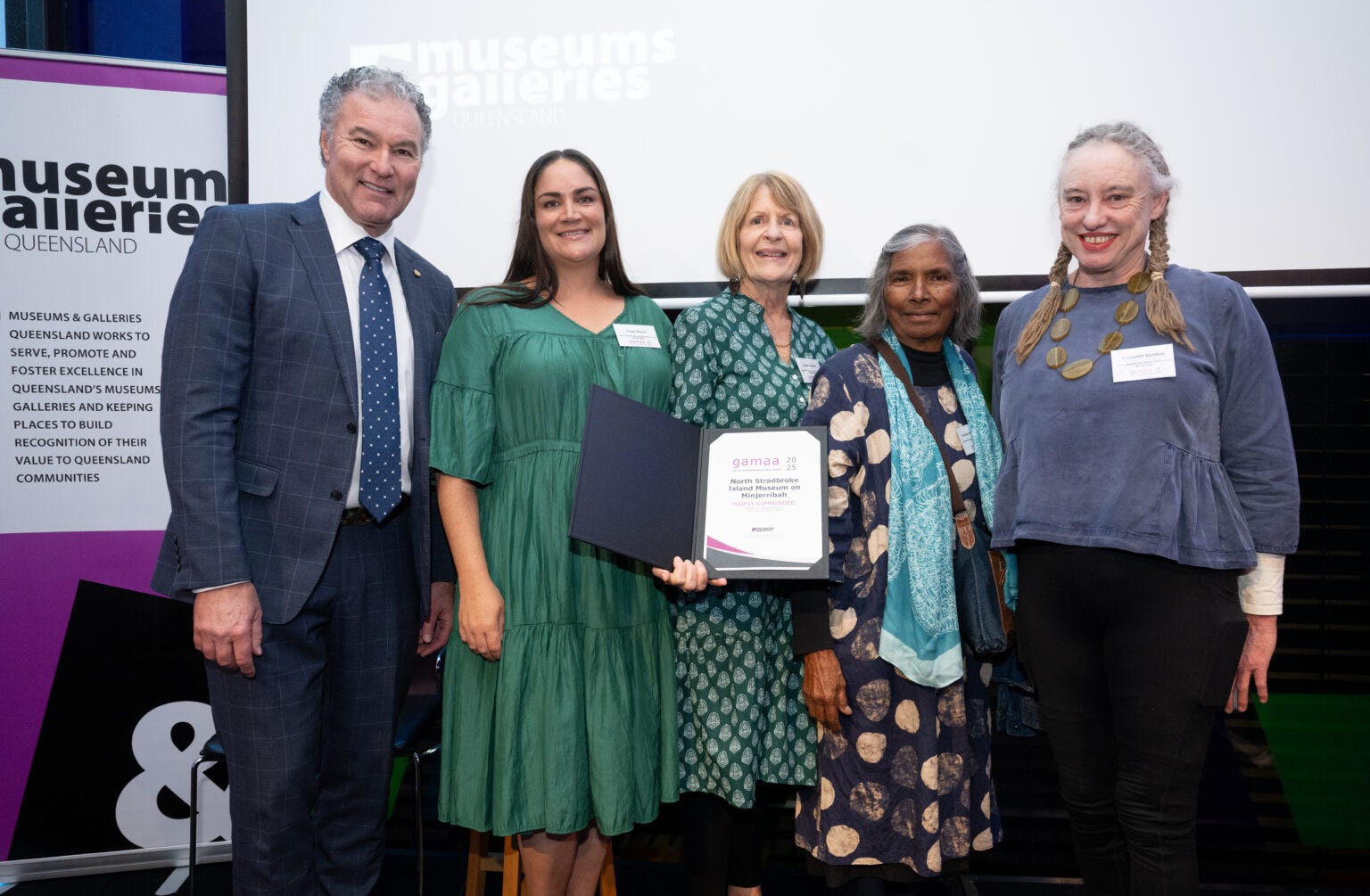
The 2025 Gallery and Museum Achievement Awards recognised Ngali Dullan with a highly commended award. See media statement here. This award honours the legacy of the Quandamooka people. It emphasises the importance of sustainability, balance, and the interconnectedness of all living things.
Acknowledgments
This article acknowledges the contributions of Quandamooka artists, Elders, and community members, as well as the support of grants and donors that make the museum’s work possible. Special thanks to Megan Cope, Belinda Close, Martin Karklis, Elisa Jane Carmichael, Nicky Karklis Jones, Nathaniel Chapman, and Xoë Mazzoni for their artistic contributions. And to Tegan Burns for managing the entire project.
References North Stradbroke Island Museum on Minjerribah. (2024). Ngali Dullan – We Remain Exhibition Booklet.
Comments
Nothing yet. Say the first thing.
Sign in to join the conversation.