
Welcome to Story Deep Dive!
In this final episode on Broken Harbor by Catherine Cowles, Dana and Rachel share their editor’s takeaways: the braid, the four-act structure, conflict buckets, suspense that never sacrifices the romance, and interpersonal conflict between characters who like each other. They also reveal next month’s crossover pick.
Whether you’re a romance writer, a cozy mystery author, or a story strategist, you’ll gain insight on tracking your threads, using tropes as an engine, and learning from books that aren’t your own picks.
You can also watch the video version of this podcast on YouTube!
The hosts announce next month’s crossover pick, Louisiana Longshot by Jana DeLeon, a cozy mystery with a twist: the protagonist is a CIA agent, not the usual amateur-sleuth baker. Dana explains why cozies are a strong study in character development across a long-running series this one runs 30 books and is still going, and Rachel flags it as their first fully clean, no-steam pick in two years.
Dana reiterates the month’s refrain and names her takeaways: the braid internal, external, romantic, tropes as engine, and suspense without sacrificing romance. Rachel folds in external threads used to real effect, specificity for story and characters, and the importance of interpersonal conflict.
Dana teaches the four-act structure each act roughly 25 percent as a more natural pacing tool than three-act, and maps the book onto it. She ties it to the braid and gives a sharp editor’s caveat: when two braid elements integrate so well they can’t be severed, it reads beautifully but studies poorly, because the beat is doing double duty. Broken Harbor keeps its threads trackable, which is what makes it teachable.
Rachel notes Sutton builds a life even when Cope isn’t on the page, which keeps her from being a damsel. She introduces conflict buckets: categories of antagonism you can abstract from your story to verify your act-one setups pay off and to see what happens when two buckets hit at once. Dana adds the bonus: mapping threads makes plot holes blaring, so it doubles as an editing tool.
Writers lean into suspense because it’s more tangible than plotting a feeling, but it usually railroads the romance. Cowles keeps clean lines, the romance progresses while the suspense stays as present white noise, then both converge in one relevant climax. Rachel ties it to expectations: because the prologue signaled the destination, the twist is satisfying, not out of left field.
Dana revisits the trope list, single mom, hockey player, found family, small town, forced proximity, and shows each affecting trajectory rather than dangling as a label. Rachel connects it to specificity: tropes feel arbitrary when jammed in for popularity, and the fix is to ask why this matters to the story and how it’s part of the fabric of the characters.
Dana reframes the trope-skeptic’s worry with a cooking metaphor: same ingredients, totally different dish. Your lens and your characters’ specific wounds are what make a familiar trope uniquely yours. You know better now, so you do better, and leveling up is the whole point of studying a book like this.
Rachel’s closing craft point: conflict between characters who care is a gift, harder and more meaningful than conflict with the snooty side character. It lets them confront flaws and shows change over time so growth doesn’t feel overnight. Dana adds it happens in a safe space, where someone you care about can say what others can’t.
Both hosts close on the show’s philosophy: you can learn enormous amounts from books outside your genre. See it, don’t unsee it, generalize the move, then notice why it hit you, and solve the new problem, how do I do this in a way only I can?
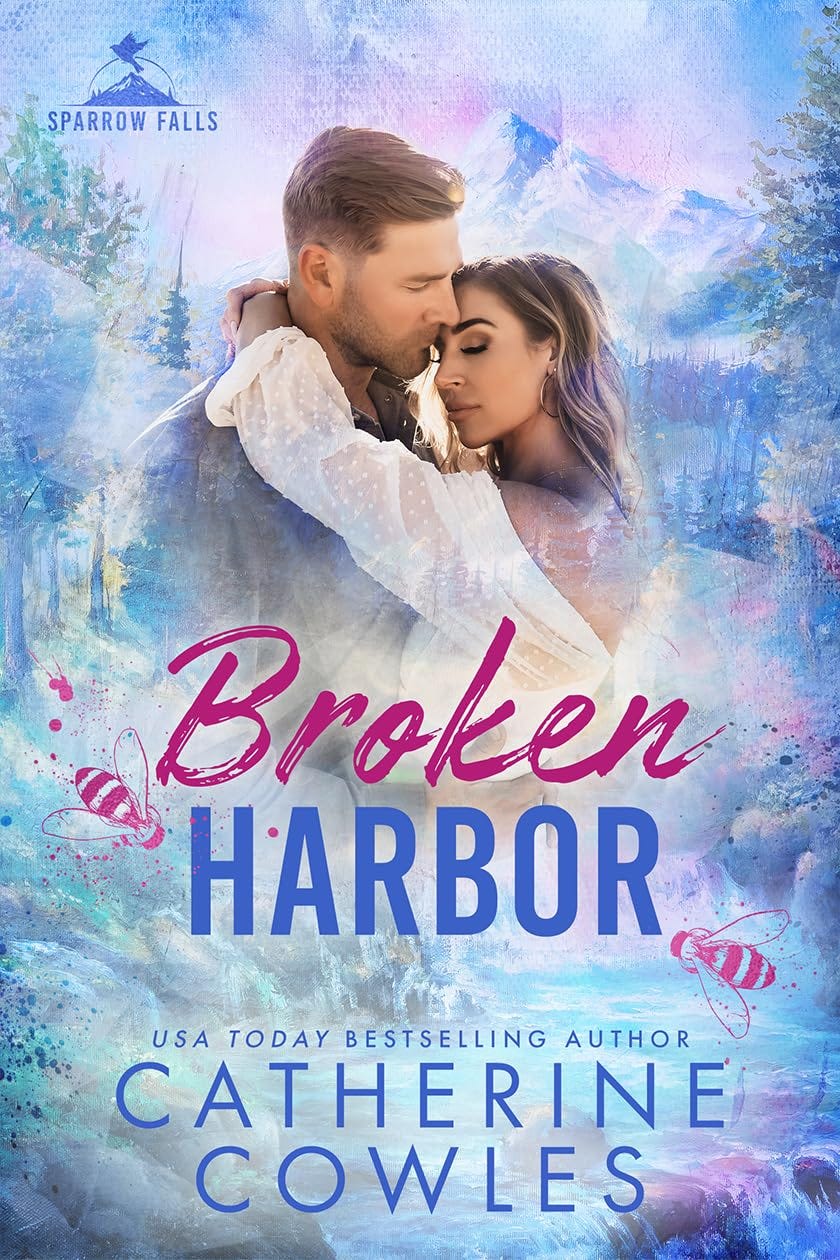
Since the moment our lives fell apart, the only thing that mattered was making a good life for my son. A life where he was happy and safe. I just never expected to find that safety with a hockey player known for his brutal dominance on the ice and his recklessness off it.
But Cope Colson is so much more.
The gentle way he makes sure we’re okay. The playful care he shows my son. The way he truly sees me.
When my life comes apart yet again, it’s Cope picking up the pieces. Now, we’re living in his house, eating his incredible, chef-worthy meals, and it’s not just my son who’s falling.
It’s me.
Because when Cope touches me, I lose all sense. I’m no longer thinking about staying safe, I’m thinking about how my skin ignites with every glance, how I come undone with the barest brush of his fingertips, and when we give into temptation…I’m lost.
But Cope has secrets and so do I. And when the forces from our pasts emerge from the shadows, there’s nothing they won’t do to end our happiness once and for all…
Broken Harbor by Catherine Cowles is available in several formats. It's also widely available in libraries and online retailers. Details on her website.
Next month, Dana and Rachel kick off Louisiana Longshot by Jana DeLeon, a cozy mystery crossover pick and their first fully clean read, with a CIA-agent protagonist and a 30-book series to learn from.
Like what you heard? Subscribe, leave a review, and share your thoughts at storydeepdive.com. Follow Story Deep Dive on YouTube and Substack, and connect with Dana and Rachel to keep the discussion going!
Comments
Nothing yet. Say the first thing.
Sign in to join the conversation.