
Welcome to Story Deep Dive!
In this episode, Dana and Rachel dig into the plot of Broken Harbor by Catherine Cowles: the inciting wound in the prologue, how the book escalates to life-or-death stakes using regular people, and why a romance still needs a breakup scene.
Whether you’re a romance writer, a suspense author, or a story strategist, you’ll gain insight on when a prologue earns its place, how to keep suspense from swallowing your love story, and how to use interpersonal conflict to develop character.
You can also watch the video version of this podcast on YouTube!
Dana gets honest about a yap challenge and why talking on camera drains her even though she loves to talk. She names the real friction: platforms want one idea in 30 seconds, and books are so interwoven that a single topic dovetails into fifty others. Rachel mirrors it from the author side and both land on the same fix: get your reps in and keep tweaking until a sustainable rhythm clicks.
Dana lays out the opening: Sutton and Luca living a normal life until the prologue goes south fast, the moment that becomes the wound the book unpacks. Rachel names why chapter one works: because we had the prologue, Sutton’s specific behavior, checking the parking lot, strict rules with Luca, tells us the threat is still operating a year later without the writer being heavy-handed.
Rachel gives two clean heuristics for when a prologue earns its place: opening in a POV that isn’t your protagonist she cites Mistborn, and establishing tone and stakes up front the injured, bleeding open of John Wick buys the audience’s patience for the sad first 25 percent. Dana’s version: “don’t be lazy.” Cut a prologue that lets you drag your feet; crush one that seeds something the reader needs to carry.
Dana calls suspense “a ballsy, elbowy person taking up too much room on the airplane,” because it can overpower a romance fast. Cowles keeps the fire kindled with phone calls and small pings while the romance builds. Rachel adds that the external threat feeds Sutton’s internal arc, and Dana’s rain-crawling-across-the-tin-roofs image captures the lingering dread the reader shares with Sutton.
Because Sutton has a bakery, a son, and an ex, every scene has something to do beyond being romantic. Rachel notes this fixes a problem from past picks where lovers just wander and reflect when apart. The threads create different sets, the rink, the bakery, Cope’s house, that reveal different facets of the characters. Dana warns against subplot-for-subplot’s-sake: think in connections with real beginnings, middles, and ends.
Rachel hands Dana the soapbox and Dana takes it: every romance needs a breakup scene, because “a love not tested cannot be trusted.” Broken Harbor runs a soft, emotional version. The deeper rule: characters can’t change for the love interest, they have to heal individually and come back whole, or you’ve written toxic love instead of real love.
Rachel frames conflict with the love interest as putting a character through their paces, and tells the $15-an-hour story on herself: undercharging until Dana named the blind spot she couldn’t see. Good developmental conflict does the same for characters and lets readers watch them wrestle with something familiar, with the love as the catalyst for healing.
Dana closes on tropes: Cowles didn’t just make Cope a hockey player, she made hockey bump directly against Sutton’s wound, so the trope carries stakes and consequence. Found family works the same way. Her stance for trope-skeptics: give readers what they want, then anchor it so it changes how the characters feel, decide, and move.
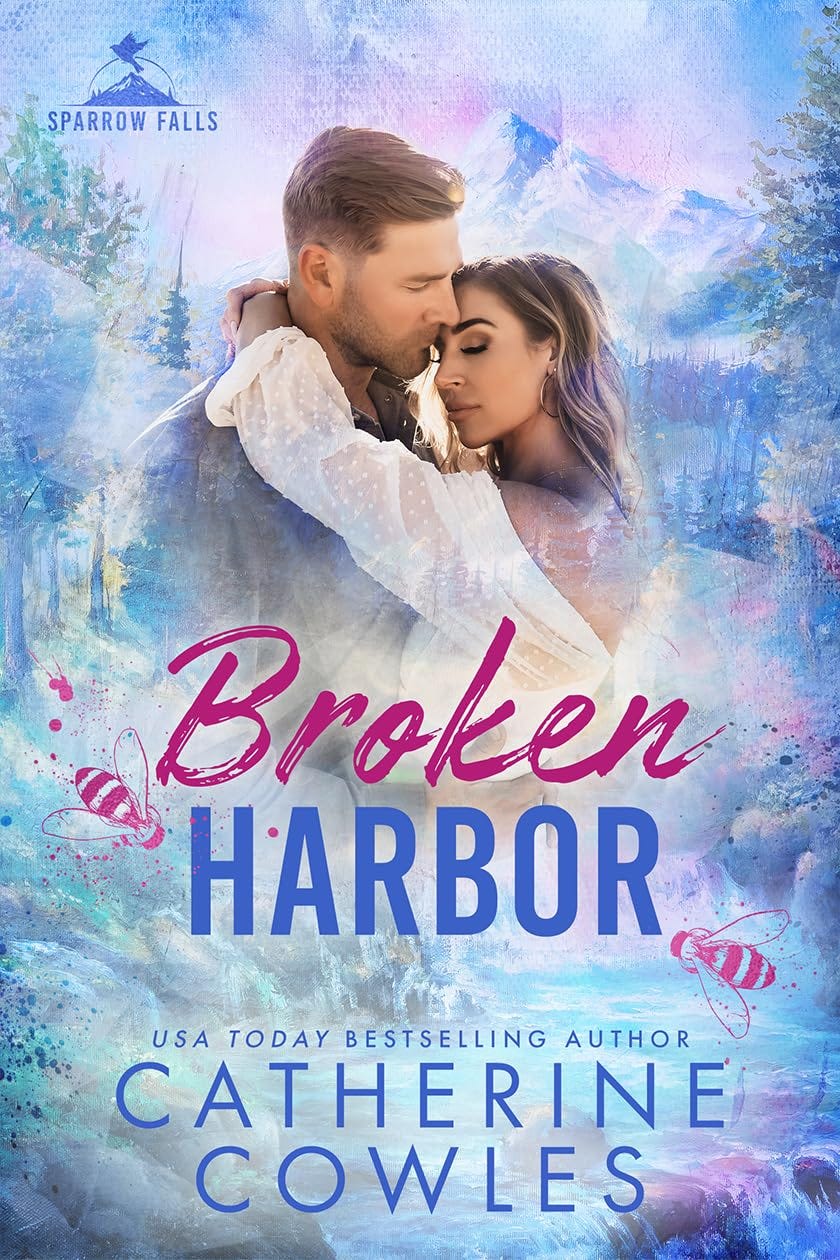
Since the moment our lives fell apart, the only thing that mattered was making a good life for my son. A life where he was happy and safe. I just never expected to find that safety with a hockey player known for his brutal dominance on the ice and his recklessness off it.
But Cope Colson is so much more.
The gentle way he makes sure we’re okay. The playful care he shows my son. The way he truly sees me.
When my life comes apart yet again, it’s Cope picking up the pieces. Now, we’re living in his house, eating his incredible, chef-worthy meals, and it’s not just my son who’s falling.
It’s me.
Because when Cope touches me, I lose all sense. I’m no longer thinking about staying safe, I’m thinking about how my skin ignites with every glance, how I come undone with the barest brush of his fingertips, and when we give into temptation…I’m lost.
But Cope has secrets and so do I. And when the forces from our pasts emerge from the shadows, there’s nothing they won’t do to end our happiness once and for all…
Broken Harbor by Catherine Cowles is available in several formats. It's also widely available in libraries and online retailers. Details on her website.
In the next episode, Dana and Rachel discuss the characters in Broken Harbor: Sutton and Cope as a fresh take on opposites, Luca as catalyst, positive family dynamics, and how to write flashbacks and memories that actually mean something.
Like what you heard? Subscribe, leave a review, and share your thoughts at storydeepdive.com. Follow Story Deep Dive on YouTube and Substack, and connect with Dana and Rachel to keep the discussion going!
Comments
Nothing yet. Say the first thing.
Sign in to join the conversation.