
It’s easy to feel as if everyone needs my attention right now and that I must give it to them right now. But what would happen if I didn’t?
I’m a mom, a daughter, and a wife. Mostly in that order.
When my boys were little, I couldn’t imagine a life where they were not front and center. It’s a good thing, too, because that never really happened. They are, and always will be, at the center of my life. Children don’t magically leave your consciousness simply because they’ve grown up or moved out of your house.
I still text them nearly every day, and whenever I change the Netflix password, they somehow manage to respond within minutes. I worry when they’re sick, feel heartbroken when they’re hurting, and overcompensate in wordy texts and grocery items for all the places where I fear I failed them. They occupy a large portion of my thoughts and, if I’m being honest, most of my heart.
As a daughter and especially as the eldest daughter, I’ve inherited responsibilities that were never formally assigned but somehow became mine anyway. My father is gone now, so much of that responsibility centers on my mother. When she calls, I answer because I can’t imagine not answering. I drive her to appointments, stop by when I can, and try to make sure she has what she needs.
By the end of the day, I’m tired, hungry, distracted, and sometimes downright cranky. My wife often gets the version of me that has already been handed around to everyone else.
Seems my availability has become less of a virtue and more of a reflex. Somewhere along the way, I started treating every request as urgent and every need as mine to solve. Nobody appointed me Director of Everyone’s Emotional Support Department. If they did, I certainly don’t remember filling out the paperwork.
Say yes to everything, and eventually your own life gets pushed to the back burner, simmering quietly while you attend to everyone else’s. Say no, and you risk disappointment, guilt, awkward conversations, and the unsettling realization that people may have to solve a few of their own problems. Neither option is free. The question is simply which price you’re willing to pay.
At fifty, journeying through the hellscape of menopause, I’ve come to the realization I need more downtime between bursts of activity. My mind is still convinced I’m thirty-five and capable of conquering the world before lunch. My body, however, has filed a formal complaint. And not just my body. My emotional stability has become about as predictable as the weather. One day I’m cheerful and productive. The next, I’m crying because someone was kind to me at the grocery store. I used to move through my days with confidence that if I pushed a little harder, stayed up a little later, or squeezed one more thing onto my calendar, I could get it all done.
Now my body’s become a less cooperative business partner. It keeps insisting on things like rest, quiet, and hydration. Neglecting these requests often results in tightness between my shoulders. In headaches that bloom after too many days of rushing from one obligation to the next. In stress eating that has me standing in front of the pantry looking for comfort in the form of crackers, cereal, or anything covered in peanut butter.
My body whispers first. Slow down. Drink some water. Take a breath. When I ignore the whispers, it gets louder. It has taken me far too long to realize that self-care isn’t really the right phrase. Nobody is asking me to book a spa weekend or meditate on a mountaintop. What I need is maintenance. The same basic care I offer everyone else without hesitation. Enough sleep. Enough food. Enough quiet. Enough space. Enough time to hear my own thoughts before someone else’s needs rush in and occupy them. Because the truth is, the people I love don’t need a depleted version of me. They need me. And I’m wondering if the best way to take care of them might be to stop abandoning myself. Here are a few of the things I’m attempting to do, to give back to the body that has shown up for me day after day.
Eating enough earlier in the day.
Putting off eating inevitably results in me grazing my way through a family-sized bag of Veggie Straws after dinner. (Technically they are made from vegetables, right?) If I eat enough protein and actual food during the day, I am significantly less likely to find myself elbow-deep in a bag of crunchy orange denial at 9 p.m.
Brushing my teeth immediately after dinner and putting in my retainer.
Brushing my teeth is a nuisance. Not quite as annoying as flossing, but close. However, if I brush my teeth after dinner, I am far too lazy to brush them again. And if I put in the retainer the dentist assured me was necessary to protect my approximately ten thousand dollars’ worth of dental work, I become remarkably committed to not eating again. Nothing kills a late-night snack quite like the thought of removing a retainer, brushing again, and restarting the entire process.
Breathing.
It seems like a low bar, yet somehow, I keep failing it. Apparently, I spend much of my day with my shoulders glued to my earlobes while unconsciously holding my breath. It is concerning to realize that one of my wellness goals at age fifty-four is remembering to inhale.
Sitting down without earning it first.
This one is surprisingly difficult. Somewhere along the way I decided rest was a prize awarded only after every task was completed. Unfortunately, the tasks multiply faster than I can cross them off which means I never actually qualify.
Drinking water before diagnosing myself with a terminal illness.
Headache? Water. Irritable? Water. Tired? Water. Unable to remember why I walked into a room? Probably menopause, but also water.
Leaving blank spaces on my calendar.
I used to look at an empty afternoon and immediately start filling it. Now I’m trying to leave a little room between obligations because I’ve learned that racing from one thing to the next is a great way to arrive everywhere exhausted.
Asking myself what I need before asking what everyone else needs.
This one feels selfish, which probably means it’s exactly the one I need the most. I won’t stop being the mom my kids call, the daughter my mother depends on, or the wife who wants to show up fully for the person she loves. That’s never been the problem. The problem is that somewhere along the way, I started acting as if everyone else’s needs were non-negotiable and my own were optional. But I’m beginning to understand that caring for myself isn’t selfish. It’s maintenance. It’s stewardship. It’s the difference between burning brightly and burning out. The people I love deserve my attention. But so do I. And maybe that’s the lesson I’m learning in this season of life: I don’t have to stop showing up for the people I love. I just have to stop leaving myself off the list.
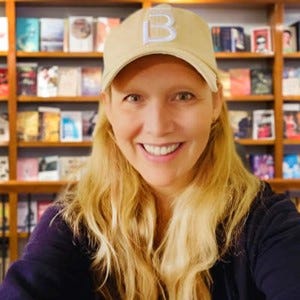
Lorinda Boyer writes memoir and poetry. She is the author of the award winning memoir, Straight Enough and micro-memoir, Body, Enough and has been published in several anthologies and journals.
Website - I’m Healing Out Loud - Healing from religion, rewriting my story, and spilling the truth—out loud (Substack).
Comments
Nothing yet. Say the first thing.
Sign in to join the conversation.