
content note: this essay discusses pmdd, depression, suicidal thoughts and moments of feeling unsafe in my own mind. please take care while reading.
if you’re struggling with thoughts of suicide, you don’t have to manage them alone. in canada, call or text 9-8-8. in the united states, call or text 988. if you’re elsewhere, contact your local emergency services or find support through befrienders worldwide. pmdd-specific information and peer support are also available through the international association for premenstrual disorders. if you’re in immediate danger, call your local emergency number.
this is my personal experience, not medical advice.
gosh. i’ve been avoiding this one.
i know exactly what i need to say, which is probably why i’ve found so many reasons not to write it. even now, my fingers are kind of shaky.
my parents sometimes read my substack. they don’t know how bad things became for me. most people don’t. a few close friends know, as do my boyfriend, my doctor and my therapist. writing this means some people may learn what happened at the same time as everyone else.
that is terrifying.
i usually wait until an experience feels safely behind me before i write about it. by then, i’ve had time to think, find the lesson and make the story sound more coherent than it felt while i was living it.
i can’t really do that here. this still feels close, and there are parts i’m leaving out because i’m not ready to share them. but i’m writing anyway because pmdd made me feel very alone. i don’t want someone else to spend months calling herself crazy because no one ever told her this was a thing.
before i was diagnosed, i assumed everyone felt the way i did.
i was on a ski trip with some girlfriends when i casually asked, “don’t you hate it when, just before your period, you feel like you don’t want to live anymore?”
i really thought they were going to understand.
they looked at me with genuine concern. apparently, no, they didn’t feel that way. they also didn’t think it sounded like regular pms.
it was the first time i wondered whether something else was going on.
for around two weeks every month, i’d feel like a heavy, dark cloud had lowered itself over my head. if you’ve watched twitches (yes, the disney movie), it reminded me of that terrifying cloud, except i didn’t have magical powers to fight it.
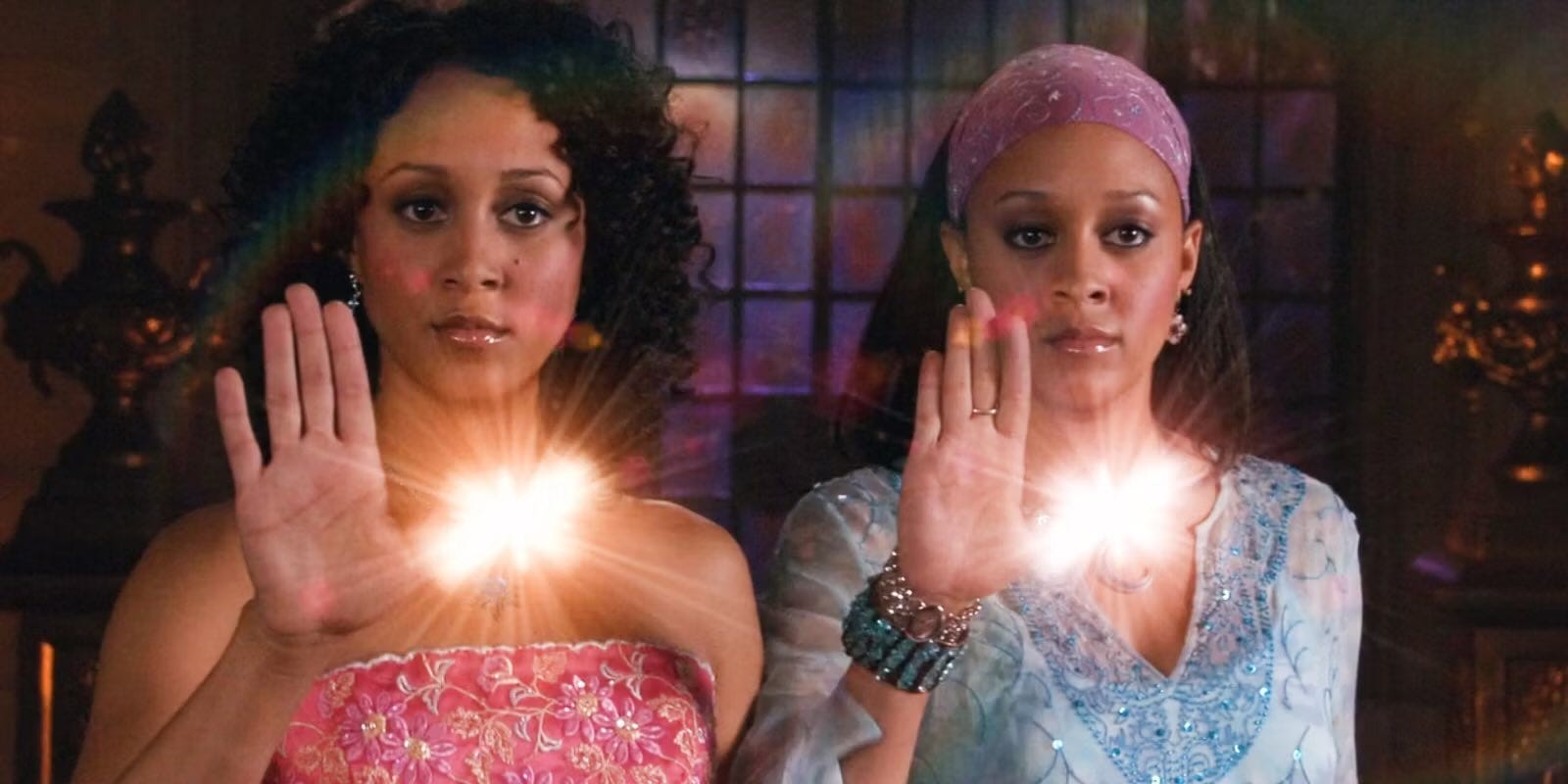
i could wake up feeling like myself and then, almost overnight, everything would change. work felt impossible. the future looked completely hopeless. my thoughts became so dark that they frightened me.
the confusing thing was that nothing had happened. my actual life hadn’t fallen apart overnight, even though my mind was acting as if it had.
so, naturally i decided i must be the problem.
my trouble working looked like laziness. the mood changes felt like some hidden instability finally revealing itself. every time i asked for reassurance, i worried that i was becoming difficult to love.
i didn’t understand why i could be fine one day and barely recognise my own thoughts the next.
my boyfriend was travelling quite often around the time the symptoms became impossible to ignore.
having him nearby helped. he could tell when something had shifted and remind me that the way i felt wasn’t necessarily an accurate reflection of my life.
once he left, there was no one in the apartment to reality-check things with me.
i didn’t know which thoughts belonged to me, which ones belonged to pmdd or whether that distinction even made sense. all i knew was that i didn’t trust myself, and being alone started to scare me.
i’d moved from south africa to vancouver for grad school around a year and a half earlier. doing that had required a level of independence i was quite proud of. i’d left my family, my routines and everything familiar because i believed i could create a life somewhere new.
suddenly that version of me felt very far away.
i have this dream of moving to new york city one day. during the worst weeks, i’d wonder how that could ever happen when i couldn’t even feel safe by myself in my own apartment.
that was the point when i knew i couldn’t keep trying to manage it alone.
pmdd stands for premenstrual dysphoric disorder. it’s connected to the menstrual cycle and can cause severe emotional, behavioural and physical symptoms.
the symptoms usually show up after ovulation, during the luteal phase, and begin to ease within the first few days of a period. for me, that looked like hopelessness, frightening thoughts, difficulty concentrating and a complete inability to work normally.
pmdd disrupts daily life in a way regular premenstrual discomfort doesn’t. according to the international association for premenstrual disorders, around one in twenty people who menstruate experience life-altering premenstrual symptoms.
i explain it as my brain having an allergic reaction to my hormones. that isn’t a literal medical definition, obviously, but it’s the closest description i have. my hormone levels could be completely normal while my brain reacted badly to their natural rise and fall.
what confused me was my age.
why would this suddenly begin at 23 when i’d already had a period for years?
i assumed anything connected to menstruation would’ve shown itself from the beginning. i later learned that pmdd doesn’t work like that for everyone. symptoms can start early or become noticeable later, and early adulthood isn’t an unusual time for them to appear. they can also change during different stages of a person’s reproductive life. (there’s more information about that here.)
i went to a doctor and explained what had been happening. because there isn’t one blood test that confirms pmdd, they asked me to track my cycle, mood and symptoms every day for two months.
the timing matters. doctors look for symptoms that repeatedly appear and lift at particular points in the cycle, which is why daily tracking across at least two complete cycles is part of the diagnostic process.
after two months, we didn’t have to guess.
the worst days were clustered around the same point in each cycle. then my period would begin and i’d feel like myself again.
i hadn’t imagined the shifts. they were sitting in front of me, recorded day by day.
i grew up in a traditional household where mental health wasn’t discussed much.
i mean, even the fact that i go to therapy regularly makes my parents wonder whether something must be severely wrong with me. seeing a doctor for physical pain felt normal in my family. getting help for your mind carried more weight.
i’d absorbed some of that without realising it.
taking medication felt like admitting i hadn’t tried hard enough to fix myself. that i was weak and not mentally strong enough for this life. there was no great logic behind this belief. i was scared of needing it and scared of what that need might say about me.
eventually, i became more afraid of continuing without help.
medication changed my life. i don’t know how to make that sentence sound less dramatic, and i don’t want to, because it saved my life.
work became possible again. being alone during my luteal phase stopped feeling dangerous. my mind could produce a dark thought without immediately convincing me it was true.
i also started doing cognitive behavioural therapy, or cbt. therapy has helped me notice what my mind is doing before i get pulled completely inside it. some thoughts need to be questioned, especially during the part of my cycle when everything feels heavier.
medical care and therapy have helped me in different ways. neither is something i’m ashamed of anymore.
i wanted to live. after a while, that mattered more than whatever ideas i’d inherited about the kind of person who needs medication.
only a small group of people know about my pmdd.
my closest friends and my boyfriend can see where i am in my cycle through a tracking app. when the difficult part of the month is approaching, they understand that i might need a bit more care.
it saves me from trying to explain the entire condition while i’m already overwhelmed.
i’ve also told my mom about pmdd. i’m not sure she understands how much it affected me, and i know parts of this essay may be difficult for her to read. maybe it will answer questions i haven’t known how to answer in conversation.
i still don’t want every person in my life to know every detail. there are things i’ve deliberately kept out of this piece. those moments can stay between me and the people who were there.
i keep thinking about the ski trip and how casually i asked that question.
my friends’ reaction embarrassed me at the time. now i’m grateful they didn’t laugh it off. their concern was the first indication that i needed to take what was happening seriously.
if i’d found an essay like this at 23, i would’ve needed it to be very plain.
a severe change in your thoughts before your period is worth paying attention to. write down when it happens, tell someone you trust how bad it gets and take that information to a doctor.
i wish someone had given me those instructions before i started calling myself crazy.
share this post with someone who might need it
every sunday, i send paid readers a deeper essay with a few reflection questions and one small practice. you’ll also receive a monthly field guide, a private check-in thread, and the full archive of essays, practices, and workbooks.
it’s $8/month or $80/year.
No posts
Comments
Nothing yet. Say the first thing.
Sign in to join the conversation.