
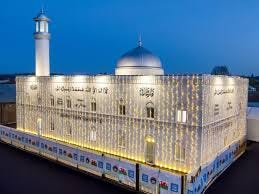
The inauguration of the Bait-ur-Raheem Mosque on 23 November 2025 marked a landmark moment for the Ahmadiyya Muslim Community in Wales. As the first purpose-built Ahmadi Muslim mosque in the country, its completion was celebrated by civic and political leaders and representatives of the different faiths. In a video message, Rt Hon Jo Stevens MP, Secretary of State for Wales, congratulated the community and praised its long-standing charitable work and its guiding motto, “Love for All, Hatred for None.”
But behind this inspirational mosque project lies a far more difficult truth. The mosque’s journey from proposal to construction was marked by hostility and targeted opposition. The planning process drew over 130 objection letters and an organised petition of more than 200 signatures, while anonymous leaflets circulated locally depicting the community as unwelcome outsiders. In one of the most troubling episodes, a local councillor, Sue White, who supported the application reported facing internal bullying and pressure to distance herself from Ahmadi Muslims, with false accusations linking the community to extremism. She later resigned, citing racial discrimination tied directly to her support.
Sadly, such challenges reflect a broader pattern. As multiple studies, including work by Cardiff University, have demonstrated, Ahmadi Muslims in Britain face persistent discrimination, often rooted in imported sectarian narratives that misrepresent Ahmadi beliefs. Sue White’s experience closely reflects the patterns documented in the UK Parliament’s All-Party Parliamentary Group report Suffocation of the Faithful, which details how sectarian pressure and institutional hostility have been used in Britain to marginalise Ahmadi Muslims.
Against this backdrop, the opening of Bait-ur-Raheem Mosque is both a milestone and a testament to the community’s resilience. It celebrates the resilience of a community determined to practise its faith openly and peacefully. But it also exposes the prejudice, sometimes subtle, sometimes overt, that still affects Ahmadi Muslims in Britain. Such prejudice and discrimination must have no place in the UK, especially when the communities being targeted are championing social harmony.
This commitment to peace was highlighted in the inaugural keynote address of His Holiness Hazrat Mirza Masroor Ahmad, the Worldwide Head of the Ahmadiyya Muslim Community, who said, “…our Mosques are not built to sow disorder or to incite division. Rather, they stand as shining beacons of peace, love, and harmony...” His Holiness added that “…a Mosque only serves its purpose when it is used for both the worship of God and also to manifest Islam’s true teachings of kindness, love, and compassion for all mankind, and to spread peace and security throughout society.”
May these powerful words of peace reach the hearts of all in Cardiff and beyond.
Comments
Nothing yet. Say the first thing.
Sign in to join the conversation.