
In the heart of the Staffordshire Potteries, where the clay pits, brickworks, and collieries stretched like veins through the landscape, a young woman was quietly making history. Daisy Bates, born on 24 September 1897, grew up in Hanford, in a small cottage that witnessed the struggles and the triumphs of a working-class family in early 20th-century England. Her father, James Bates, toiled as an ironstone miner before becoming an assistant fireman at the local pit, while her mother, Mary, kept the household running alongside Daisy’s siblings. By the time Daisy was a young woman, Hanford had seen war, industrial upheaval, and the early stirrings of women’s football.
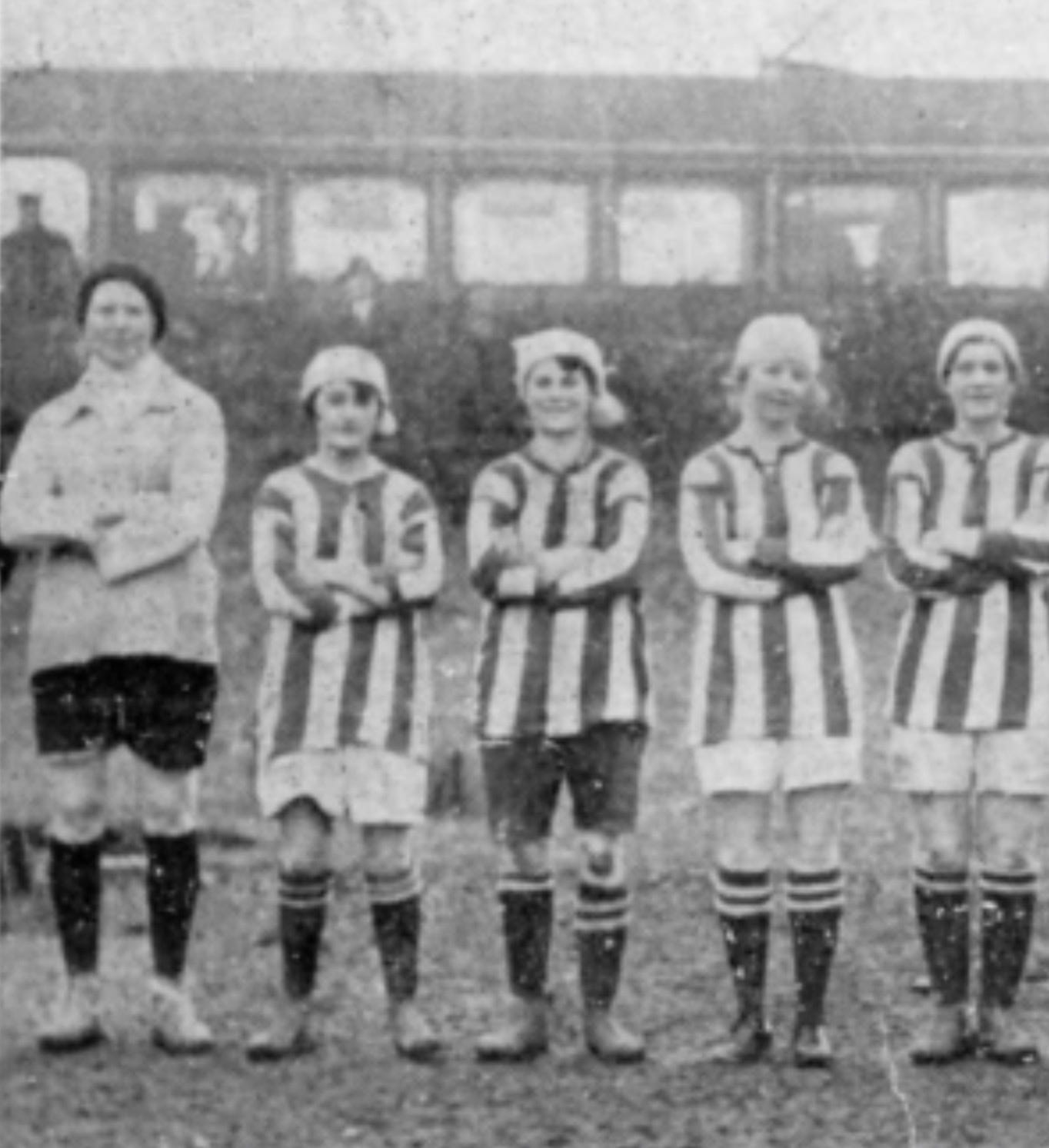
Daisy Bates (centre) with Stoke teammates
Credit: Staffordshire Sentinel
From a young age, Daisy was immersed in sport. The 1910s were a period of experimentation and opportunity for women athletes. Across the country, factory teams and local clubs were giving young women like Daisy a chance to play football, despite societal warnings that sport might be too taxing for the ‘delicate’ female constitution. For Daisy, who had grown up walking past the collieries and farms of Hanford after long days helping at home, football offered not just exercise but freedom, camaraderie, and a chance to shine beyond the shadow of the mines.
The war years brought both tragedy and opportunity. While men went off to the front, women filled their roles in factories, offices, and schools. Daisy’s contemporaries juggled munition work with football, honing their skills and helping raise funds for charity. Inspired by these feats, and by the visits of the famous Dick, Kerr Ladies, Daisy pursued her passion on the pitch. She played centre-forward in Len Bridgett’s Stoke Ladies, a group that would soon become a beacon of women’s football in North Staffordshire.
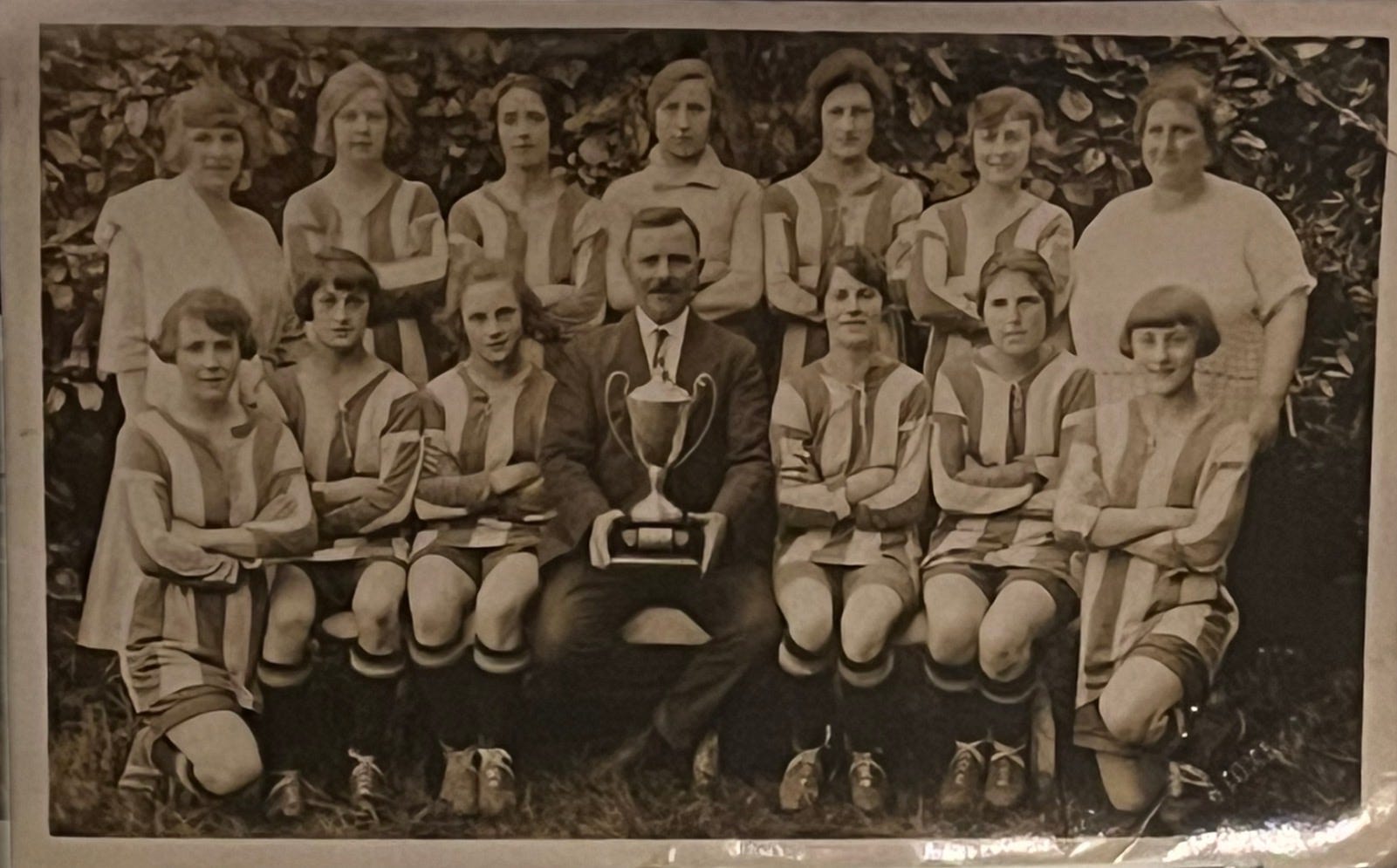
The Stoke Ladies. Daisy is on the front row, third from the right
Credit: National Football Museum
In 1920, Daisy was listed in the Staffordshire Sentinel as a winner in ladies’ races at the Stoke Victoria Athletic Club and Stoke Wakes Sports, confirming that her athleticism extended beyond football. These were not casual competitions. They were part of the first wave of organised women’s sport under Amateur Athletic Association regulations, a context in which Daisy and her peers were proving that women could compete, excel, and, most importantly, be taken seriously.
Daisy’s footballing journey was intertwined with the social and economic turbulence of the Potteries. In autumn 1920, the Stafford Coal and Iron Company strike left 4,000 workers out of work, including her father and two of her brothers. With coal reprivatised after wartime nationalisation, pay cuts and increased hours created hardships for families like the Bates. Against this backdrop, Daisy and her teammates played matches that raised funds for people who were struggling. Football for them was more than sport; it was a form of solidarity, a way to help communities in need while pursuing a passion that was still frowned upon by some social commentators.
By 1921, Daisy was a recognised figure on the pitch. Reports show she played for a ‘Rest of England’ side against the famous Dick, Kerr Ladies, a team that had become a household name after tours in France and charity matches across England. The match was groundbreaking, played at night under electric light – an innovation that even professional men’s teams had not yet regularly adopted. On this occasion the match organisers used army searchlights, ordered from the Secretary of State for War, a certain Winston Churchill. The flares were set up around the pitch, ready to light up the two teams. Whitewashed balls improved the players’ – and supporters’ – chances of seeing them. A short clip is available on Pathe News, as the cameras were rolling.
Daisy’s skill and presence as a centre-forward marked her out as one of the era’s leading female players, a local girl from Hanford making her mark on the national stage. She also caught the eye of Stoke’s goalkeeper, marrying Bob Dixon in 1925, Stoke captain Val Rouse acting as best man. By then the Stoke Ladies’ side had disbanded, struggling to find safe spaces to play after the Football Association ban on women’s matches at grounds belonging to FA-affiliated teams.
Daisy’s story reminds us of the early challenges and triumphs of women’s football. She played in a time when the press questioned the very idea of women training and competing, when the notion of a ‘working girl’ excelling in sport could provoke outrage. Yet she persisted, alongside peers like Lily Parr, Florrie Redford, Lizzy Ashcroft and Daisy’s Stoke teammates the Bridgett sisters, paving the way for the generations of women footballers who followed.
From Hanford’s quiet lanes and the North Staffordshire collieries to the floodlit pitches where she competed against the best of her era, Daisy Bates’s journey is a story of grit, talent, and quiet rebellion. She demonstrated that football was not just for men, that women could captivate crowds, inspire communities, and, most importantly, play with joy and purpose. The name of Daisy Bates deserves a spot among the pioneers who made it possible.
No posts
Comments
Nothing yet. Say the first thing.
Sign in to join the conversation.