
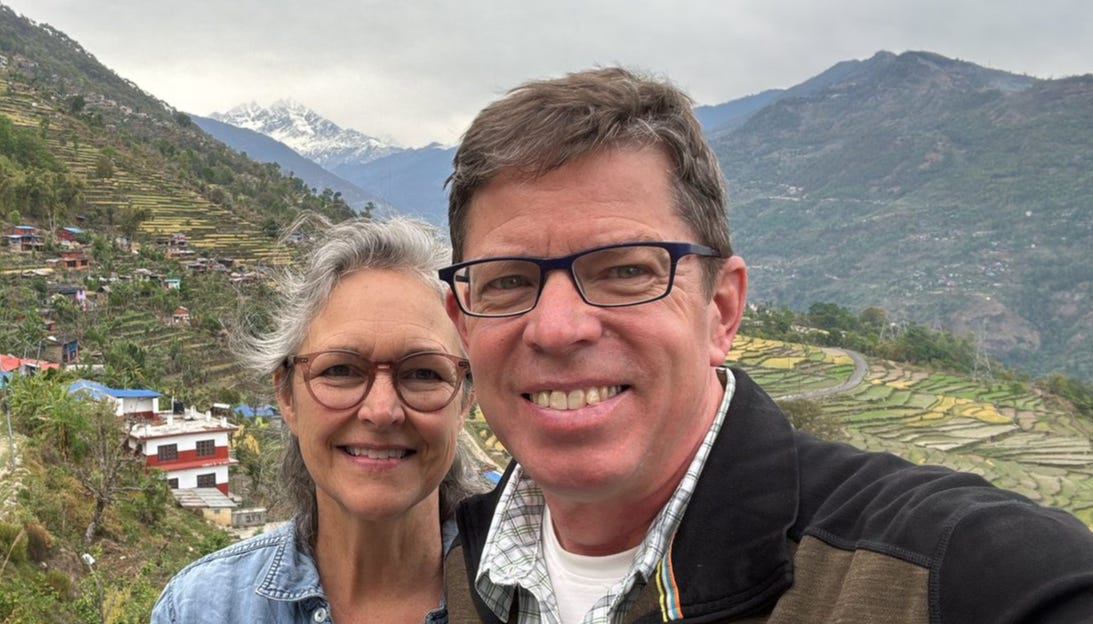
Greetings and thanks again for reading our Substack feed! We love your support and feedback!
We’ve been experiencing some Nepali cultural differences. We hope you will find them enjoyable!
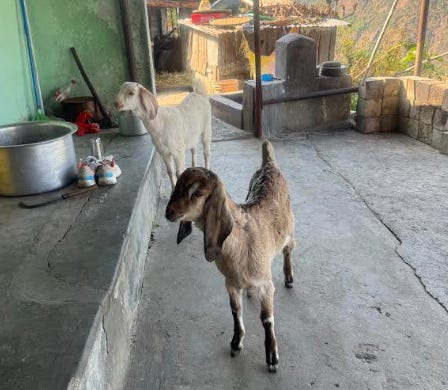
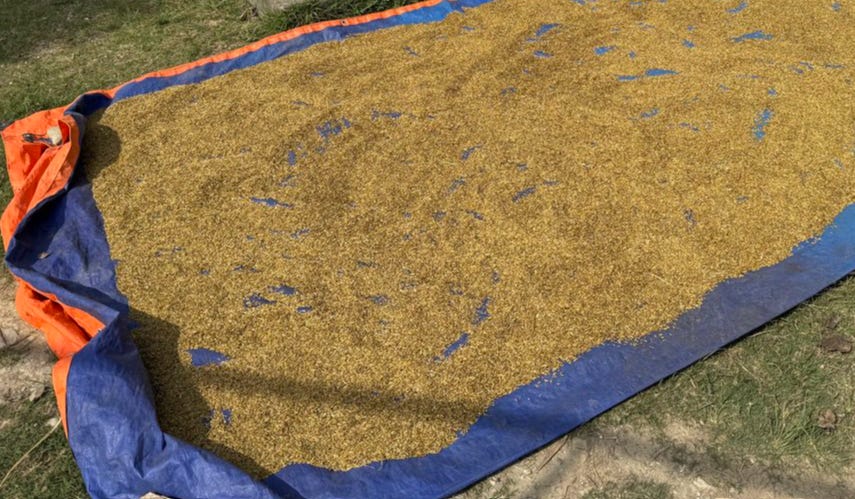
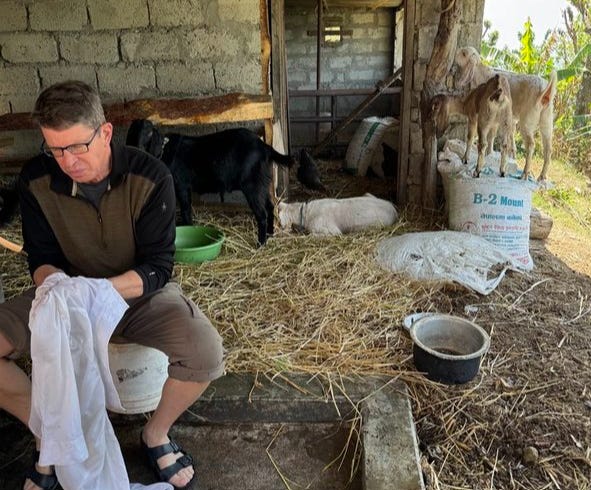
· Goats passing through the house to get to the front of the house to see what there is to eat…maybe there are harvested crops drying on the driveway!
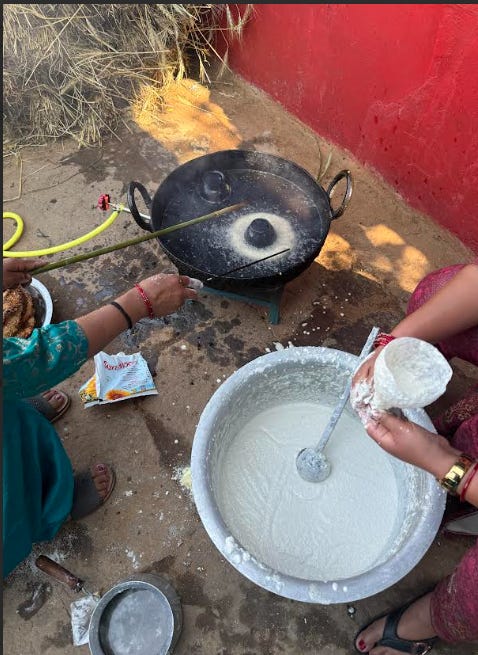
· Our best Nepali doesn’t allow us to always understand what’s being said. Liisa thought she was going to do some garden planting only to arrive at food preparation time in the neighborhood to honor a deceased relative. Liisa was wearing appropriate clothes and had the right attitude. She helped stir a large pot of dough by hand which means you use your hand. People are generally happy to see us and let us join in the activities, even if we have no idea what’s going on. It is characteristic of the Nepali easy-going attitude in life.
· There are many names for how people are related to each other which precisely indicates who that person is in relation to you. For example, your father’s older brother is your “Thuli baa”, father’s younger brother a “kaakaa, and mother’s brother is “maamaa”, all are uncles in English and might also just be called father “buwaa” if the families are close. Most villages are full of relatives. We know how to ask people what their names are in Nepali and also give our names in a complete Nepali sentence. It takes people by surprise that we start with asking their name, rather than their relationship to our host family. One day on a walk we meet two younger men walking with a woman who appeared to be their grandmother. We greeted and asked the grandmother first for her name. She was having trouble understanding us, so the grandsons’ translated for her. We heard them ask the grandmother what her name was, she has always been grandma, “hajuramma”, to them, no name needed!
· We joined our host mother at the village’s yearly celebration of the women’s savings and credit union meeting. We sat in front on the stage facing a room full of women and listened to a 60 minute, impassion speech in Nepali. It was warm. We were thirsty. It was past time to eat. We were hoping we looked engaged. Many photos were taken. If you see any with dazed Steve and Liisa, sweating on a coach on a stage, yes, that’s us!
· Setting up a meeting with the agricultural supervisor was a good lesson in patience. It took three attempts to set up the meeting and then our host mother insisted she come along. She is very well intentioned and wants to be sure we get to where we are going. The trip to the office took 50 minutes to walk down the makeshift steps in the hillside. It was a fascinating walk down the winding, narrow path as it crossed homes and farm fields. Nepali’s have incredible eye-foot coordination which we don’t. We managed to keep up and not fall. The meeting with the supervisor was great, and it was a good family trust building experience. Yes, we had our host mom at our meeting with our boss; we felt so grown-up!
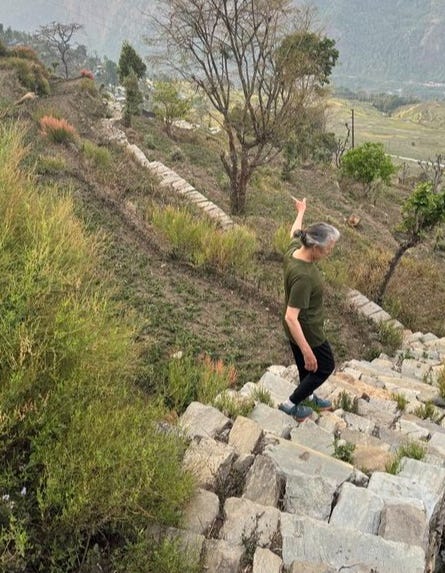
· We ask people to speak slowly which they gladly comply with for the first 3 words, then it is off to the races. Nepali people love to talk and it appears to come naturally to speak fast. We’ll easily be known as the “bistarai” (slow) listeners.
· Coming home from a day at the market means an hour walk uphill om stairs that switch back the entire way home. We did not protest that our host mother arranged for the local jeep driver (think bus) to take us home. The jeep has room for 8 people, but it often accommodates 11. On this day, we were at capacity, but 2 youths were still hoping for a ride. The driver went around the block and let the 2 youths climb on the roof into the luggage rack for the gravel road ascent. Steve could swear he heard them say, no problem!
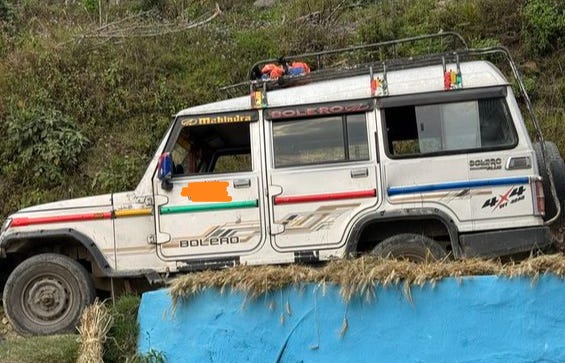
· Speaking of drivers, the driver is our neighbor. If we are missing an ingredient for supper, we can call the driver and he will pick it up his way home, no app required!
· People are laid back, get their work done, they enjoy tea with one another and want to make sure that you have had something to eat. One of the most repeated questions to any Nepali is “Have you eaten?” If you haven’t, they will feed you.
· No natural gas pipelines come into the homes for hot water or heating. There is well established business in natural gas containers that hook up to the kitchen stove tops. Some homes have solar water heating on the roof to heat the water. On chilly days, you wear a lot of clothes in the house including a stocking hat. You might heat up a tea kettle of water to add to a bucket of cold water so you have warm water bucket bath. Steve’s favorite self-treat is a warm bucket shower, but he is getting used to cold showers!
· All the work is done in flip flops and with no gloves. It doesn’t matter if you are building a road, building a wall, planting, driving a motorcycle, or walking to town. Flip flops get the job done. Even if it is cold out, flip flops are the choice of footwear. We stand out with our tennis shoes on.
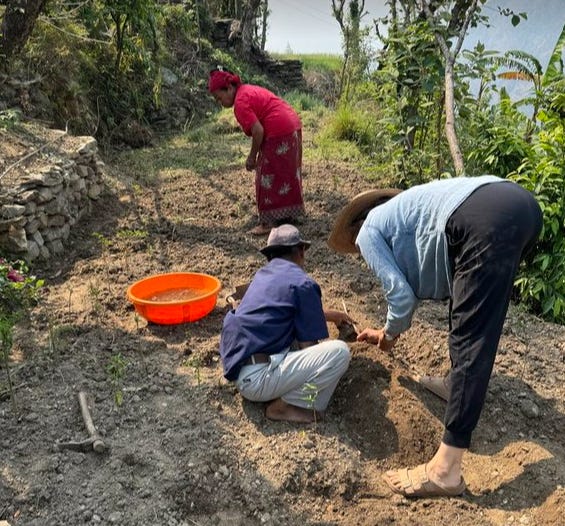
· As we walk through the narrow paths of the village, our host mother is on the lookout for things to eat or use. She will pick a thistle, strip it and eat it because it is good for her heart. She will pick mulberries to feed us. She has taken a branch from a plant to propagate once we get home.
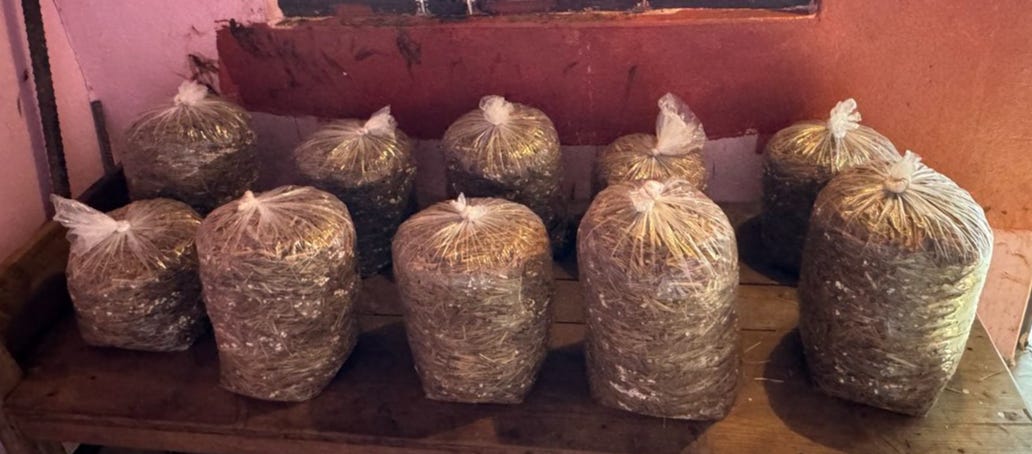
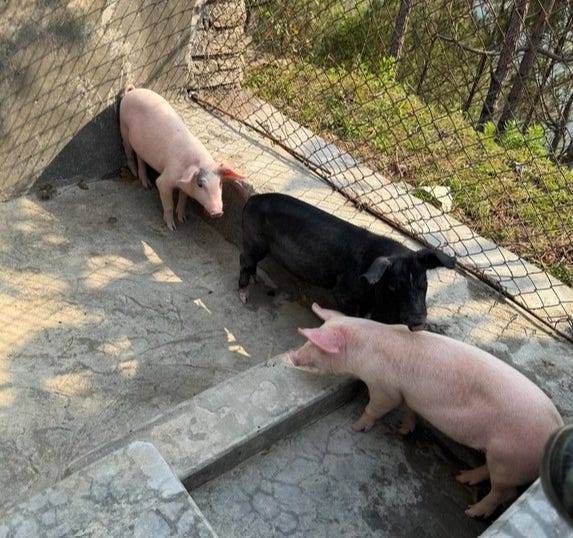
The local farmers are getting used to us stopping by to say hello and ask questions about what they are doing. It is currently a transition time with winter wheat being harvested and corn or rice being planted. We have planted 4 vegetable gardens, started 10 mushroom bags, and trimmed diseased orange trees. Steve was able to help a local farmer vaccinate his 3 pigs. We are in awe of how they manage the local produce without refrigeration or canning. There is a lot of drying of grains and some municipal cold storage of the potato crop. We are awaiting the monsoon season in June. Currently it is quite dry.
A reminder of the disclaimer from our first post, any opinions that we may share are ours alone and are not Peace Corps’ position.
Till our next post, enjoy spring and keep your clothes separate from your goats!
No posts
Comments
Nothing yet. Say the first thing.
Sign in to join the conversation.