
Thank you for reading Evil Speakers. In almost exactly one month, my new book will arrive in stores. It’s called “Is This It: The Rise and Fall of The Strokes (and Rock ‘n’ Roll),” it’s out Sept. 8, and you can pre-order it now. In the fall I’ll be doing some book events, all in the Midwest (for now!) I’ll be sharing those dates soon.
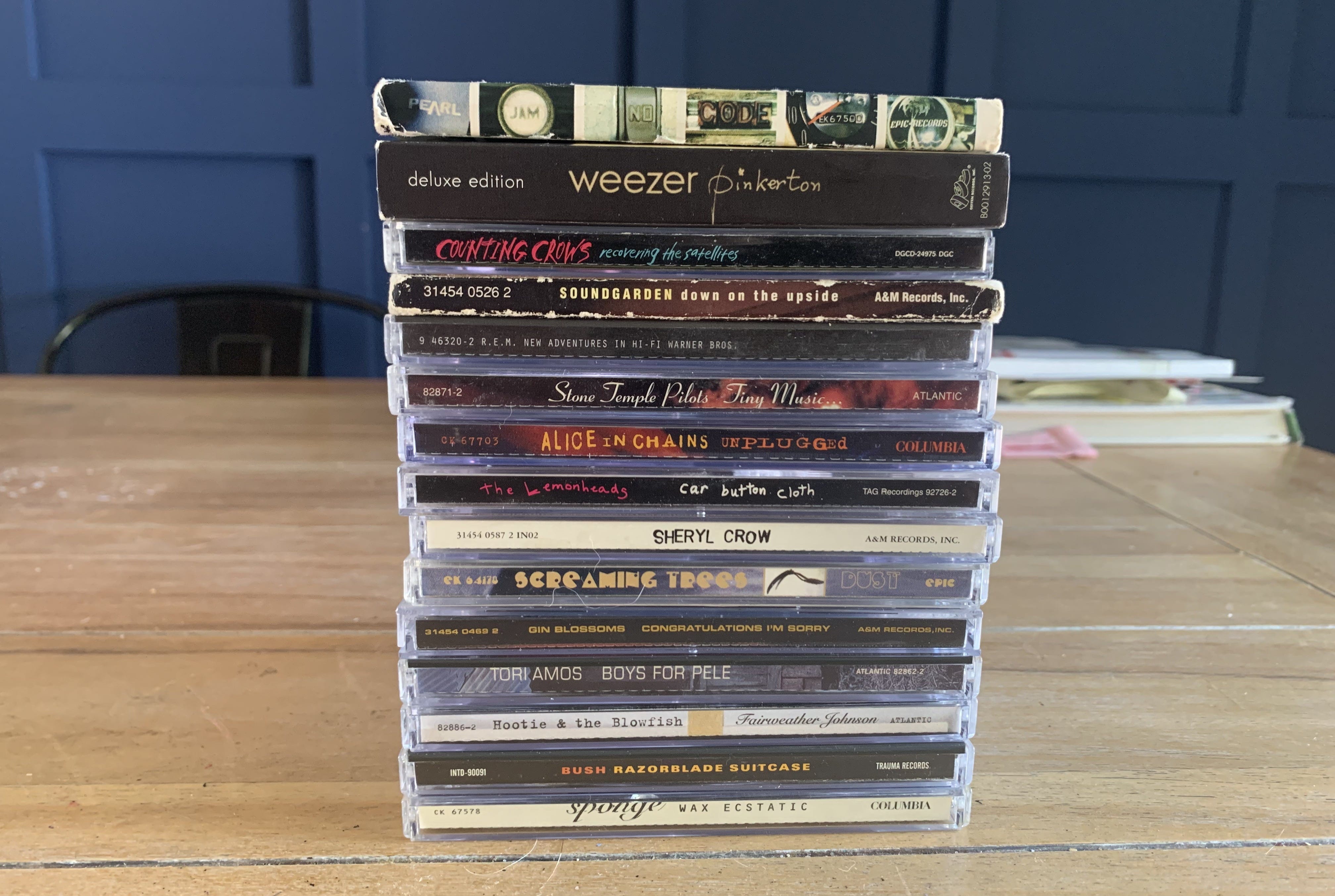
This essay is a critical overview of alt-rock (and alt-rock adjacent) albums released in 1996 in light of those albums turning 30 in 2026, as well as the overall trend of alt-rock’s commercial (though not necessarily artistic) decline during that year, written in the essay style of “The Rolling Stone Record Guide” and “Spin Alternative Record Guide,” books I grew up reading and still love that were nevertheless rendered irrelevant by the internet. Until now!
To all my paying subscribers — thank you for making this newsletter viable.
More than any other art form, popular music lends itself to analysis overly inured to intense myopia. The old “all the best songs ever written just happened to come out when I was in high school and college” phenomenon. So consider this a self-aware disclaimer for what I otherwise believe are two air-tight assessments.
Assessment No. 1: The nineties — as an era of rock music — began in late summer of 1991, right before the season switched over to autumn. I refer to the stretch of time from early August to late September when the following albums were released, nearly one per week: Metallica’s “Black Album,” Pearl Jam’s Ten, Guns N’ Roses’ Use Your Illusion(s) I and II, Nirvana’s Nevermind, Red Hot Chili Peppers’ Blood Sugar Sex Magik, and Soundgarden’s Badmotorfinger. I also turned 14 and entered eighth grade during this span this time. Though I think you’ll agree, even with the aforementioned “intense myopia” factor, that these albums don’t sound like the start of a new era to just me. They, in fact, look and sound like the start of a whole new chapter of so-called “classic rock,” a virtual starter kit for the nation’s least imaginative AOR radio stations.
Assessment No. 2: The nineties — again, in the parlance of rock, especially alt-rock — ended five years later, as late summer turned to fall in 1996. This was when I turned 19 and entered my freshman year of college. Here is where my disclaimer starts to put in some work. For starters, when I say “the nineties” I mean “my nineties,” aka the early nineties. It coincides with a profound life transition for me personally that, one could argue (and not very hard), irrevocably colors how I hear the music of the time.
I don’t deny that. I confess it’s particularly true of No Code, the fourth Pearl Jam album released in late August, right as I was moving into my college dorm, a haven for rednecks from rural western Wisconsin who downed entire cases of Natty Ice in one gulp while listening to Pantera’s The Great Southern Trendkill. Pearl Jam is the bookend band of this period — Ten and No Code were released exactly five years apart, with each record coming out on August 27 in their respective years. But in the moment that gap might as well have been 50 years. As I settled into my room and made small talk with my roommate (a very handsome and otherwise nice enough guy who played on the school’s hockey team, my photo negative in every possible way) I quickly realized that my childhood (no picnic, really) was basically over. I felt older than I had ever been — which, technically, was true, I suppose. But I also felt older in the “My Back Pages” sense. I was (spiritually speaking) a burned-out codger then compared to how I am now. Which meant that No Code was perfectly aligned with my own personal frequency. Throughout that semester, whenever the rednecks from rural western Wisconsin got to be too much, I would slip that album into the Discman and brood over Eddie Vedder’s vocal at the close of “Red Mosquito” while traversing the quad. That part of the song where he moans over muscular Abbey Road guitar chords, “If I had known then / what I know now,” over and over, a real moaned koan. Damn straight, Eddie. Oh, how the fresh-faced innocence of a 14-year-old seemed like a pipe dream to my infinitely more grizzled 19-year-old self!
No Code is the definitive album of a made-up genre that I’ve written about elsewhere but never with the comprehensive depth I’m attempting here. I call this genre “Alt-Rock Is Dead” albums, which as the label suggests pertains to records that signify the decline and eventual death of the most culturally predominant form of rock music in the early nineties. While some of these records came out in 1995 and a few more were released in 1997, the majority — and pretty much all the best ones — came out in 1996. (For the sake of narrative cleanliness, I really wish One Hot Minute by the Red Hot Chili Peppers had come out four months later and Pop by U2 had come out four months earlier, so I could write about them here. They certainly belong in 1996 more than their actual respective release years.)
In case there’s any confusion: This is not meant to be necessarily a negative judgement on the artistic quality of these albums. Quite the opposite, really. The best and most illustrative examples of the genre rank with my very favorite albums ever. Even the “Alt-Rock Is Dead” records I don’t love are, at worst, incredibly interesting to me. What interests me, specifically, is how they signaled the decline of this trend/movement/marketing scheme in terms of their commercial performance, and the ways the artists and bands who made them seemed to be willing this response, somehow, as a collective group.
Comments
Nothing yet. Say the first thing.
Sign in to join the conversation.