
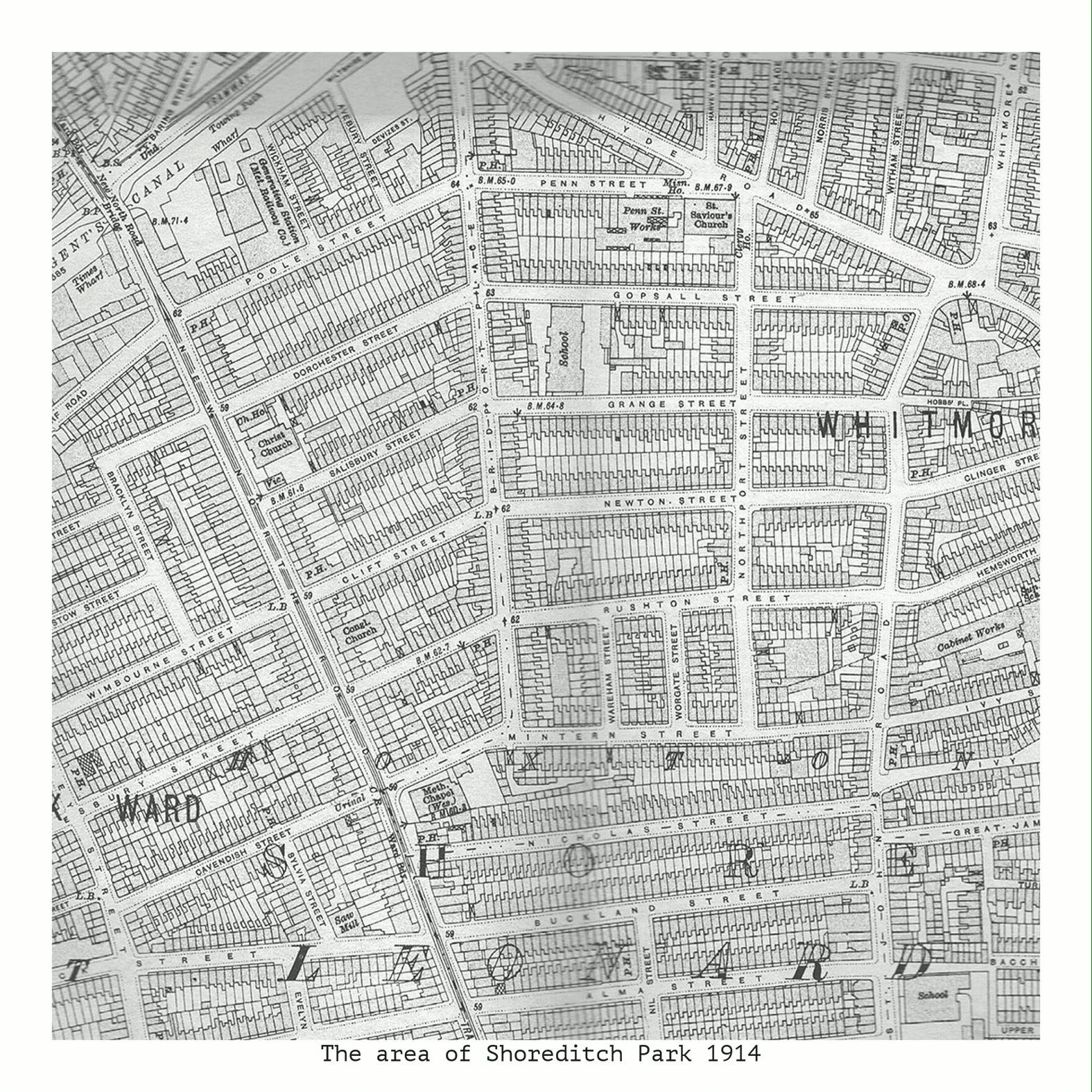
Shoreditch Park was created as part of the Abercrombie Plan for post-war reconstruction of London. It is frequently referred to by planners as an example of the benefits of bold, comprehensive planning. Before WWII, the area that is now the park was an urban neighbourhood with a grid of sixteen streets lined with small, terraced houses with yards and gardens, corner pubs, churches, some small workshops and a school.
After careful statistical analysis and surveys, the Abercrombie planners concluded that Shoreditch, and the East End of London in general, had two major problems that their plan would address. Firstly, the East End lacked open space, and to bring the open space area to approximately the London average, many buildings would need to be replaced by municipal parks. Secondly, the East End was densely populated, and this density had to be reduced by relocating 500,000 East Enders to remote estates and new towns. These two problems were exacerbated, in the planners’ view, by inefficient land use due to an excessive number of streets lined with terraced houses. London was to be rebuilt as multi-storey flats surrounded by lawns and open space with a greatly reduced number of streets.
Shoreditch was intensively bombed during the London Blitz, destroying many houses in the area that would become Shoreditch Park. Repairing damaged houses or rebuilding on the pre-war building plots was an option that could have been considered; however, this would have conflicted with the planners’ modernist ‘vision’ for what the East End should be. The explanation to the Post-War County of London Plan included a remarkable rhetorical response to the trauma of wartime death and destruction:
‘The Blitz has cleared some sites, and we must clear many more- but for what? Has the Blitz cleared our vision too and made it possible to see what London might be?’
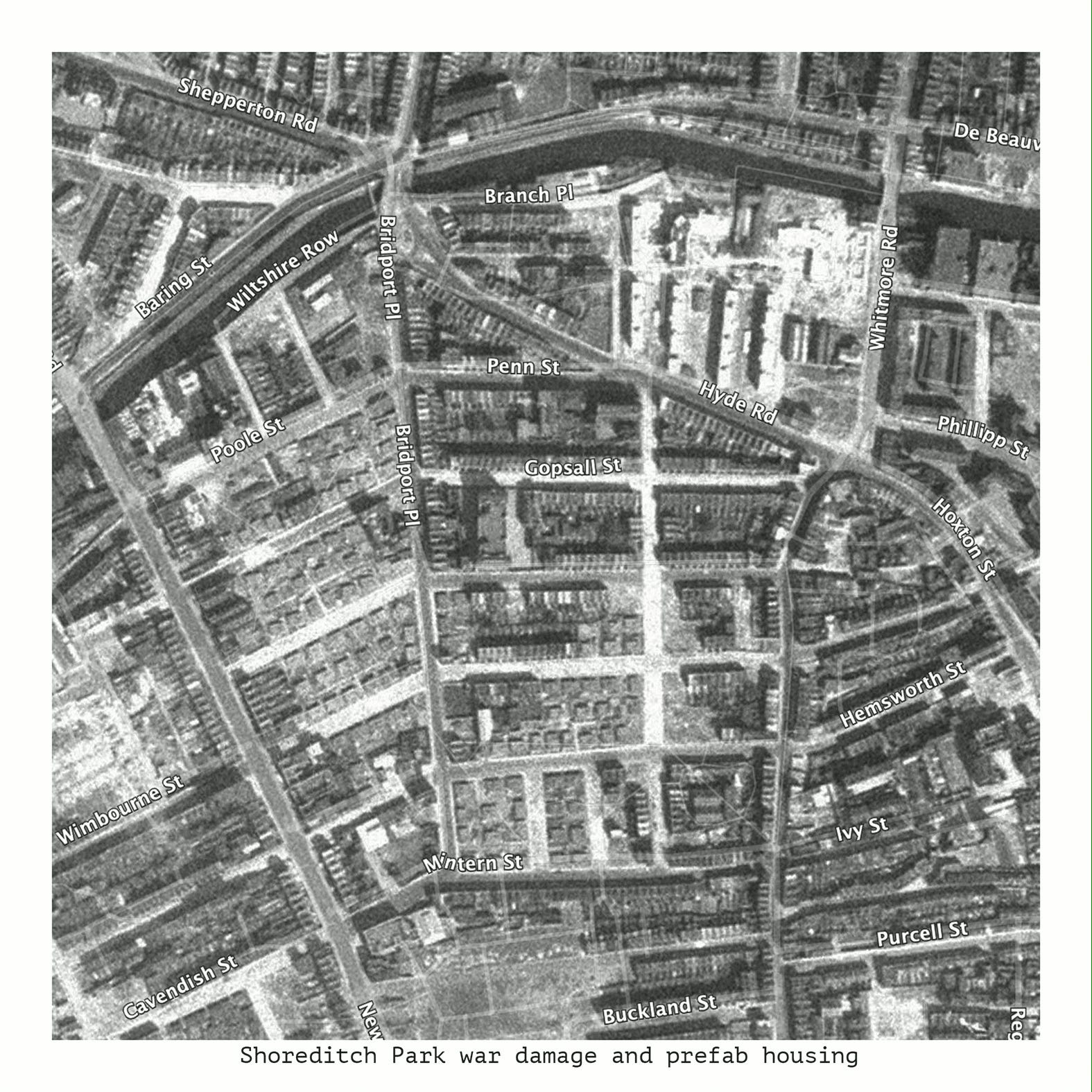
Terraced houses which had served Londoners well for generations conflicted with the seduction of building something bold and entirely new. The post-war planners were also politically antagonistic towards small-scale private ownership of land and buildings that, in their view, promoted the chaos and evil of ‘private landlordism.’ The old houses and streets had to go.
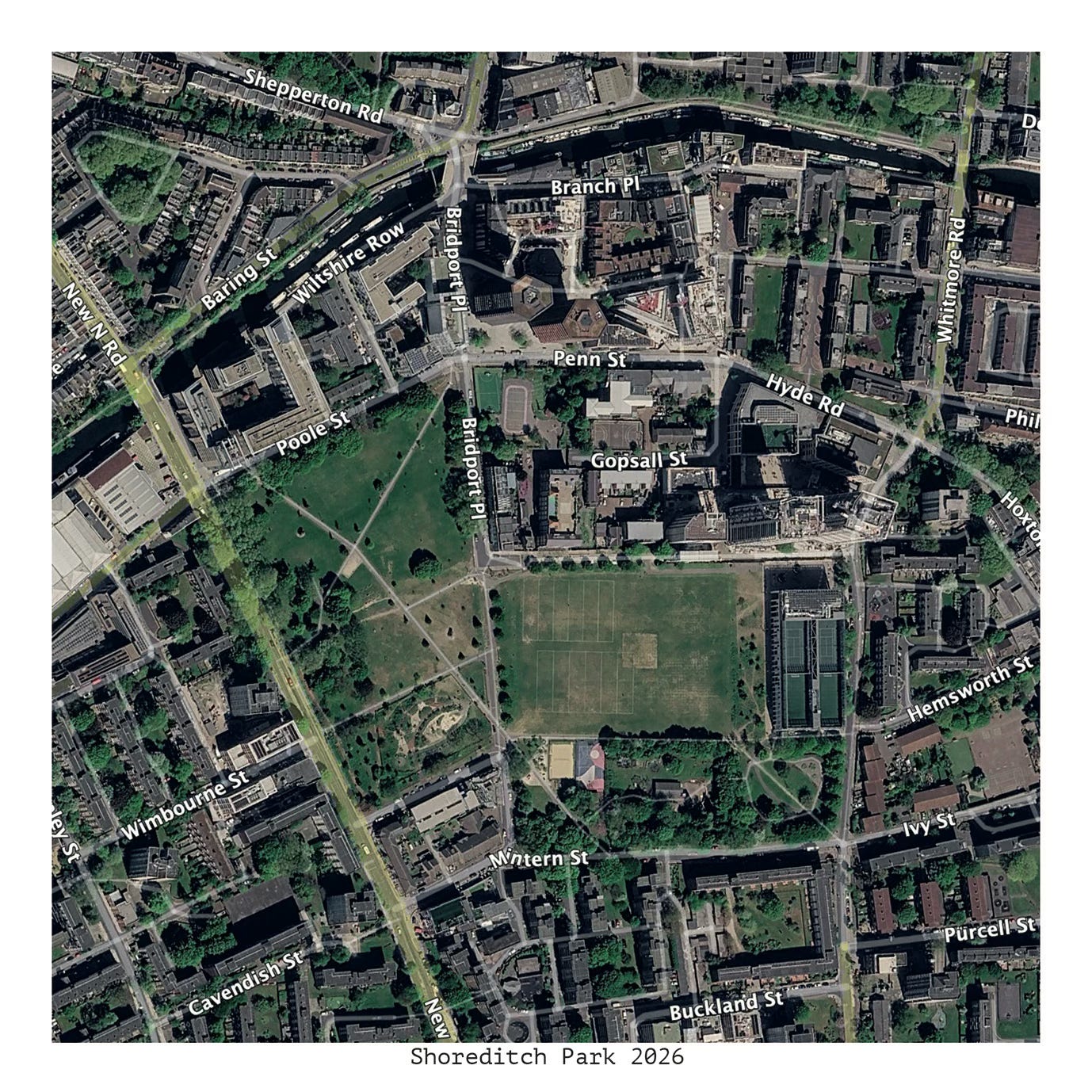
After the war, the bombed and partially cleared site of Shoreditch Park was used for temporary ‘prefab’ housing for bombed-out residents. In the 1960s, these structures and the houses that had survived the bombing were cleared to make way for the park.
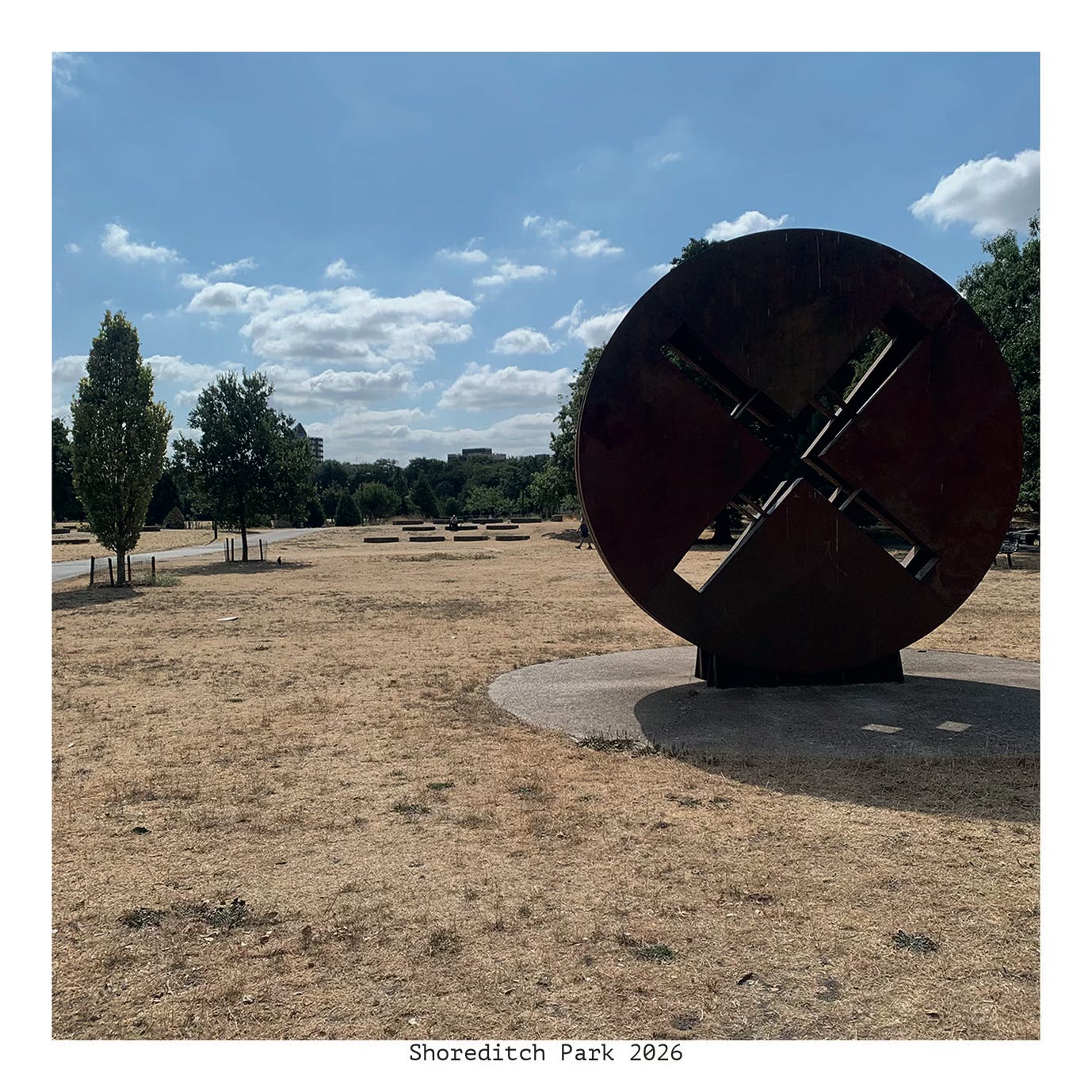
For the first time since rainfall records began in 1871, London has experienced no measurable rainfall for over a month. Tree leaves are turning brown and lie dry and crisp on the ground as though Autumn is beginning in mid-summer. I went to Shoreditch Park to see the impact of the unprecedented drought.
There is no unifying design to Shoreditch Park. Instead, the former urban block layout defines areas of contrasting character for various activities. A sports field, children’s adventure playground, beach volleyball, open walks and lawns. Some large sculptures and ground-form mounds act as focal points.
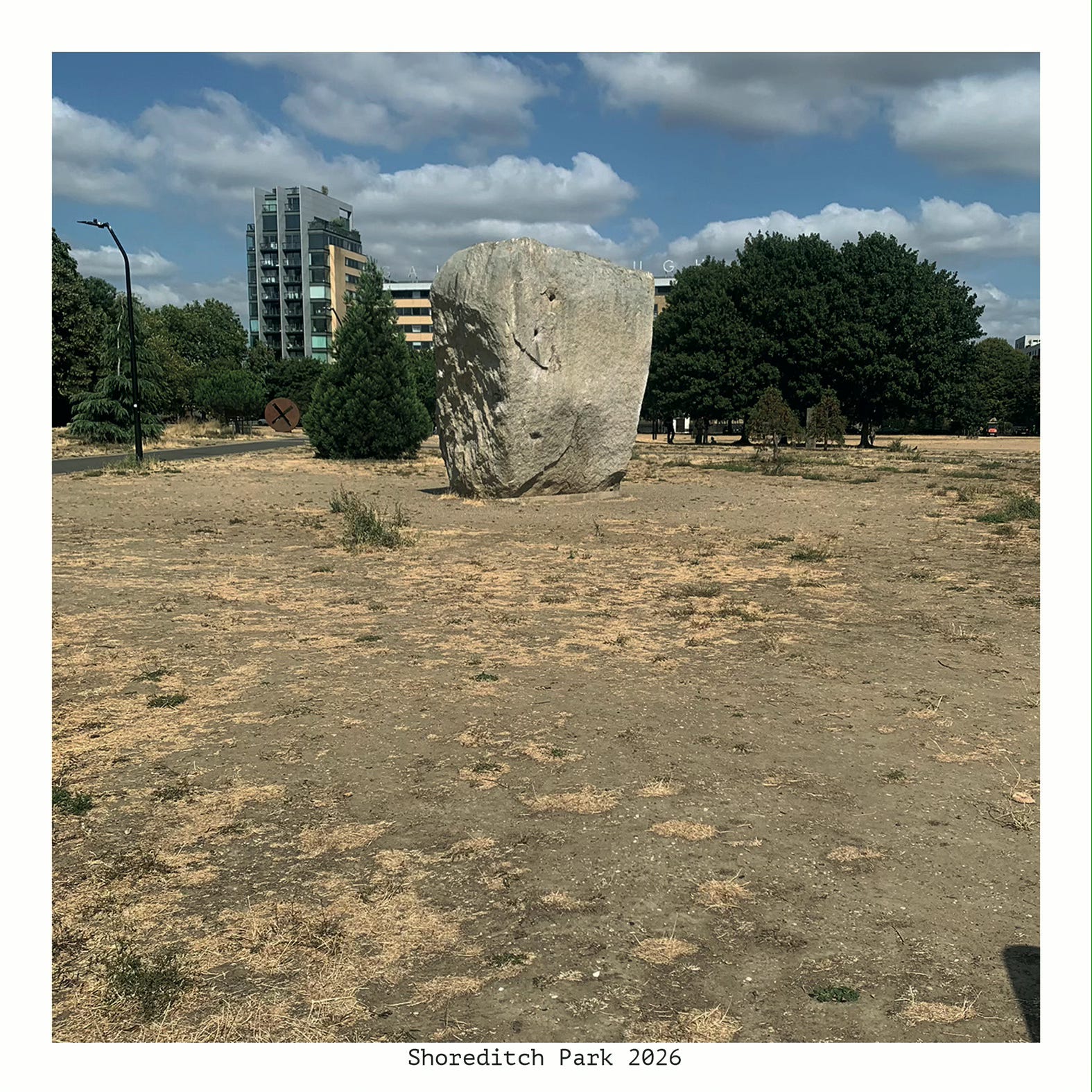
This summer the open lawns had been sunburnt to dry expanses of straw, with just a few drought-resistant weeds maintaining signs of life. The trees have remained green, providing welcome shade, sustained by a park warden who was watering them from a small mobile tanker. Here and there I imagined I could see the outlines of former streets showing through the burnt grass. I could not be sure. Perhaps I was just wishing for some presence of the past to show.
It is difficult to criticise open spaces and parks. They are protected by being a category of urban development classified universally as ‘a good thing’. What is there not to like? It is the realisation of what was lost to create this park that haunts the appreciation of what has been achieved. What alternative possibilities could have been realised on this very large, 8-hectare Shoreditch site?
The crudely conceived planning ambition for more open space has been realised, but something is missing. Even on a bright summer day, there is a melancholic atmosphere. Crows pick over the dry grass where houses once stood. The park has the feeling of absence or of a space carelessly hacked from the city.
To read past Hoxton Chronicle posts, please subscribe to the free Substack Application and search for The Hoxton Chronicle.
No posts
Comments
Nothing yet. Say the first thing.
Sign in to join the conversation.