
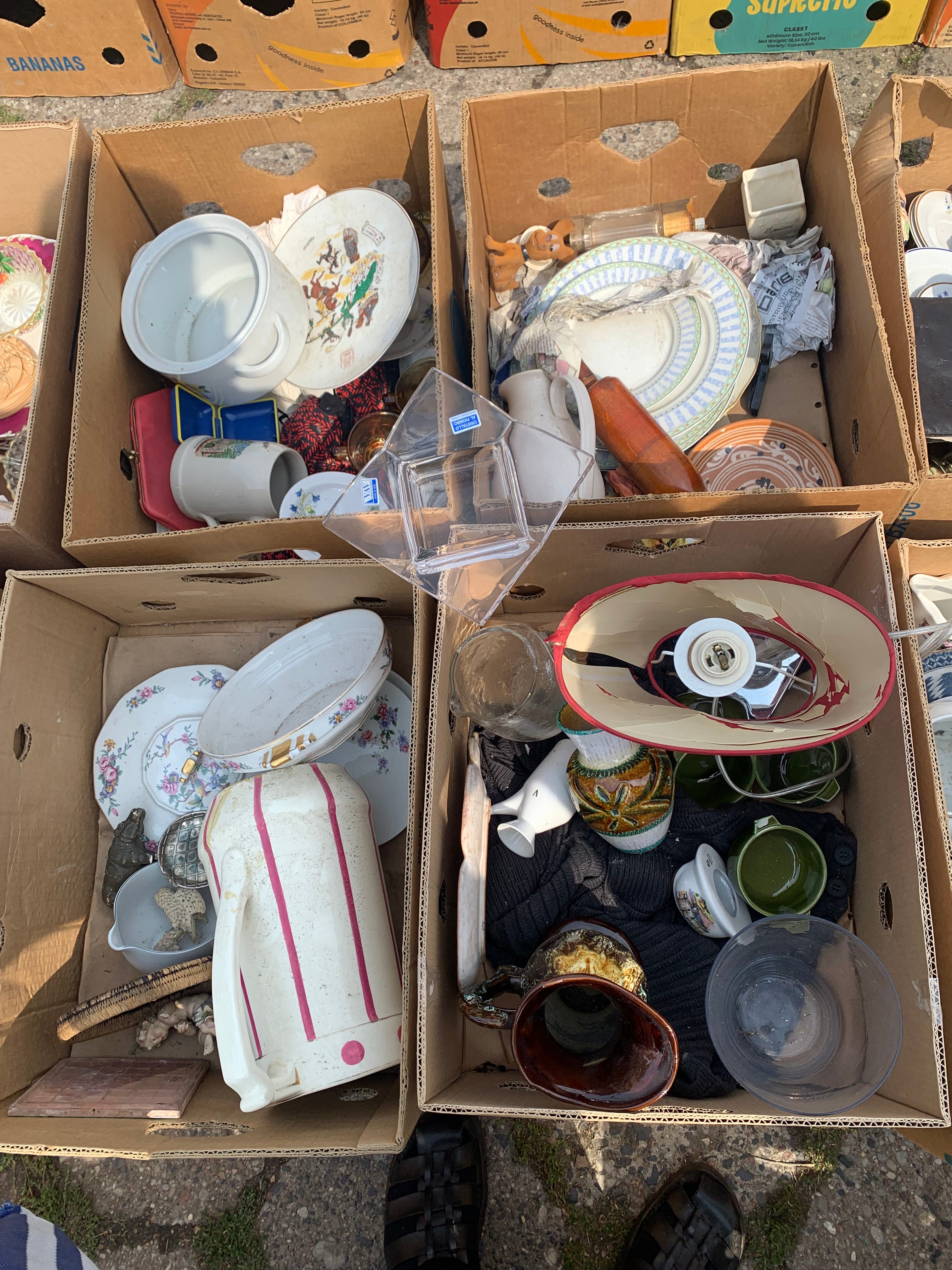
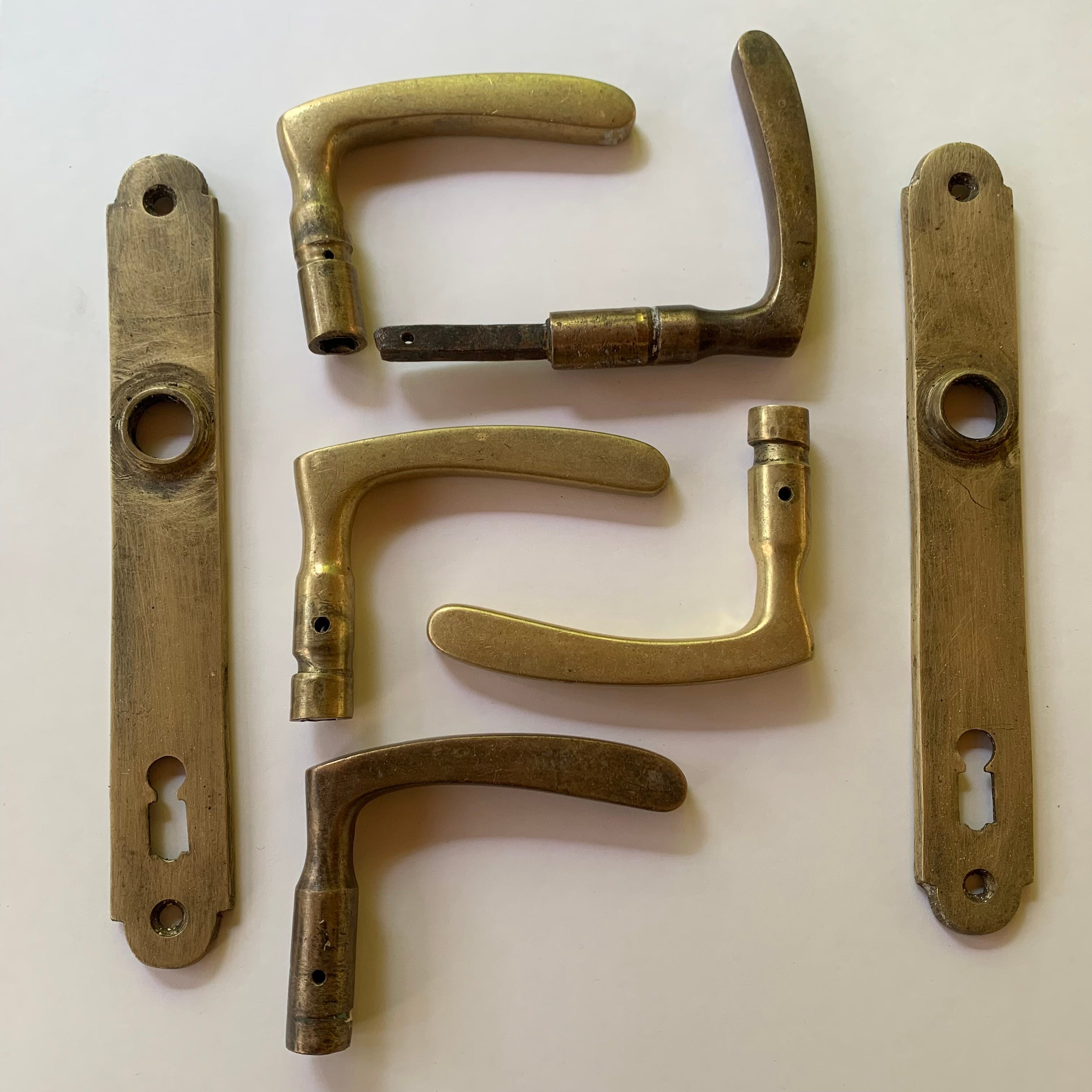
It did not look very promising. Just one of many cardboard boxes on the ground in front of a small wooden market stall. The stall holder specialised in metal household bric-a-brac. Cutlery, brass bowls, clothes hooks and ornaments. The boxes mostly contained bits and pieces of metal scrap that were not sufficiently interesting to display on the stall. I casually moved a couple of items in one of them. To my surprise, in the bottom of the box I found a door level that matched exactly those in our old house. I rummaged further and eventually found four others. It was thrilling to discover these personal treasures mixed in with the junk.
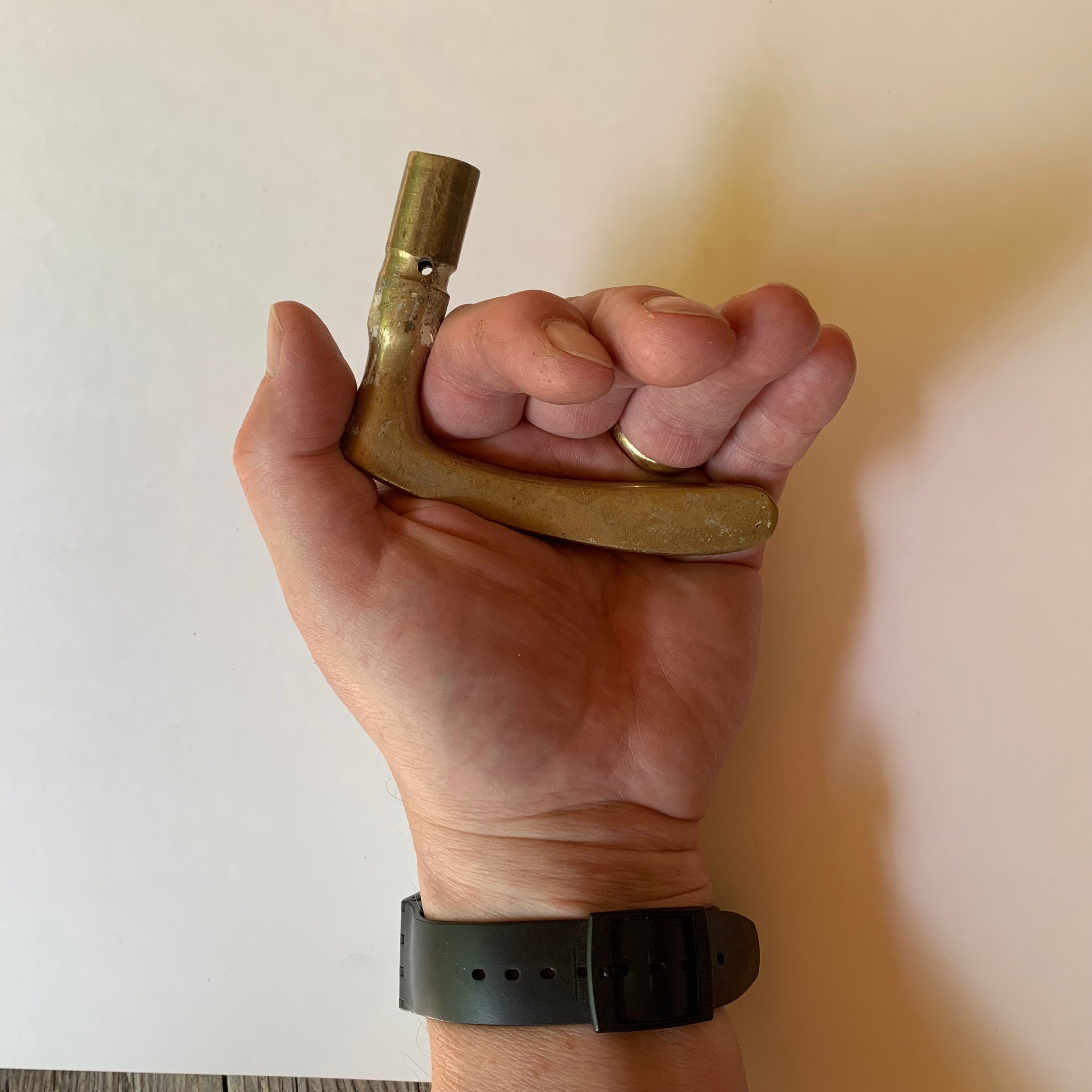
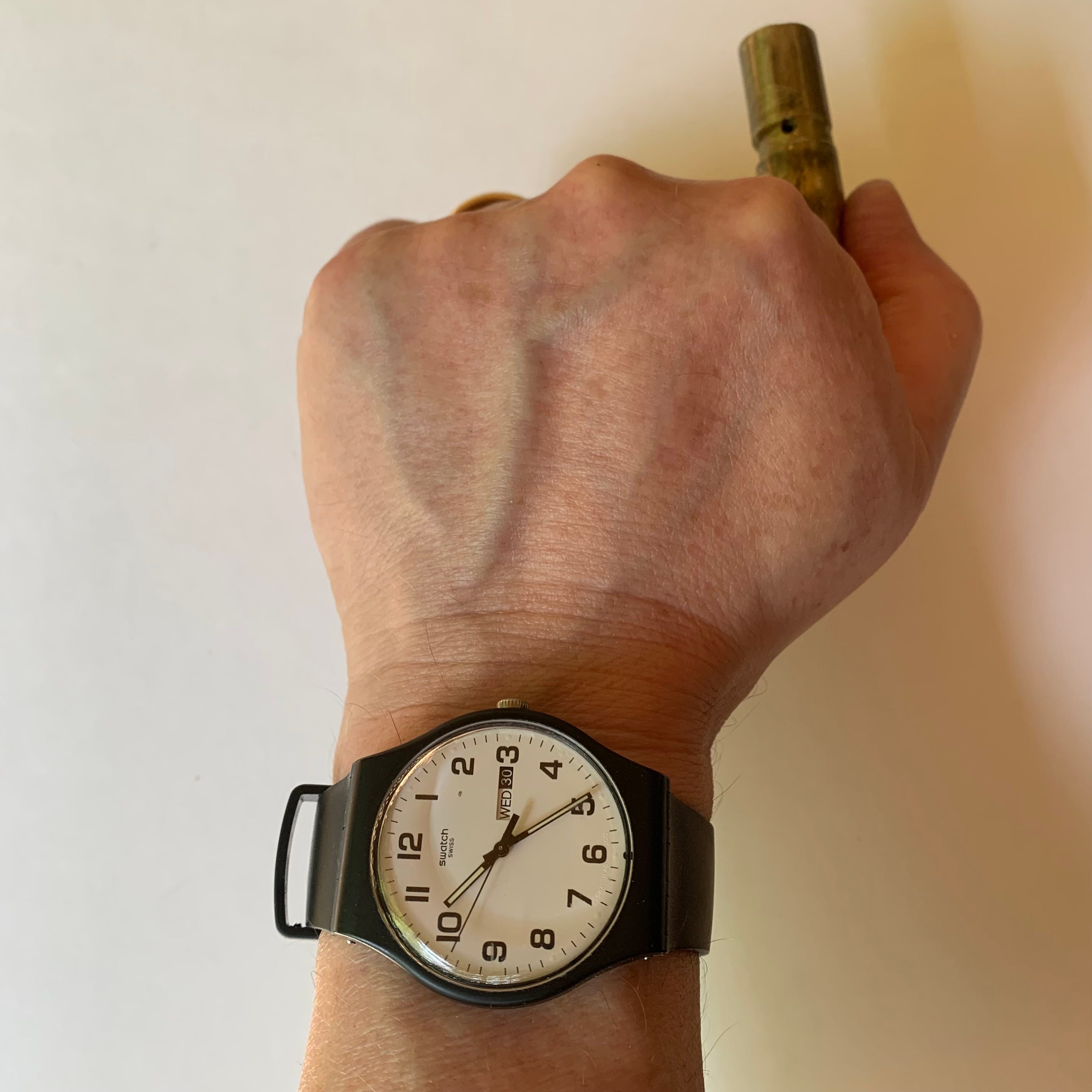
Our house, in the village of Mostówka, was built in the 1930’s as the holiday home for my wife’s grandparents, Bronislaw and Irena Szerszynski. Throughout the house, fine polished brass ironmongery was fitted to all the doors and windows. Few of the beautifully designed original fittings have survived the destruction of war and the wear of hard times. The door lever fits the hand perfectly, and the curved spindle moulding caresses the thumb. Door opening is like a warm handshake. We have yet to find modern fittings that come close to this level of sensual ergonomic refinement. We are hopeful that we may eventually restore all the doors to their original condition. For readers who share my obsessive interest in ironmongery The Hoxton Chronicle 087 discusses other aspects of the topic.
The door-level treasures were discovered at the Bazaar na Kole flea market in Warsaw, a famous destination for optimistic treasure hunters with a nostalgic love of old junk. The stall holders are all of this cast of mind. They lurk grimly by their stalls, seeing value and utility in what most potential customers browsing the market see as curious, redundant, and mostly worthless. They are certain that among the passing crowds will be a rare individual who shares their sensibilities. It is a game of hope and waiting and gleaning a small income from cheap, meagre sales. Given that most of their stock has cost nothing to collect other than time and patience, sales protect 100% profit margins. Many towns in Poland hold Flea Markets, though Bazaar na Kole is the most famous. We are now regular browsers, hoping to repeat our door-handle finds.
The markets start early. Shortly after dawn, the professional dealers browse the stalls. We have never been up early enough to witness this process of sorting and refining the offers from the random tide of objects. Frequently these early risers are specialist traders seeking new finds to add to their stock. Military memorabilia, coins and medals, tools, crockery, children’s toys, paintings, sculptures, old furniture, cameras and redundant technology are common at specialist stalls. Through the remarkable skill and judgement of these traders, many intriguing and beautiful stalls emerge from the sifting and sorting. In one market we saw a stall specialising only in concertinas. We wondered if concertinas were purchased frequently on impulse, and if you really wanted one, would you search a village flea market to find it. We speculated that the stall holder was an exception stoic, blessed with immense hope and patience. Another stall sold only stuffed Disney characters. The traders car served as his market stall, packed to overflowing with Mickey and Mini mice of all sizes that spilt from the interior to cover the roof and car bonnet.
The life cycle of all products follows a sequence of stages. It begins with design, followed by manufacture, sale and use. Finally, after use comes a stage of redundancy, breakdown or loss of desirability. Flea markets are the last chance for products in this final state to find new users. If products fail to attract renewed interest here, they will inevitably join the tides of dumped waste or, more optimistically, become feedstock for the rapidly improving materials recovery or recycling industries. Flea markets are museums for browsing where the collection is not curated but is for sale. Their attraction shares much with metal detecting. It is a form of preemptive archaeology.
The old world charm of the flea market, based on chance encounters between the eternally optimistic stall holders and browsers testing their luck, is under threat. Now the internet connects an entire world of browsers with an infinite array of recovered objects, however apparently useless or rare. It is remorselessly efficient but utterly charmless. The analogue market continues to excite the pleasure of encounters with people in places and connect new users with products they did not know they needed or wanted. Its core pleasure flows from its inefficiency and chance nature of encounters between people and things.
Perhaps, on the right day, in a creative moment of madness, I could discover the desire and need for a concertina, or indulge my nostalgia feelings by buying a Soviet-made Zenith E camera that I treasured as a student long ago.
To read past Hoxton Chronicle posts, please download the free Substack Application, search for the Hoxton Chronicle and subscribe.
No posts
Comments
Nothing yet. Say the first thing.
Sign in to join the conversation.