
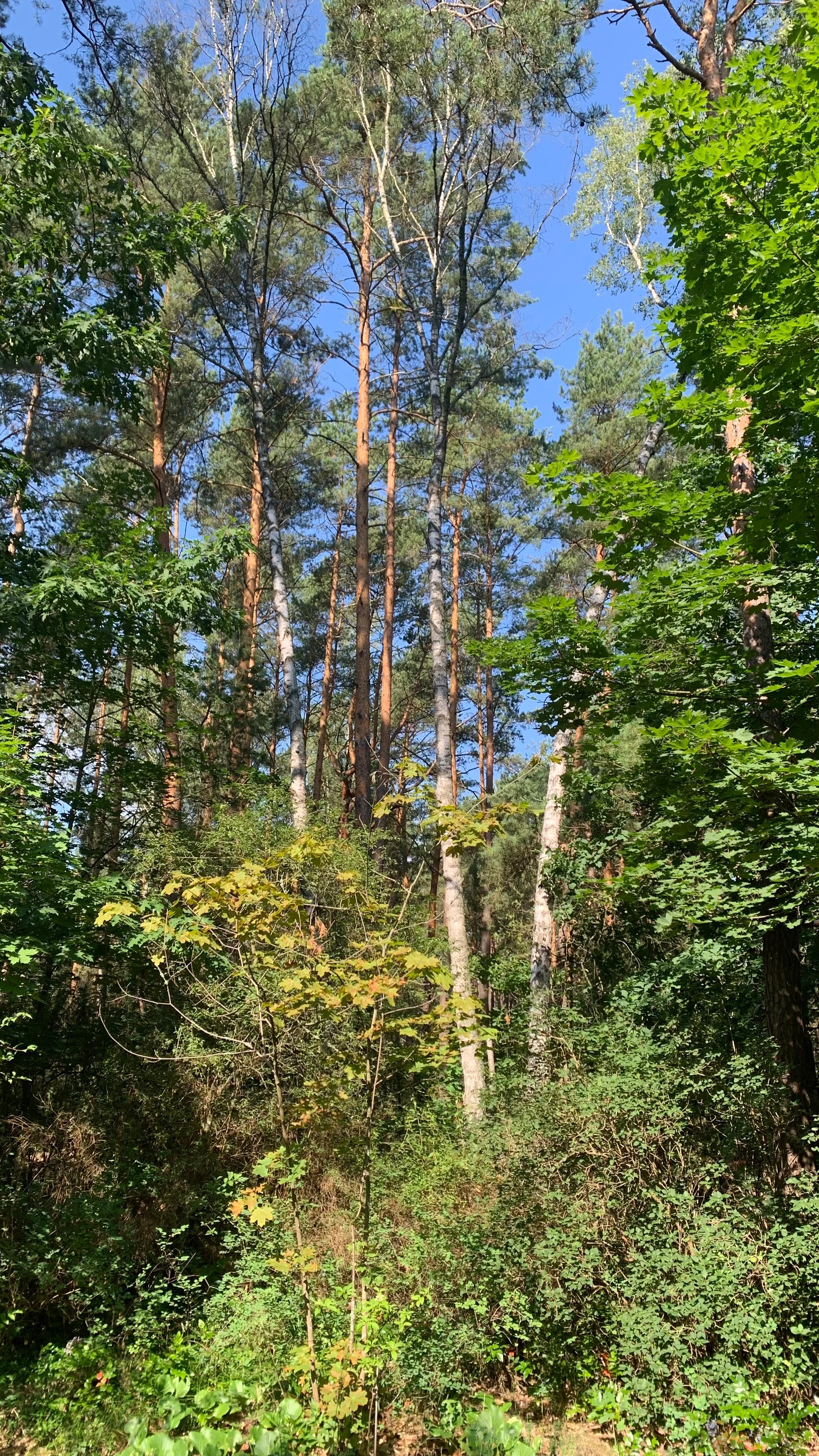
We knew it was coming. It was just a matter of time. Winters can be brutally cold. It is a minor miracle that any living thing can survive them to flourish in the spring. In summer, the heat builds up and then suddenly breaks in rolling thunderstorms, unleashing savage, swirling winds and driving torrential downpours. The wind dissipates the storm’s pent-up energy, bringing down dry, dead branches and testing the grip of old tree roots in the loose sandy soil.
Silver birches are pioneering trees that are the first to reforest open land. They appear fragile and delicate but, despite appearances, can survive the harsh winters and, when young, can bend to resist summer storms. They grow quickly but live for no more than 60 to 90 years. Longer-lived, more substantial pines, maples, and oaks are gradually replacing the old silver birch trees in this part of the forest
After the last of these summer storms, one of the old silver birch trees fell onto the roof of our neighbour’s house.
Days later, Pan J appeared at our door dressed for action in a peaked cap and overalls. We have no idea how he heard about the fallen tree. Village news is gathered and transmitted across an invisible network that relays messages to Pan J. His solution to our limited ability to speak Polish is to gesture his meaning, reinforced by speaking at an ever-increasing volume. He needed to borrow our ladder. He did not need the wheelbarrow that we offered. With the ladder handed over the fence, he and his grandson set about clearing the fallen tree from the roof. The chainsaw made short work of cutting branches and trunk into manageable pieces. These would soon be split and stacked to dry for winter fuel. The old tree was near the end of its life, already brittle and probably half-dried before it fell, so the house withstood the impact without serious damage.
Pan J returned the ladder and pointed out three more old silver birch trees close to our boundary fence. With gestures and a flow of Polish at high volume, he communicated that these three trees were in a dangerous condition and should be felled. He confirmed that he would come back soon with men and a tractor. The three condemned trees frame the view of the forest from our front door. We were sorry to hear that they must go. They could fall in either direction, into the forest or onto our house. We knew Pan J was right.
A few days later, news arrived. Men and a tractor would be here in the afternoon. After some preparation and clearing of the ground, the borrowed ladder was propped against the first tree. A steel cable was then attached high up on the trunk and hauled tight by the tractor to direct the tree’s fall away from the boundary fence and our house beyond.
There was a problem starting the chainsaw. Eventually, after several vigorous tugs of the starting cable, the engine coughed into life. First a wedge shape cut was made on the side of the tree in the direction of fall. The chainsaw engine then revved to full power, and the main cut began. It took less than a minute until the tree began its fall. Slowly at first, then with gathering speed. As it fell, the tree trunk broke into sections and brought down branches from the adjacent pines. It landed with a dull thud on the soft mossy forest floor. Then there was silence, soon broken by the sound of chainsaws rendering the fallen tree into logs. With equal despatch, the second tree was soon cut down. The third was deemed safe enough to stand for a while longer.
The felling of trees is a melancholy sight. Knowing that these were at the end of their lives did not soften the shock of seeing a gap in the canopy where they once stood, swaying majestically. The sadness is a sentimental city person’s emotion. To the foresters, the important element is not the individual trees but the collective health of the forest. Light will now flood the forest floor, and the century-long process of renewal and carbon-cycle growth will begin again. Unlike sentimental observers, the foresters know that nature conservation is the labour of managing constant change.
To read past Hoxton Chronicle posts, please download the free Substack Application, search for the Hoxton Chronicle and subscribe.
No posts
Comments
Nothing yet. Say the first thing.
Sign in to join the conversation.