
On his first visit to the Smithsonian Institution in a decade, historian Jody Edward Ginn was shocked to find “a museum for activism,” with “factually incorrect information” and key realities left out. The Smithsonian was “the highest-profile symptom of a process that’s been going on for some time,” a lot longer than people might think.
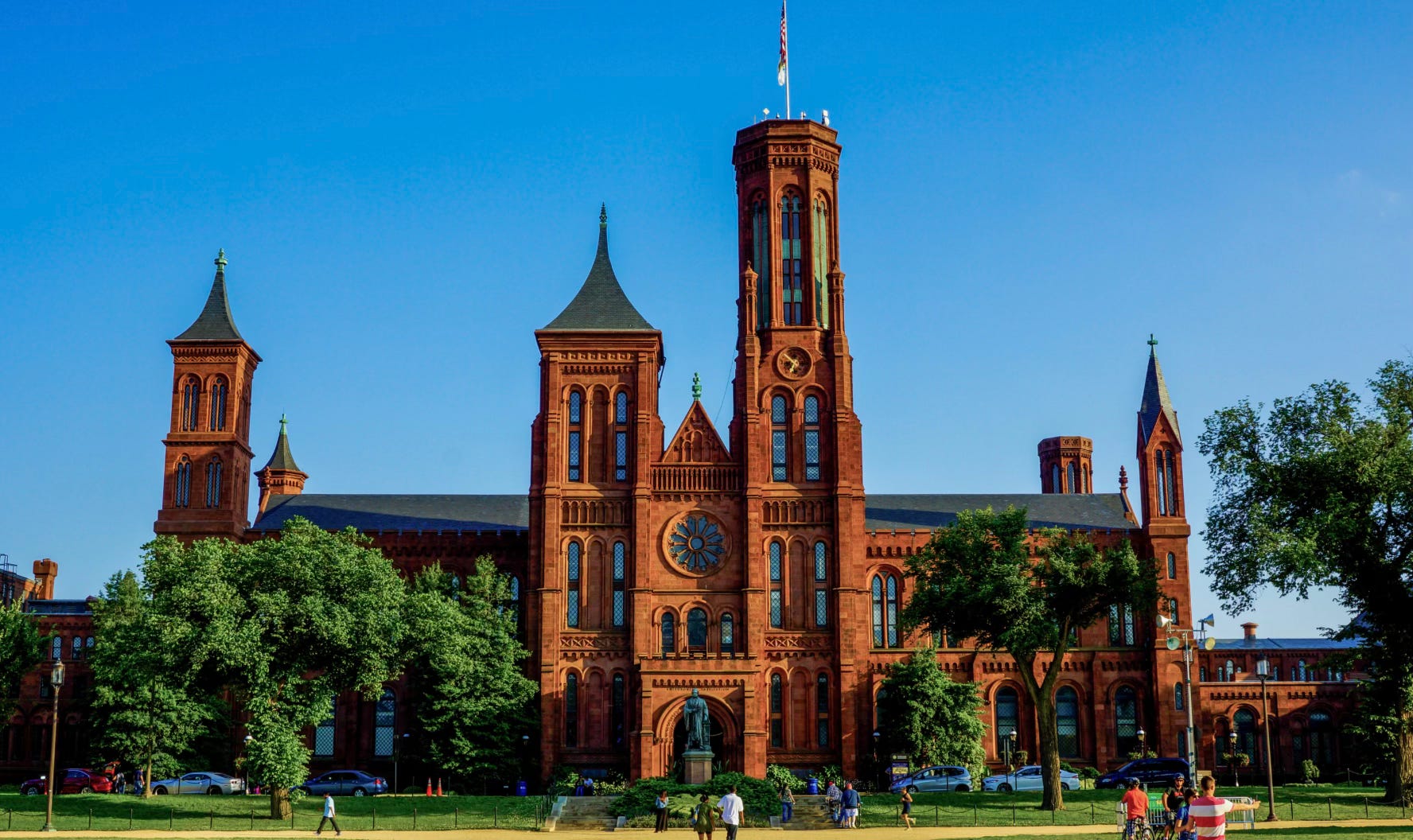
On October 12, 1996, the Washington Post published “Institution with an Attitude,” my take on the Smithsonian’s slide into political correctness, what would now be called woke or DEI propaganda. The article was based on “Assault on the Smithsonian,” which I wrote for the September 1996 issue of Heterodoxy. A few excerpts reveal what the Smithsonian was up to 30 years ago:
Earlier this year, Robert Maranto of Lafayette College observed that “today’s history curators quite naturally favor the masses-as-morons paradigm. It serves as self-justifying protection against anyone who objects to the single-minded direction of the new history curatorship. The masses-as-morons history values top-down moralizing over the mere sharing of information. It thus replaces the exhibiting of objects and events with the exhibiting of ideas.
In this process, the script describing the exhibit becomes the artifact because, as Maranto observed, objects and events are open to interpretation and require one to think for oneself. Some Air and Space Museum visitors have splattered blood on the missiles exhibited there, while others marvel at their technology or sheer size, thankful that they helped keep the peace. But thinking for oneself, Maranto observed, is “a task the new history curator is unwilling to trust to the masses.”
Caitlin Collier, who spent a semester at the Smithsonian with the UC Davis internship program in 1993, reports much discussion about pushing the museum’s objects into the background and placing new emphasis on “subjective” views on the accompanying labels, with all the usual code words “diversity,” and “multiculturalism.” When one staffer raised the issue of the labels’ commitment to truthfulness, he was greeted with icy stares.
During Collier’s stay, a group of history curators who spent time in Cuba were eager to conduct a joint project with the Castro regime, which responded that these overtures “signal a deepening commitment to tighter cultural and professional bonds between our two countries.”
Some would hold that, as the last celebrity communist dictator, Castro himself ought to be stuffed and displayed in the museum. The Smithsonian’s enthusiastic overtures to his regime seem all the more suspect given the museum’s cavalier rejection of a section of the dismantled Berlin Wall—an educational artifact if there ever was one.
In “Working People of Philadelphia,” museum guests are told that “whatever their race or gender, Philadelphians found that the revolution had not solved their problems of social and economic inequality.” A label about sailors of the day puts “free market” in dismissive quotes, a kind of ideological scowling, and sneers that the seamen were “free to be unemployed,” the sort of thing Soviet economists used to say about Western societies.
The Smithsonian’s Air and Space Museum—with 8 million visitors a year, the most popular museum in the world—produced a prototype Enola Gay exhibit that in early stages portrayed fascist Japan as a victim of Western imperialism and the United States as a kind of Dr. Strangelove villain. American GIs “brought with them racial bigotry, boastful national pride and free-spending habits. . . wherever American troops traveled, babies were fathered and venereal disease rates soared.”
After the Enola Gay debacle, [Smithsonian secretary Michael] Heyman proposed a series of academic seminars. The first, “Presenting History: Museums in a Democratic Society,” at the University of Michigan on April 19, 1995, featured leftist stalwarts Eric Foner, Noam Chomsky, Todd Gitlin, Richard Barnet, Daniel Ellsberg and Victor Navasky, who condemned the Smithsonian for supposedly caving in to the veterans and the American Legion.
In 1992, Robert McCormick Adams responded with a 15-member task force to examine their record on including and hiring Hispanics. The administration’s choice to head the task force? Professional Hispanic Raul Yzaguirre, chairman of the radical National Council of La Raza. To the surprise of nobody, the professional Hispanics said the Smithsonian had neglected them and demanded a museum about themselves and a special office for “multicultural initiatives.” Yzaguirre now serves on a Latino oversight committee monitoring how the Smithsonian implements the recommendations.
“Science in American Life” showed a cartoon from a Nation of Islam publication ascribing racist motives to white doctors advocating birth control. “Alarmed about overpopulation in developing countries,” reads one label, “the U.S. government had tied foreign aid to the establishment of birth control programs abroad. At home, some government officials saw similar programs as a way to slow the rising costs of welfare.”
And so on, prompting columnist Georgie Anne Geyer to accuse the Smithsonian of “gerrymandering with the cultural soul of the nation.” Just so you know, Heterodoxy was the first publication to take on political correctness in museums, the media and the academy. Readers can access all bac issues at this link.
Comments
Nothing yet. Say the first thing.
Sign in to join the conversation.