
A few decades ago, I created a Musical About George Gershwin.
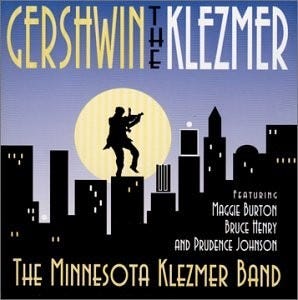
I plan to write a PQ post about it soon. Before legal entanglements scotched the project, we did hundreds of performances in dozens of places, not only where we started out in Minnesota, but across the U.S., from South Florida to California, and even at 2 AM in at the ancient Saraya in Tsfat, Israel.

We sold a lot of tickets and earned a lot of great reviews.
The show (later under the title The Soul of Gershwin) featured three singers, an actor portraying Gershwin on stage, and a band—also on stage.
The singers sang the songs, the band played them, and Gershwin talked.
All Gershwin talked about was his music. He never mentioned his mother, his father, his feelings towards breastfeeding, his sex life, or his opinions on imperialism or Freud’s theory of dreams. He talked only about his music and where it came from.
Then the rest of us and sang music; at least half the music was not by Gershwin.
I just wanted to delve into the genesis of all those great songs—just for one example, where the spectacular Rhapsody In Blue portamento came from (if this video does not appear here in your market, you should be able to access it by clicking on Watch on YouTube):
Because George Gershwin’s music is why we care about him in the first place.
Likewise, George Washington’s accomplishments in history are why we care about him. From 1775 to 1783, Washington served as American Commander in Chief throughout the eight brutal years of our Revolution. In 1787, he presided over the Constitutional Convention which laid the basis of our government. As everyone knows, he was our first President under that new Constitution.
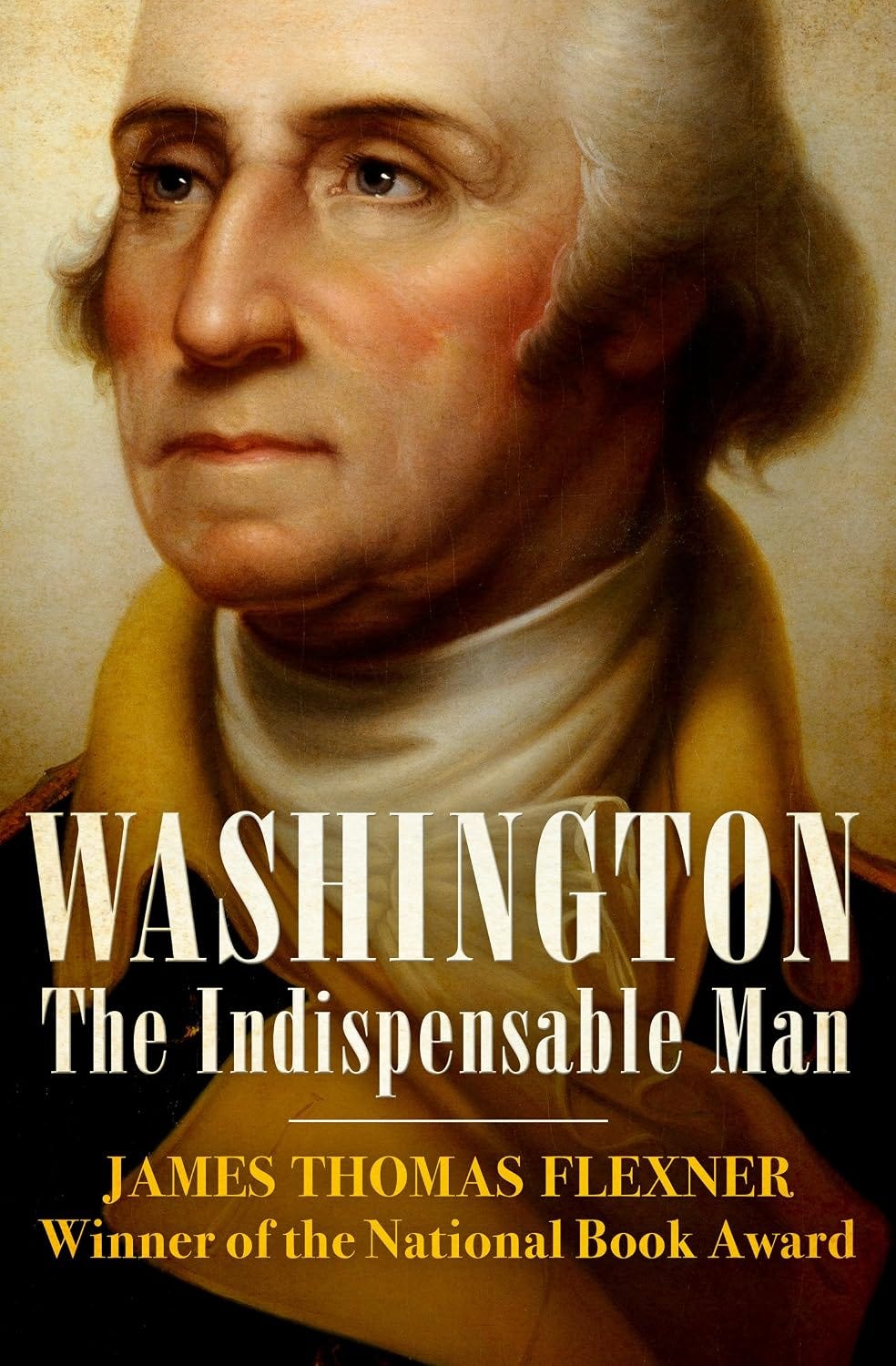
Washington was what we used to call in our quaint naivete a “hero,” whom historian James Thomas Flexner elevated to “The Indispensable Man.”
But where does a hero come from?
We live in an age of blockbuster hero movies. Studios think nothing of spending $300 million on a new megahit in the hope that it will bring back billions.
One of the original blockbuster epics is 1977’s Star Wars. When he created Star Wars, George Lucas consciously rooted its science fiction story in the “monomyth” outlined in the 1949 book Hero With A Thousand Faces, by Joseph W. Campbell, the man Lucas called “my Yoda.”
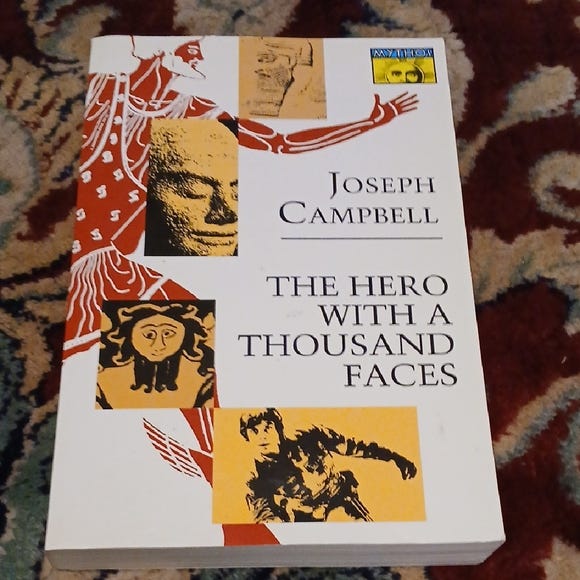
For movie screenwriter convenience, a fellow named Christopher Vogler has boiled Campbell’s ideas down into a seven-page summary called A Practical Guide to Joseph Cambell’s The Hero with a Thousand Faces.”
I guarantee every director and screenwriter for every superhero movie has read this short “Practical Guide.” In the course of writing this post, I read it too. This is its conclusion:
“To Summarize: The hero is introduced in his ORDINARY WORLD where he receives the CALL TO ADVENTURE. He is RELUCTANT at first to CROSS THE FIRST THRESHOLD where he eventually encounters TESTS, ALLIES and ENEMIES. He reaches the INNERMOST CAVE where he endures the SUPREME ORDEAL. He SEIZES THE SWORD or the treasure and is pursued on the ROAD BACK to his world. He is RESURRECTED and transformed by his experience. He RETURNS to his ordinary world with a treasure, boon, or ELIXIR to benefit his world.”
Actually, my favorite sentence in the entire Practical Guide is this one:
“The hero’s supreme ordeal may grant him a better understanding of women, leading to a reconciliation with the opposite sex.”
Now we’re really passing into the realm of myth.
If the storyteller’s job is to make up stories about fictional heroes, following the Vogler Guide seems to bring success, at least if success means raking in billions of dollars in ticket sales, Comic-Con honoraria, and, “where the real money from the movie is made”—“moichandising”:
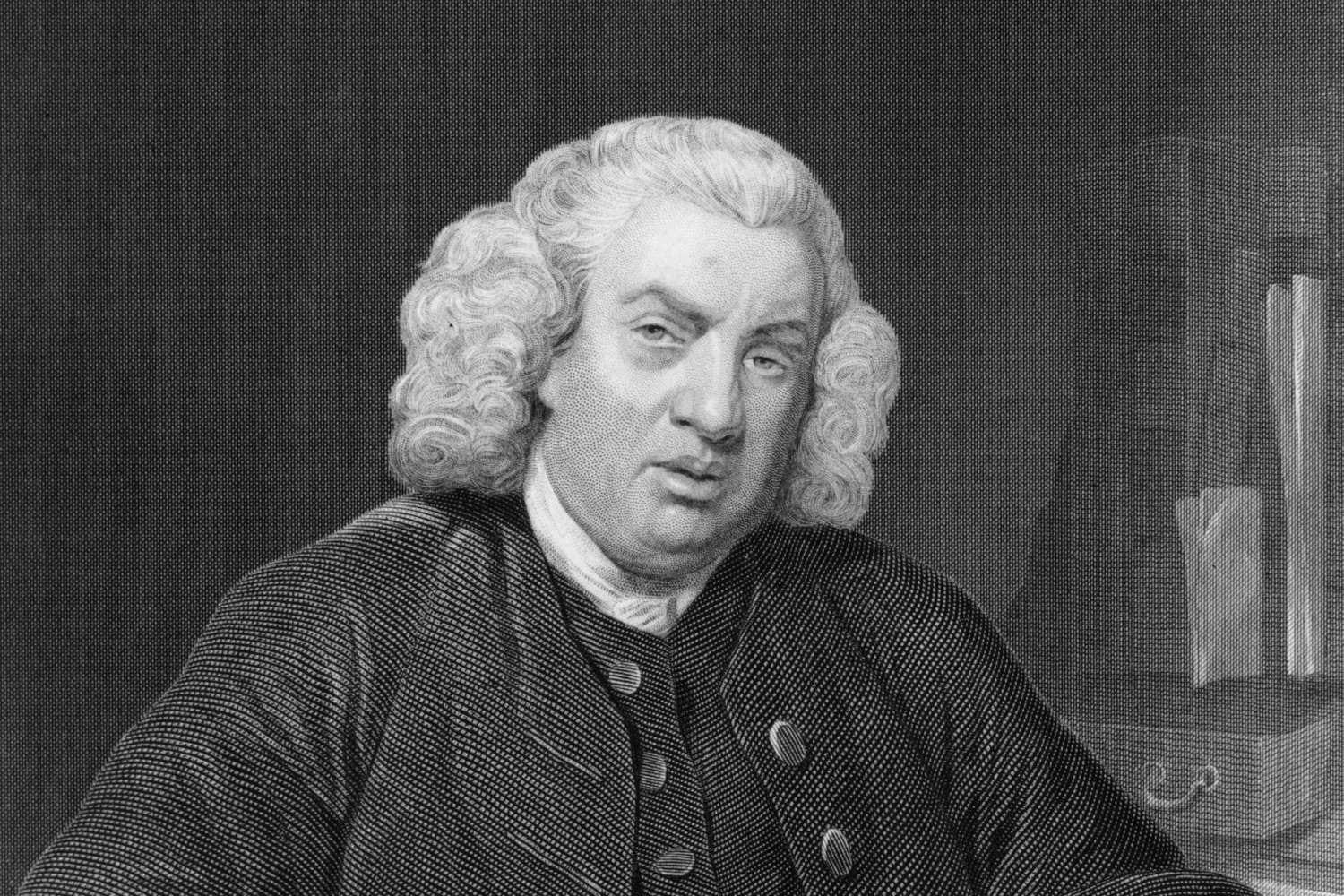
Fine. I’m pro-profit. According to one of my favorite 17th century English polymaths Samuel Johnson, “No man but a blockhead ever wrote except for money.”
But I do have a cavil, a quibble, an objection, and a quarrel.
This so-called “monomyth” is not entirely mythical. After all, real heroes do exist: consensus-challenging scientists like Louis Pasteur and Marie Curie, Congressional Medal of Honor winners and other great soldiers, myriads of others we’ve never heard of, and especially—for the purpose of this post—George Washington.
On July 9, 1755, stricken with a potentially fatal dysentery, 23-year-old George Washington was lying no more than half-conscious in a beat-up wooden cart near the Monongahela River, then called the “Ohio” wilderness, nowadays near Pittsburgh.
Traveling with the British Army as volunteer aide to General Braddock, Washington possessed no military rank. At the sounds of the nearby Battle of Monongahela—which his side was losing and eventually lost—Washington crawled from his cart, grabbed a horse and rode straight into the war. There he found a dying Braddock, accepted his general’s delegation of command, rallied the British regulars, saved the remnants of his own Virginia militia and did spectacular deeds of derring-do which I challenge any mere Spiderman to come close to.
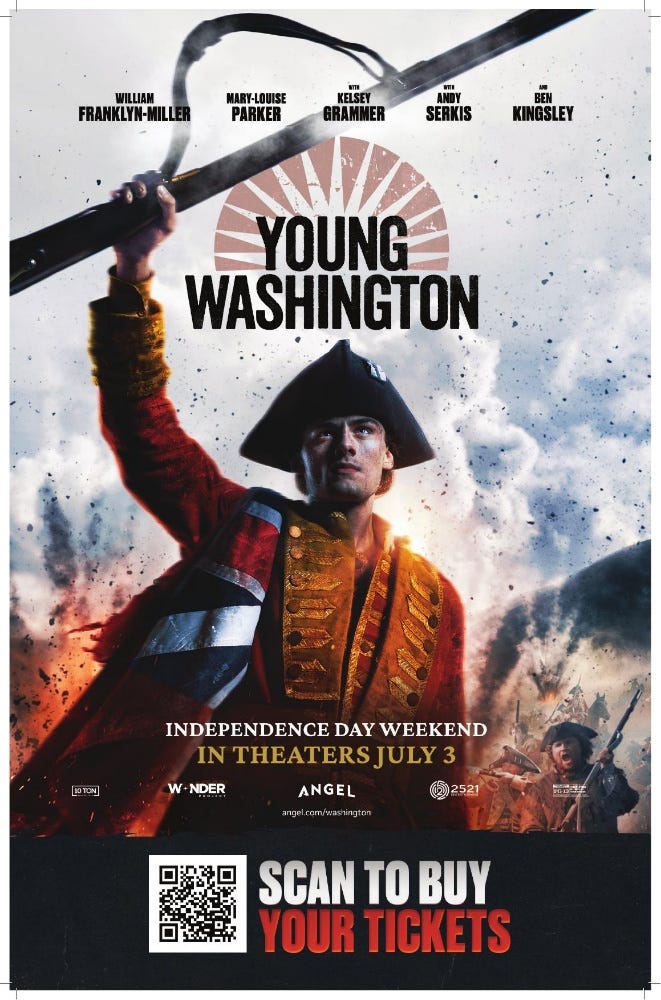
This is my token spoiler: in the movie Young Washington, the enemy shoots Washington’s horse out from under him. In real life, Washington had two horses shot out from under him that day.
Washington came back from this battle with four bullet holes in his coat and one in his cocked tricorne hat.
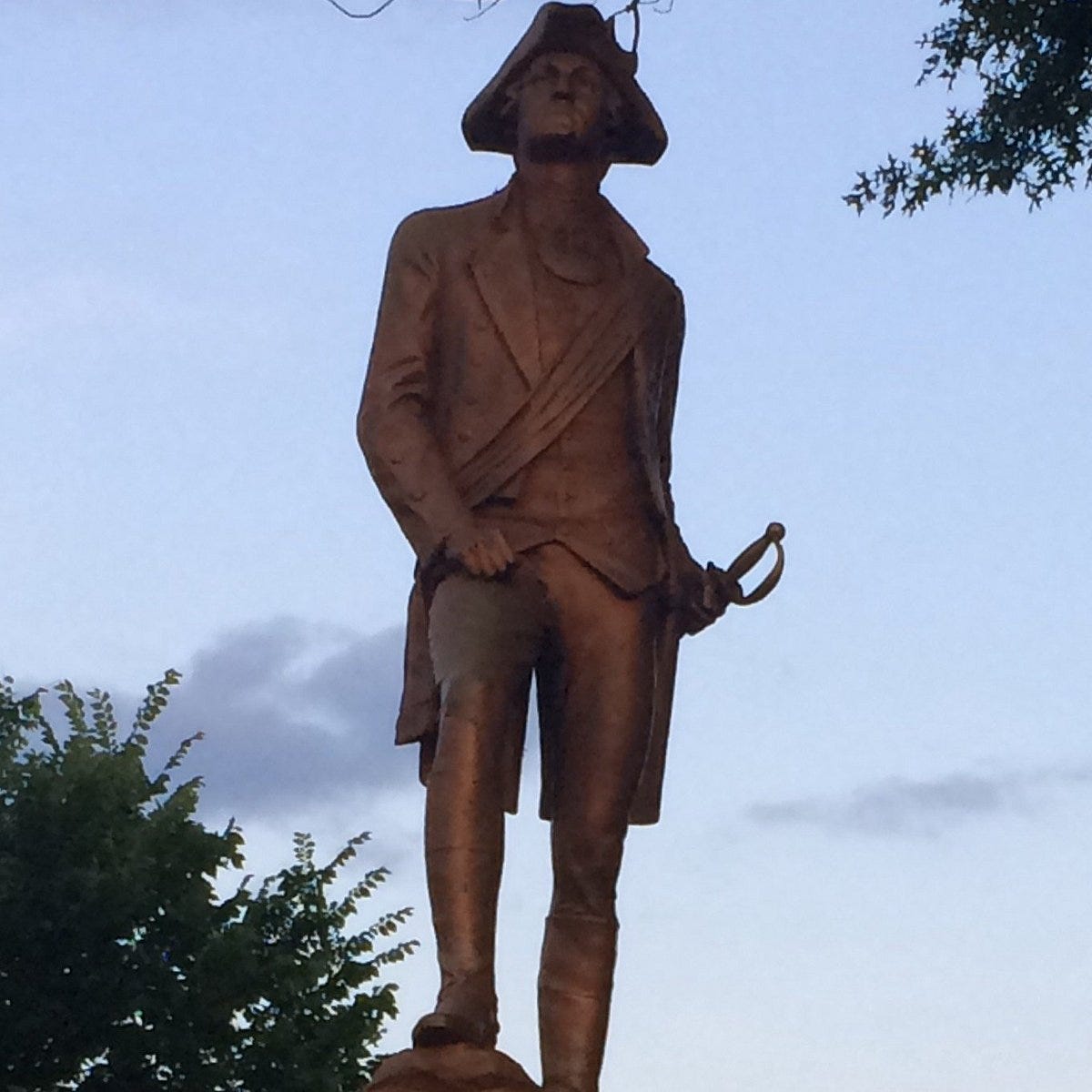
“Truth is stranger than fiction, but it is because Fiction is obliged to stick to possibilities; Truth isn’t.” as Mark Twain wrote in Pudd’nhead Wilson’s New Calendar.
How turn into a biopic the story the hero who in real life performed absurdly heroic deeds? Deeds which if you saw in a movie you’d never believe?
I say, if you’re making that movie, stick to what matters. Where did this man come from? What formed him? What was he thinking?
According to our present mores, George Washington had flaws. Some want us to think only about them. Yes, in a society and economy based entirely on slavery, he owned slaves. His relationship with a certain young woman may have been suspect—hard to say from three centuries later—though some give it a try.
Perhaps most damning of all for Hollywood purposes, he developed bad teeth, a defect which in current Hollywood culture condemns him to unsuitability. Clooney’s advisors would never let George play him.
As far as I’m concerned, we’re back in Gershwin territory. I personally don’t care about extranea. They are not what matters most about George Washington.
The movie Young Washington focuses on the story which matters.
And it didn’t take $300 million to make. It took only $10 million.
Despite what seems a modest budget, it displays topflight production values equal to Hollywood’s best. Even the sets are compelling. It is beautifully filmed, well-edited, well-costumed, well-acted, and intense in the viewing almost beyond moviegoer endurance.
From noted humorist Susan Vass, whom I convinced to take two hours from her CC5 preparations to watch it with me: “Stunning! A study in physical and moral courage. Made me feel like an unworthy wimp!”
As another unworthy wimp, I report to you this is a good movie worth watching.
Max Cossack lives with his wife Susan in a dusty little village in Arizona with two wimp cats who live indoors and show no interest in any journey. hero or otherwise.
Also, in case you missed his novel Blessed With All This Life, one reader described it this way: “This novel has no apocalyptic threats, no gunfights or car chases; it just lets you come along on a thoughtful recounting of meaningful life events, fun times and hanging out with people who consistently try to do the right thing for neighbors near and far. I stayed up past my bedtime, enjoyed every minute, and came away with some of the blessing myself.”
Comments
Nothing yet. Say the first thing.
Sign in to join the conversation.