
Saturday June 20th 2pm Techne Art Center 1609 Ord Way Oceanside California
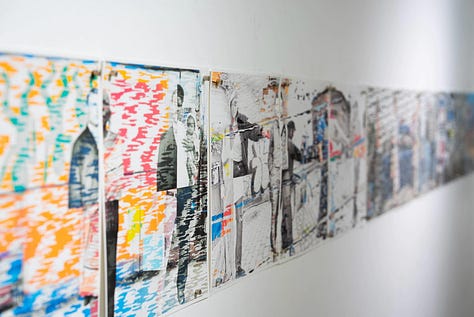
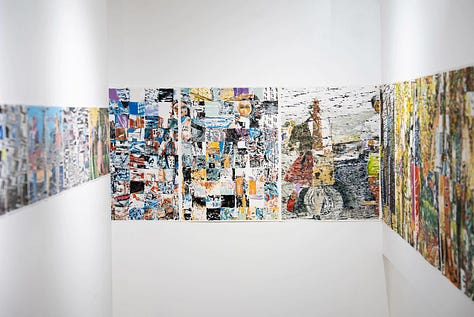
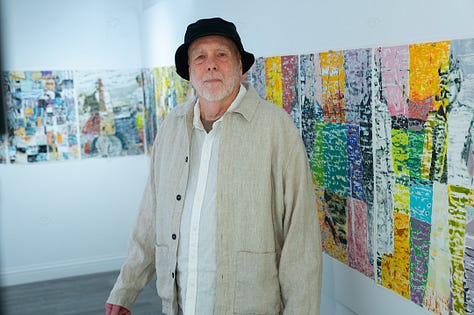
I will be speaking on the paintings and collage prints from my DEMOGRAPHICS cycle installed in the upstairs “L” shaped hallway at Techne.
As with any paintings, these have three main qualities: first is their subject, second is how they are painted, and the third is how they are seen by a viewer.
The Subject ––
As references for the DEMOGRAPHICS paintings, I made photo collage studies which feature front-facing figures made from photographs of clothed people from around the world. I universalized them by collaging them into mixed gendered and mixed cultural humans. I set these figures in environments made from panoramic photos of urban, suburban, and rural locations.
The universalizing of the figures is achieved by dividing photos of people into quadrants, then recombining the quadrants into new figures, typically, with two female and two male quadrants –– like our biological grandparents. A symbolic representation of the biological and cultural multitudes each of us contain.
This basic template for DEMOGRAPHICS is triptychs where four figures appear. One figure each on the two outside panels plus half figures on the inside edge of those panels. The center panels have a half figure on each vertical edge. When placed contiguously, the three panels form a triptych showing four figures.
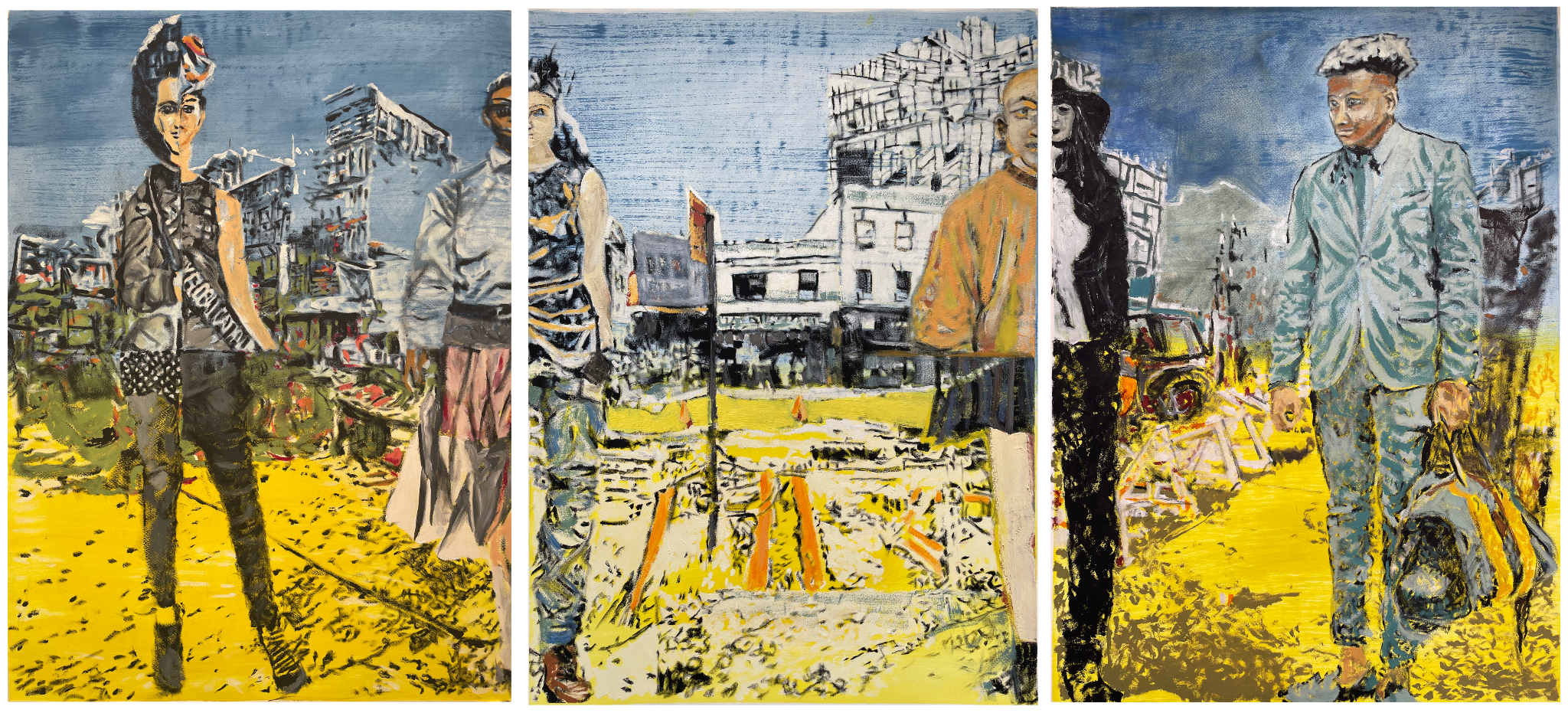
A few groupings in the DEMOGRAPHICS cycle are quadtychs instead of triptychs. These show five figures.
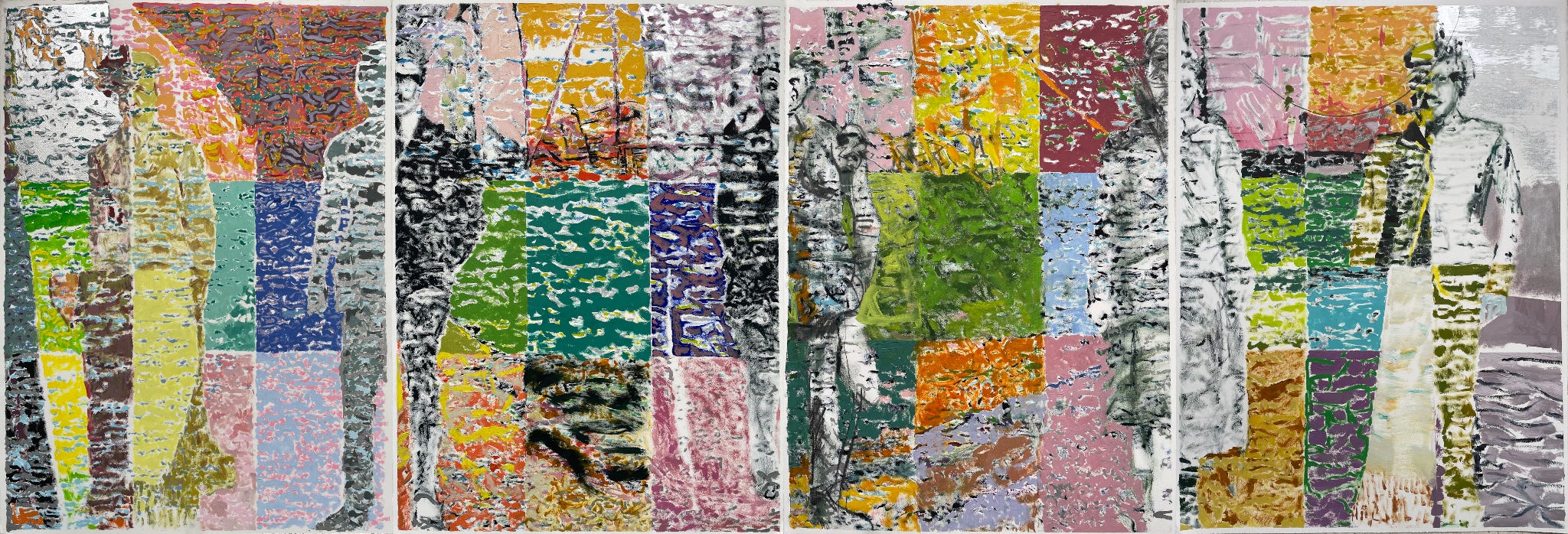
In installation, two end panels may be hung together without a center panel. This arrangement creates a diptych showing three figures.
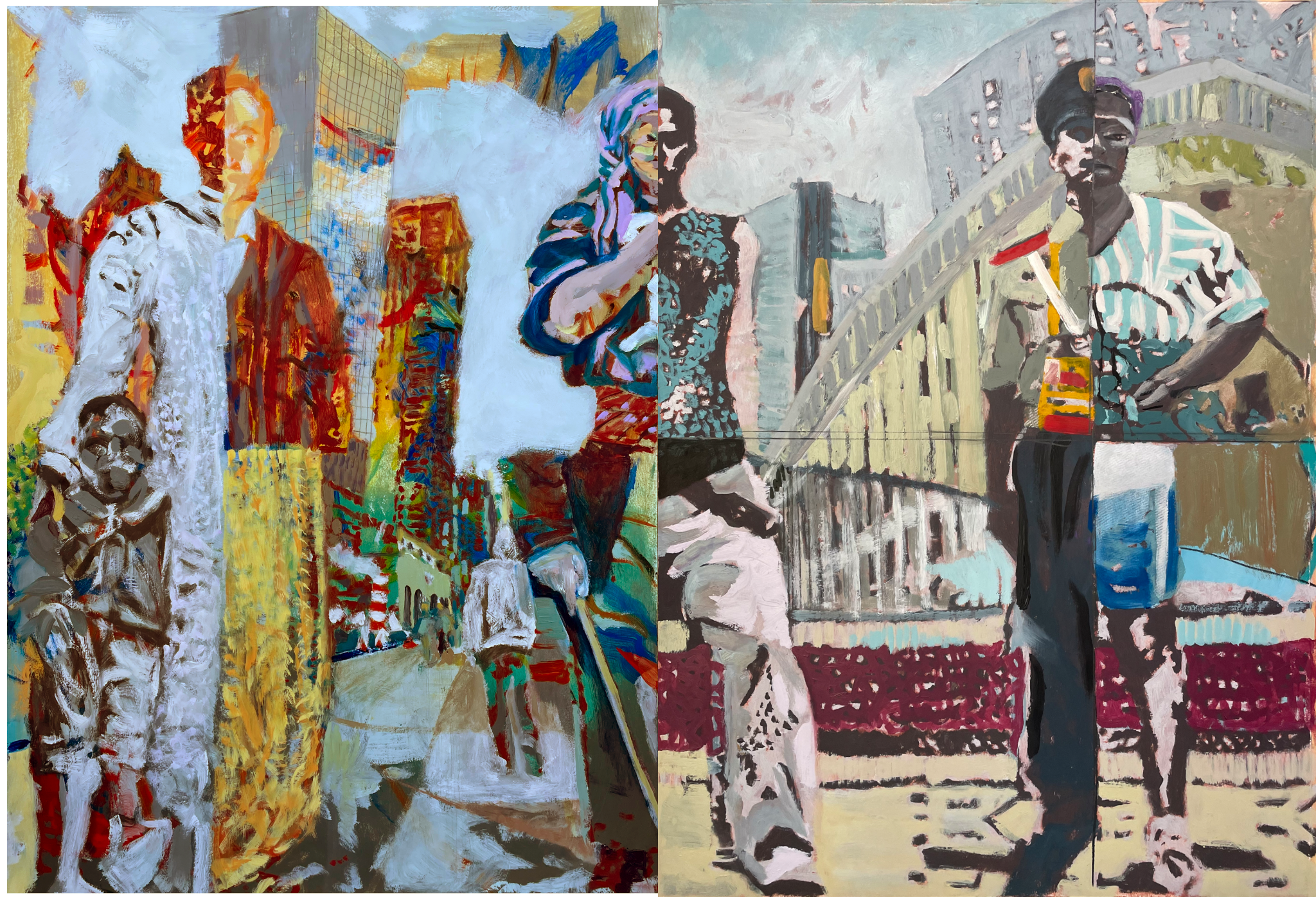
The subject of DEMOGRAPHICS is appreciation of humans in their environments.
How I paint –––
The purpose of paintings with recurring layouts is to allow for improvisational variations on the theme. The DEMOGRAPHICS cycle allows me to produce over 300 separate variations. Since there are so many, I feel free on each one to paint unique solutions.
I like to paint the surface of the object in the painting and allow its boundary edges to be formed by where I stop painting it, rather than outlining it. I like to paint the shapes from their insides out. Also, I prefer to paint any naturally occurring lines as shapes.
Outlines create a false clarity. Boundary lines don’t exist in nature.
I want the painted ground to be as important as the figure. There is no background in my paintings, only foreground.
I paint forward, applying paint where I have not yet painted, I must strengthen any weak stroke by painting strong strokes next to it. I don’t allow myself to scrape off or cover over weak strokes.
I paint to completion, one panel at a time. I start the painting with a projection of the study and continue improvisational painting while referencing a printed copy or a digital tablet display of the study.
It is very important to me that the environments surrounding the figures be painted as thoroughly as the figures. This represents my basic vision that we and everything around us are made of the same stuff.
The viewer–
Painting communicates when a viewer sees it. DEMOGRAPHICS paintings prompt the viewer to form complete figures from parts, to distinguish the figures from the ground. Because any viewer sees both what is before their eyes and what is within their vision, all viewers see paintings uniquely. The “real” art is images formed in the viewers’ minds.
Comments
Nothing yet. Say the first thing.
Sign in to join the conversation.