
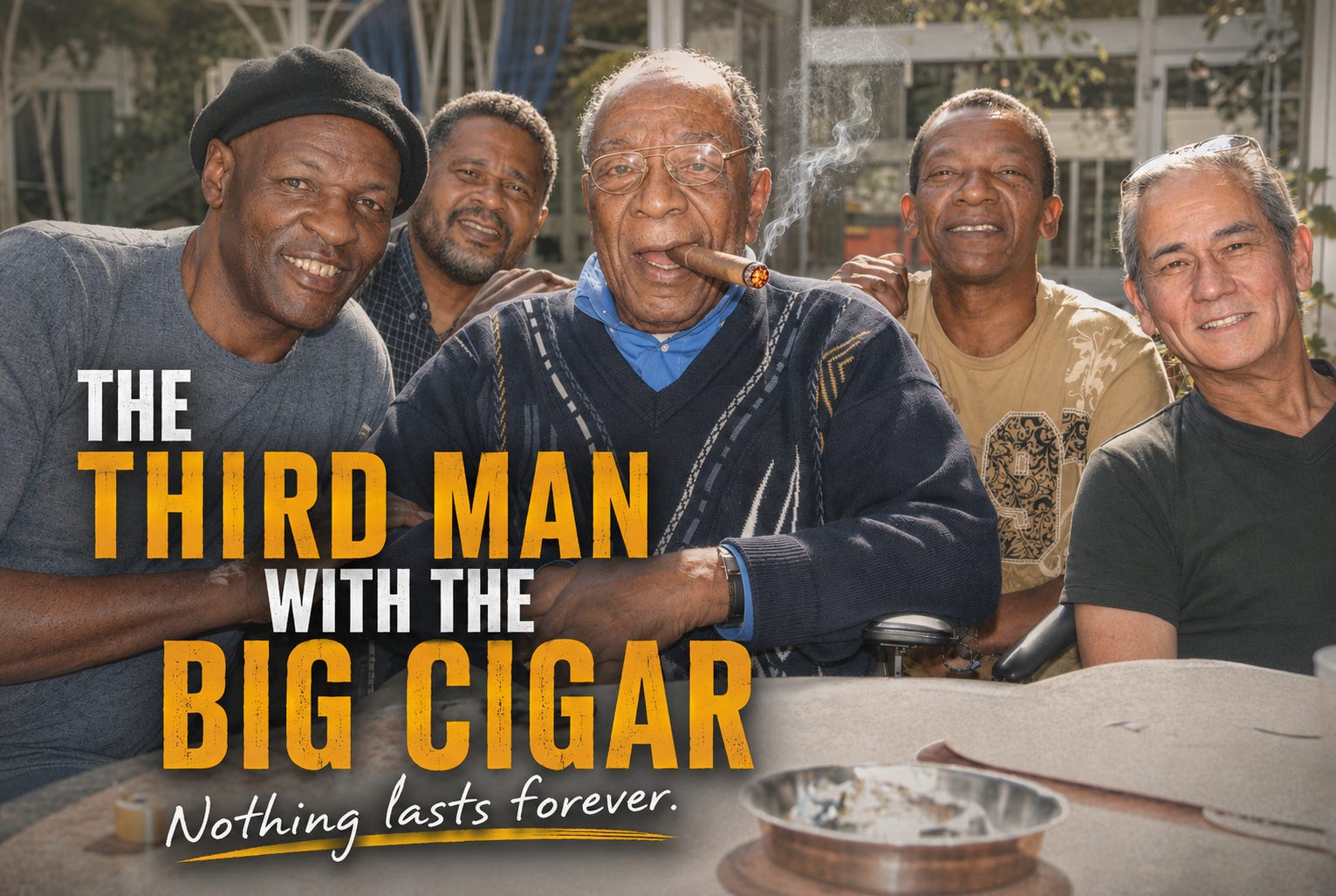
The rumour came first, the way rumours always come in closed communities, sideways and half-formed, passed between people who were not sure they believed it themselves. The foreign police had found out we were there illegally, or were about to find out. Maybe someone had tipped them off. Joe was the one who brought it up first, and Joe’s relationship with paranoia was long and complicated, so we weighed it accordingly. But Albert had also been patient with us for six months, and even the most generous man has limits, and thirteen people living above your club using your utilities and testing your goodwill is way past most people’s limits. We were, as I admit, like roaches. Once you had us in your place, we were not easy to remove.
The decision was made the way most of our decisions were made, not at a meeting, not with a vote, but through a slow accumulation of unalterable reality until only one direction remained. We had to move.
Bright went ahead as an advance scout, which was his particular talent. He had a nose for possibility and the confidence to walk into a room and start a conversation, and he applied both in the south of Holland and across the border into Germany. He ended up in Aachen, a university town just inside the German border from Maastricht, and there he walked into a pub one night called the Domkeller and met a man named Omar Van Prince.
Van was Black. That mattered to us in ways that are difficult to explain concisely. We had been managed and directed and produced and employed by white Europeans for two years, all of them well-meaning in their fashion, all of them operating from a frame of reference that was not ours. Pepe had been generous and exploitative in equal measure. The castle had been real but the ownership was someone else’s. Everything we had moved through had been someone else’s infrastructure. Van Prince was the first man with a big cigar who looked like us.
He was a New Yorker, a Shakespearean actor who spoke French, Italian and some German, a supreme hustler and a storyteller of the first order. He had stories about Miles Davis, Sidney Poitier, Paul Robeson, Quincy Jones and more. He used to tell us about Quincy’s failed attempt to bring his big band to Europe and try to do something similar to what we were trying to do, and what a disaster that turned out to be.
We didn’t believe him but it turned out to be true. He was a big part of the New York music and acting scene of the fifties and sixties, stories so raw and specific that you couldn’t decide whether to believe them or simply be grateful that someone was telling them. He was bigger than life and had a way of sharing stories that surely couldn’t be true yet later you found out they were.
Van had a bone to pick with Sydney Poitier that he returned to often. According to Van, he had been the one who took Sydney under his wing when he first arrived in New York, green and barely speaking English, and Sydney had never properly acknowledged it. Van would go off on him regularly, that ungrateful black ass Sydney, and we would listen with the usual grain of salt we applied to all of Van’s stories about the icons of the New York scene. The stories were always extraordinary and always self-serving, and we had learned to appreciate them for the entertainment value while reserving judgment on the facts.
A few years into our relationship with Van I took a short holiday in Ibiza and brought a few books along, one of them Sydney Poitier’s autobiography This Life.
I was sitting on the balcony of our apartment when I got to the part where Sydney described arriving in New York for the first time, barely speaking English, washing dishes by day, listening to the BBC by night to learn the language. And then he mentioned a man he said he would never forget, someone who had befriended him when he had nothing and nobody. Omar Van Prince. He wrote about Van’s kindness in terms that left no room for doubt. I ran downstairs to reception and called Van immediately. I told him excitedly that he was in Sydney’s book, that it was all there, that I was sorry for not believing him. Van was completely nonchalant about it. He called Sydney a bunch of motherfuckers and complained that he hadn’t seen a dime for the use of his name. New Yorkers were hardcore.
Wolfgang, who owned the Domkeller, had partnered with Van on an idea that had turned the pub into a holy spot for the local university crowd: American spare ribs with a special barbecue sauce that you simply could not get anywhere in Germany. It sounds simple. In 1972 Aachen it was a revelation.
Michael came back to Amsterdam with the news that he’d found the next gig and we did what we always did. We took down the tents, rolled up the mattresses, said goodbye to Albert and the bleachers and Carlos and the nightly inventory of forgotten narcotics, packed everything into the van, and headed south.
The Domkeller was warm with dark wood and alcoves and booths, the kind of place that feels like it has always existed and will continue to long after everyone is gone. There was a bell in the church nearby that rang on the hour in perfect fourths, and I used to take my saxophone out after hours and practice to it because the harmonics were extraordinary. Germany gave us something Amsterdam never had: a permit to stay for a year. For people who had been living on borrowed time and other people’s goodwill since crossing the French border, a document with your name on it and an official stamp was not a small thing.
But we were drawn back across the border constantly, because in Holland you could smoke hash without consequence, and hash had become the rhythm section of our daily life. There was a pub in Maastricht called Knijpke, in an old heritage building with a converted cellar and a bar with a piano. A second room with a cheese bar where you could get a plank of Dutch and French cheeses and the most delicious bowl of onion soup and escargot in garlic butter sauce that made you question every meal you had ever eaten before. Jeff who ran it was a large Dutchman with a big heart and a love of music, and he fell in love with the band immediately and let us play as much as we wanted.
Which meant crossing constantly from Aachen to Maastricht.
There were three routes to get from Aachen to Maastricht. The main border you avoided like the plague unless you had no choice. This would often happen if we missed the wrong turnoff on the highway. At what we called “the big border” they would always pull the van over, pull all the equipment out, go through everything, repack it wrong, and eventually let us through. Once they pulled everything out, put it back, and in the process planted a vial of dope on us in plain sight and took us to jail. That was because we were Black and very funkadelic and to them we looked suspicious, which in 1972 at a German border crossing was reason enough for some of the guards to do their duty. We didn’t stay in jail long, but we didn’t forget.
The Vaals border was where they trained the border guards. Every time we went through Vaals they would bring the students out and use our van and us as a practical examination. They were like ants, dozens of them going through everything with the enthusiasm of people who had not yet learned that the point was to find contraband, not just look busy.
Herzogenrath was the best border. A quiet road if you could find it, one small booth, sometimes empty. You’d pull up, they’d wave you through, and like magic, you were in Holland. Knijpke, the cheese plank, the onion soup, Jeff’s open arms, and hash that didn’t require a border crossing to obtain.
We spent nearly a year in the orbit of Aachen and Maastricht, crossing and recrossing, playing both sides of the border, finding girlfriends in Holland, trying to legitimise ourselves through whatever paperwork we could obtain. Michael found a girl who he would eventually marry. As it turned out, her father was the head of the foreign police. He was no happier about a Black American dating his daughter than any white man in Louisiana would have been in the same situation.
And that is where Van Prince, and his new crew, with his stories and his contacts and his supreme confidence, found us our first big record deal.
Next week, Hans van Hemert, Angel Eyes, the Dutch album cover of the year and the Hit song I refused to sing!
A postscript on Van Prince — after this chapter was written, a Dutch newspaper profile surfaced that confirmed what we could never quite believe. Van Prince studied acting at The Dramatic Workshop in New York alongside Marlon Brando, Walter Matthau and Tony Curtis. He knew James Baldwin personally. He believed he was blacklisted during the McCarthy era, which was what drove him to Europe. He spent time in Rome during the production of Cleopatra. Every story he ever told us turned out to be true. He just never mentioned the half of it.
“Quick heads up before I go… Bill and I are back at Cardea June 25th celebrating 25 years of making music together. Looking forward to this one.”
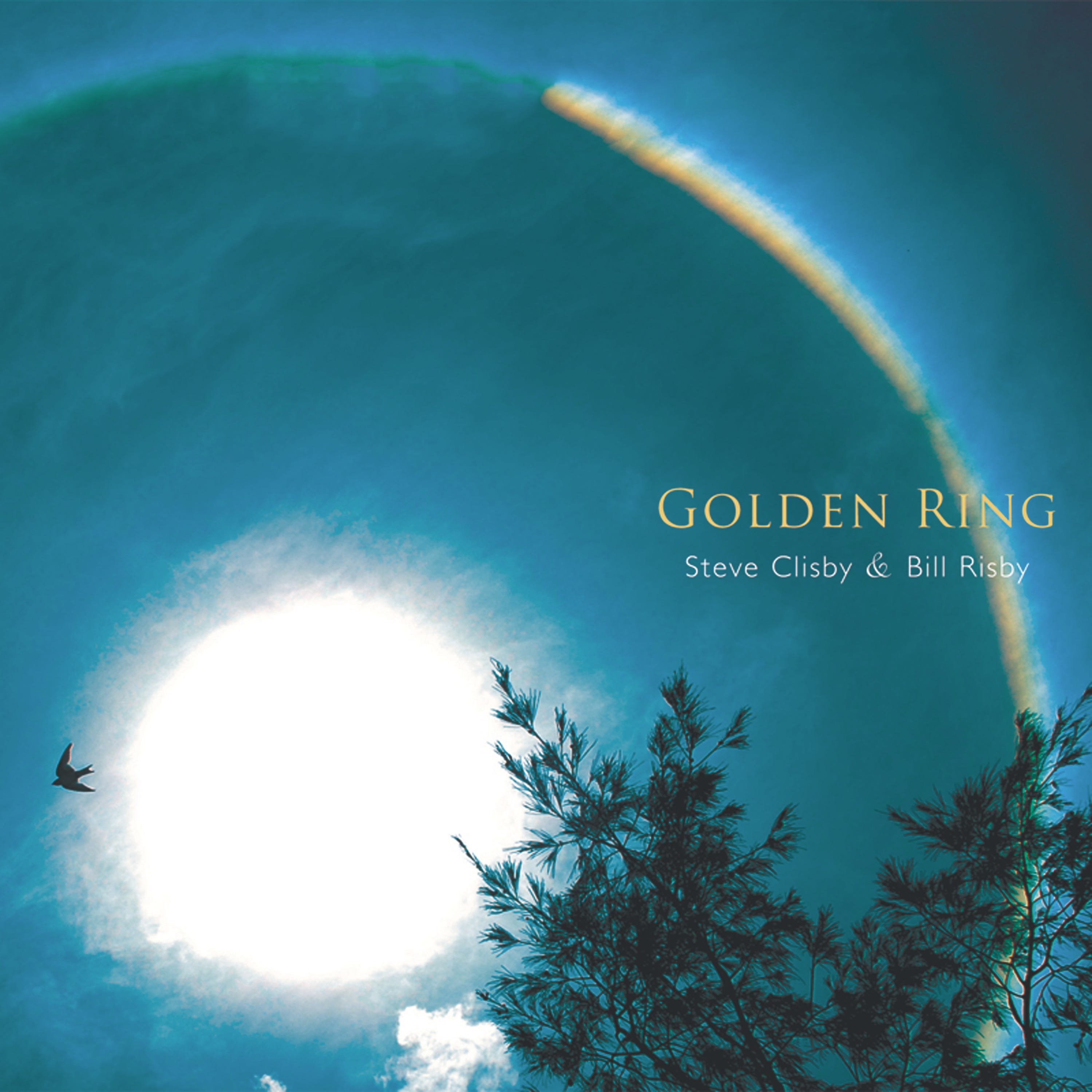
The song Golden Ring was written as an afterthought. We needed one more song for the first American Gypsy album. I wrote it and forgot about it. Nenah Cherry recorded it in in 1996. The royalties paid my way to Australia. Twenty years later Bill Risby and I put our names on an album called Golden Ring that got five stars in Vibe Magazine. Some afterthoughts have a long life. It's yours. Free.
No posts
Comments
Nothing yet. Say the first thing.
Sign in to join the conversation.