
I post quarterly updates for subscribers at Holodoxa to highlight items of interest and recap what I’ve been reading, writing, watching, and thinking. I also attempt to provide narrower recommendations to those who have a less omnivorous approach than me. See the “Monitoring the Situation” for Q1 of 2026 & for 2025’s quarterly posts → first quarter, second quarter, third quarter, and fourth quarter.
In my last update, I obliquely alluded to the events of Operation Epic Fury, of which about one month had elapsed. Events at the time were foggy as we were still in the thick of major combat operations. Those largely ended a week after the post, and the strategic outcome looks less favorable to U.S. interests, but, paradoxically, the questions brought to the fore by events (e.g. terrorist proxies, ballistic missile defense, drone warfare) seem further from resolution; this simultaneously creates reason for hope and dread. Regardless, these events appear to be of at least modest historical significance and will influence the military strategies and politics of many countries. It has my interest. I will continue to monitor the situation.
Otherwise, we’re probably settling into a slower news cycle as celebrations for America’s 250th kickoff and major decisions from the end of the SCOTUS term settle.1
Anyway, the second quarter of 2026 has come to and end, and it is time to recap what I’ve been reading and thinking about.

Here’s my book reading for the second three months of 2026:
21 completed books total across all formats (7 fiction titles, 14 nonfiction titles)
3 ebooks
3 print books
15 audiobooks
The Novelist by Jordan Castro [Audio] → Goodreads Review
James and the Giant Peach by Roald Dahl [Print] → Goodreads Review
Football by Chuck Klosterman [Audio] → Goodreads Review
University: A Reckoning by Lee Bollinger [Audio] → Goodreads Review
The Conservative Futurist: How to Create the Sci-Fi World We Were Promised by James Pethokoukis [Audio] → Goodreads Review
Primary Colors by Joe Klein [Audio] → Goodreads Review
Peter Pan by J.M. Barrie [Print] → Goodreads Review
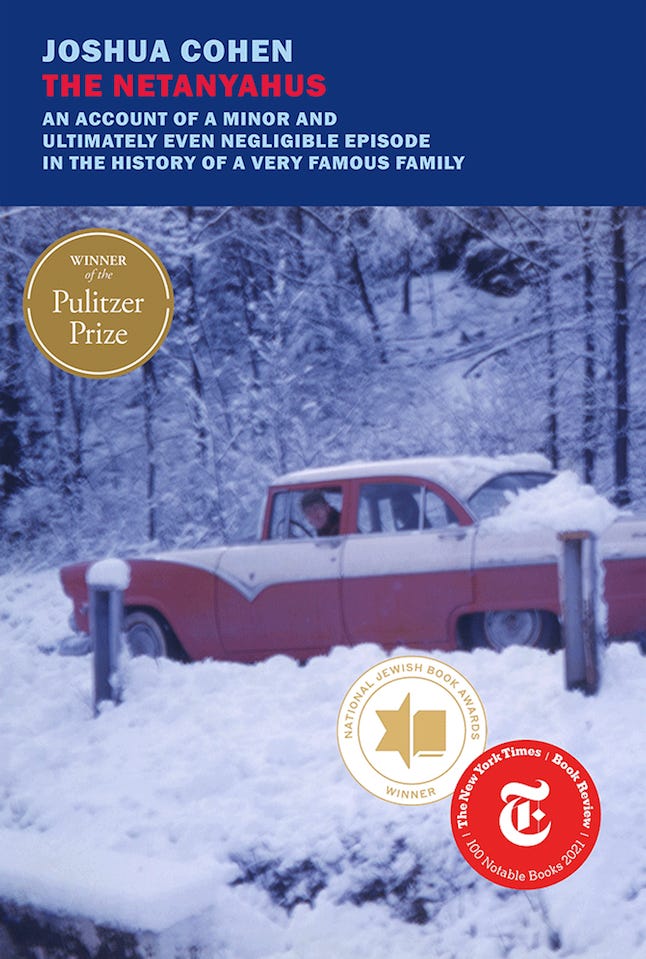
The Netanyahus by Joshua Cohen [Audio] → Goodreads Review
Last Branch Standing: A Potentially Surprising, Occasionally Witty Journey Inside Today’s Supreme Court by Sarah Isgur [Audio] → Goodreads Review
Dad Brain: The New Science of Fatherhood and How It Shapes Men’s Lives
by Darby Saxbe [eBook] → Goodreads Review, Substack Review, Podcast
Blood and Progress: A Century of Left-Wing Violence in America by Noah Rothman [eBook] → Goodreads Review
Empires of the Steppes: A History of the Nomadic Tribes Who Shaped Civilization by Kenneth W. Harl [Audio] → Goodreads Review
Gerontocracy in America: How the Old Are Hoarding Power and Wealth―and What to Do About It by Samuel Moyn [eBook] → Goodreads Review
Kill Chain: Drones and The Rise of the High-Tech Assassins by Andrew Cockburn [Audio] → Goodreads Review
The Wonderful Story of Henry Sugar by Roald Dahl [Print] → Goodreads Review
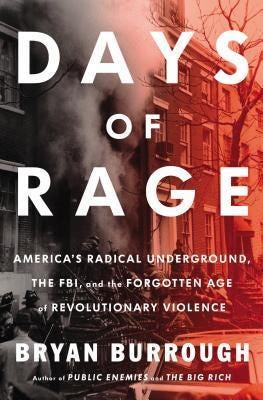
Days of Rage: America’s Radical Underground, the FBI, and the Forgotten Age of Revolutionary Violence by Bryan Burrough [Audio] → Goodreads Review
Television by Lauren Rothery [Audio] → Goodreads Review
Strange New World: How Thinkers and Activists Redefined Identity and Sparked the Sexual Revolution by Carl R. Trueman [Audio] → Goodreads Review
Almost Human: The Astonishing Tale of Homo naledi and the Discovery That Changed Our Human Story by Lee Berger [Audio] → Goodreads Review
After the Ivory Tower Falls: How College Broke the American Dream and Blew Up Our Politics—and How to Fix It by Will Bunch[Audio] → Goodreads Review
Everybody Loses: The Tumultuous Rise of American Sports Gambling by Danny Funt [Audio] → Goodreads Review
I’m also currently working through/finishing up Wittgenstein’s Mistress by David Markson, The Collected Prose, Volume 1: 1905-1928 by T.S. Eliot, and selected essays of Michel de Montaigne.
Any book that I took rated well on Goodreads and took extra time in reviewing are likely worthwhile reads depending on one’s interests or familiarity with a topic. From a more general interest perspective, I really think Days of Rage should be more widely read and discussed given some of the historical echoes of we’ve born witness to today.
Of the fiction I read, The Netanyahus by Joshua Cohen stood out. It was an arch way of exploring the pitched battled hosted by the Jewish American pscyhe, the push-andpull between liberal universalism/assimilationism and ethnoreligious particularism. The novel undoubtedly favors the former (it wouldn’t have otherwise won the Pulitzer), which reflects a truth about American Jewishness, but it doesn’t only satirize the fictional “Yahus” and finds their challenge to liberal universalism substantial.
The only television show I watched with much interest this quarter was the third and final season of Euphoria. The show began as a glittery and provocative coming-of-age story for a cast of LA-based teens, where the central figure, Rue Bennett, battles drug addiction in the wake of familial tragedy. The final chapter for the sometimes transgressive, often gratuitously raunchy and interestingly impressionistic show has been received as a disappointment. This has less to do with choices of the creator than critics have alleged and more to do with circumstances beyond the show’s control. Historically, long breaks between TV seasons are fatal for prestige and popular shows alike, at least if we have learned anything from how Game of Thrones and Stranger Things stumbled through their closing seasons. The momentum evanesces.
Relatedly, the change in age and fame of the several primary cast members—Zendaya, Jacob Elordi, Sydney Sweeney—and the untimely deaths of others, Angus Cloud and Eric Dane, created serious logistical and creative challenges. Many of the actors were apparently too busy to even shoot scenes together, giving the show a disjointed and discontinuous feel. Prominently, Sydney Sweeney dominates season 3. She’s risen so substantially and her contract gave Euphoria scheduling priority thus her character, Cassie Howard, moved from the show’s periphery to its center. In this way, the show’s psychological and emotional core shifted dramatically.

Some of the criticism appears to be a function of the seemingly shifting political tone of the show with the final seasons adopting an almost Old Testament moral universe. I think this thematic shift is over-emphasized and was already present in the past two seasons. Sam Levinson, the show’s creator, was less subtle about some of the satirical choices than before, and the post-woke environment in which the show landed made this clearer to viewers. It was merely obscured before by the show’s gonzo visuals and nominal diversity, e.g. Rue’s race and lesbianism, Jules’ transgenderism, etc.
Remember my usual disclaimers about these recommendations, i.e. they don’t function as endorsements. I’m keeping the list short again as I really have not been able to keep up with Substack reading as much as I’d like.
how you should feel about my cancer diagnosis by DeepLeftAnalysis🔸 (DLA gets a bit David Foster Wallacean here)
The first molecular data from Homo naledi by John Hawks (related to my reading of Almost Human)
The ballad of TIGIT by Abhishaike Mahajan (I had wanted to write something similar)
David Reich – Why the Bronze Age was an inflection point in human evolution by Dwarkesh Patel (This is a must listen)
Embryo Selection and Frontier Genomics with Dr. Alex Young – Manifold #111
Chatting with Prester John Andrews from Peter Banks & Prester John Andrews
Why Democrats and Republicans want you to pay $50,000 for a car from Jerusalem Demsas & Matthew Yglesias
Dan Hess: the end of Asians and humanity going to the retirement home from Razib Khan & More Births
Here’s what I’ve published on Substack recently:
Colossus: An Interview - I talk with Ross Barkan about his latest novel.
Born in Sin, Raised in Iniquity - I review Kathryn Paige Harden’s book on the genetics of sin
Are Great Dads Made, Born, or Selected? How Do We Make More? - I interview Darby Saxbe about contemporary fatherhood
The Once and Future Dad - I review Darby Saxbe’s book Dad Brain
I’m active on Substack Notes. Here are some recent selections:
Be back with you all soon!
Of note, I read a book about SCOTUS this quarter.
Comments
Nothing yet. Say the first thing.
Sign in to join the conversation.