
The Grinch is green and, according to Dr. Seuss (he knows because he invented him) lives in a cave on Mount Crumpit with his dog Max (who is not green). I have a lot of questions about the Grinch. Why is he grumpy? Why did he steal Christmas? But most of all why is he green? Finally, I think scientists have found the answer: kleptosomes. It seems that other green animals—sea slugs, sea anenome and corals—have evolved a chloroplast-harboring substructure—dubbed a kleptosome—inside their cells. With it they can steal chloroplasts from the plants they eat. The thieving kleptosomes keep the chlorplasts alive and help the host animal carry out photosynthesis—using the sun’s energy to make carbon —just like a plant. Carbon, to remind readers, comprises about 18% of our body’s mass and is the chemical building block for the proteins, fats, and carbohydrates that turn us into living organisms.
Emotionally, it makes sense to me that the grumpy Grinch would envy the humble plant. These green ones do not need to hunt or raise farm animals in order to grow and reproduce. And from envy to thievery is a simple step. We may not know, intuitively, why the Grinch stole Christmas, but stealing a plant’s generating stations and using them for his own nutrition seems like a no brainer!
I realized all of the above upon reading a new article with the ponderous title “A host organelle integrates stolen chloroplasts for animal photosynthesis”, published recently in the biology journal Cell.1 It has been decades since the extraordinary scientist, Lynn Margulis (1938-2011) proposed that complex animal and plant cells evolved when one primitive cell ate another. Sometimes one of the eaten organisms settled into its new environment and made a molecule that promoted its predator’s survival. In time it adapted to its interiorized life style, lost its ability to survive independently and became a component of its host cell. Many doubted Margulis at first, but, both brilliant and tenacious, in the end she won the day.2 Now biologists commonly accept that mitochondria—the so-called cellular energy factories— and chloroplasts—the organelles that capture energy from the sun and turn it into sugars that fuel plant cell growth and development—as well as several other organelle, once were free-living organisms that became symbionts, living inside and in support of a larger cell.
Plants are green because their cells have chloroplasts which use chlorophyll a green-colored molecule, to snag energy from the sun. Animals are not green because they don’t have chloroplasts. Animals have to move around, looking for food, They eat, they rest, they move again. It can be truly tiring. So wouldn’t it be great if an animal could eat some plants and keep the chloropasts, just like those original single-celled organisms did when they first acquired mitochondria and chloroplasts? The Cell research paper tells us how the sea slug, Elysia crispata, has pulled off just such a hijack. Margulis would, I feel confident speculating, have loved this article.
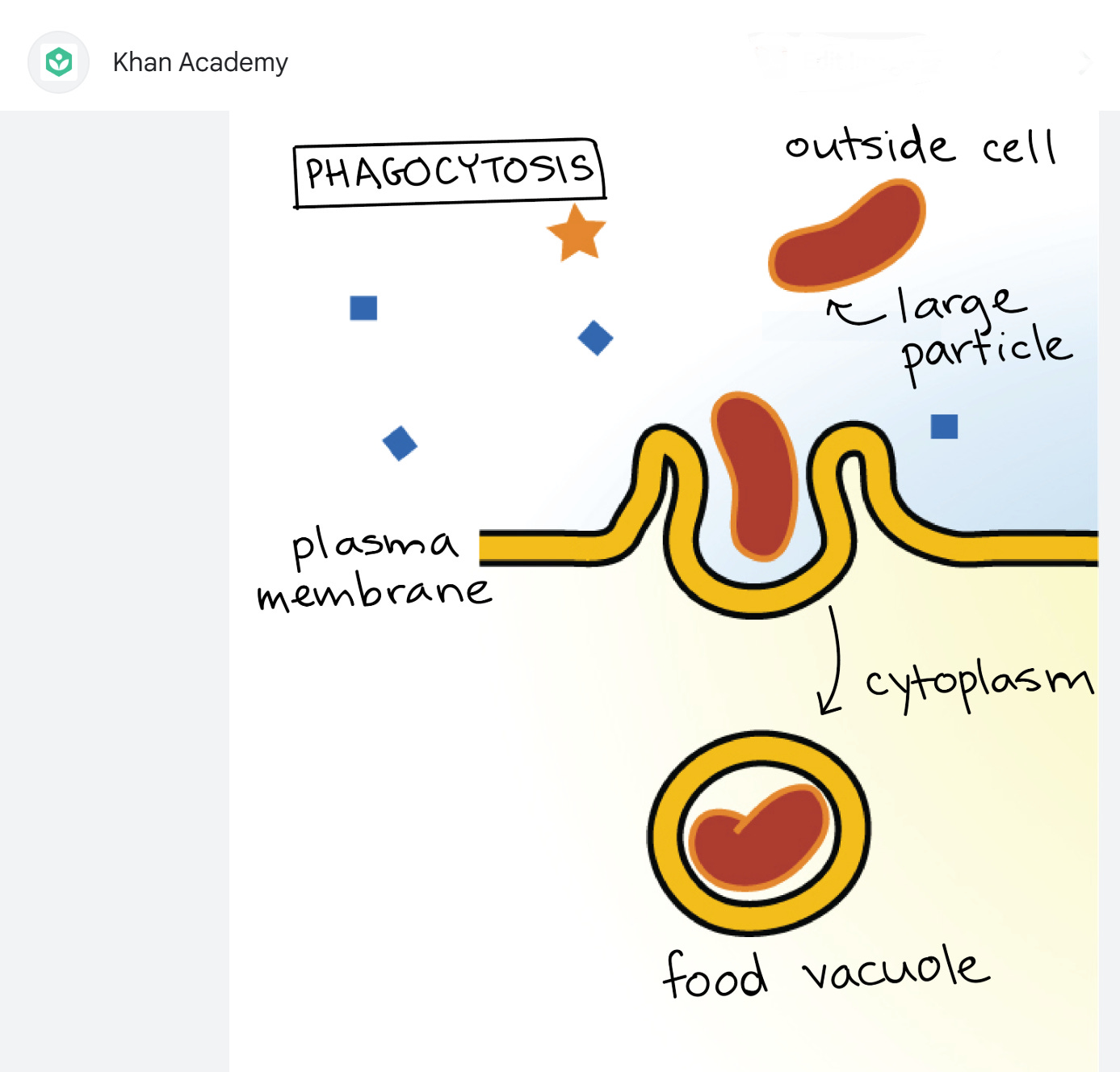
Here is a rough sketch of what this international team, that included scientists from Harvard, the Scripps Oceanographic Institute, the University of Gronigen (Netherlands) and the Dana Farber Cancer Institute, found. Picture the slug scraping green algae off of the surfaces of rocks and shells. As it scrapes, it punctures the algal cell wall, the cell membrane breaks, and cell parts such as the chloroplasts travel into the slug’s gut. There, specialized gut cells ingest free-floating chloroplasts using a process (shown in Figure 1) called phagocytosis. Usually the membrane surrounding the ingested food particle lets in digestive enzymes that break down the food and allows the cell to absorb it. What makes a kleptosome a kleptosome, the authors hypothesize, is that the membrane it uses to surround the engulfed chloroplast excludes the digestive juices, and, through an array of ion pumps and specialized molecular transporters, makes an interior environment that supports the chloroplast. Happy in its new environment inside the gut of the sea slug, the chloroplasts photosynthesize and supply the sea slug with welcomed nutrients.
Until, that is, the sea slug hits hard times. Much like leaves in August (in the Northeastern United States) if sea slugs starve for several weeks they turn orange. Under starvation conditions, apparently, the kleptosomes stop supporting chloroplast happiness and let in the digestive enzymes. These break down the green chlorophyll revealing orange carotenoids—pigments probably also contributed by the original algal meal. In the good times the chloroplasts supplemented the slug’s nutrition. In the bad times, the chloroplasts became just another edible vegetable.
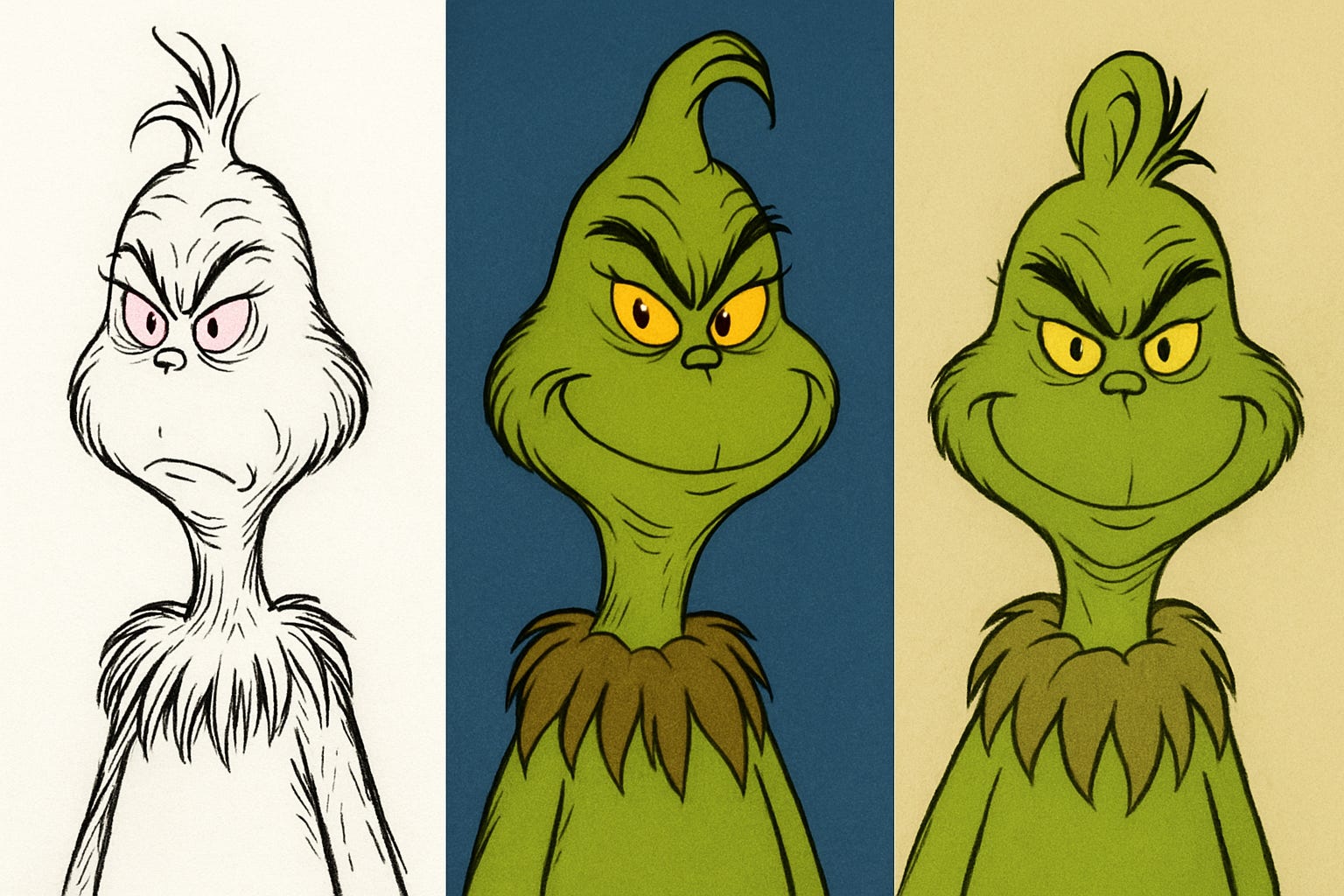
With this last twist, the sea slug’s path diverges from the Grinch’s. According to Chat GPT, an admittedly fallible source, once having become green, the Grinch never turns orange. (See Figure 2) One wonders, though, what might happen if the Grinch lost access to its food stamps.
Allard CAH, Thies AB, Mitra R, Vaelli PM, Leto OD, Walsh BL, et al. A host organelle integrates stolen chloroplasts for animal photosynthesis. Cell. 2025;188:5266-77.e13. https://doi.org/10.1016/j.cell.2025.06.003
No posts
Comments
Nothing yet. Say the first thing.
Sign in to join the conversation.