
Santa Fe architect Beverley Spears has been publishing opinion pieces in the Santa Fe New Mexican for years, mostly with the same take: new development is too ugly, too tall, and does not fit the character of her beloved city, where she has lived and worked since 1974. In 2022, opposing the since-built Capitol Flats apartments, she wrote that “ugly four-story buildings … should never be built in Santa Fe.” In 2024, opposing a different four-story apartment project on Cerrillos Road, she named height itself as her greatest concern. In 2026, opposing a proposed Marriott at Cerrillos and St. Francis, she raised the same concerns about design, traffic, and height. Height is always in there.
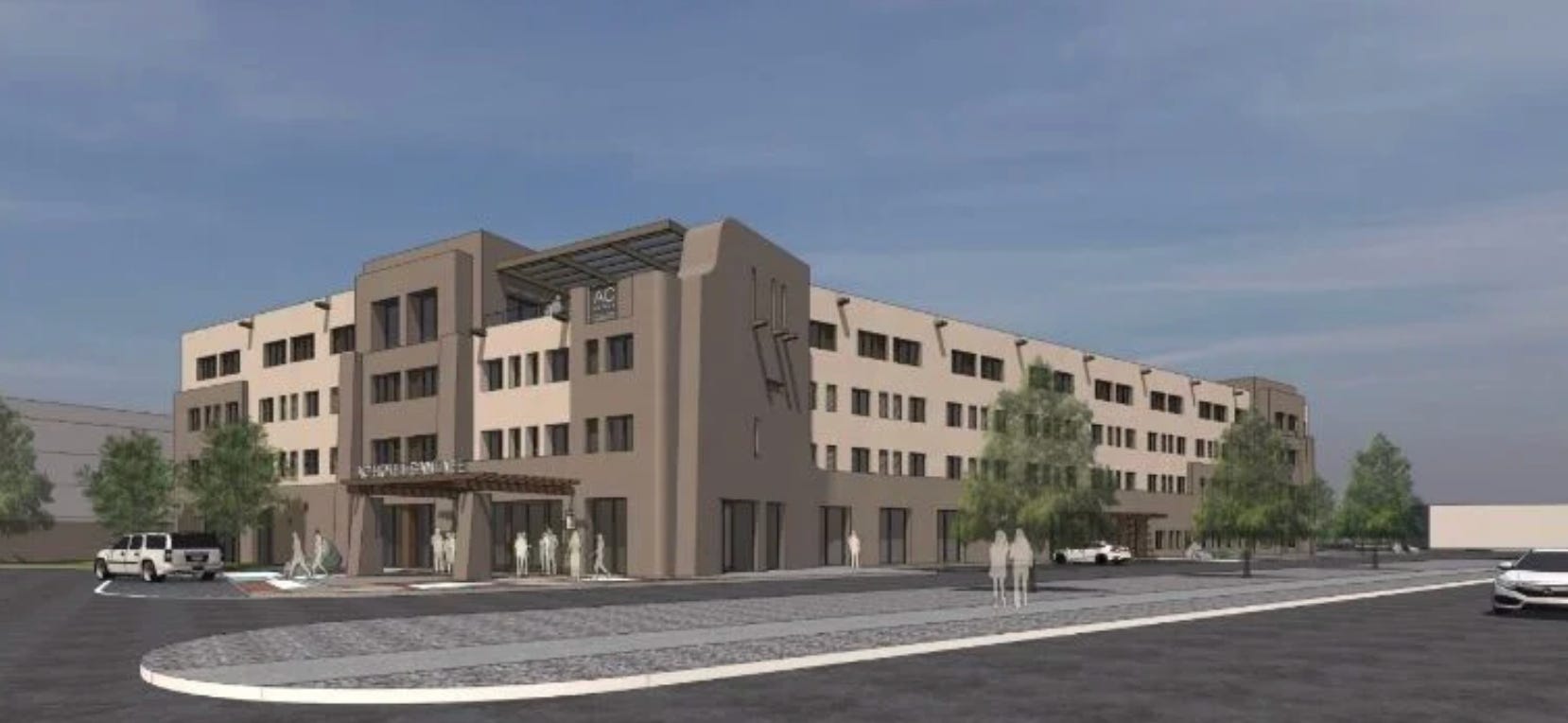
Spears is just one letter-writer, but I selected her as my sample Santa Fean because she expresses herself clearly and her concerns are ones I hear frequently from the public whenever development is proposed. I certainly heard them as a planning commissioner in Los Alamos, and height/aesthetic concerns are even more common among Santa Feans.
To be honest, I’ve mostly dismissed such concerns as pretexts for NIMBYism. People often don’t like change or new neighbors, and they will come up with whatever reason they can to oppose both. Nobody wants to say, “I only want rich people like me in this city,” so they find other reasons. Especially against apartments. Which are (often) tall. But now some research has come along that tells us that not
First, to understand how height caps function today, we have to understand their origin. Which was, perhaps counterintuitively, in New York City.
In 1911, garment workers on their lunch break in Manhattan would get out of the building, enjoying some light and air outside. They’d walk “arm-in-am” up Fifth Avenue, looking in department store windows to see what was selling, according to Yoni Appelbaum’s Stuck: How the Privileged and the Properties Broke the Engine of American Opportunity, which I reviewed extensively here. Appelbaum recounts a police raid that swept up a hundred of these workers—mostly Russian Jewish immigrants—and fined them a dollar apiece for “loitering.” The workers adapted by shuffling slowly as they ate. Merchants tried a few other tactics, then took the problem to the mayor. His answer: it’s a public street, what do you want us to do?
What the merchants wanted was to clear people off the sidewalk for the crime of not being wealthy and white. There was no legal way, so wealthy, white people found an indirect one: they invented height caps on new buildings.
The idea was that a height cap near Fifth Avenue would make the garment lofts unprofitable to operate, pushing the factories (and the workers who ate lunch outside them) back down to the Lower East Side. Edward Bassett’s Heights of Buildings Commission delivered its report in 1913; within three years, the height caps had morphed into the country’s first comprehensive zoning code. Height was the first exclusionary zoning tool, chosen because it worked when other tools didn’t. You can say “I want a comfortable environment for well-heeled shoppers” without saying “my shoppers don’t want to mix with people who have accents.”
Given this unsavory history, it’s understandable that people who support more housing are skeptical when opponents haul out aesthetic concerns like height. Why bother taking those objections at face value? If you address concerns about height, opponents will simply move on to some other pretext—traffic, parking, views, character.
But are aesthetic objections always just an excuse? Appelbaum argues that they often are. Looking back through the historical record, he finds repeated cases where concerns about “neighborhood character” served as cover for keeping out people of different races or social classes. Housing-politics researchers have long debated to what degree this is still happening today, or if other concerns are behind opposition to new development.
Two broad theories of housing opposition have emerged. One camp, represented by economist William Fischel’s “homevoter hypothesis,” argues that homeowners primarily oppose development because they fear it will reduce their property values. The other, which UC Davis law professor Chris Elmendorf calls the “NIMBY theory” (or what we might call the “neighborhood defender” theory), argues that opposition is driven less by financial self-interest than by proximity to change—the “backyard” of the “Not In My Back Yard” acronym.1 As Elmendorf explained in a discussion with Jerusalem Demsas, “The NIMBY theory doesn’t distinguish so clearly between homeowners and renters. What it does is it distinguishes between projects that are nearby and projects that are far away.”
Of course, these explanations aren’t mutually exclusive. Someone might worry about property values and they might dislike any change near their own home. Or, as we learned from Appelbaum, they might simply not want lower-class neighbors. But there’s another possibility: maybe they sincerely dislike what a particular proposed building looks like—and would be perfectly happy with something that fits. How would we know?
We’ll start with Elmendorf, who, together with political scientists David Broockman and Joshua Kalla, set out to disentangle those explanations. In a recent survey experiment, they had participants evaluate a proposal to replace a vacant house with a five-story apartment building. The building itself never changed; what changed, across different groups of respondents, was how it was described.
Location did matter: respondents who were told the building would go up on their own block were less supportive than respondents told it would be in “a neighborhood like yours” elsewhere—the classic NIMBY result. But a bigger effect showed up in a separate comparison at that same distant location: support rose substantially when respondents were told the neighborhood already had five-story buildings. Visual coherence mattered more than distance. And the single largest effect in the whole study came from a third, independent comparison: whether the building’s architect was described as a design-award winner or as the recipient of a satirical prize for ugly buildings.
If stated concerns were just there to hide antipathy toward renters, none of this should matter. But how to isolate that variable? Researchers swapped the apartment building for an office building of identical height and design. “If the opposition to apartments is really about opposition to poor people,” Elmendorf told Demsas, “Then you would expect that office buildings of the same size would be more popular.” But support for the office was actually a bit lower! And general dislike of heights, measured by questions like “would cities look nicer with fewer tall apartment buildings,” predicted opposition to both about equally. That’s a bit of a hit for the theory that opposition is mostly about unwanted neighbors.
A separate, larger study out of Denmark from political scientists Martin Vinæs Larsen and Niels Nyholt surveyed about 13,000 respondents. They showed people a hypothetical development on a map of their own neighborhood, randomly varying its height, size, and use—social housing, owner-occupied housing, rental housing, retail premises, or offices. A seven-story building drew twice the opposition of a one-story building. Project type barely moved the number. And, as in Elmendorf’s study, opposition to new height dropped substantially in neighborhoods that already had at least one five-story building—people accept tall buildings more readily where tall buildings already exist.
The two teams agree that height and coherence matter, but disagree on why. Larsen and Nyholt attribute it to neighborhood preservationism—a general aversion to change, which aligns with the NIMBY theory. Elmendorf’s experiment, testing how people felt about buildings far away, suggests it’s not parochial preservationism but a broader instinct that development should match its surroundings no matter where it goes.
The screenshot below is from a third study, by Princeton researchers Adrian Pietrzak and Tali Mendelberg. They tested height against style directly, using realistic renderings of proposed buildings that varied in height (2, 4, 5, or 10 stories) and style (modern or traditional).
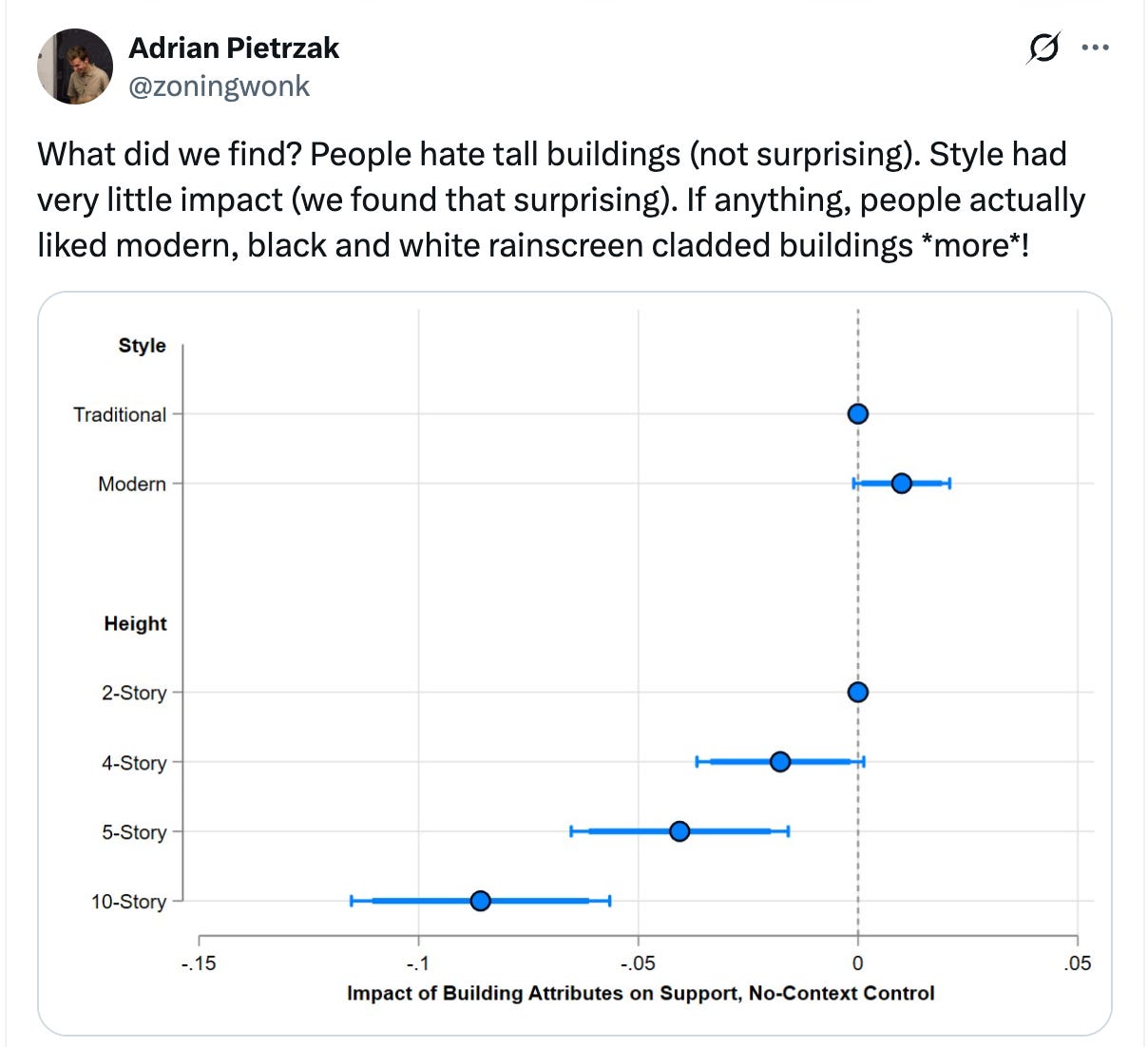
Some respondents saw the buildings with no context; others saw them set into real streetscapes, drawn from neighborhoods like the Upper West Side and Chicago’s Lincoln Park. Height reduced support substantially, even without nearby context. Style alone barely moved the needle. But when buildings were given a context, it mattered: Pietrzak and Mendelberg found that buildings that matched their surroundings in both height and style got a modest bump in support compared with the same buildings shown without surroundings. And buildings that stuck out—in height or in style—were penalized by a similar margin.
A basic story comes out of these three studies: whether a building’s height and design match what’s already there predicts opposition more reliably than density, more reliably than who’d live there, and more reliably than simple proximity to the respondent’s own home. None of them found that height alone explains everything. Elmendorf’s team found that an architect’s reputation mattered as much or more than anything else, even when the building they’re looking at is the same. And Larsen and Nyholt found height itself mattered enormously.
That’s more or less the question Jerusalem Demsas put to Elmendorf when she interviewed him for The Argument. If aesthetic taste matters this much, what does that mean for housing politics?
Elmendorf admitted that it’s messy. There’s probably no magic lever to press (like “make things short and pretty”) that will make everyone instantly supportive of new housing. But visual coherence does seem to matter, and this complicates the story about opposition that pro-housing advocates have been telling themselves for years. None of these researchers argues that financial self-interest, resistance to change, or elitism have disappeared from housing politics—these are still factors. But to me, this research suggests that when a proposed building doesn’t match its surroundings, it’s likely to receive strong and sincere resistance. And this resistance doesn’t just show up in survey experiments designed to isolate it, of course; it shows up in public meetings, and in the My Turn columns of the New Mexican—where it’s messier and tangled with everything else.
When I re-read all of the letters from Beverly Spears (and again I don’t mean to pick on her, but she is a very consistent letter-writer), I can’t say that knowing all this closes my disagreement with her. I don’t think Santa Fe can preserve affordability while refusing to accommodate new residents, and I don’t think stopping apartment buildings will stop people from wanting to live here. I don’t think keeping buildings the same will keep Santa Fe the same—because pricing people out changes the character of a city, too. But after reading this research, I also find it harder to dismiss her concerns as mere camouflage for something else. Spears is an architect, after all—and architects care a great deal about beauty, especially when it comes to buildings.
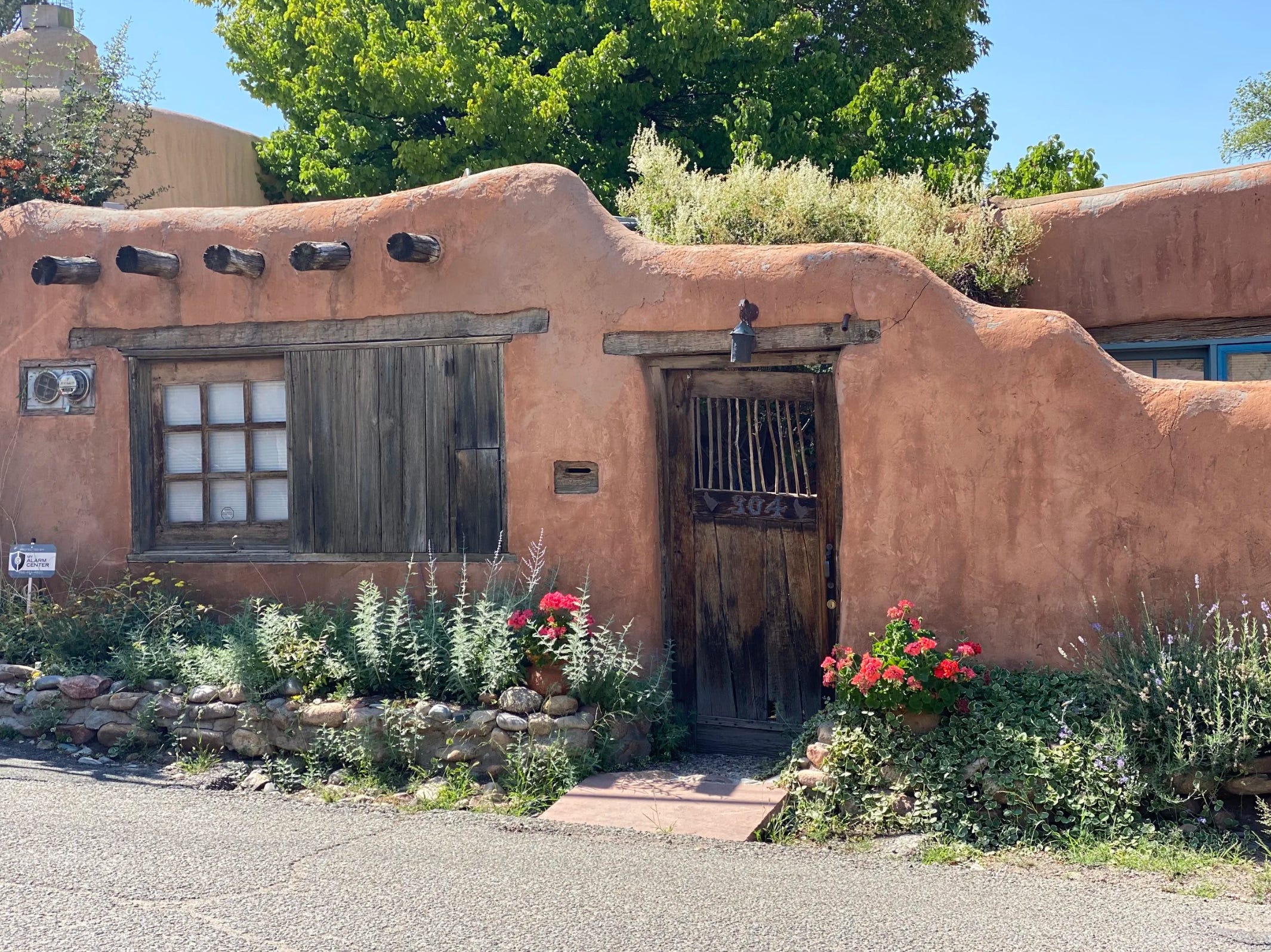
That doesn’t mean she’s right that because “Santa Fe has been a low ‘adobe’ town for so long,” as she put it, it should remain that way, “stuccoed in time,” forever. Chris Wilson’s work on the history of “Santa Fe style” and who it was meant for (spoiler: mostly tourists) is a useful counterpoint. Sincere beliefs can still produce terrible public policy. History is full of people who honestly believed they were protecting their communities while making them less open, less prosperous, less affordable, and less welcoming. Appelbaum documents many of those examples. But if the objection is genuinely aesthetic rather than merely tactical, then policymakers have new facts to work with.
Perhaps it’s time to ask whether we can build four stories—or taller!—that feel like Santa Fe. Or whether we can achieve the same number of homes in other ways. We could shift from asking whether to build housing to how. Coming up, I’ll be digging into various ideas about that—and I’d love to hear yours.
Elmendorf et al. are also known for a third theory of housing opposition, called “the symbolic politics of housing,” which posits that since most people aren’t policy wonks, their support for housing policies is guided more by gut feelings about the words and images a policy or proposed development brings to mind (“luxury,” “developer,” “affordable”) than whatever theory or evidence says. This might help explain the odd fact of people preferring a building they’re told is designed by a good vs. bad architect, even when the building is literally identical.
No posts
Comments
Nothing yet. Say the first thing.
Sign in to join the conversation.