
“In the end, perhaps what separates one individual from another is not talent but passion. And what is passion if not a restlessness of the heart, an intense yearning to surpass your limits, like a river overflowing its banks?”
‘There are Rivers in the Sky’ by Elif Shafak
I have just finished reading There are Rivers in the Sky by Elif Shafak. I read the prologue and then put it down for a few days, intrigued but not hooked. Then, with three hours of uninterrupted travel time, I picked it up again and read 250 pages - I was captivated. I kept stopping every couple of pages to note down a quote and, more often than not, a tear was leaking out of the corner of my eye. I’ve tried to put my finger on exactly why this book has captured my soul, imagination, and emerging ethos in This Moment: I’ve narrowed it down to three threads I want to write about here. But, honestly, every aspect of this book makes the cells in my body sing.
“Water hardens in adverse circumstances, not unlike the human heart.”
My mom is a chemical engineer by training but her entire career has revolved around water: sustaining it, cleaning it, the importance of it. As a result, I’ve grown up with a rather unquestioned belief/understanding of how fundamental water is to our world.
The structure of this book - or rather I should say one of the devices - is the echo of a water droplet that shows up throughout the three timelines that form the narrative. It brings with it memory and connection. This water droplet (and the ways more generally that water is depicted) feel(s) like a balm to the blatant disregard with which we are currently treating our planet and humanity.
The violence that this water droplet sees and the emotional response it has from the very first terrible act it witnesses throws into sharp relief the horror that humans inflict on each other.
To see water used as a basis of connection through time, space, and tragedy only expands my own appreciation.
“Water is the consummate immigrant, trapped in transit, never able to settle.”
There is something deeply personal to me about stories being told via/in relation to bodies of water. I have always lived close to water. In Cape Town, we lived on a lake called Zeekoevlei; in France, we lived near Lake Geneva (Lac Léman to my pays de Gex baddies); in London, it took me four minutes from leaving my house to running along the Thames. I am also never happier than when I am swimming in a lake looking up at a mountain. Given this specific opportunity, I will dive in at most temperatures (within reason). It is my absolute favourite place to be.
How important water is to us, to literal life, can feel impersonal, scientific1. This story depicts the emotional importance of water in these three lives with such urgency and infallibility. Consequently, I was moved.
There is an ache - one could even say yearning - in all three timelines but I am especially drawn to the character of Zaleekhah whose personal tragedy casts a long shadow over her whole narrative. I’ve watched two movies recently which threw into sharp relief my desire at the moment to consume stories created by women2. Zaleekhah is sad and she’s messy and she is allowed by the narration to be so. I find her pull to be swept away so understandable as is her sense of wandering alone - unseen and without belonging.
“Because [lost rivers are] still there. Things don’t disappear just because we wish them to. Even if we cover them with concrete and build over them and pretend they never existed, they’re still part of us, all those ghosts that we thought we’d buried deep inside, and, if we don’t face up to them, they’ll continue to haunt us.”
She is studying water and at an awkward family dinner brings up the phenomenon of lost rivers. If you don’t know, lost rivers are rivers that are now subterranean, buried. From an environmental point of view, this is incredibly dangerous because building over these rivers can leave areas vulnerable to flooding and exposed to higher levels of pollution.
Ever since I landed on “restless” for these essays, the word has knocked at my brain. I’ve always felt like my restlessness was something to be ashamed of - it made me dark and twisty, it was a product of my internationally chaotic upbringing, it meant I wouldn’t be able to settle. This book found me at a time where I am questioning all of those statements and also their previously assumed negative tilts. Not to belabour the metaphor3, but I am digging up the lost river. If you will. Which you may not.
Zaleekhah carries such shame around her sadness and that hidden current inside her. Reading her story (I am being purposefully (not elegantly) vague as I would like you to read this book) turned a polite knocking into a banging that refuses to be ignored. I don’t want to fight my restlessness anymore.
In fact, I fucking love it.
It’s got some painful baggage with it, sure, but from what I hear of ~adulthood~ c’est la vie.
“They are all there. The lost rivers of time, out of sight and out of mind but notable in their absence, like phantom limbs that still have the power to cause pain. They are here and everywhere, eroding the solid structures on which we have built our careers, marriages, reputations and relationships, evermore flowing onwards - with or without us.”
Throughout the narrative, we are pulled back, pulled through, pulled to The Epic of Gilgamesh, a poem with which I was only very loosely acquainted. The book comes back to it again and again. The history of Nineveh, the tale of King Ashurbanipal, as well as the beautiful but horrific history of the Yazidi people are the stories that weave our three timelines together.
This is a story about stories and storytelling. I found myself enraptured with it4.
“We make art to leave a mark for the future, a slight kink in the river of stories, which flows too fast and too wildly for any of us to comprehend.”
This book feels very of the moment and what everyone should be reading given the Tragedy Of The Human Condition and how we really keep losing ourselves. As I have written, this story is based on stories and the importance of storytelling. With any other medium, I often find this tedious. Theatre about making theatre? yikes. These devices so often seem self-indulgent, navel gazing. But telling us stories about how important stories are only seems to further amplify that importance. And I don’t think that’s because I love stories and have quite literally dedicated my own life to them. I think it’s because they are fundamental to us, as humans.
“Stories and poems and ballads seem to be the mortar that keeps them together, keeps them alive.”
What are we if not a collection of stories: stories we tell each other, stories we tell ourselves, stories others tell of us. Storytelling encompasses who we are. Everything is narrative. So stories that tell us The Importance of Stories go to our core. We feel validated. They confirm in us that we count, our collections of stories5 matter.
I have not yet felt in my lifetime that dread and horror that I feel now, daily. And - as a result - I cannot think of a better time to lean back into stories. To rally, to defend, to encourage. This book goes into the horror of a genocide that I knew nothing about in 2014. How can I not think of Palestine? The Sudan? What’s happening in Venezuela? Iran? Minnesota? As humans, I think when confronted with facts and figures and numbers, we switch off. Our brain just goes “oh okay that’s a lot of violence that I cannot comprehend”. When you pour your heart into a book that tells you about one nine year old’s view of the world and throws her into the worst of what we do to each other, that speaks to your brain. Or at least it does to mine.
“How is it that lives so tenderly and painstakingly built, year after year, can be shattered in a matter of hours?”
Stories beg us not to switch off.
Elif Shafak has written a book that both transcends its own history and speaks to the heart of this moment.
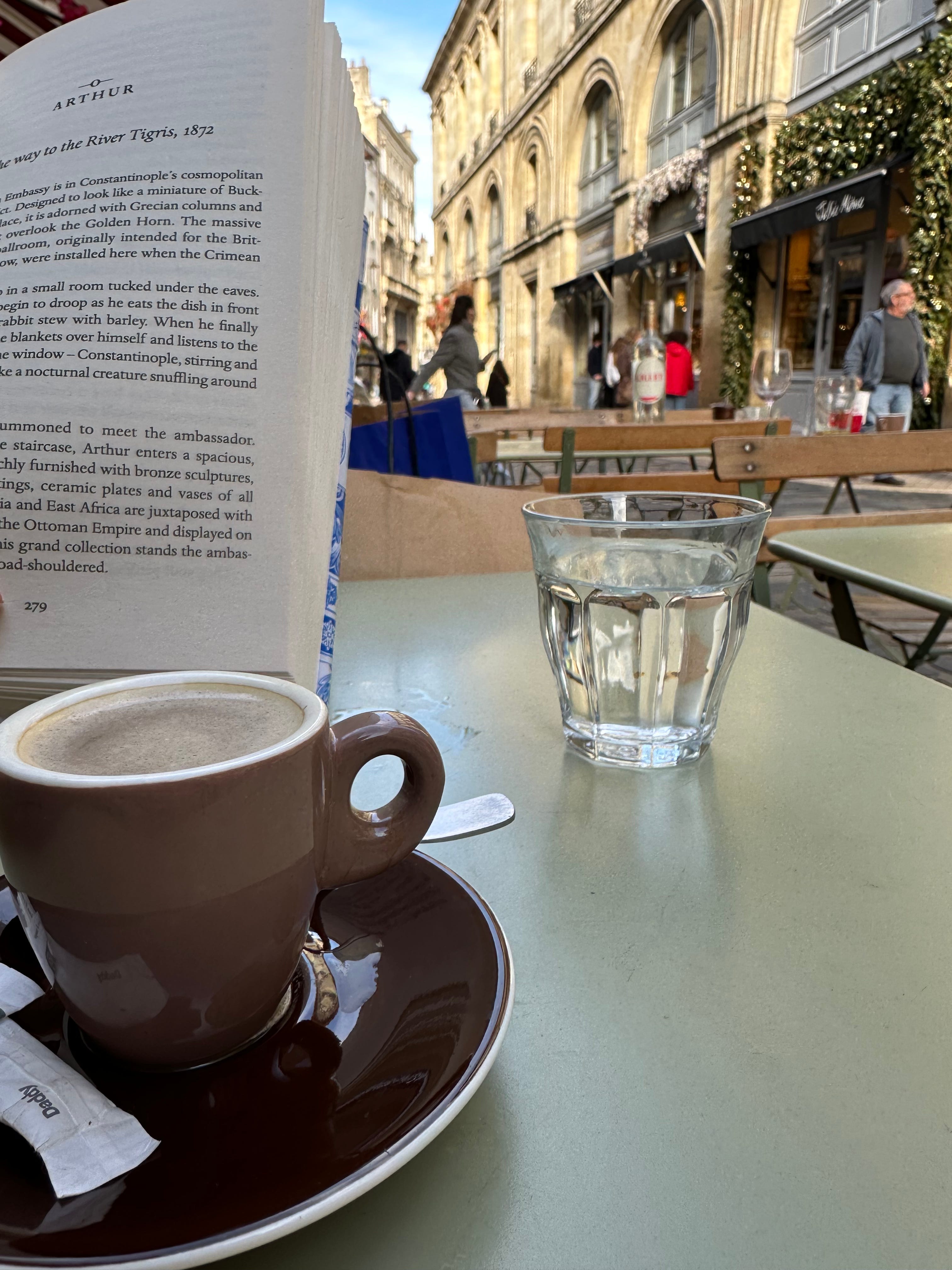
Needless to say, this book hurt my feelings in the best way. I am struck by its beauty but also its challenge.
And I obviously gave it five stars on goodreads.
“More and more he comes to realise that people fall into three camps: those who hardly, if ever, see beauty, even when it strikes them between the eyes; those who recognise it only when it is made apparent to them; and those rare souls who find beauty everywhere they turn, even in the most unexpected places.”
science - a must, but just not always the easiest to connect with on an emotional level. Also… how serious is this piece of writing that this is my first footnote??
FORESHADOWING! post to follow.
at least this week it’s not horticultural?
which tbh is not a surprise given that if you read this book and enjoyed it my immediate recommendations (when you ask for more homework) would be to read Cloud Cuckoo Land and The Invisible Life of Addie LaRue. Then we can have a book club where I cry over how much I love stories about stories.
yes, I did do that thing like when you repeat the word banana too many times and it loses its meaning. S T O R I E S. Ironically, meaningless.
Comments
Nothing yet. Say the first thing.
Sign in to join the conversation.