
A Tribute to Ken Yagelski: From Purdue to the Power Grid
By Stephen Heins, The Word Merchant, Sheboygan, Wisconsin
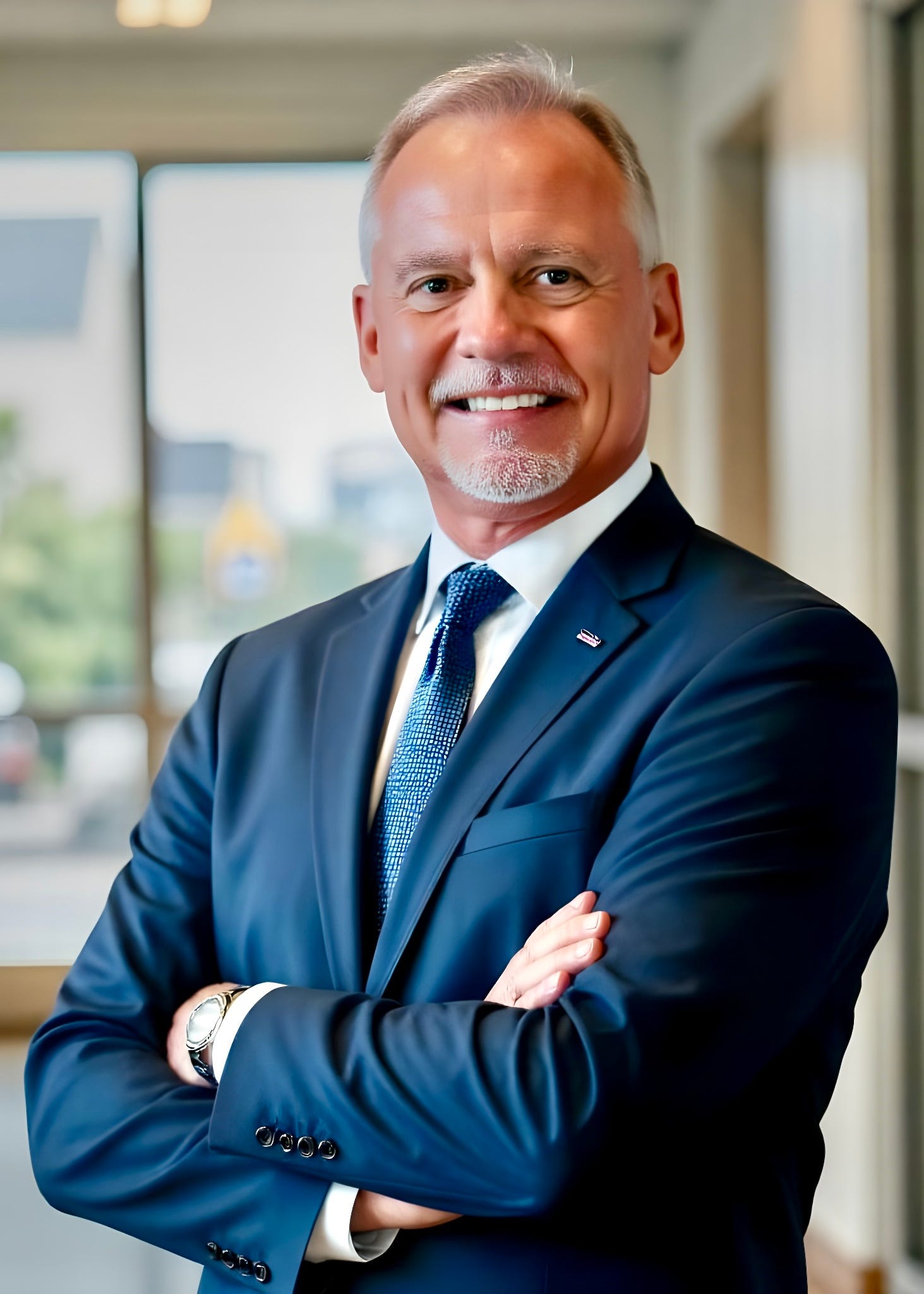
To understand Ken Yagelski’s contribution to the national energy conversation, one must begin where his professional journey started: in the classrooms of Purdue University. Earning a Bachelor of Science in Electrical Engineering with a dedicated focus on power systems is no small feat. It demands a rigorous, uncompromising mind—one capable of grasping the invisible, highly complex physics of alternating currents, voltage regulation, and grid synchronization.
Power systems engineering is inherently humbling. It deals in margins of error that leave no room for ideology. When one studies the flow of electrons across high-voltage transmission lines, you learn quickly that wishful thinking cannot power a single incandescent bulb. You learn the iron laws of thermodynamics, the necessity of base-load capacity, and the delicate, precarious balance between supply and demand that must be maintained second by second, 365 days a year.
Ken took that rigorous foundation and expanded it into the business arena, pursuing graduate studies in business at the University of Illinois Springfield. This rare dual fluency—bridging the hard mathematical realities of electrical engineering with the strategic, financial, and operational demands of corporate leadership—became the launchpad for a remarkable career spanning decades across the American energy landscape.
Few energy professionals possess a resume that reads like a comprehensive masterclass in North American utility operations. Ken’s professional footprint spans both the electric power and natural gas sectors, traversing corporate leadership, engineering, and regulatory strategy.
From his early days with Illinois Power (now Ameren)—where the foundations of his utility expertise were forged—to his leadership roles with Washington Gas and UGI Energy Services, Ken has consistently operated at the critical intersections of the industry. His career has not been confined to a single silo; rather, he has moved fluidly across system and resource planning, business development, asset optimization, information technology, and complex supply sourcing.
Whether navigating the intricate mechanics of natural gas distribution or optimizing electric generation assets, Ken has always approached the sector with an integrator’s mindset. He recognizes what many modern policymakers often forget: that the electric and natural gas grids are not competing adversaries, but deeply interdependent halves of a singular, magnificent macro-system. The security of one relies utterly upon the resilience of the other.
Today, Ken brings this wealth of institutional memory and operational grit to his role as Director of Gas Supply for Southern Company Gas. Operating under the banner of a major industry leader, Southern Company Gas’s distribution utilities serve an astonishing 4.4 million natural gas customers across Georgia, Illinois, Tennessee, and Virginia.
Think for a moment about the sheer human magnitude of that responsibility. Four point four million households, commercial enterprises, and industrial hubs depend on the systems Ken and his teams oversee. Behind every cubic foot of natural gas delivered safely and efficiently is a complex chain of gas supply, control operations, and pipeline logistics. It requires vigilance around the clock, deep analytical foresight, and an unwavering commitment to safety.
Furthermore, Ken serves as the company’s advocate before the Federal Energy Regulatory Commission (FERC), representing the interests of local energy distribution companies in the high-stakes arena of federal policy. In an era where energy regulatory frameworks are frequently buffeted by political crosscurrents and environmental activism, having a seasoned engineer and strategist articulate the practical, ground-level realities of pipeline economics and energy supply security is an invaluable public service.
In the lexicon of energy humanism, four words stand as non-negotiable pillars of a civilized society: reliability, resiliency, affordability, and sustainability. Ken Yagelski has spent his professional life advancing these four pillars not through empty rhetoric, but through the unglamorous, vital labor of engineering, regulatory navigation, and operational leadership.
Beyond his corporate responsibilities, Ken has consistently stepped into the broader civic arena to educate, mentor, and guide. He has served as an expert witness in critical regulatory and legal proceedings, stepped up at government hearings to provide objective testimony, and taught widely on the intricacies of the energy sector.
His leadership imprint is visible across the premier organizations that shape American energy policy and standards:
The American Gas Association (AGA)
The Institute of Electrical and Electronics Engineers (IEEE)
The Metropolitan Washington Council of Governments (COG)
The National Petroleum Council (NPC)
The North American Energy Standards Board (NAESB)
The Southern Gas Association (SGA)
The Virginia Oil and Gas Association (VOGA)
In these forums, Ken has acted as an energy sector statesman—bridging technical details with public policy, ensuring that energy policymakers understand the engineering constraints of the complicated systems they seek to regulate. Light-handed regulation after all encourages industry innovation.
In the Midwest, when someone does the heavy lifting without complaint, honors their craft, protects the community’s vital energy infrastructure, and stands up for common-sense principles through decades of quiet dedication, we don’t let the moment pass without proper acknowledgment.
To Ken Yagelski: Thank you for applying your Purdue engineering mind to the intricate task of keeping the lights on and the gas flowing. Thank you for decades of service across Illinois, the mid-Atlantic, the South, the entire North American continent and Washington, D.C.
Thank you for standing as a steadfast, articulate advocate for energy humanism—recognizing that reliable, affordable energy is the foundation of human progress, freedom, and dignity.
Comments
Nothing yet. Say the first thing.
Sign in to join the conversation.