
For most adults, aging involves “rightsizing”— a portmanteau of the words “right,” meaning, “did we make the right decision?” and “capsize,” meaning, “your life is about to be turned upside down.”
When that happens, boxes from yesteryear rain from the attic to face judgment, and another Marie Kondo gets her wings.
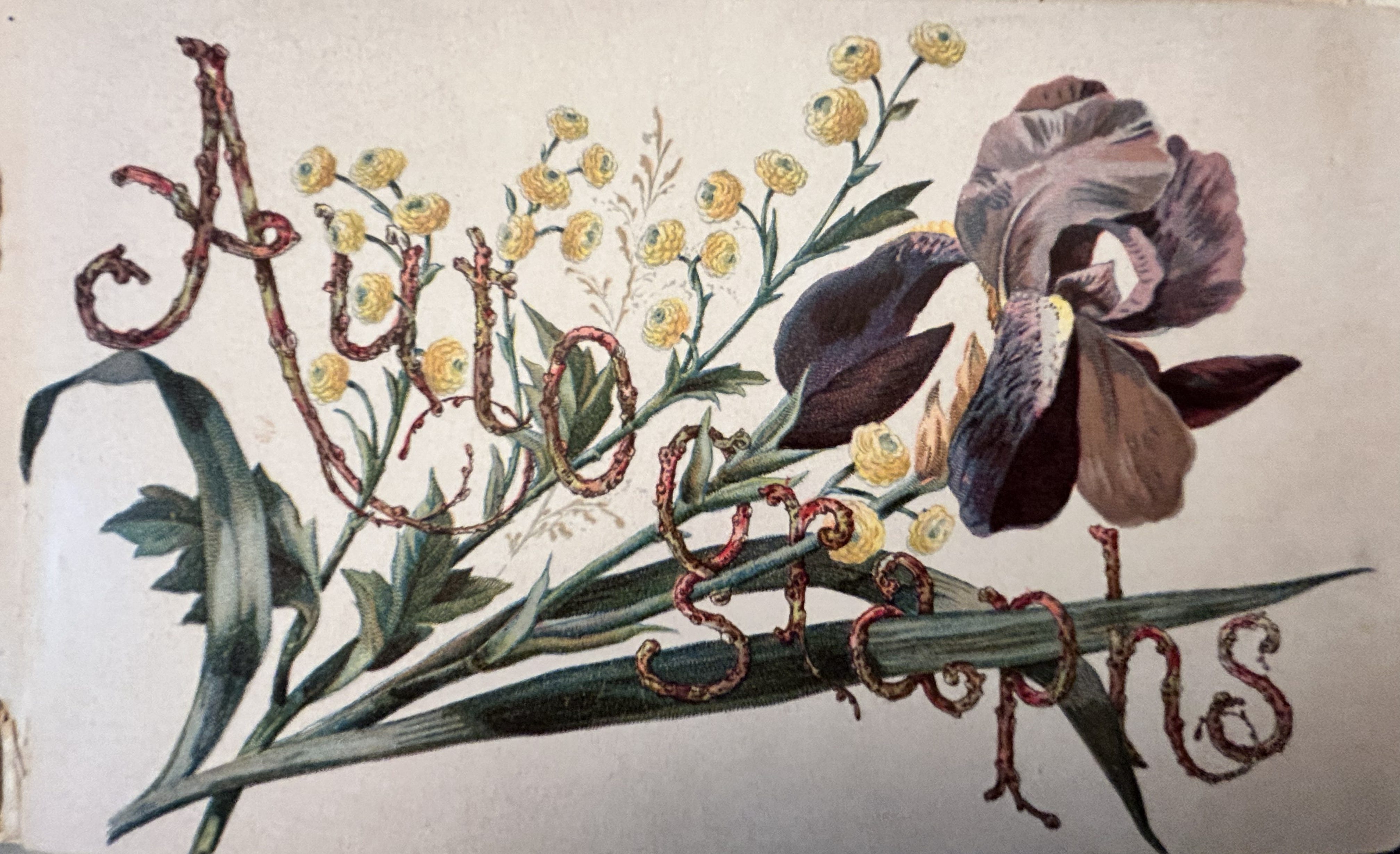
In one of my parents’ ancient boxes I found this slim book, and gravitated toward it:
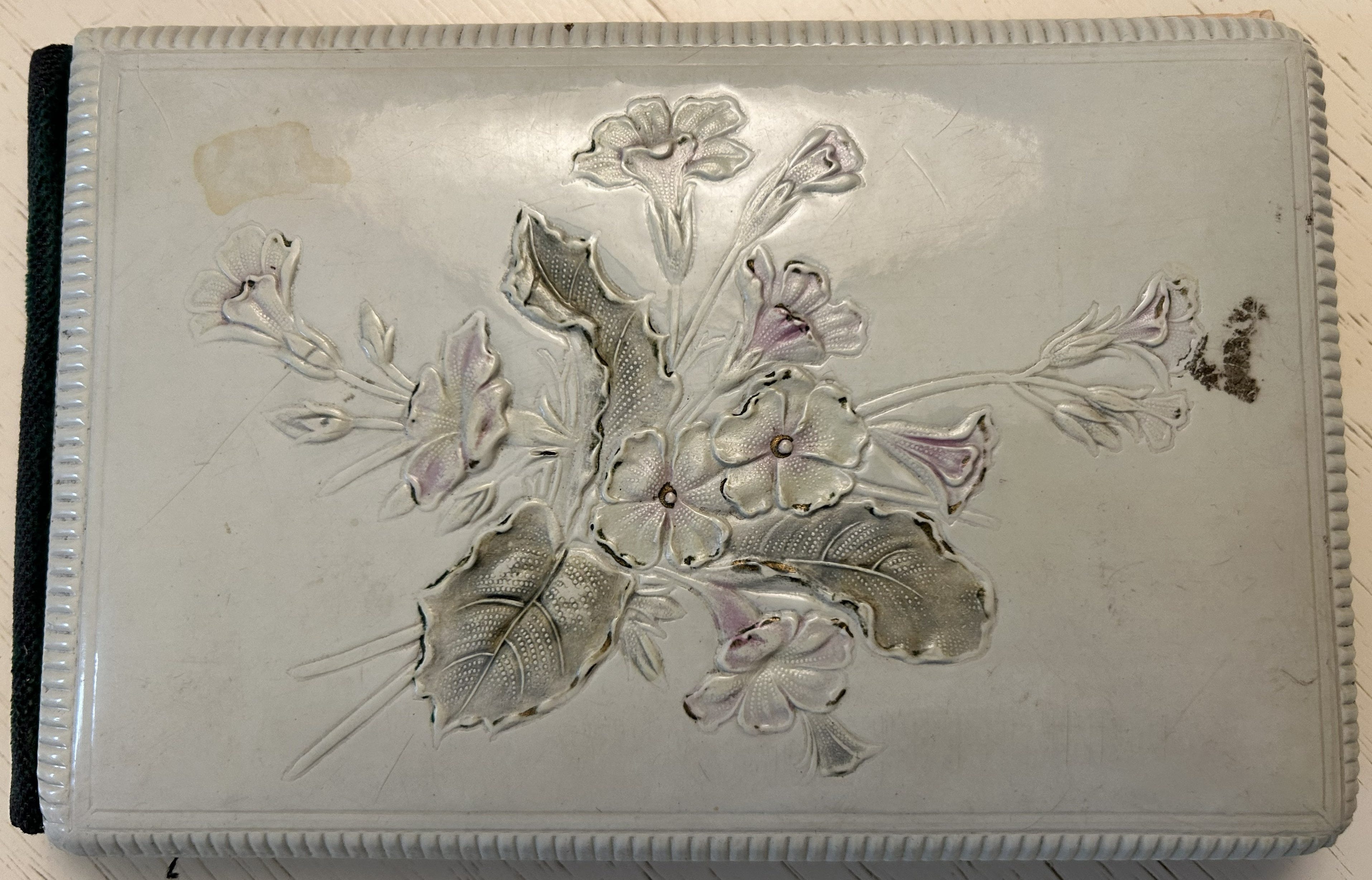
The shellac cover is mintier than it appears onscreen; the velvet a shimmering peacock green. Lean close and you will inhale pleasant old tobacco and parchment, and why wouldn’t you?
The book is 133 years old.

As I’ve now pieced together, when Great-Grandmother Daisy was roughly 21 years old, she relocated from New York City to Spokane by train. As was common, she used an autograph book to collect well-wishes before her departure.
What I found delighted me.
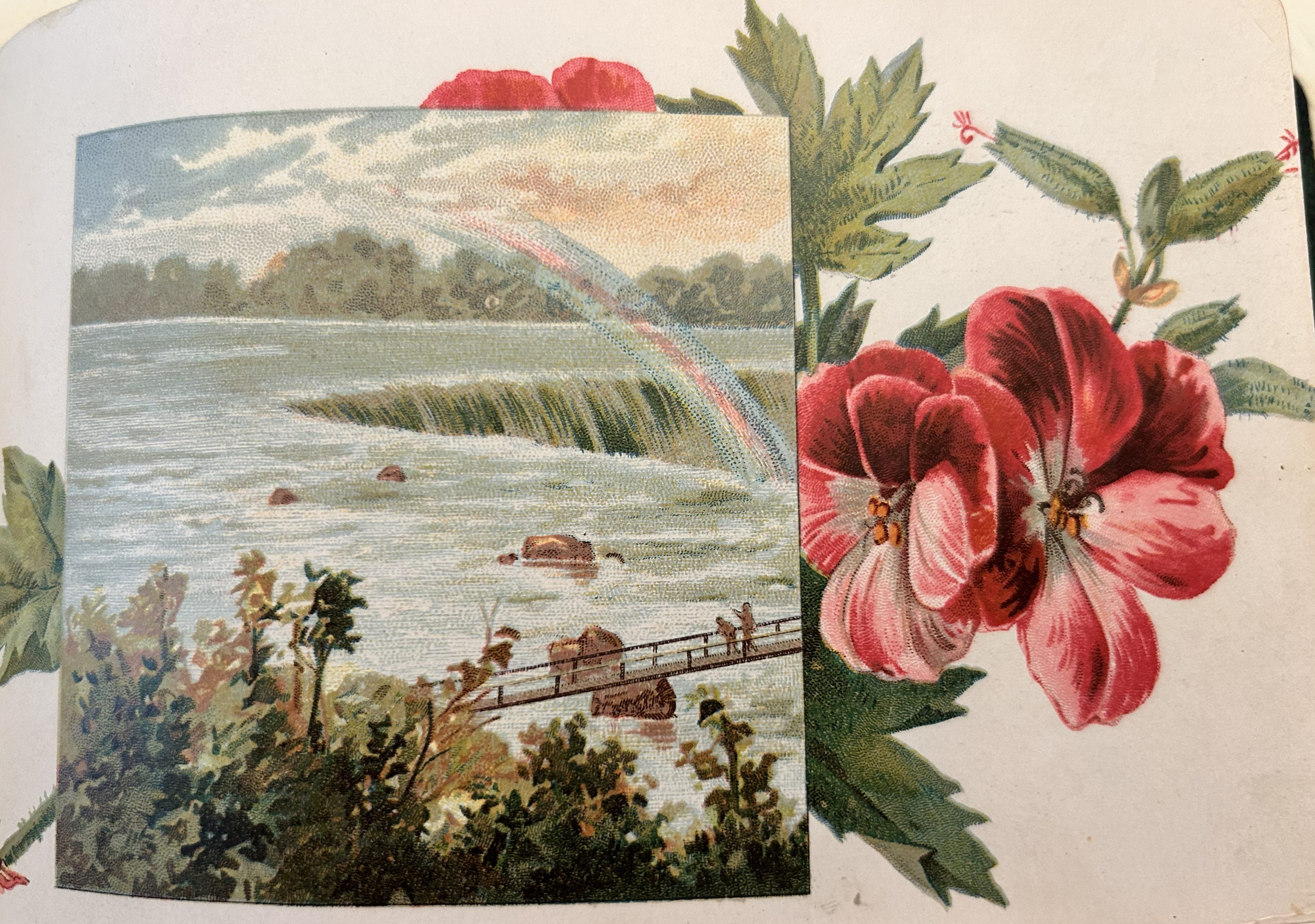
Entries range from 1893 to 1910, but most are dated the year of the trip— 1903. I don’t recognize all the signers, but many are family. Daisy’s was large and loving, including six siblings, and nine aunts and uncles.
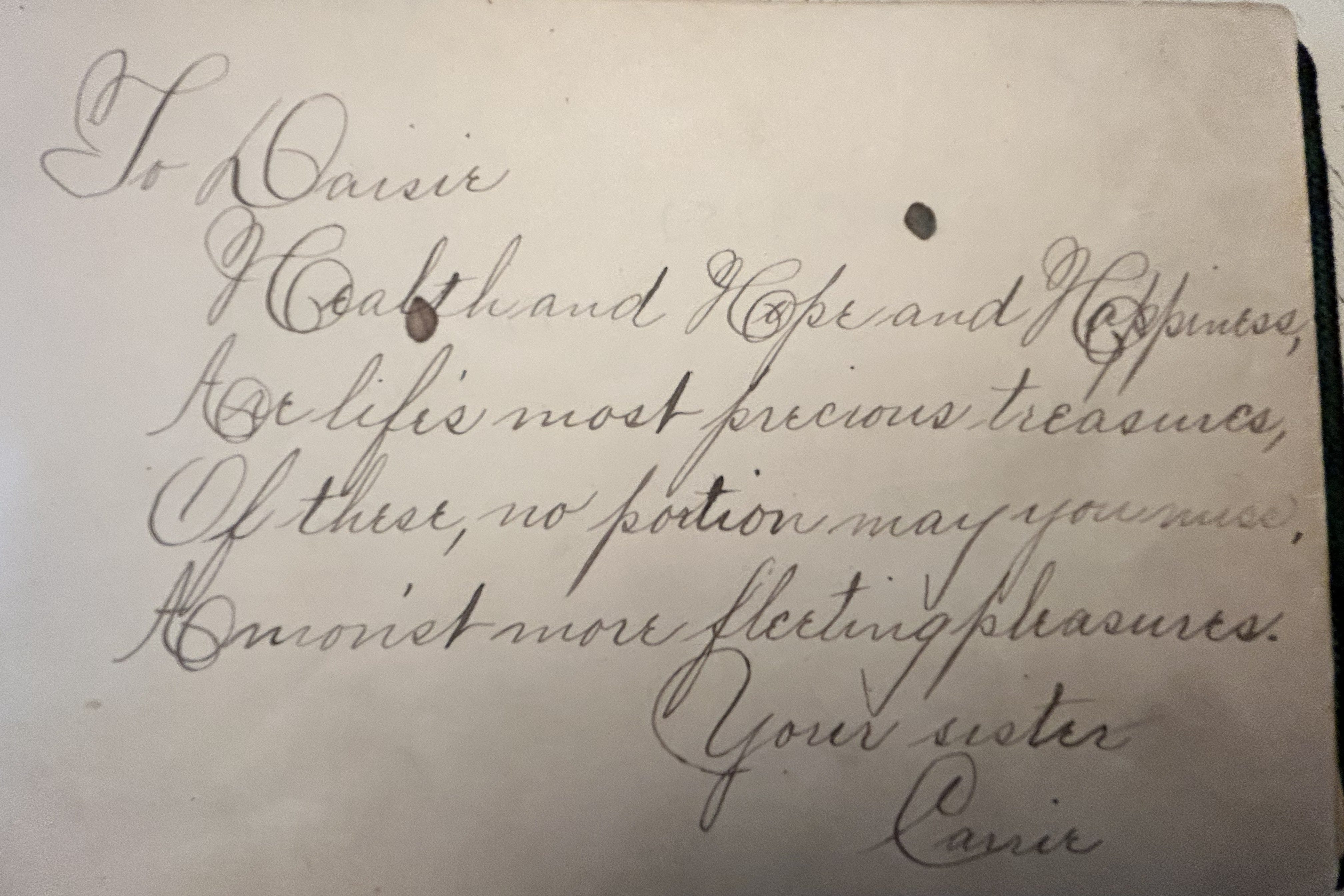
Sister Carrie’s ability to compose a greeting card on the spot is a talent:
“Health and Hope and Happiness / Are life’s most precious treasures,
Of these, no portion may you miss / Amidst more fleeting pleasures.”
Cousin “A” knows what’s up:
“I wish you Best / Wishes and joy
Don’t forget to get / For yourself a sporty Boy”
Has anyone heard this before? This is from a friend:
“I wish you a husband gallant and true.
Proud of himself but prouder of you.”
A.K. is formal:
“When glory waits thee / While fame elates thee
Oh still remember me.
When the praise thou meetest / To thine ear is sweetest,
Will you remember me.”
This cousin gets to the point:
“In life’s casket, drop one pearl for me.”
Hope this friend will come babysit:
“Long may you live / Happy may you be
Blessed with forty children / Twenty on each knee.”
This cousin is approaching lyric territory:
“A place in thy memory dearest / Is all that I claim
To pause and look back / When thou hearest / The sound of my name.”
This friend started with “Oh!”, which I adore:
“Oh! When in distant lands thou art / The time will come when we must part
And rivers roll ‘tween me and thee. / Perhaps thou’lt write a line to me,
Your letter being finished then / Think of me when you wipe your pen.”
Can I be honest? I’ve been thinking about this line from Daisy’s friend a lot:
“Do your best, your very best, and rejoice in the ones who can do better.”
And finally this, from “Your loving Mother, Sept 4, 1903 New York, New York”
“Be a good girl and you will make a true woman.”
Some individuals had a gift for great handwriting, and others were scrawlers. To be fair, writing with a fountain pen dresses anything up, like talking with a British accent.
A great entrée to the autograph book is sister Carrie: note her feathery capital letters, and the pressure from her pen:
You can feel how painstakingly Louis worked on this, it looks tattooed:
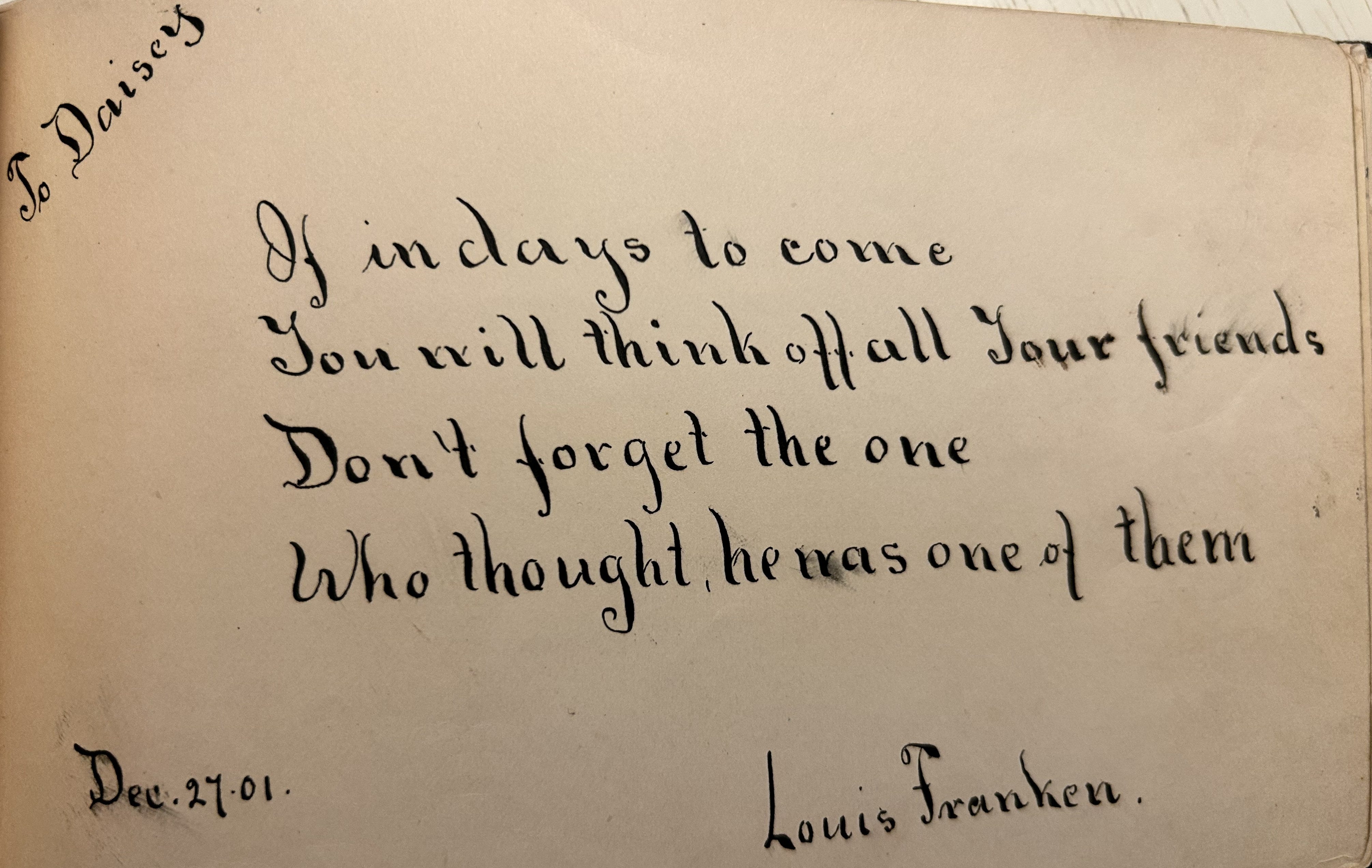
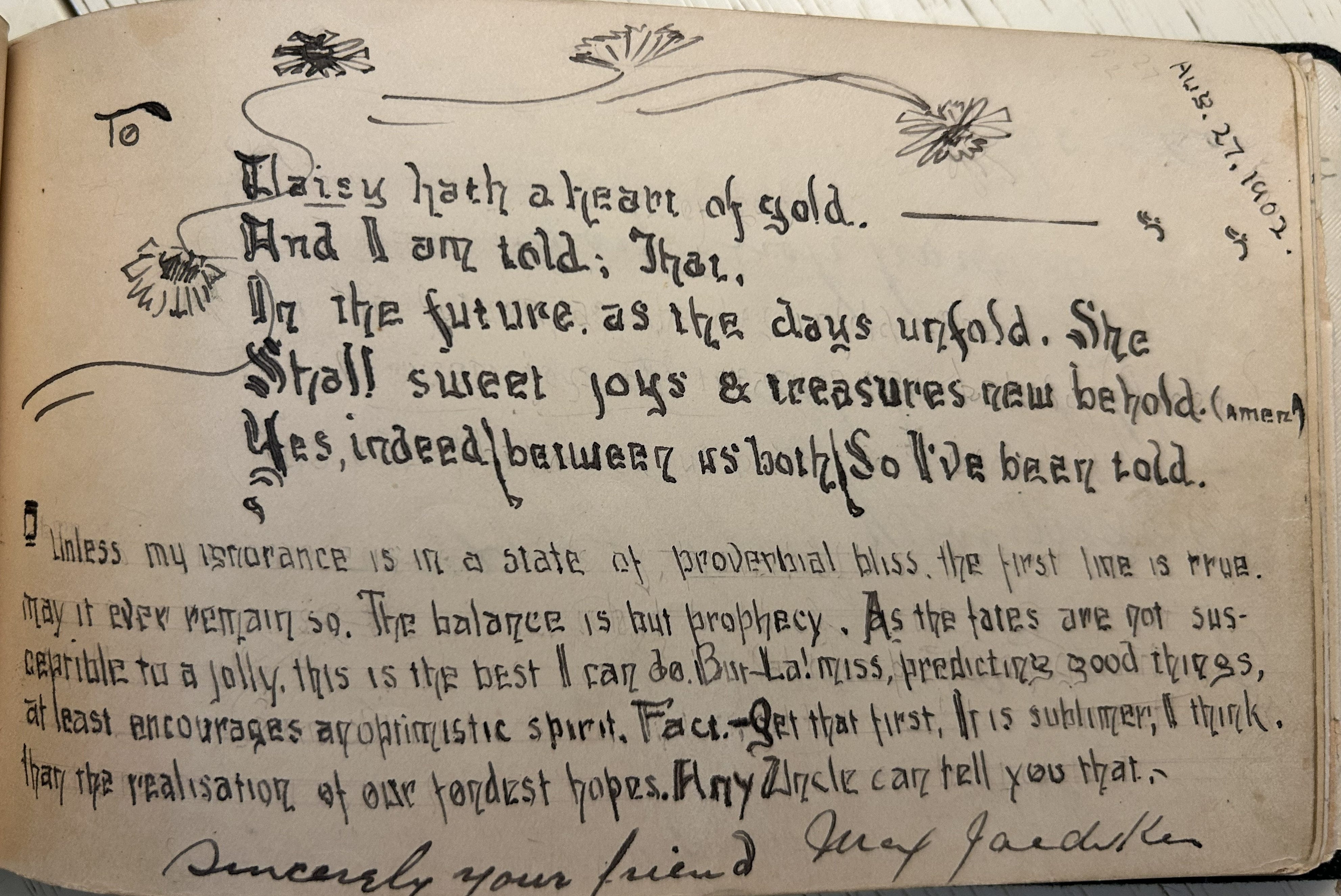
Are you kidding me, Max? We’re coming back to you…
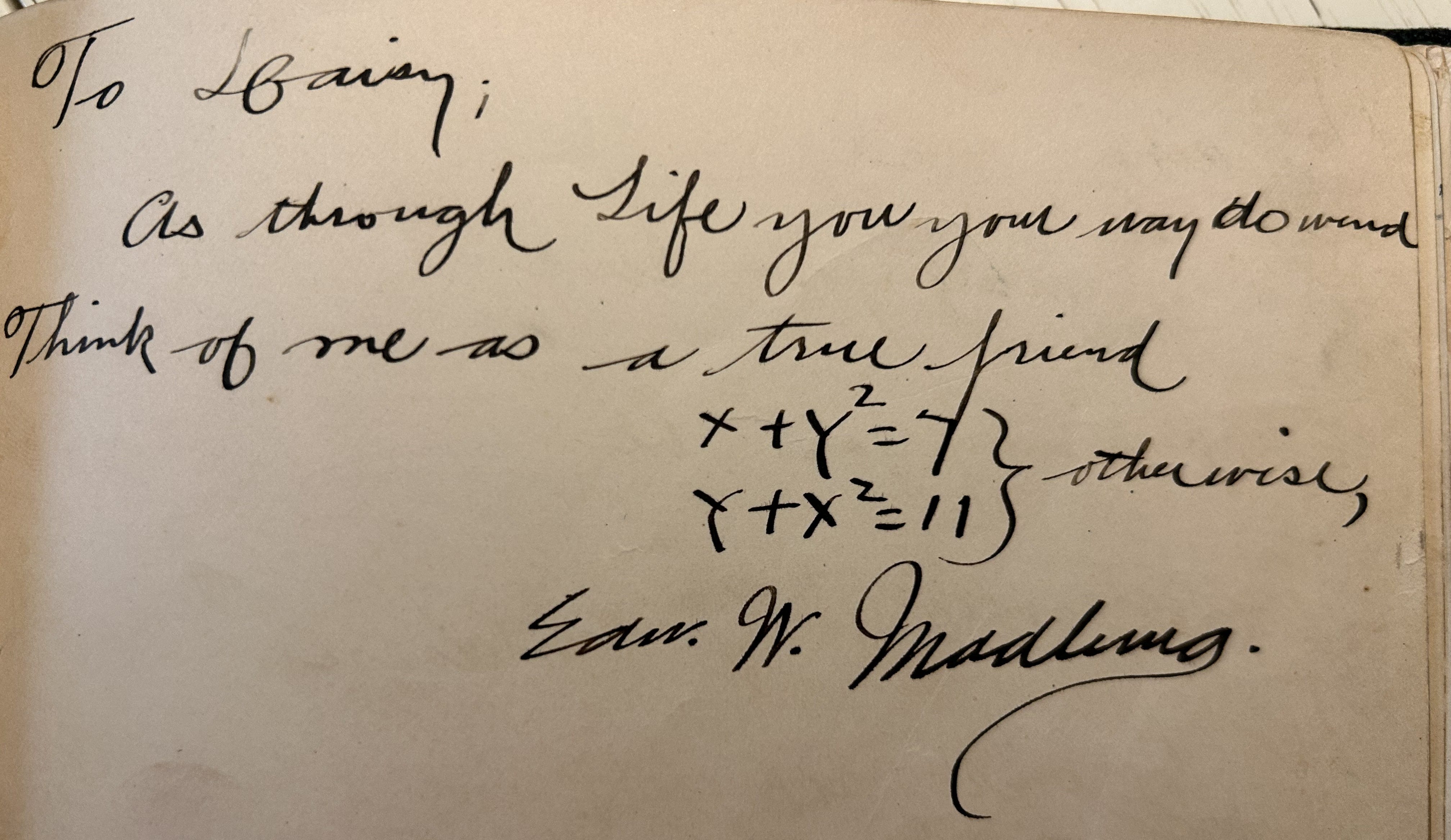
I’m not sure how to make out this name, but I like the message because it’s cryptic and unexpected. Anyone have any ideas what the equations mean?
Were Daisy’s acquaintances unusually talented, or was this normal in 1902?
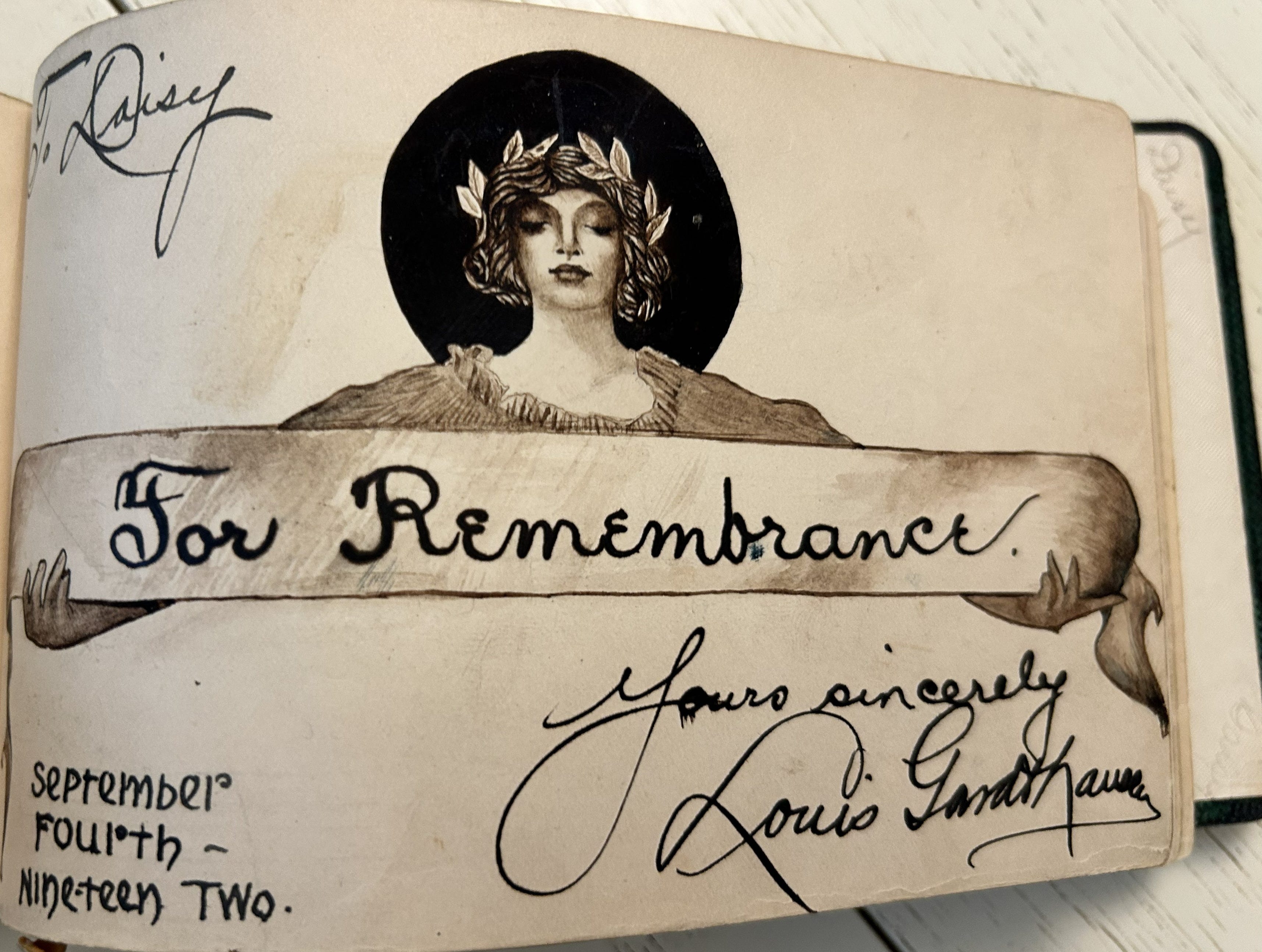
Every page in Daisy’s book is filled, and I’ve devoured them twice with a magnifying glass. One stands out from the rest. When I first saw it, I gasped. It’s hard to do the picture justice onscreen, because it’s not like the others.
George Jaedicker created it with pencil and ink— the only signer to use two media. He used pencil for drafting, shading and relief. Then he retraced using a black ink that doesn’t resemble the other blacks in the book. It’s like a fine-point, felt-tip pen.
He made a gift out of this picture.
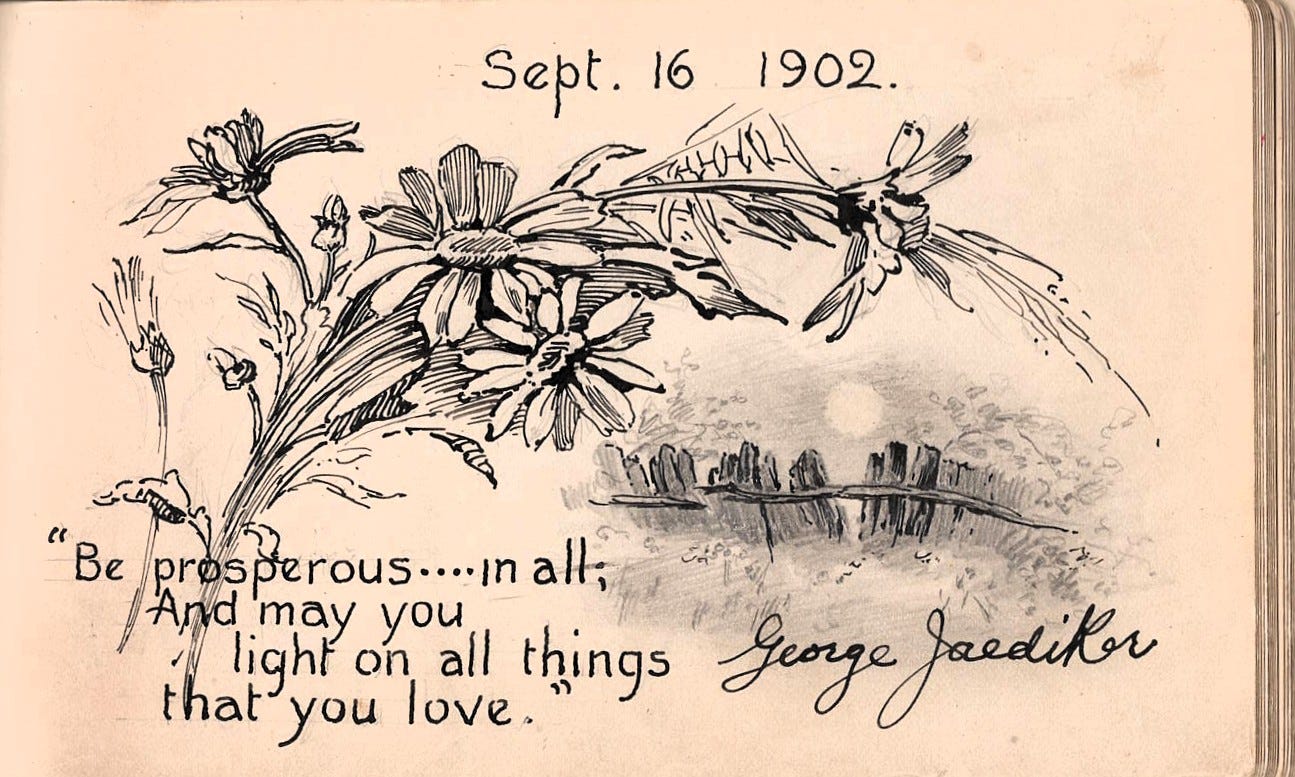
It’s my professional opinion as a guy that George was sweet on Daisy.
But I also said to myself, “I want to see the post-credits scene where I found out if he ever went on to pursue art in a meaningful way?”
Thank you, internet!
I mean, it’s possible this 1934 painting is not by the same George Jaedicker. But c’mon, it’s the same guy:
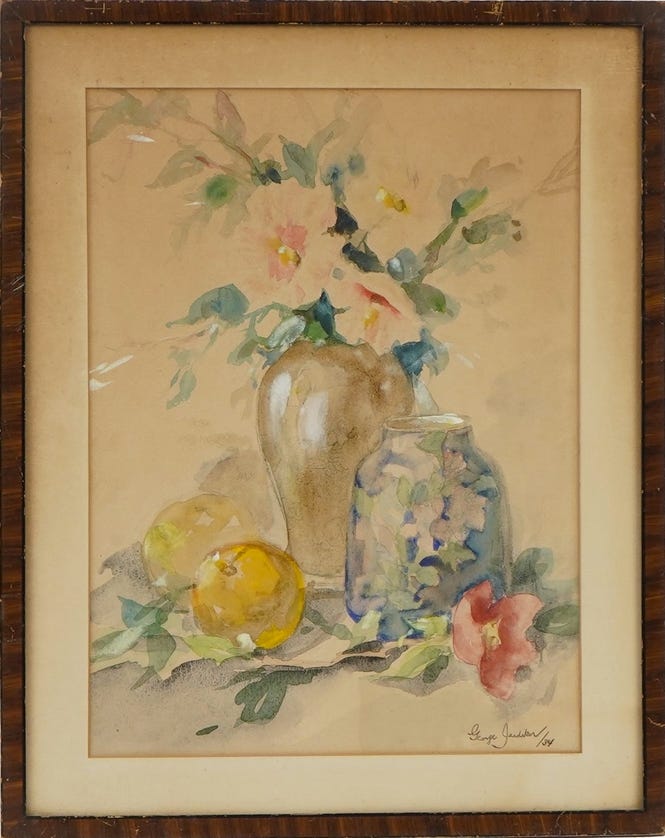
Next I thought, “Talent runs in that family, they’re like the Mannings of 1900s sketch art. Let’s not forget brother Max.”
Max last had a collection of etchings sell at auction in 2010, with one of his pieces— “Winter Watchman”— in the Met collection (not currently on view).
To think we knew him before anybody’d heard of him!
It’s tempting to sample a few pages and say, “I get the gist,” before hastily putting the book back in its box. There’s always another box.
But there’s a reason for turning every page.
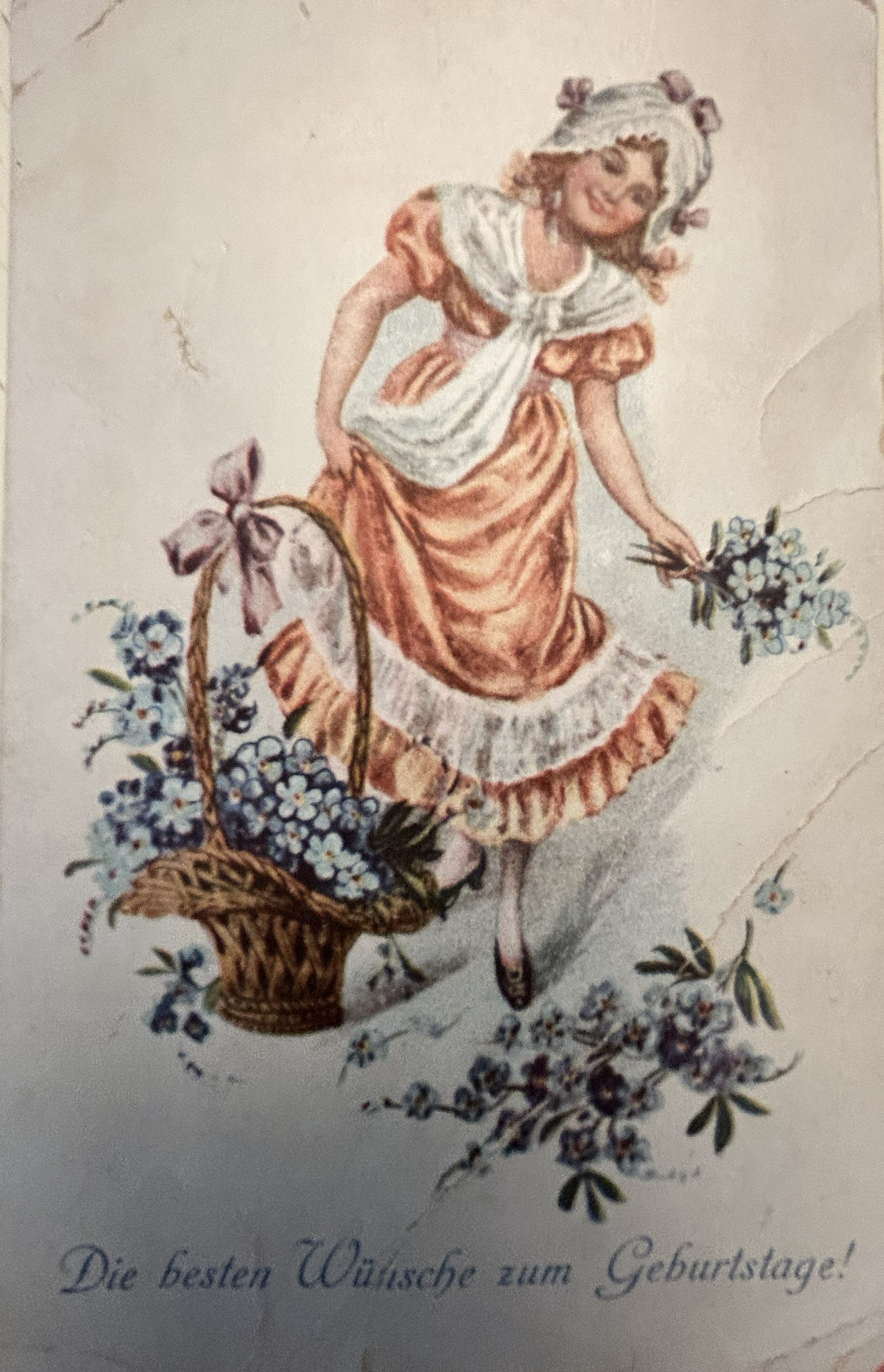
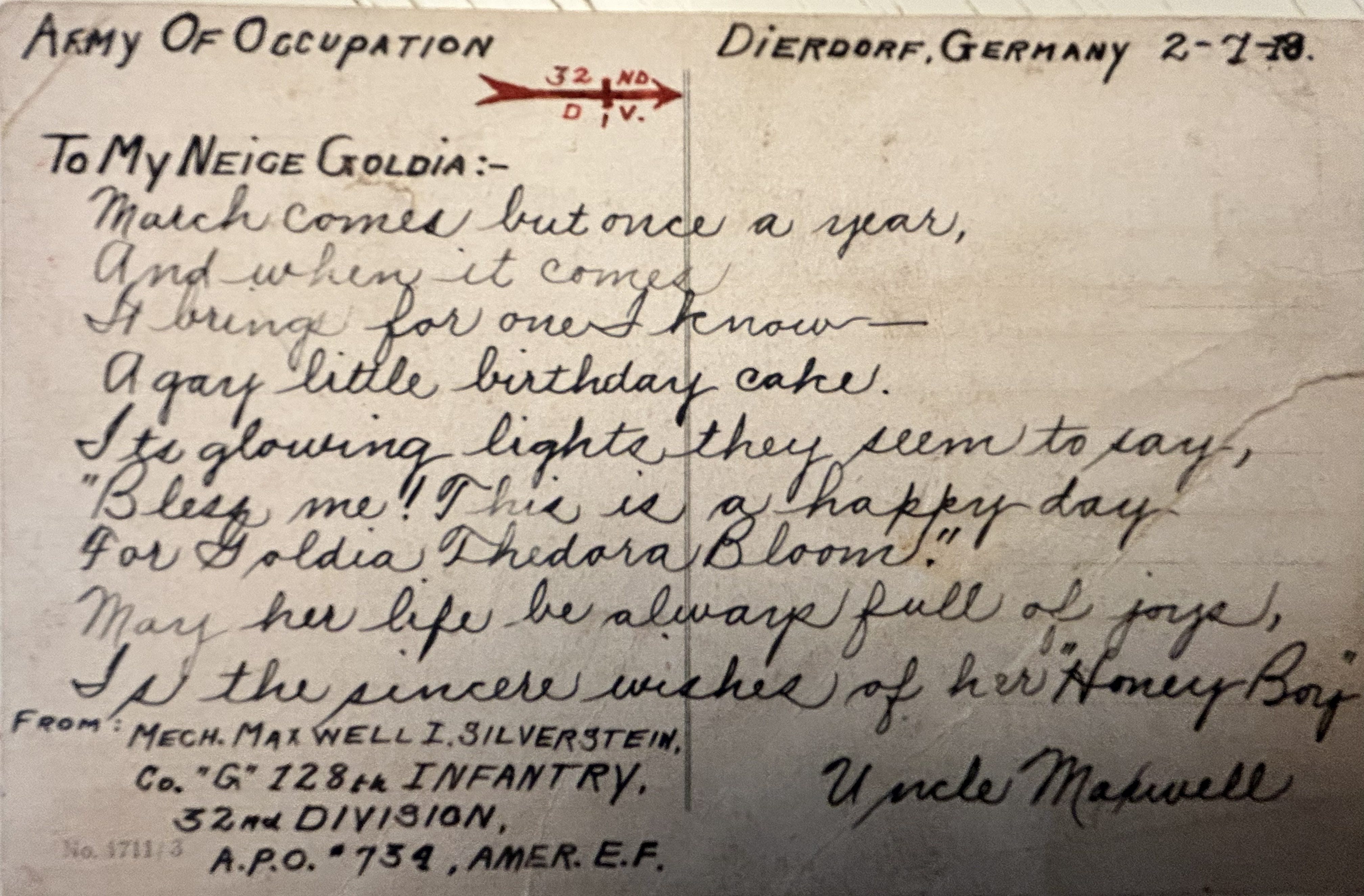
Near the end and pressed between two leaves hid one last entry, and Daisy’s last surprise for her Great-Grandson— a fragile postcard from her 24-yr old brother soldiering in Germany during WWI to Daisy’s 6-yr old daughter Goldia Bloom (we would call her “Aunt Gloria” growing up).
What about you— have you rifled through a musty old box and unearthed something extraordinary? Something unexpected that delighted you? Anything that led you down a rabbit hole? What was the oldest thing you found?
Share in the comments below!
Comments
Nothing yet. Say the first thing.
Sign in to join the conversation.