
In the realm of symbols, few have been as misunderstood and misappropriated as the caduceus in the field of medicine. This ancient Greek emblem, depicting two serpents entwined around a winged staff, has become a ubiquitous sight in healthcare settings, adorning logos, buildings, and even medical professionals' attire. However, its widespread use belies a fundamental disconnect from the true essence of the medical tradition – a disconnect that mirrors a broader shift in priorities within the healthcare system.
The caduceus finds its origins not in the annals of healing but in the realm of commerce and negotiation. It was the symbol of Hermes, the messenger god of ancient Greek mythology, representing his role as a facilitator of trade and communication. The serpents, often interpreted as symbols of wisdom and renewal, were entwined in a manner that evoked the duality and complexity of Hermes' domain.
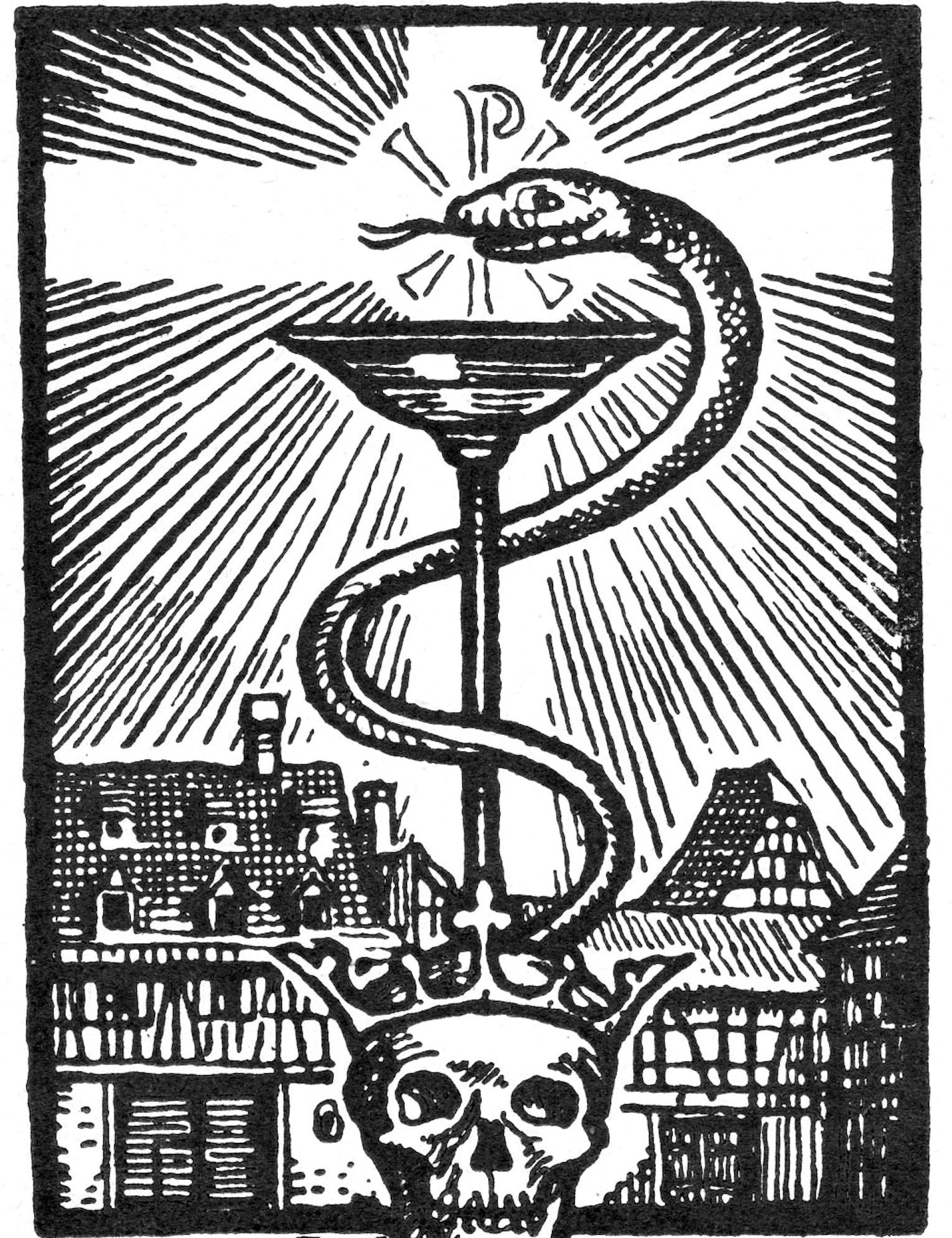
In stark contrast stands the Rod of Asclepius, the true emblem of the medical arts. This simple yet powerful symbol depicts a single serpent coiled around a staff, a representation of the mythological figure Asclepius, the Greek god of medicine and healing. Unlike the caduceus, the Rod of Asclepius is deeply rooted in the ancient traditions of the healing arts, its serpent symbolizing rejuvenation and the staff representing the wisdom of the physician is also the symbolic embodiment of medicine's role in facilitating the body's own healing potential..
The widespread adoption of the caduceus as a medical symbol can be traced back to a fateful mistake made by the U.S. Army Medical Corps in the late 19th century. In a misguided attempt to imbue their organization with a sense of authority and prestige, they chose the visually striking caduceus over the more understated Rod of Asclepius. This error, born of a lack of understanding of the symbols' true meanings, set in motion a chain of events that would see the caduceus become entrenched in the collective consciousness as a symbol of medicine.
However, this symbolic misstep is more than just a historical curiosity; it serves as a poignant metaphor for the broader challenges facing the modern healthcare system. Just as the caduceus is associated with commerce and negotiation, the medical industry has increasingly prioritized financial considerations over the fundamental principles of healing and compassion. The commodification of healthcare, driven by profit motives and the relentless pursuit of efficiency, has eroded the sacred bond between patient and practitioner. The art of medicine, once rooted in a holistic understanding of the human condition, has been reduced to a series of transactions, with patients viewed as consumers and healthcare providers as mere service providers. This shift in priorities has manifested in myriad ways, from the proliferation of impersonal, assembly-line-style care to the over-prescription of costly treatments and procedures. The emphasis on short term quantifiable metrics and bottom lines has overshadowed the more intangible, yet equally vital, aspects of healing – the empathy, compassion, and human connection that lie at the heart of the medical tradition.
It is in this context that the resurgence of integrative medicine offers a glimmer of hope, a path back to the true roots of healing embodied by the Rod of Asclepius. Integrative medicine seeks to harmonize the best of modern medical science with ancient wisdom traditions, recognizing the intricate interplay between mind, body, and spirit in the pursuit of holistic well-being.
By expanding treatment options, empowering patients, and prioritizing prevention over just symptom management, integrative medicine can help reorient our healthcare system toward true healing. Its sustainable model that rehumanizes the patient-provider relationship and validates the mind-body connection has the potential to catalyze a shift toward more effective, affordable, and compassionate care.
By embracing a more comprehensive understanding of health and illness, integrative medicine practitioners strive to treat the whole person, not just the symptoms. They acknowledge the profound impact of lifestyle, environment, and emotional well-being on physical health, and employ a diverse array of therapeutic modalities – from nutrition and exercise to mindfulness practices and energy healing – to promote a deeper and more sustained healing on multiple levels.
At the core of this approach lies a profound respect for the innate wisdom of the human body and its capacity for self-healing, a wisdom that has been obscured by the reductionist tendencies of conventional medicine. By reconnecting with these ancient principles, integrative medicine seeks to restore the sacred bond between each one of us with our own bodies as well as healer and patient, fostering an environment of trust, empathy, and mutual understanding.
Just as the Rod of Asclepius represents the true essence of the medical tradition, integrative medicine offers a path back to the fundamental principles of healing – a path that transcends the narrow confines of commerce and exchange, and embraces the holistic well-being of individuals and communities. In this light, the caduceus stands not merely as a symbol of a historical mistake, but as a poignant reminder of the dangers of losing sight of our true purpose as healers. Its serpents, once emblematic of wisdom and renewal, now serve as a cautionary tale, urging us to reclaim the sacred mantle of the Rod of Asclepius and recommit ourselves to the timeless pursuit of healing in its purest, most compassionate form
.
No posts
Comments
Nothing yet. Say the first thing.
Sign in to join the conversation.