
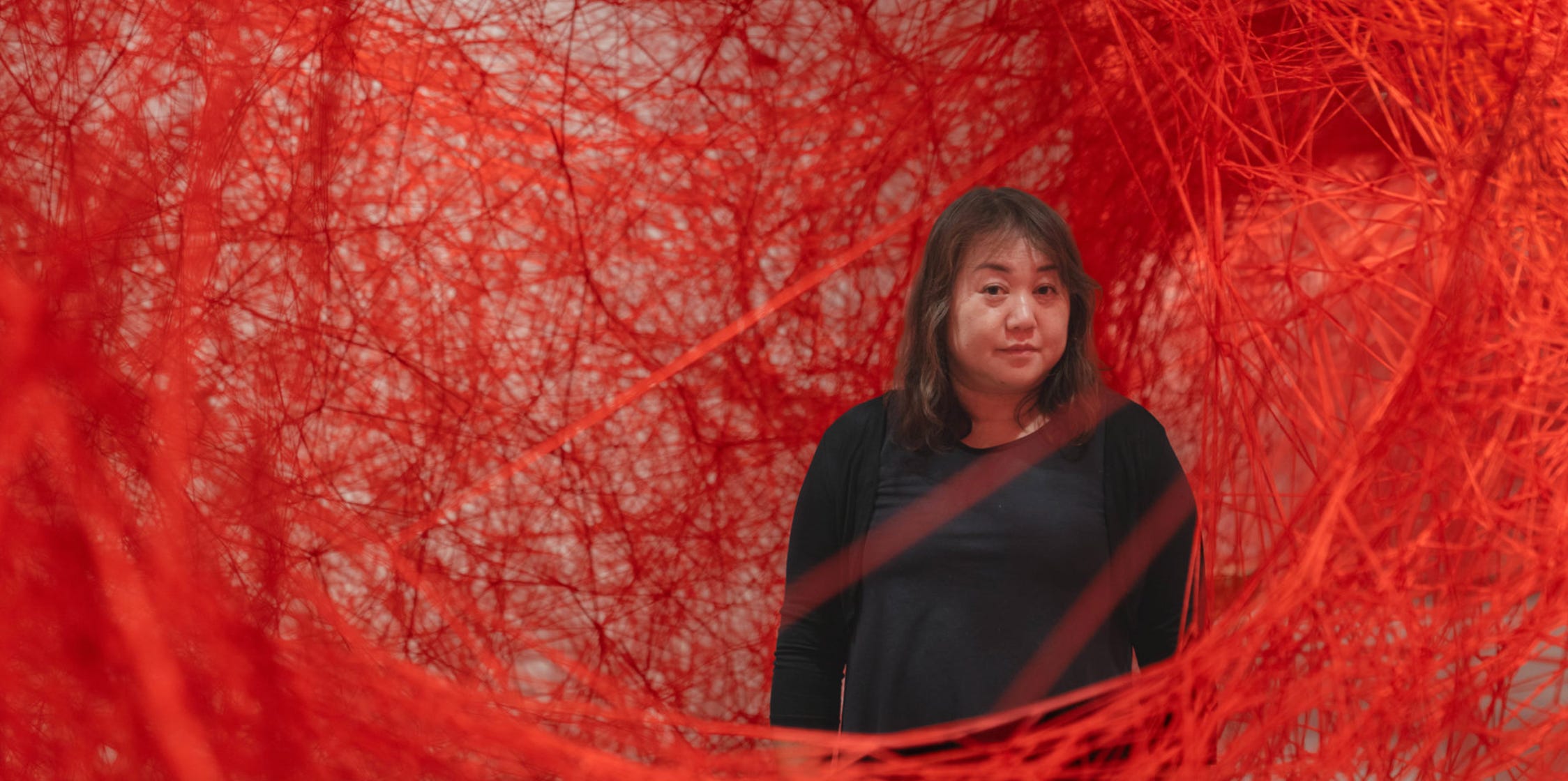
Since childhood, Chiharu Shiota (b. 1972), who grew up in Osaka, was dead set on becoming an artist. From elementary throughout high school, Shiota had painted and excelled at it, later enrolling at Kyoto Seika University to study oil painting and sculpture. And yet her intuition couldn’t be silenced; she wanted more than a career as a painter. While studying abroad in Australia in 1994 amid this crisis surrounding the future of her practice, Shiota ditched the canvas and became a literal painting.
The artist donned a white sheet, grabbed a bucket of red enamel paint, and let her free will take the reigns. The result, which looks like it was taken straight from a horror film’s bloodbath, is Shiota’s first foray into performance art. Following Becoming Painting (1994), she took an even bigger leap by moving to Berlin in 1996 to study under acclaimed installation and performance artists Rebbecca Horn and Marina Abramović.

One early installation arranged cattle bones in circles around a pool of water. Another mounted 13-meter-long dresses covered in mud. This early period of her work was raw, dirty, even shocking or disgusting. Like the sandy body prints of Ana Mendieta waiting to be washed away, there’s a sharp universality to Shiota’s fleeting works.
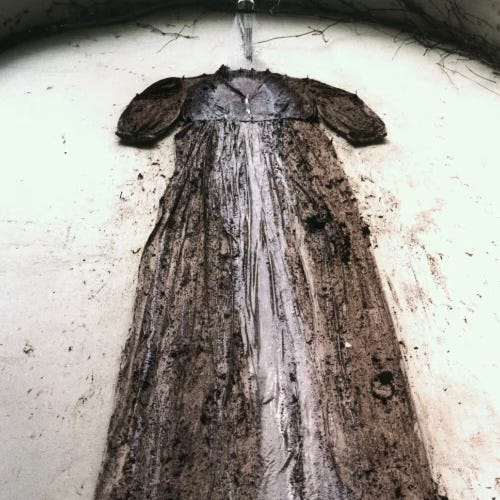
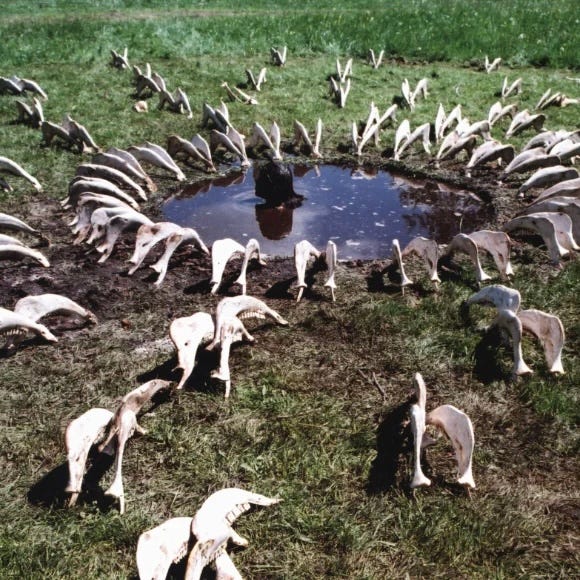
“I began thinking about my own existence,” said Shiota of her exploration into performance, land art, and self-portraits in the 1990s.
Alongside existentialism, missing Japan riddled her thoughts too. Berlin had transformed her artmaking profoundly, but wasn’t Shiota’s entire identity. She felt split, as she’d feel again between her body and spirit amid surviving two bouts of cancer in the 2010s. Communicating this personal and collective tension guides the exhibition Chiharu Shiota: Two Home Countries at San Francisco’s Asian Art Museum.
The show is introduced by a thoughtful, 10-minute biographical video tracing Shiota’s practice from Osaka to Australia to Berlin. The artist’s career thus far cannot be confined to regular wall text. Understanding Shiota’s path to artmaking is integral to appreciating this exhibition.
To enter the gallery, visitors walk through a tunnel of red yarn crossing over and over, suspending the diary pages and photos of World War II soldiers, both Japanese and German.
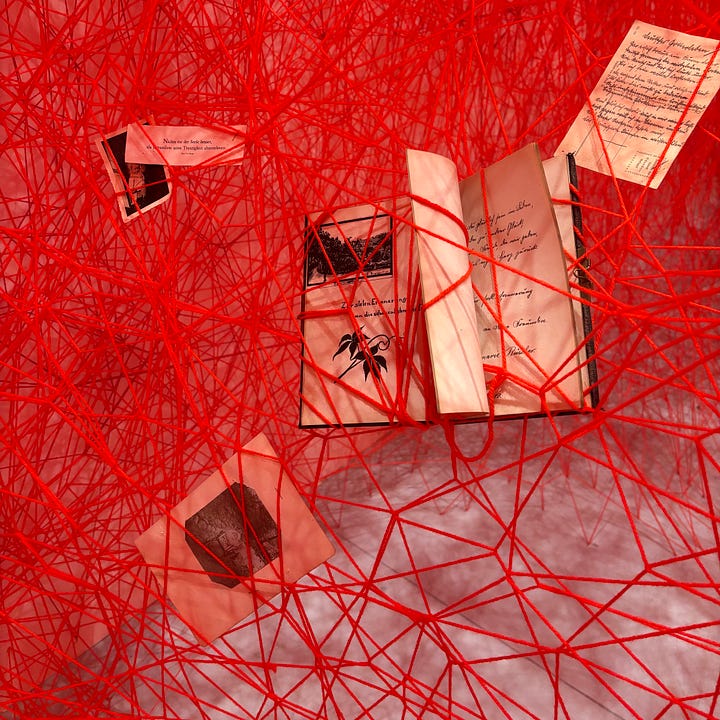
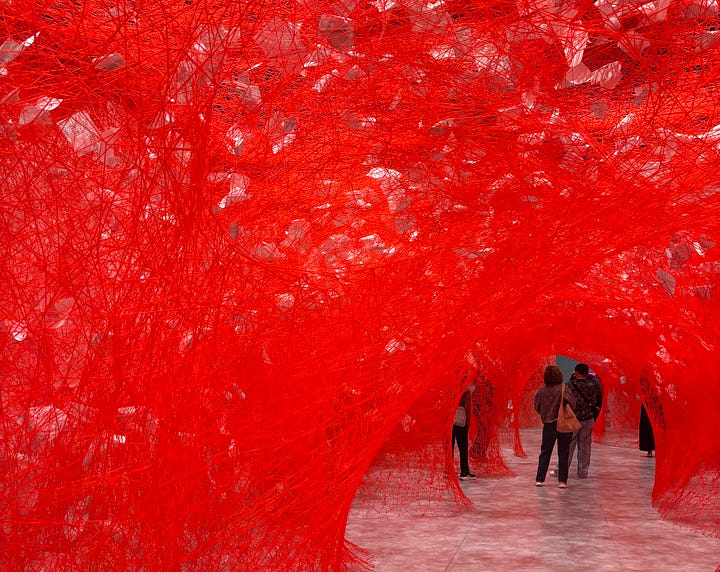
While shown time after time on Instagram, Diary deserves more time than a 30 second video. I lost myself inside the cavernous webs. I felt compelled to read every diary page and find every family photo that these soldiers left behind. These pages are all that remain from a multinational war that killed millions, a sort of absent human presence that previews Shiota’s meditations on death throughout her practice.
What lies on the other side of Diary is far more personal. The works become increasingly gutrenching, at least that was the reaction that Out of my Body (2022), a bronze cast of Shiota’s feet placed below a looming leather net, elicited in me. Here stands a fractured body frozen in time whose soul is departing. During her battles with cancer, body casts and chemotherapy remnants entered Shiota’s practice for the first time as art became an outlet to process trauma. Structurally, this work doesn’t envelop a room like Diary, but my heart sank looking at it in the same way it did reading the soldiers’ letters suspended in thread.
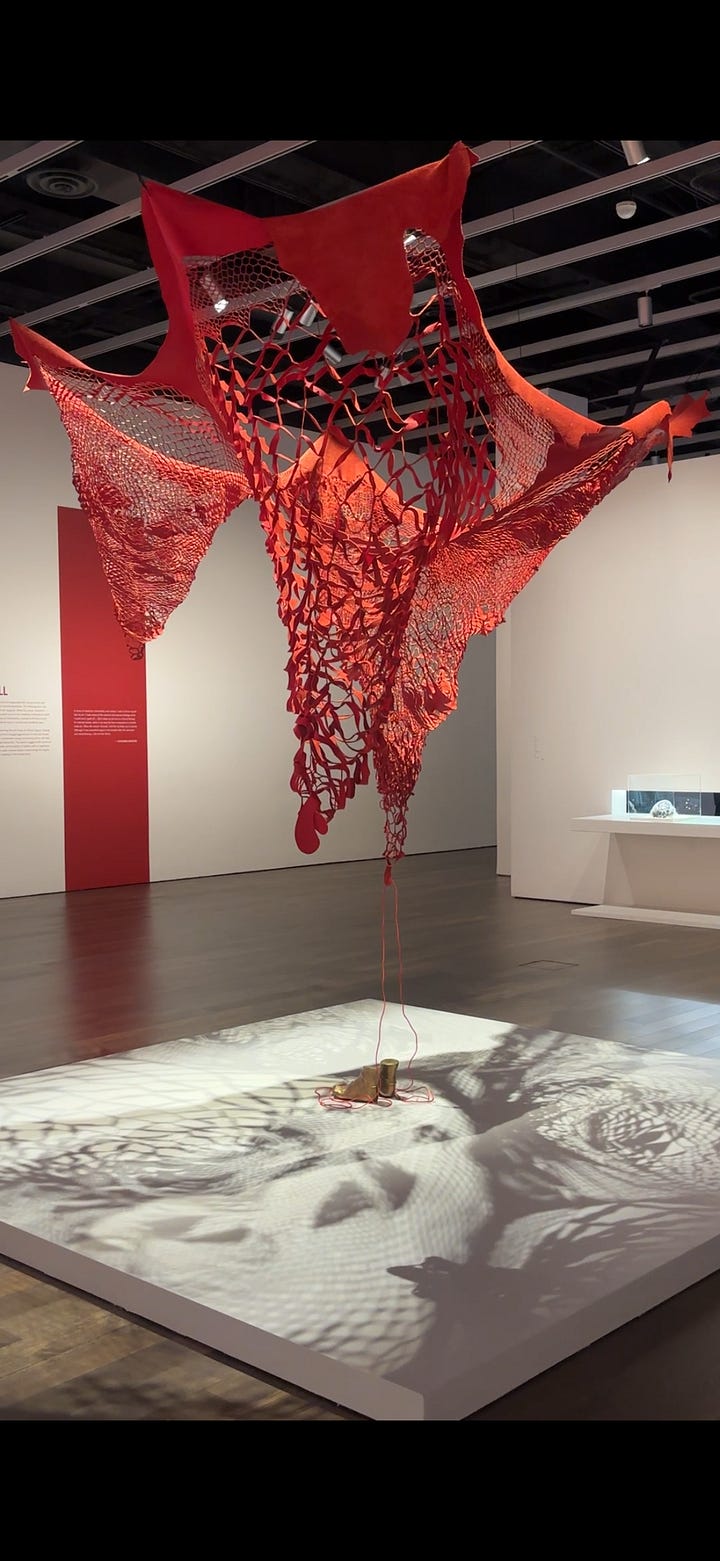
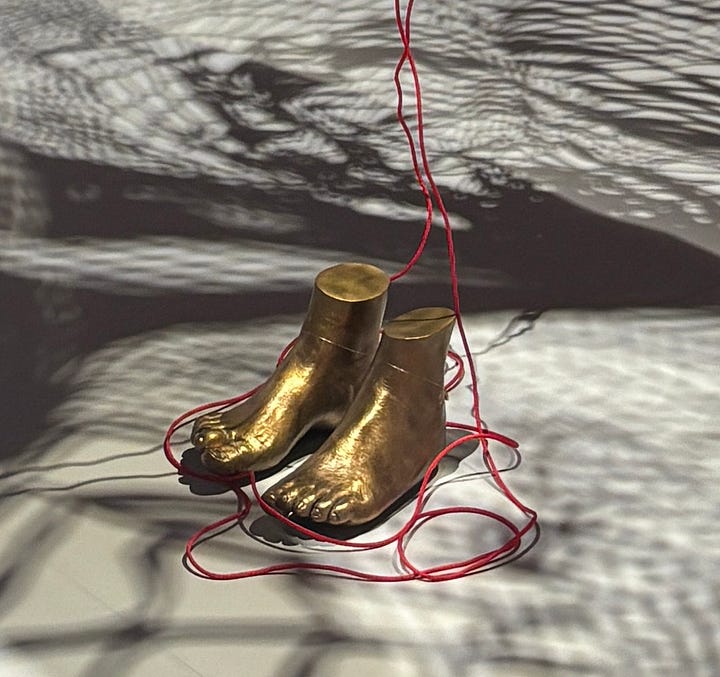
Almost a decade ago, my mom passed from cancer, although I hate to remember her by that. Most don’t share what your body actually feels like when it’s fighting itself, when the end of life could be around the corner. It makes Chiharu Shiota’s recent work all the more brave and impactful. Feeling ‘out of body’ parallels the discomfort of feeling homesick.
“This feeling of pain and anxiety are sometimes necessary for me. They are inseparable from the process of creating my work,” Shiota told Art Basel of creating art following 2005 and 2016 cancer diagnoses.
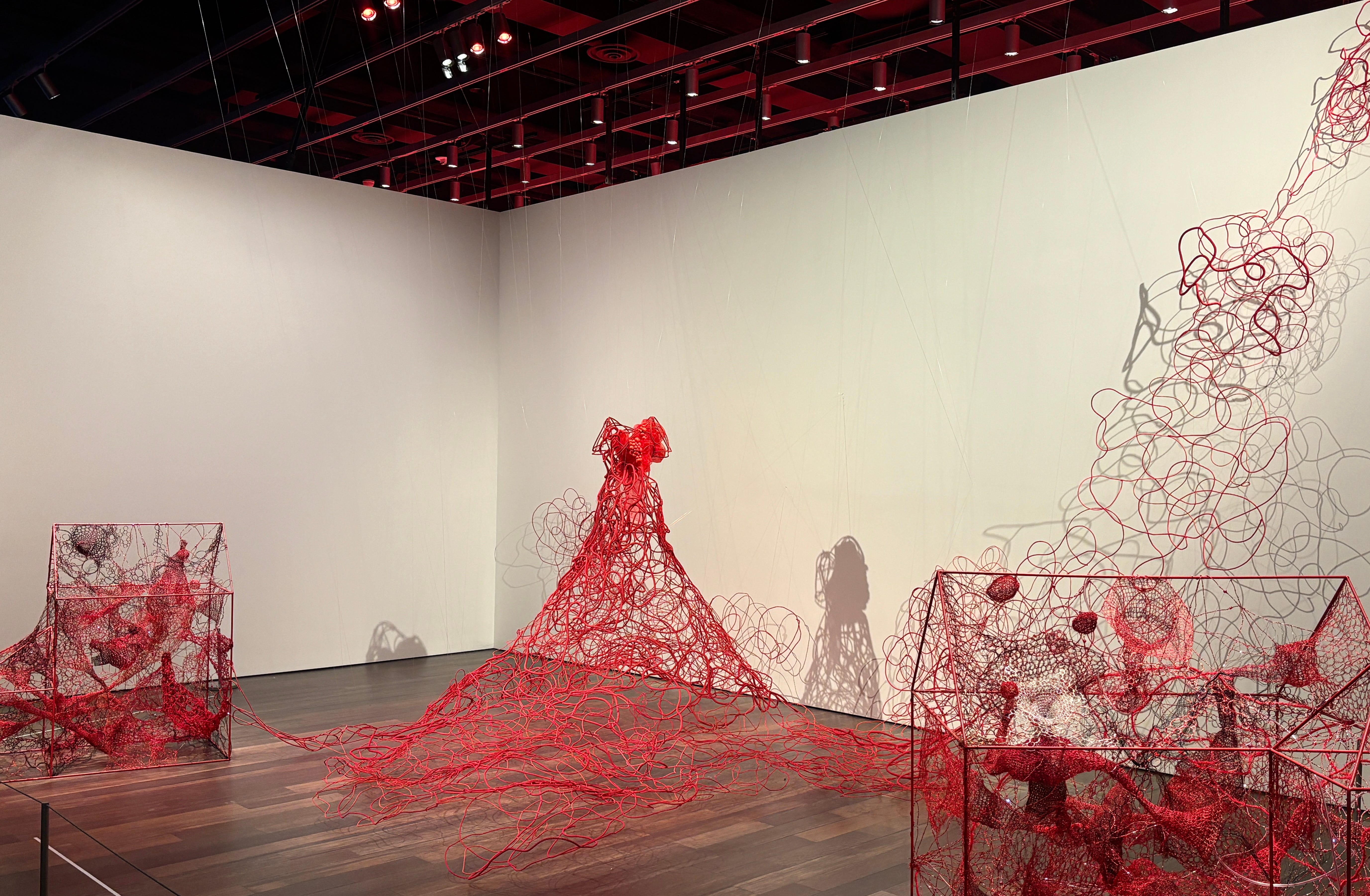
Growth cannot happen without pain, and that truth keeps Shiota creating. In Cell, a set of glass, organ-like orbs take a more literal approach to illness. In the same gallery, a wiry red red dress stands equidistant from two model houses, the show’s titular work. These works are heavy and uncomfortable, but don’t show breakage under pressure. Cells can grow back healthy. A new home country can become a place you miss when you’re away instead of one you’re trying to flee.
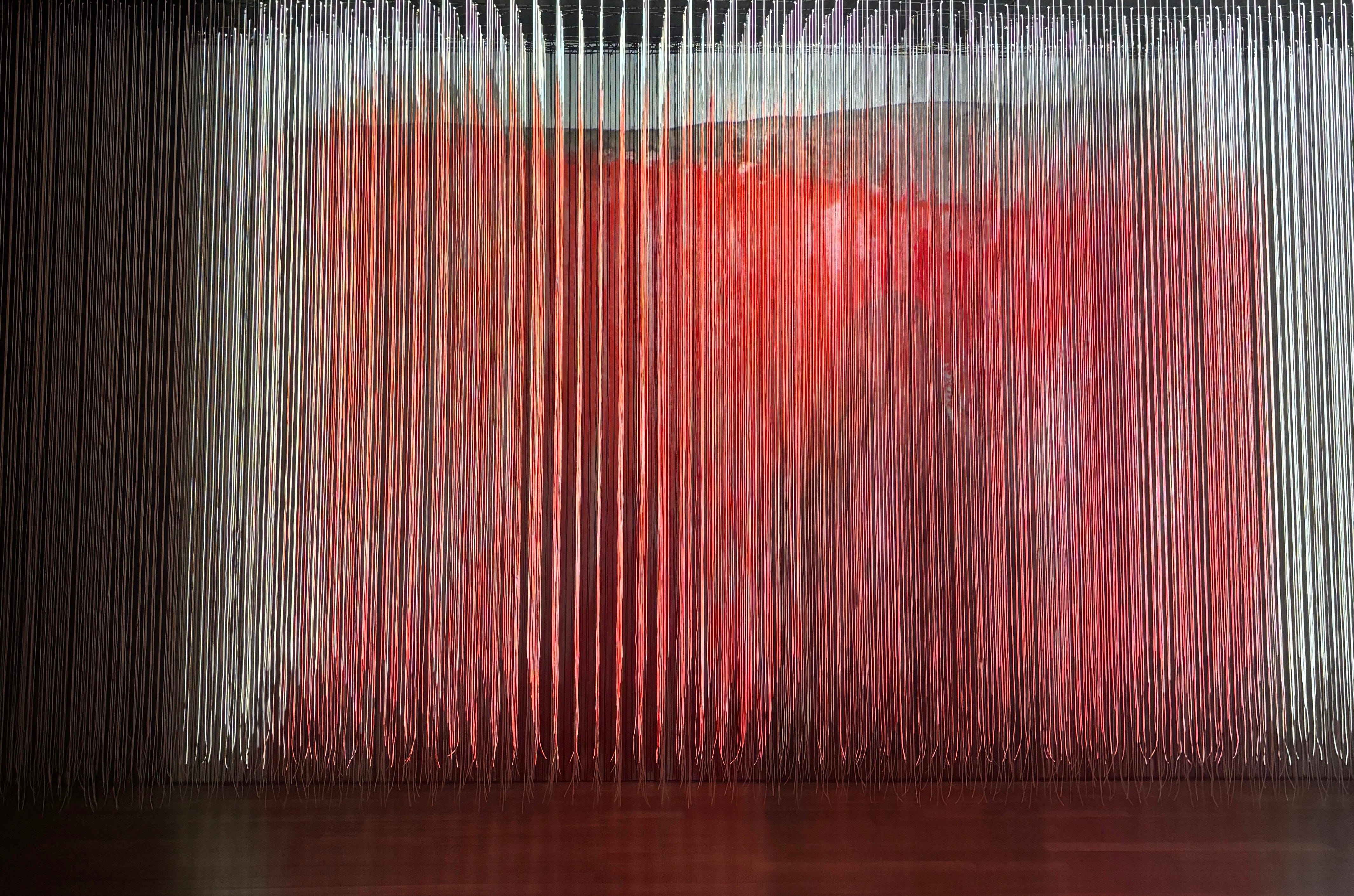
The last installation, a glowing curtain of thread that Shiota designed for a theater production, is more of a palate cleanser than a resolution.
Two Home Countries has no happy ending because tension surrounding your health, identity, and future doesn’t just disappear, no matter how much you can attempt to process. Shiota simply came to terms, noting “I can’t choose only one home and recently, I feel that I do not need to choose. having two home countries may even be a way to imagine a world without war.”
Acceptance is all we can wish for in the future. Chiharu Shiota’s approach might be the most graceful way to do it.
If you made it this far, thank you so much for reading and go visit this exhibition before it closes this weekend! Follow me on Instagram for all things women artists, museums, and art world :)
Dig into my exhibition reviews:
What paid subscribers are reading:
Comments
Nothing yet. Say the first thing.
Sign in to join the conversation.