
Today marks the thirteenth day of the government shutdown. Roughly 750,000 people have been furloughed, causing disruptions across a wide array of government agencies. Many essential workers, including air traffic controllers and active-duty troops, are still required to show up for work—and somehow pay their bills and feed their families—even though they aren’t receiving a paycheck. And now the Trump administration is summarily terminating thousands of federal employees in the departments of Health and Human Services, Treasury, Commerce, Education, Energy, Housing and Urban Development, and Homeland Security.
Government shutdowns are nothing new. Since 1980, funding has lapsed on fourteen other occasions. The record (34 days) for the longest shutdown in U.S. history was set in 2019, during the first Trump administration. But this shutdown is different.
For one thing, Russell Vought, the current head of the Office of Management and Budget (OMB) and principal architect of Project 2025, came to the job announcing that he was eager to traumatize the federal workforce:
[We want them] to be traumatically affected…When they wake up in the morning, we want them to not want to go to work, because they are increasingly viewed as the villains. We want their funding to be shut down…We want to put them in trauma.
From the perspective of the Trump administration, the shutdown presents an opportunity to do just that. As the president himself recently put it:
We can do things during the shutdown that are irreversible that are bad for them and irreversible by them, like cutting vast numbers of people out, cutting things they that they like, cutting programs that they like.
While republicans don’t want to be blamed for the shutdown itself—they’ve branded it the “Schumer shutdown”—they’re using the opportunity to go after people and programs they want to eliminate anyway. This is how the OMB director announced the Friday night massacre at the Centers for Disease Control and Prevention (CDC).1
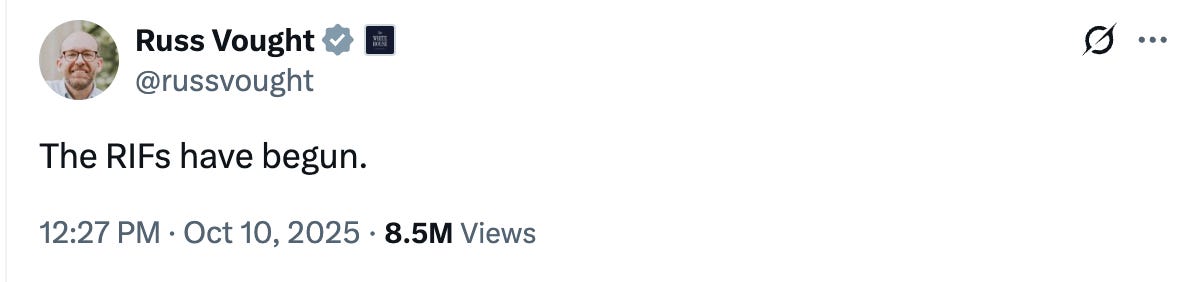
This is not like other shutdowns.
Democrats want credit for standing up to the Trump administration, but they don’t want to be blamed for the shutdown that has led to furloughs, firings, flight delays, and so on. Senate democrats acknowledge that they have the power to restart paychecks and bring furloughed workers back to the office. All they have to do is vote to pass the House bill, which extends federal funding at current levels through November 21, and the shutdown would end. But they’re playing hardball.
It takes 60 votes to overcome a filibuster in the Senate, and Sen. Rand Paul (R-KY) continues to vote ‘no’. That means that it will take eight democrats to end the shutdown. As it stands, they are five short.
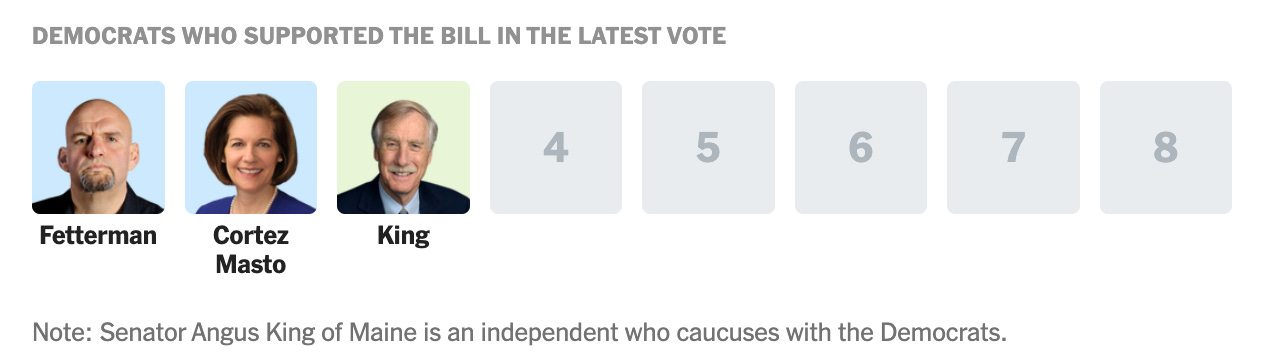
Most democrats, including the senators featured in this video, have decided to leverage their power in order to rescue tens of millions of Americans from imminent danger.
What would happen if five more democrats voted to join Senators Fetterman, Cortez Masto, and King? The government would reopen, and a health care catastrophe would unfold across America. Health insurance premiums would double for 20 million Americans, 15 million people would lose coverage, and tens of thousands of Americans would die from preventable deaths.
To understand why premiums are poised to skyrocket, you have to understand something about the Affordable Care Act (ACA), which was signed into law by President Obama in March 2010. Among other things, the ACA established online platforms (“marketplaces”) that allow people to shop for and purchase health insurance. It also created subsidies to reduce the out-of-pocket cost of buying coverage for individuals and families with modest incomes. Under President Biden, Congress expanded the value of the tax credits people receive when they purchase health care in these marketplaces.
The problem facing 24 million people who currently get their coverage under the ACA is that funding for the enhanced subsidies is set to expire on December 31.
Democrats are using the only leverage they have to try try to bring republicans to the table to negotiate some kind of deal around health care. And while Senate republicans have shown little interest in negotiating, they know they have a problem.
As Sen. Patty Murray (D-WA) points out, Americans who live in so-called “red states” are going to be absolutely walloped by the looming spike in premiums. This is why democratic strategist Neera Tanden recently said that “Republicans should secretly hope that Democrats win this debate.” In other words, by making the shutdown fight about health care, democrats just might end up saving republicans from themselves. As Sen. Tammy Baldwin (D-WI) notes, about a quarter of all farmers rely on the ACA for their health care coverage.
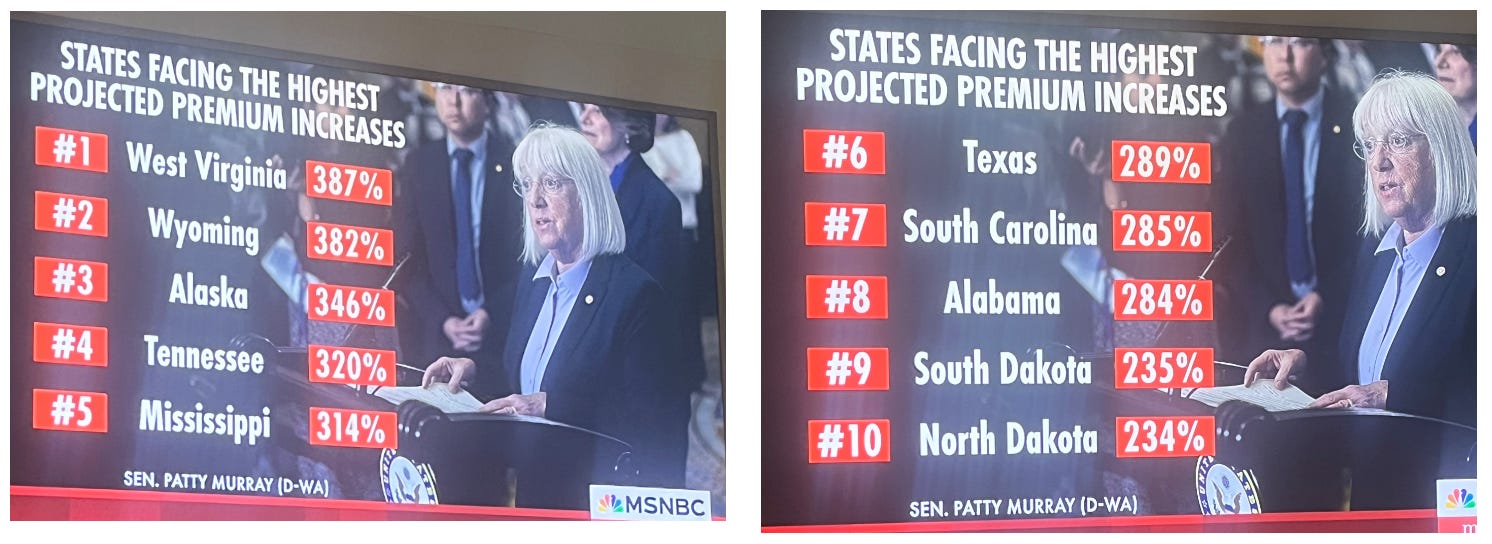
You might wonder why democrats decided not to sit back let the health care catastrophe unfold. Why not keep their fingerprints completely off the shutdown? After all, shutdowns are unpopular, and even though voters tend to blame the party in power, it’s always possible that the “Schumer shutdown” branding could stick. And if democrats are successful in restoring funding for the enhanced subsidies, will they even get credit?
When the shutdown began, I kept thinking of images like this. The superhero arrives just in time to prevent a catastrophe, and the passengers—at least those who know that they were in imminent danger—heap gratitude on their savior.
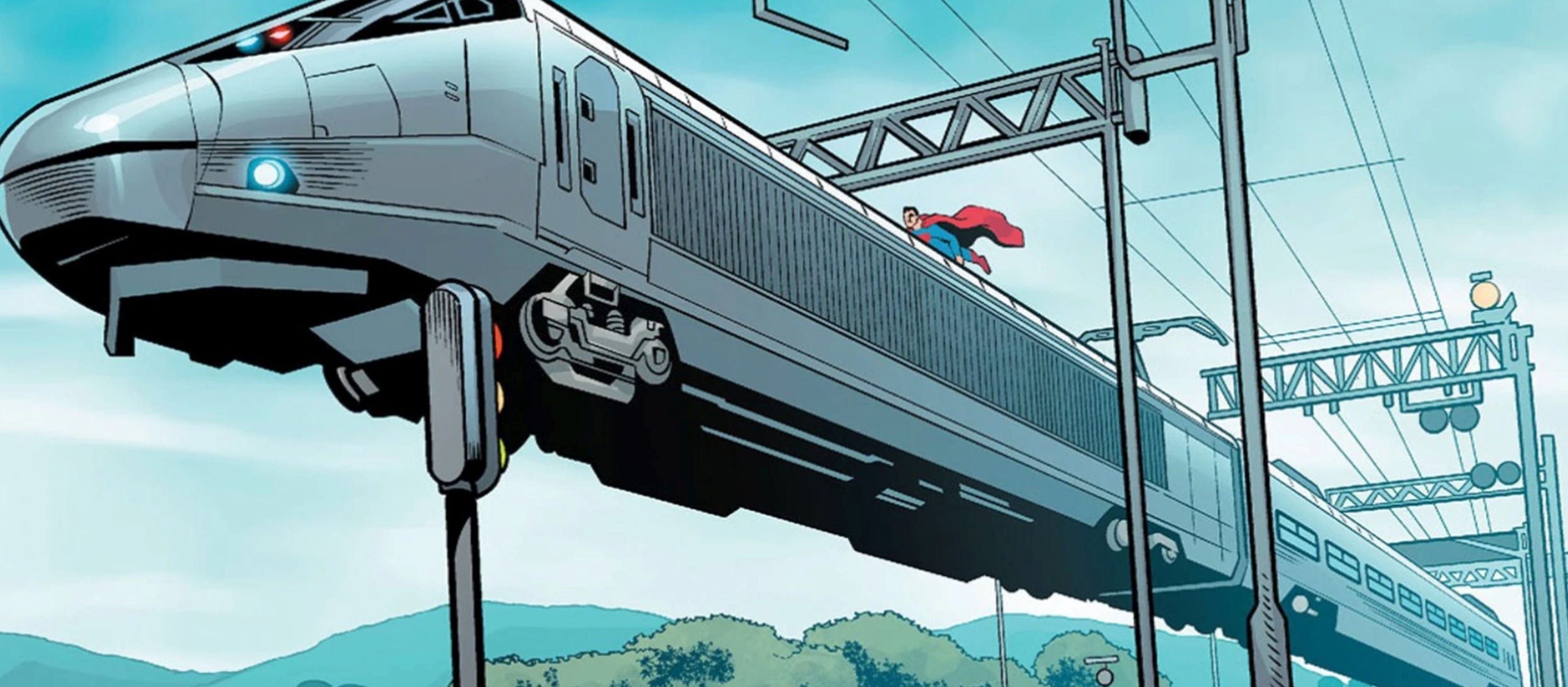
It seemed like a risky bet on the part of democrats. Were voters paying attention to what’s coming down the pike with respect to health care? And if not, could they be educated quickly enough to make them allies in the shutdown fight? Thirteen days later, their political calculus looks a lot less risky.
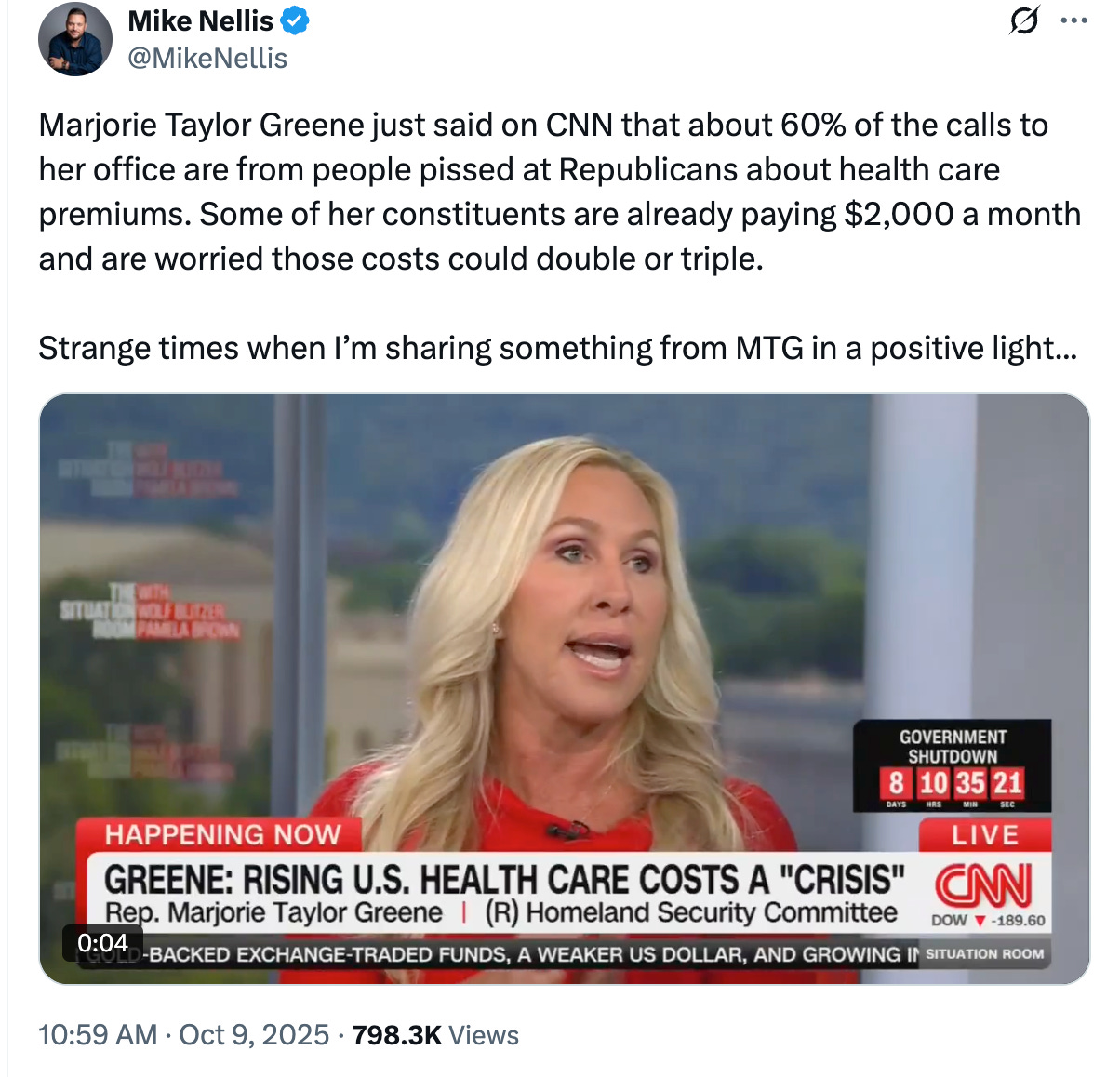
Premium shock is setting in.
Millions of Americans have been receiving alarming notices from their health insurers. It’s open enrollment season—i.e. the annual period (starting November 1) when individuals can sign up for, renew, or change their health insurance plan. Those notices show people what their premiums will look like in the coming year. Increases of 200, 300, or 350 percent are staring them right in the face.
Did democrats pick the right shutdown fight? It sure looks like a winner.
RIF stands for Reduction in Force, and it implies the permanent elimination of jobs.
No posts
Comments
Nothing yet. Say the first thing.
Sign in to join the conversation.