
Trying to save my own life turns out to be mostly paperwork. The longer it goes on, the more boring it gets. I want to do something else. Anything else. Even death sometimes seems more interesting than administering not dying.
Scheduling scans. Rescheduling them when the authorization doesn’t come through. Logging into portals, a different one for each hospital. Uploading scans from one hospital so another can look at them. Tracking down records that never arrived. Messaging doctors. Calling when nobody answers. Reading results before anyone can explain them. Getting prescriptions filled, refilled, approved, transferred. Taking the drugs, each on its own schedule: morning, night, with food, without food, every day, three times a week, only when needed. Explaining the hospital’s bills to the insurance company and the insurance company’s denials to the hospital. Researching clinical trials. Figuring out whether I qualify. Getting my records there. Getting myself there.
Then there is the administration of my own body. A new pain appears and I have to decide what department it belongs to: cancer, side effects, age, imagination, or nothing.
I have been doing this for five years. At any other job, I would have quit years ago.
The word for this is burnout. But the cures for burnout are rest and boundaries and time away, and there is no time away from this job. You can’t quit. You can’t even call in sick, because being sick is the job.
The longer I’m at this, the more doctors I accumulate. Oncologists, of course. Then an ophthalmologist to make sure my retinas aren’t detaching. An endocrinologist for the bones that keep breaking. A dermatologist for the nails lifting off their beds. A surgeon to cement my fractured spine, and a physiatrist to help me live with what was left. A dentist to extract the teeth the treatment rotted. Radiation oncologists for different parts of my body. A pulmonologist for the damage radiation and microwave ablation left behind.
Every treatment solves one problem and seems to create another specialist. Half of my doctors are treating the disease. The other half are treating the treatments
I used to read results the second they posted. I repeatedly checked the portal until they appeared. Blood counts, tumor markers, the radiologist’s report. These are the numbers that say whether I live, and I have read hundreds of them. This week a friend asked me over lunch how things stood with my disease, and I remembered I’d had a liver MRI a few days earlier. The results were probably already in the portal. I hadn’t thought to check. Five years ago, that would have been unimaginable.
I have sat on a meditation cushion for more than a decade trying to loosen my grip on what happens next. Maybe I’ve finally learned how. Maybe five years of cancer have just worn me smooth. From the inside, non-attachment and exhaustion can feel remarkably alike.
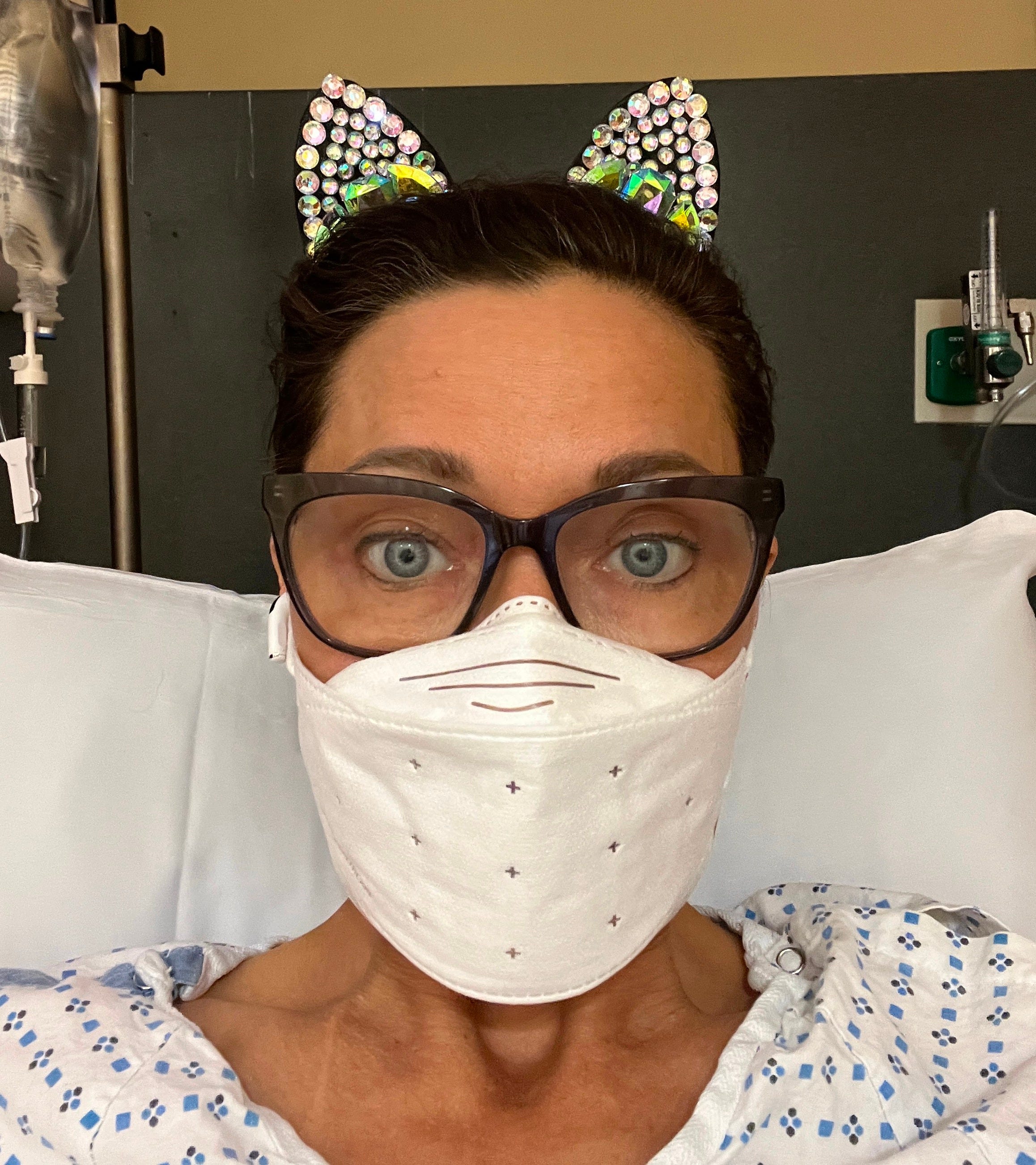
Once, MSK lost track of my biopsy results for months. I waited. I called. I messaged.
When the report was finally found, I learned that it had been inconclusive all along. The biopsy hadn’t captured enough tumor cells, a common problem with cholangiocarcinoma’s dense, fibrous tumors.
I had been waiting for an answer that didn’t exist.
Except that it did exist. Part of the tissue had gone to the Mayo Clinic for a clinical trial, and Mayo found the mutation my own hospital didn’t. But the trial knew me only as a number. The mutation was mine; the result wasn’t. To qualify for drugs targeting that mutation, I would need it on paper, under my name. Weeks were spent engineering the letter out of an institution that had my answer but resisted admitting the answer was mine.
The work is administration. The result is waiting. So much waiting. Every task on the list ends the same way: I send the message, file the appeal, upload the scan. Then I wait. Waiting rooms, obviously, but also waiting for the scan, waiting for the results. I spend most of my time waiting to find out what happens to my own life.
Oncologists have a term for this now—time toxicity—as if it were a side effect. Which it is.
Cancer doesn’t just take time from you. It breaks the time you still have into pieces too small to use.
Forty-five minutes in a waiting room isn’t enough to do anything that feels meaningful. Neither are the twenty minutes alone in an exam room, waiting for a doctor who might walk in at any moment. The problem isn’t just the waiting. It’s that the time can’t quite be used. You can’t leave. You can’t disappear into anything because you have to remain interruptible. So I scroll. I read the awful news of the day. I learn things I didn’t need to know about people I don’t know.
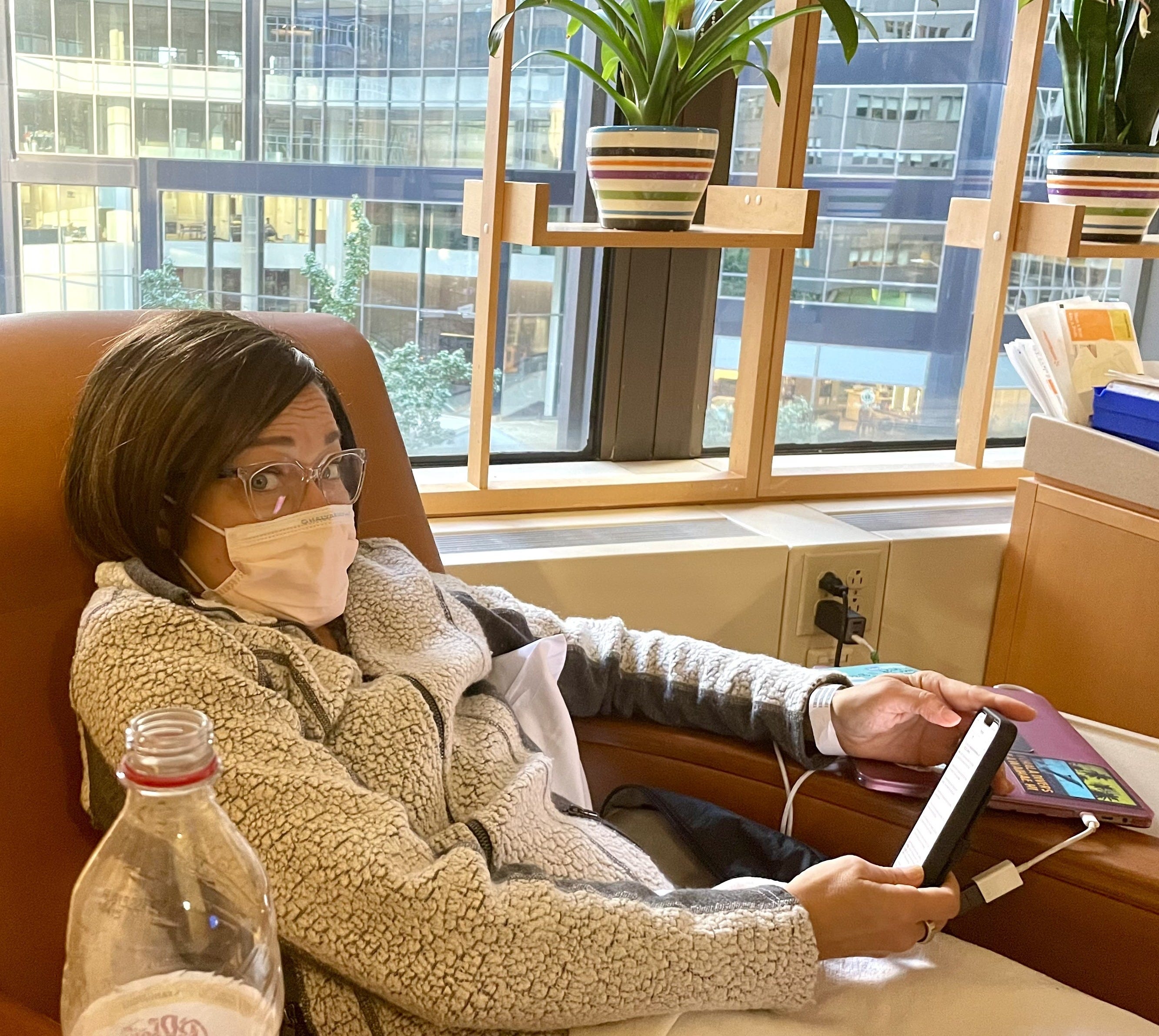
Those are the small waitings, measured in minutes. The big ones are measured in scans.
There are three.
The first kind of waiting begins when a treatment is working. This is the good part of waiting. I try to enjoy myself. I mostly do.
Each treatment for cholangiocarcinoma holds the cancer at bay for eight or nine months, on average. You might get more. You might get less. You don’t know which. So somewhere in the background, the waiting for it to stop working begins the day I learn it is working.
In the meantime, I make plans in eight-week increments. I book a dinner. I take a trip. I buy a ticket. But anything much beyond the next scan belongs in a different category of future: the subjunctive one.
The next trip is India, a few weeks away. My pulmonologist is worried. Radiation damaged my central airways, and he went down the list: the dry air and low oxygen on the plane, the heat, the pollution, the possibility of catching something. He wants me to take antibiotics, and carry prednisone and a pulse oximeter. And oxygen if possible.
I sent his instructions to my family group chat. The concern came back doubled. Should I really be going?
I understand the concern. But for more than five years my life has been doctors, appointments, tests, symptoms, troubleshooting. That is not enough of a life. Unless something makes this trip genuinely impossible, I am going to India.
Living has to matter as much as staying alive.
Part of the reason I am going is to see HH The Dalai Lama. I met him once before, in a hotel in Geneva, when I was working for the UN. He had traveled with almost nothing and was sleeping on the floor instead of the bed. He says he rehearses his own death every day.
Then I am going back to Amma (Mata Amritanandamayi Devi). I last saw her in New York, two years ago, a few days after my spine fractured in Myanmar. She hugged thousands of people that day. I was one more in the line. When she held me, she said something in Malayalam, and her assistant leaned over and asked me, “Cancer? What stage?” It took my hospital months and a letter from Mayo to tell me what I had. She took about a second.
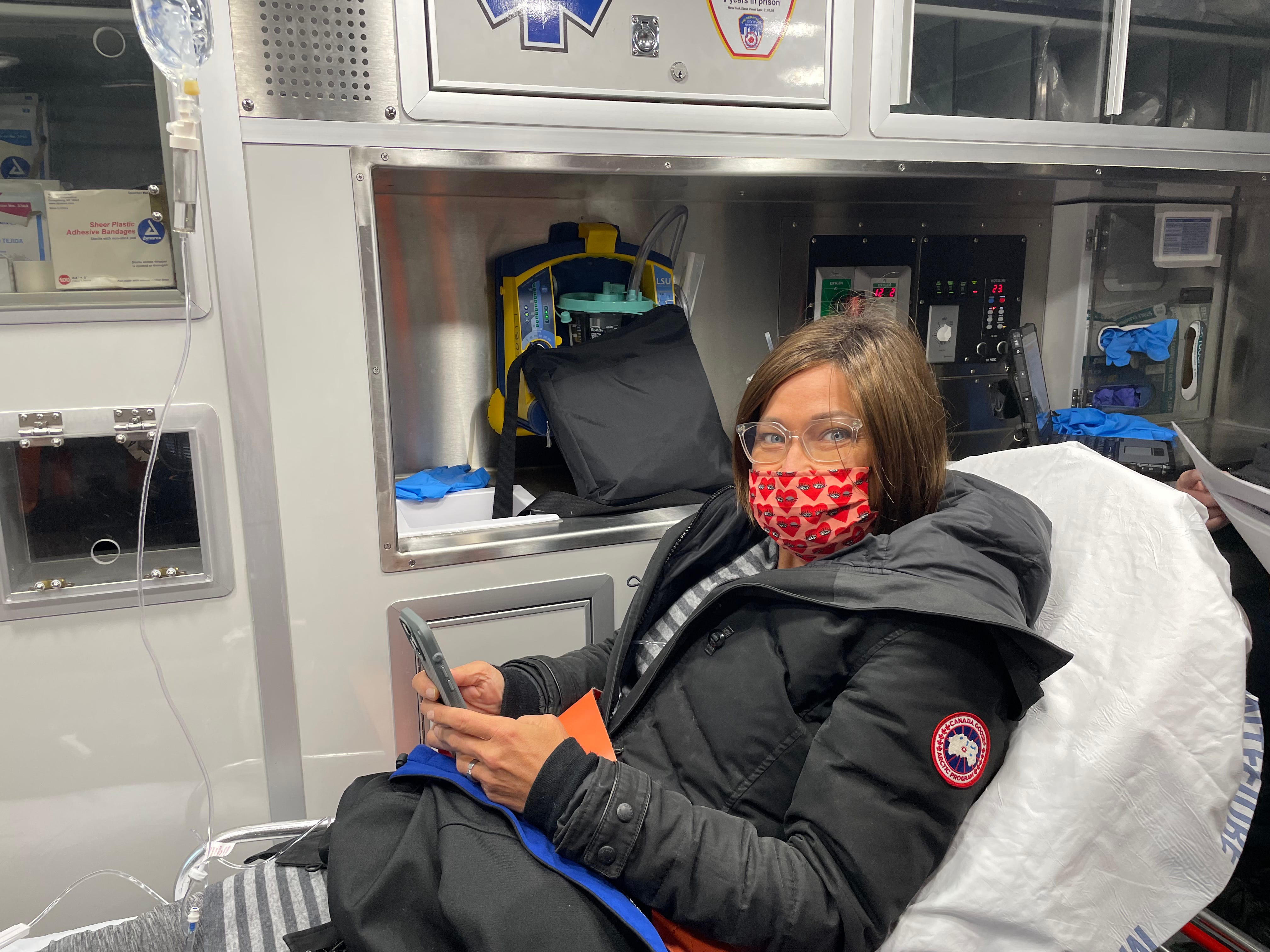
The disease gives you a terrible clarity about what time is worth. The treatment spends it in paperwork and waiting rooms.
So I will pack the prednisone. I will carry the oximeter and check my numbers. I will map the hospitals in each city. Even the trip is administered.
The second kind of waiting begins when the scan says what it was always eventually going to say. The cancer has found a way around the treatment and started growing again. Now I wait to start again. I have to pivot, fast, to the next thing, and do it in whatever condition the last treatment left me in. Any disappointment has to be scheduled around appointments.
I research. I email. I wait for the responses. I ask who is doing what where. I find a trial that looked promising six months ago and discover that it isn’t enrolling anymore. Or that a previous treatment makes me ineligible. Or that the site is across the country. Or they need a biopsy. Or that my labs aren’t right.
And so I start administering the next attempt not to die.
Not long ago a series of ctDNA blood tests came back without my mutation in it. Maybe it’s gone. Maybe it’s still there, just below what the test can detect. Nobody knows. The answer is more tests. The answer is more waiting.
What’s left now is mostly phase one trials: first-in-human studies designed to find the highest dose people can tolerate. For science they are necessary. For me, for any of us, they are also a crapshoot.
The last trial required me to fly to Houston every other week. I would get treatment and fly home with a pump that stayed attached to me for another two days.
And I didn’t even get the experimental drug.
I had been randomized to the control arm, a brutal chemotherapy that rarely works against my disease. I knew that was possible when I signed up. That’s what randomized means. Knowing it in advance did not make it easier to live through.
The third kind of waiting begins once the new treatment meets your body. Now there is nothing left to administer. But there is still waiting.
I wait to find out whether it is working or whether I am spending weeks I can’t spare on a bet that was always less than fifty-fifty. I study bloodwork for clues it cannot give me. Every twinge is the drug working, or the cancer growing, or a side effect, or nothing
Eventually there is a scan.
If it doesn’t work, I go back to the second kind of waiting.
If it does, I am lucky. I go back to the first.
In the waiting room I watch the other people waiting. Most are older than me. Many look much sicker. They come in with walkers and wheelchairs and oxygen tanks, with spouses or children carrying their bags. Some are asleep. Some are talking. Some are scrolling through their phones, just like me.
I study their faces and wonder which kind of waiting they are in. First treatment or tenth? Is the drug working? Did it just stop? Are they here to find out? The person who looks the sickest might be getting good news. The person who looks perfectly fine might have just learned that their treatment stopped working. There is no way to tell what news the person beside you is carrying.
You can recognize the ones who have been at it a while, though. They know where to check in, which elevator to take, where the coffee is. They know when to settle in and when they probably have time to go to the bathroom. They have learned the choreography of broken time.
The Tibetans call the state between one life and the next the bardo. You are no longer what you were and not yet what you will be, and nobody there can tell you which way you’re going. The Tibetans give it forty-nine days. We get eight weeks.
I wonder what they see when they look at me. Probably what I see when I look at them: someone waiting.
After a while, perhaps that is what all of this looks like from the outside.
Not brave. Not tragic. Mostly bored.
If all of this works, I get more time.
More dinners, trips, tickets. More ordinary mornings. More people I love.
More scans. More bloodwork. More portals. More eight-week increments. More administration.
There is a word in the tradition I’m flying toward for wanting more, getting it, and wanting more. The Buddha spent his life trying to help people step off that wheel.
I want more anyway.
I fight hard for more time, and I spend it waiting for someone to call my name.
Thank you for reading. Today’s essay is free for everyone. If it stays with you, consider sharing it with someone who might need it, becoming a paid subscriber, or buying me a matcha to fuel the next one. A click of the ♡ helps too.
Drink this, then wait:
Comments
Nothing yet. Say the first thing.
Sign in to join the conversation.