
Last month I wrapped up my 2025 business finances before leaving for an ongoing adventure in southern Chile. I discovered that, via my process of setting aside a small percentage of all my artwork sales, I ended up with about about $1000 to donate to organizations working to protect Alaska’s environment. In the grand scheme of our politics, that’s not much. But it’s not nothing either. And this was my original motivation for selling my art: to support the landscapes that inspire it.
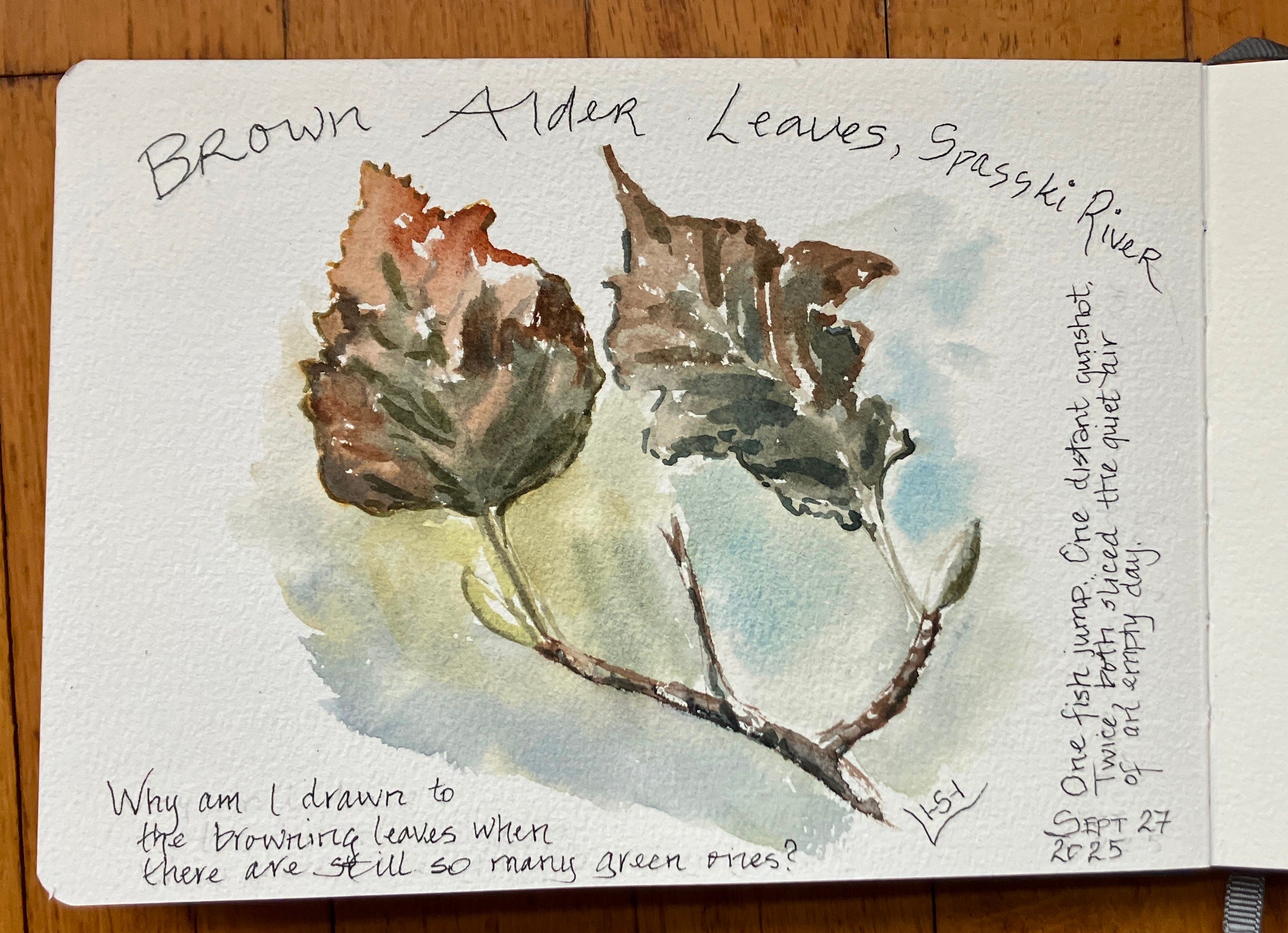
I’ve dabbled with other ways to use my art for environmental good. None have felt as viscerally satisfying as just entering my credit card at Earth Justice or the Nature Conservancy. It reminds me of how good it feels to have someone pay their hard earned money for my work. Money really does talk.
Summer of 2022, I decided to try to spark cruise ship passengers to care about the climate crisis. Admittedly, I felt more optimistic about the challenge: at last the climate crisis had been elevated to a federally declared problem, the U.S. had rejoined the Paris Climate Treaty, and I felt like the powers that be were finally on the right page. Maybe I could do my part: encourage cruisers who come to Hoonah’s Icy Straits Point to offset the carbon generated by their trip? As a side benefit, I would feel less conflicted about the Point’s presence.
Southeast Alaska’s cruise ship economy is a many-tentacled conundrum for a conservationist. In Hoonah, tourism via cruise ship has been a net economic benefit. Icy Strait Point is a model for a successful Native-owned business. Moreover, the cruise industry, even as it spews carbon into the atmosphere, is a huge advertisement for the wilderness quality of Southeast Alaska, something which has been leveraged by environmental advocates during assaults on the roadless character of the Tongass National Forest.
And tourists buy my artwork. Validation for my creative process via the chatter of money.
Of course, as much as any of those passengers, I adore “trips of a lifetime.” I charter planes and boats for wilderness drop-offs. My husband and I have a yearly project of human-powered travel north from the southern tip of South America: I’m writing this on the eve of our fourth long-haul roundtrip by jet for the priviledge of travel by foot. Yes, I create artwork along the way, but does that truly justify the carbon?
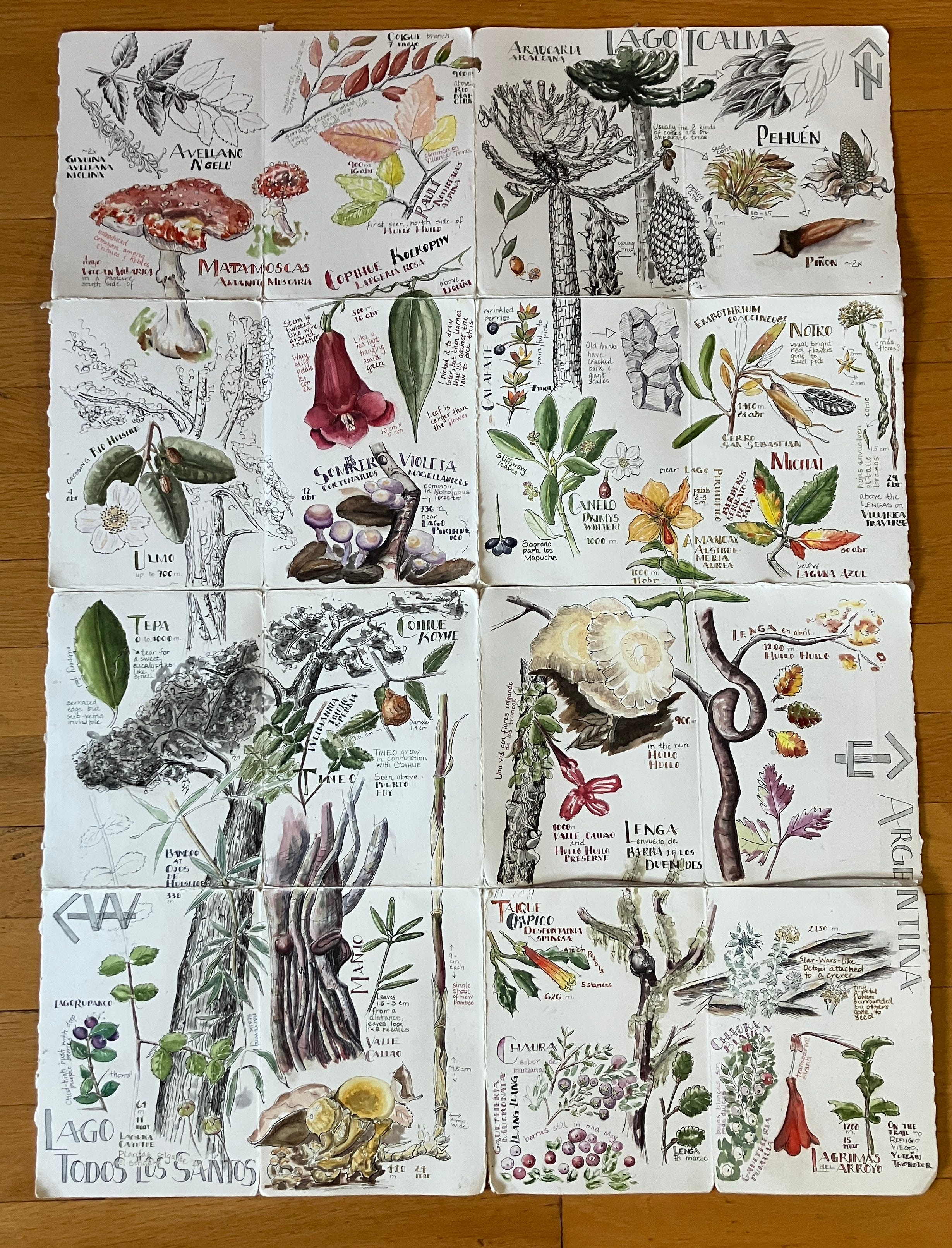
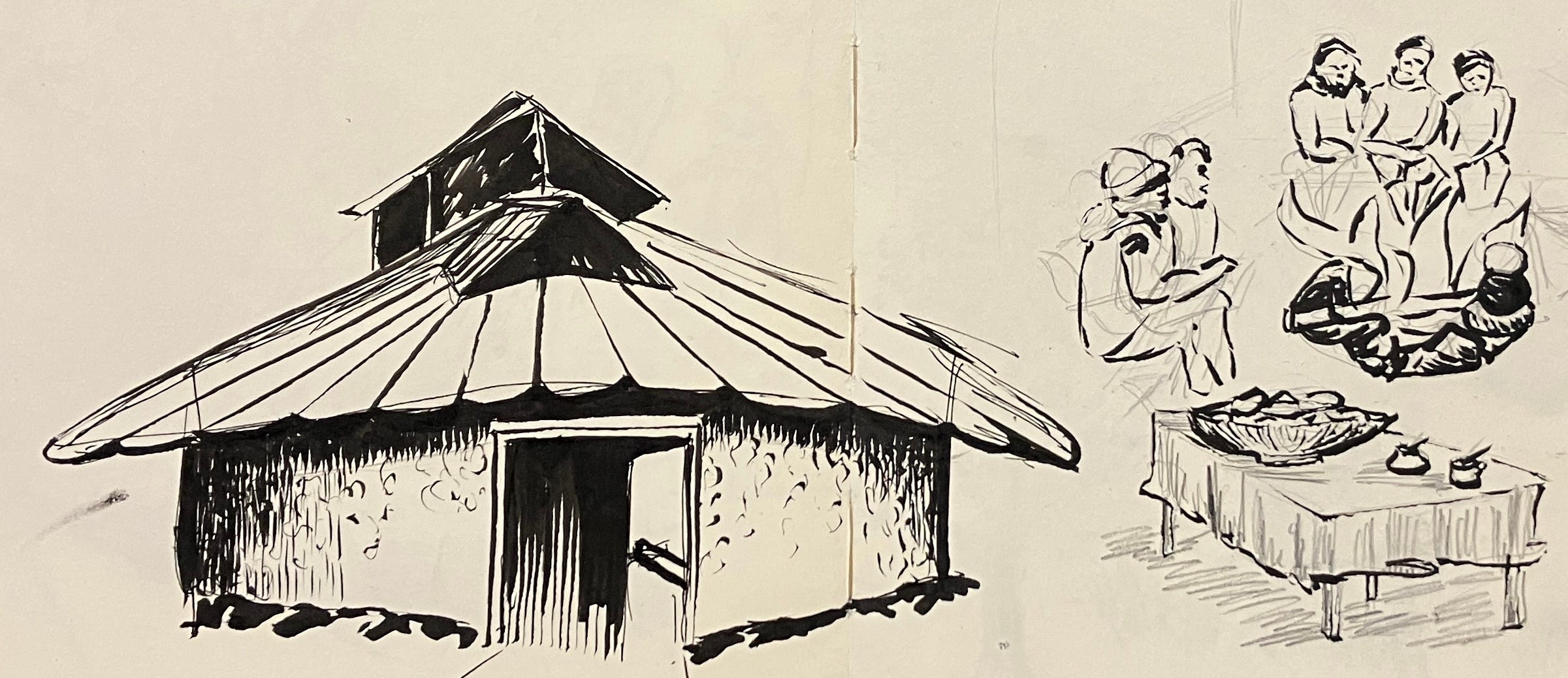
Back in 2022, my first attempt to enlist tourists in activism occurred when I crewed on a whale-watching boat. The boat owner said it was fine for me to sketch while we were underway. I imagined my art sparking micro dialogues, putting a creative film over the negative subjects of industrial logging and anthropogenic global warming.
As I speed-painted the curves of breaching humpback whales, I tried to share with the guests the vulnerability of the mountainous Tongass. I wanted to help them understand that the acres of green velvet cushions rising out of ochre tide flats are essential in the fight against climate change. But I quickly felt uncomfortable broaching the topic: these people just wanted to see cool things while on vacation. And, quite rightly, the spouting whales, cavorting sea lions, and adorable otters consumed them. Because our marine wildlife is commonplace for me, I have the bandwidth to speculate about how climate change puts it all at risk. However, they focused on photos.
Then I did an all-day demo and sales stand at Fishbone Gifts at Icy Strait Point. Owner Monica Savland hoped I would draw customers into the shop and be able to sell more of my work. Ah ha, I thought, a captive, undistracted audience. The Alaska Carbon Reduction Fund even made me a special QR code for my table. I envisioned cell phone-happy cruisers crowding around, logging into their website to joyfully offset the carbon emitted by their vacation.
My display actually worked — kind of. At times during the day, I found myself flooded with visitors who didn’t have prearranged tours. I was able to talk about my fieldwork process and my donation focus for my profits.
“Thank you for doing this,” said one customer. “Oh, it’s so good that you are here,” said another. “Here are ten dollars — can you pass the donation on?” And, best of all, “I’ll get some extra cards because you are doing this for a good cause!”
However, reflecting on the ten hours at my table, it seemed a long day’s work to earn a few compliments and raise a very small amount of money (no one even tried to use the QR code because of poor cell coverage.)
I decided that the point was in the conversations. Perhaps seeing such natural abundance and hearing about how much I love this landscape raised my customers’ awareness. Could all those tiny inputs add up to memories that change political choices and daily behaviors?
At the very least, it was a way to insert myself into climate work in a manner that recharged me rather than plunged me into depression.
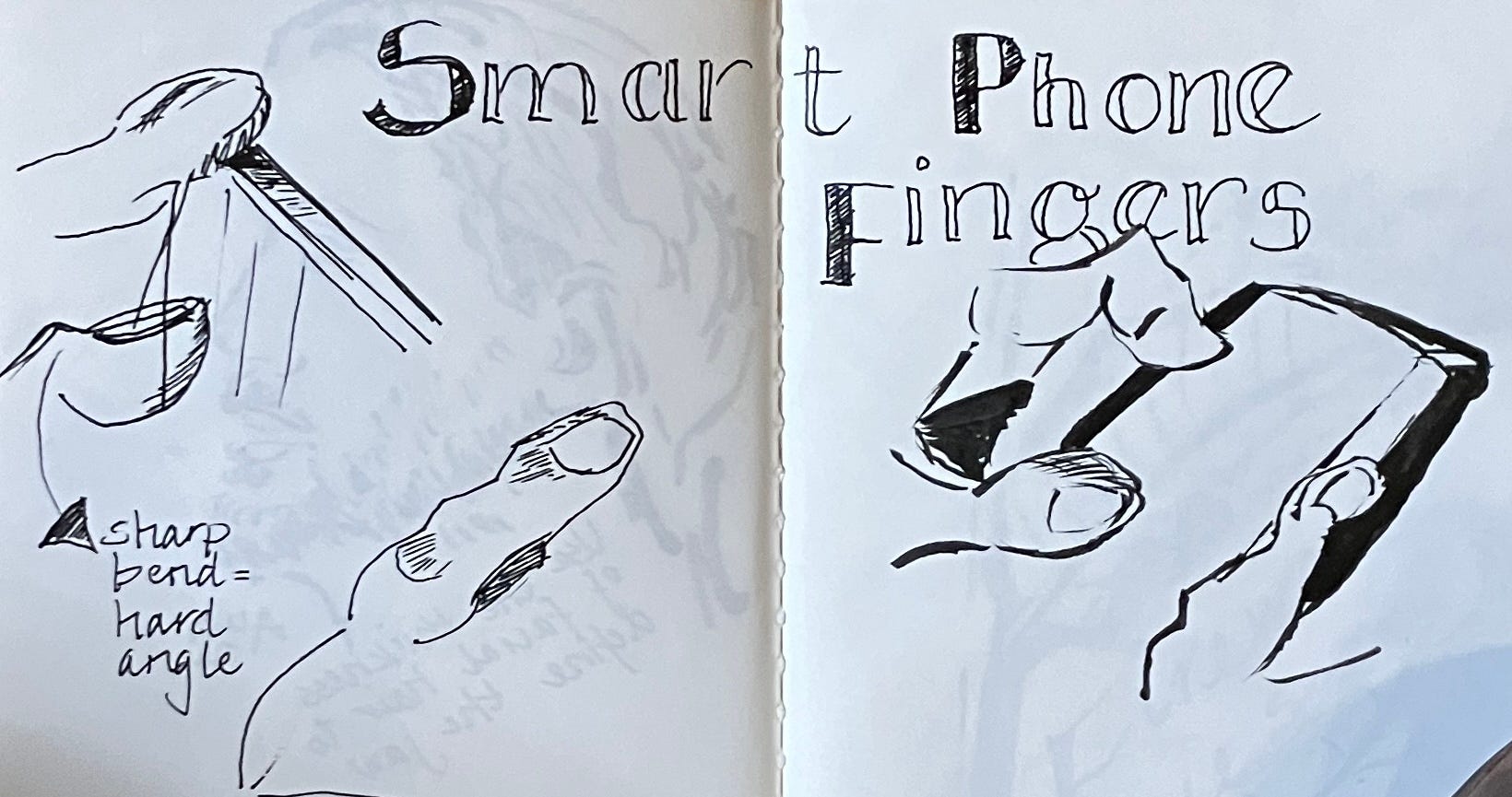
Now it’s 2026 — and we all know how our environmental politics have changed. My phone addictively drags me into despair because I can’t tear myself away from the better-than-fiction action-drama which is the American news. My husband, Ben, had another solution.
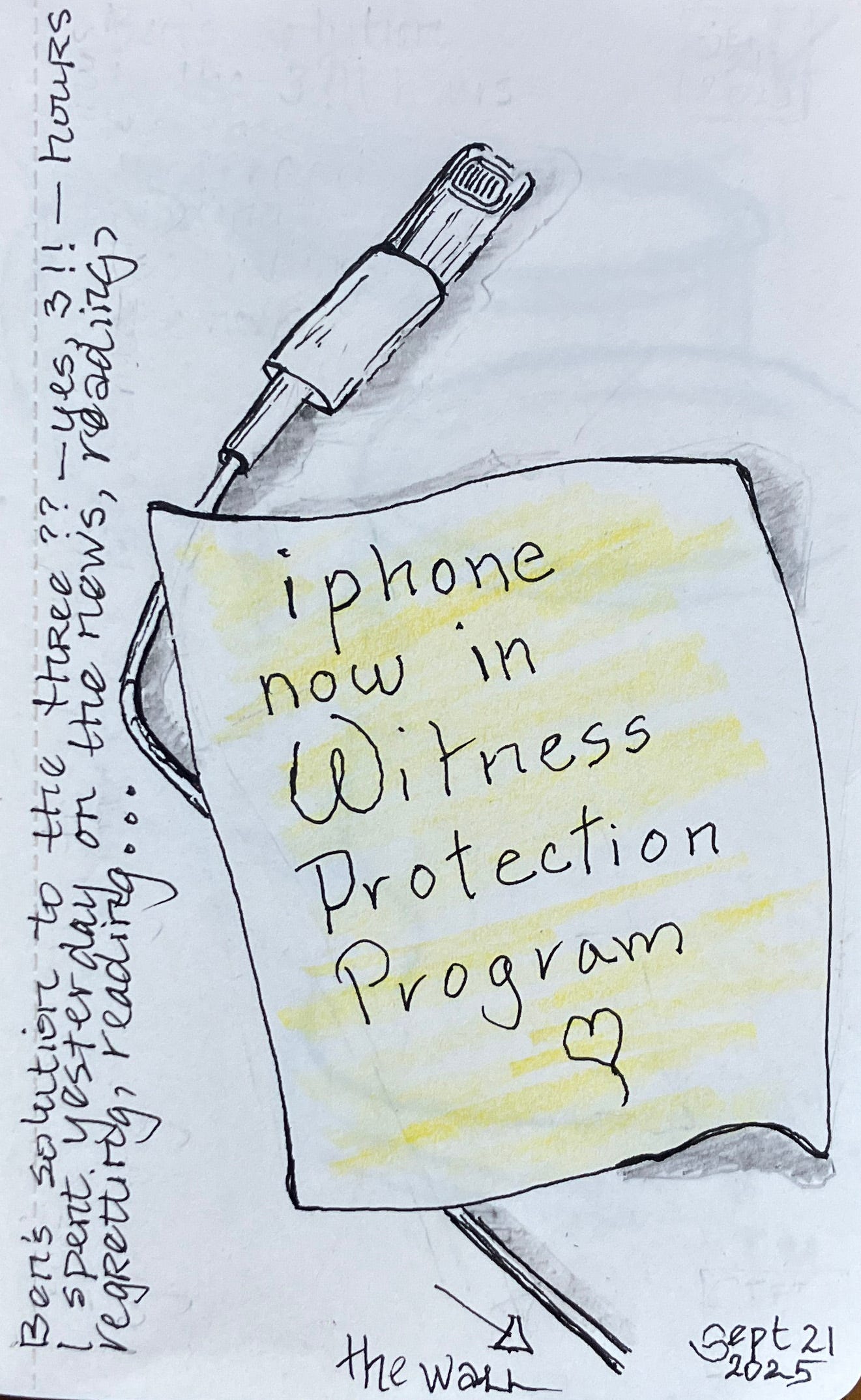
It was cute while it lasted, but I soon connived him into releasing my magical rectangle. After all, it’s so much easier to post donations on a phone.
My artwork supports the following organizations which work to protect the unique environments, cultures, and lifestyle made possible by Alaska’s public lands. Won’t you join my efforts?
Southeast Alaska Conservation Council
Natural Resources Defense Council
Alaska Carbon Reduction Fund
Alaska Wilderness League
Sitka Conservation Society
The Nature Conservancy
Earth Justice
Comments
Nothing yet. Say the first thing.
Sign in to join the conversation.