
Over the past several weeks, we have been building a case in C3 for maker learning as one of the most compelling and underinvested experiential workforce development strategies available to our community. We covered what we learned at our Salt Lake City Innovation Lab about the potential of this hands-on, project-based learning approach to develop the durable skills employers need most. STEMCONNECTOR Co-CEO Drew Glassford reflected on why out-of-school time may be one of the most underutilized opportunities for developing the human skills that AI is not able to replace, and in fact is what is critical to allow us to realize AI’s full potential. The evidence for maker learning as a workforce strategy is strong. The challenge in front of our community now is how we can work together to scale it.
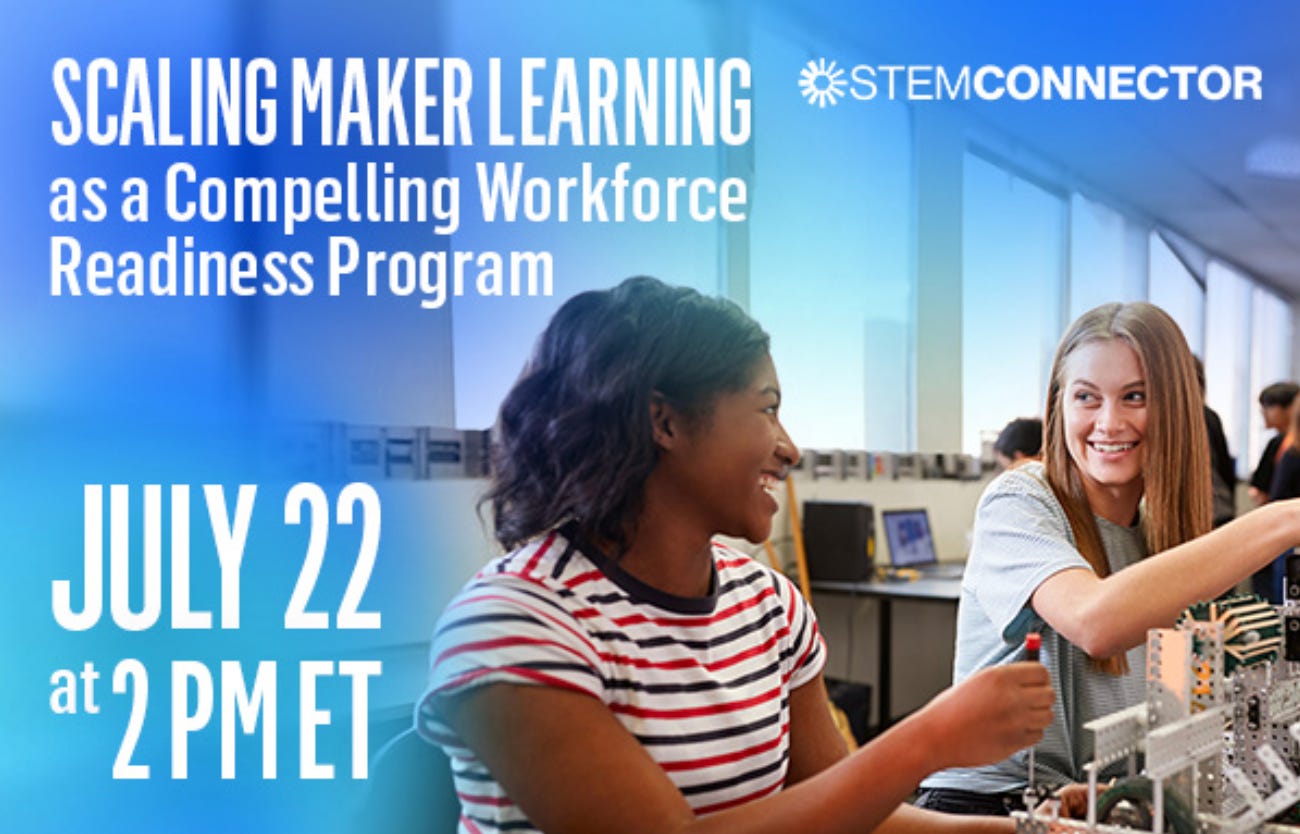
That is the focus of our next webinar, Scaling Maker Learning as a Compelling Workforce Readiness Program, on Wednesday, July 22 at 2 PM EST.
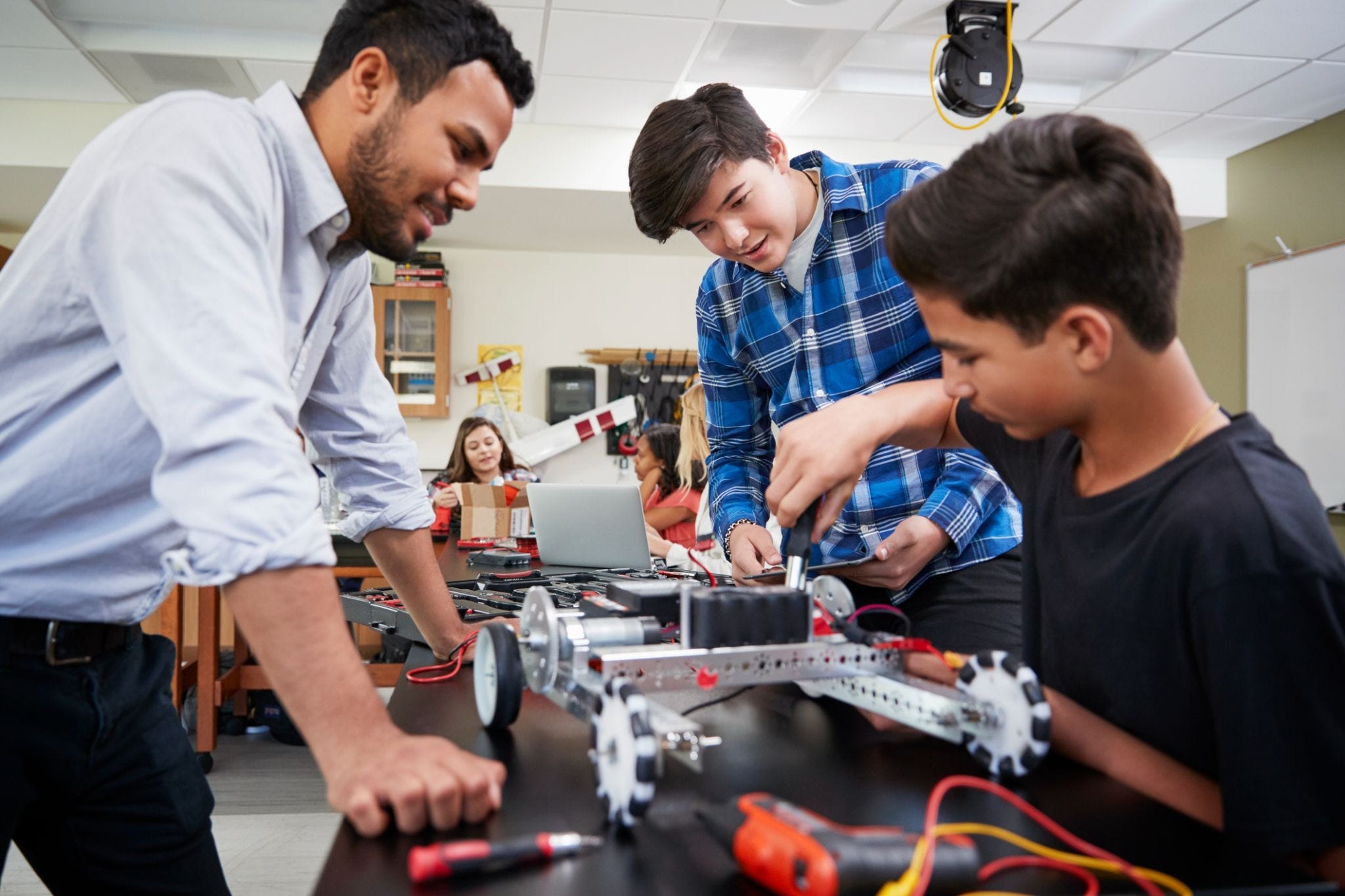
For those who are newer to this topic, maker learning refers to hands-on, project-based education where students design, build, test, and iterate on real solutions to real challenges. It takes place in fabrication labs, makerspaces, CTE classrooms, and after-school programs. The research is compelling as maker learning produces a threefold improvement in critical thinking and a fourfold increase in creativity, with statistically significant increases across every assessed employability skill area. Unlike many education interventions that show results in controlled settings but fall apart at scale, maker learning has demonstrated strong outcomes across very different contexts: CTE classrooms in Utah, a children’s museum in suburban Maryland, an invention program in K-12 and OST programs, and a girls’ tech program serving communities across the country.
The challenge is not whether maker learning works, it’s that it is only working in pockets where motivated educators, supportive administrators, well-connected nonprofits, and forward-thinking employers collaborate to make it happen. Scaling from those bright spots to a consistent, career-connected experience that students can access broadly requires connected ecosystems, aligned funding, replicable programs, professional development and shared infrastructure.
A recent article titled, America Has the Talent. Its Systems Need Better Connections, by Stephanie Rodriguez, Ph.D., Director of the STEMM Opportunity Alliance, and Travis T. York, Ph.D., Director of the AAAS Center for STEMM Education & Workforce — published through AAAS, define our challenges well. They draw a parallel to the Cooperative Extension System established in 1914, built to connect agricultural research on university campuses to the farmers and communities who needed it. The result was one of the most effective knowledge transfer systems in American history, designed with the intention to connect systems that would not naturally talk to each other, including education, industry, government, and community, around a shared goal for the common good.
The authors argue that we face the same structural challenge today with STEM workforce development. Educators update curricula without fully knowing which skills employers will require. State workforce boards have funding and program resources local schools do not know exists. Community colleges prepare graduates with the competencies a regional employer needs, but neither organization has a common way to recognize the match. They estimate that more than 27 million Americans are what researchers call “hidden workers” in our communities, people with valuable skills who remain overlooked because the systems designed to connect talent to opportunity are not aligned with the same language.
Scaling maker learning is an example of this same challenge. The programs doing the most effective work are often operating outside formal school systems, in after-school settings, community makerspaces, and youth development organizations, because those environments have more flexibility to develop and deliver career-connected, project-based experiences. But that flexibility also means they are often disconnected from the credentialing systems, workforce pipelines, and employer partnerships that would give their students awareness and interest in the career pathway to move forward.
Joining us for our webinar on July 22 are leaders who have spent their careers working on both the program development and systems implementation side of this challenge, with the discussion focusing on what it takes to move maker learning from strong local programs to a scalable national strategy.
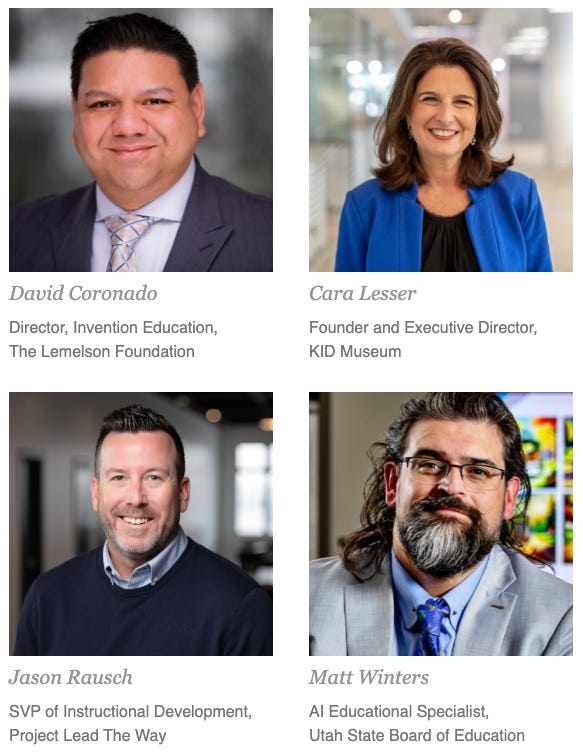
David Coronado, Director of Invention Education at the Lemelson Foundation, brings a funder’s perspective on what kinds of investments and partnerships are able to accelerate maker learning at scale, and where the gaps in the current ecosystem are most acute.
Cara Lesser, Founder and Executive Director of KID Museum, leads one of the most effective informal maker learning programs in the country and will speak to what career-connected maker learning looks like in practice and what it requires from community and industry partners to sustain.
Jason Rausch, SVP of Instructional Development at Project Lead The Way, works at the intersection of K-12 curriculum, employer engagement, and credential alignment — exactly the systems connection challenge that maker learning needs to solve to reach its potential.
Matt Winters, AI Educational Specialist at the Utah State Board of Education, will bring the policy and state systems perspective from one of the strongest maker learning ecosystems in the country, built through the Utah STEM Action Center’s UMAKE network.
You are invited to join us as they explore and discuss the partnerships, funding conditions, and policy levers that are moving the needle on scale, and what employers, educators, and workforce organizations can do to engage in this compelling work.
For our STEMCONNECTOR community of practice, including educators, employers, workforce organizations, and policymakers focused on our nation’s STEM talent pipeline, the maker learning scaling challenge is a compelling need for us to collaboratively solve. The U.S. now has more than 600,000 skilled technical workforce job postings annually, with only 150,000 new workers entering via apprenticeship programs. Maker Learning develops the durable skills which according to employers are necessary for success in these technical roles. It also provides an effective way to develop awareness and connect students to compelling opportunities through local employer partnerships. Just as compelling, the accelerating adoption of AI in the workplace has placed an increased emphasis on the need to develop human skills for professional careers, particularly problem solving, which is at the heart of Maker Learning programs.
Our Scaling Maker Learning webinar is a next step for the work we began at our Salt Lake City Innovation Lab in June, designed to give attendees a practical understanding of what scaling maker learning requires and the role they can play. Whether you are an in-school or out-of-school educator seeking to understand the benefits and how maker learning develops critical human skills and connects to career pathways, an employer considering how to engage your employees meaningfully to drive career awareness and interest, or a policymaker working on workforce strategy, this session will provide insights and next steps for your organization or institution.
No posts
Comments
Nothing yet. Say the first thing.
Sign in to join the conversation.