
A few weeks ago, I listened to Dr Hilary Cass speaking in the House of Lords. She described the case of a child whom she called “Jo”.
“I ask noble Lords to consider the case of a child who I will call Jo who was a biological male, socially transitioned at two and a half by his parents. At eleven, she—which I say advisedly because the chances of her reverting to her biological gender is vanishingly remote—she has been in stealth and will not go to secondary school because she is so afraid of being outed in that environment. She’s now refusing to come out of her room except very rarely and she now has weak bones, not as a result of puberty blockers but through inactivity. I ask the noble Lady the Minister: should her subsequent treatment be decided by politicians or by the clinicians who are looking after her?”
As I listened, I found myself beginning to construct a case formulation. Like most clinicians, I begin by asking a fundamental question. What has happened psychologically to this child?

Clinical formulation is one of the fundamental skills of psychotherapy. Before considering diagnosis or treatment, it seeks to understand how a person's difficulties developed, what continues to maintain them and where change may become possible.
It was startling to hear Dr Cass say that the chances of Jo reconciling with his birth sex were "vanishingly remote". That is a remarkably confident prediction to make about any child and it has certainly not been my experience. Over the past number of years I have worked with many parents whose children once appeared equally certain that they were transgender and who later reconciled with their birth sex. Few speak publicly about these experiences because they are often extremely difficult for the whole family. One such account, however, is Sam's story, published by PITT Parents.
Another family in the public domain is Rachel and her daughter, Matt, who identified as a boy. I interviewed them both in 2018 for the documentary Trans Kids: It’s Time to Talk. Rachel described how 13-year-old Matt had been prescribed puberty blockers and become increasingly withdrawn, barely speaking and spending much of her time confined to her bedroom. Rachel later made the decision to discontinue Matt’s puberty blocker treatment. Even children who appear profoundly distressed and deeply committed to a transgender identity may continue to develop in ways that cannot be confidently predicted.
That does not mean every child will follow the same path. It does mean that I do not believe hopelessness is an appropriate description for clinical work with a trans-identified eleven-year-old child.
For that reason, I decided to write the clinical case formulation that follows. It is necessarily hypothetical because I have never met Jo or his family. Dr Cass subsequently clarified that "Jo" was a composite case rather than a single identifiable child. That does not alter the purpose of this formulation. Whether Jo represents one child or several, the clinical question remains the same: how should we understand a child who presents in this way? It is not an attempt to diagnose him, nor is it a criticism of the clinicians involved in his care, who undoubtedly know far more about the individual circumstances than I do. It is simply an illustration of how I would begin thinking about such a case if Jo and his parents walked into my consulting room tomorrow.
I am publishing this formulation now because it coincides with the decision to proceed with the NHS puberty blocker trial in England. At a time when treatment pathways continue to dominate public discussion, I believe it is worth returning to the question that should always come first: how should we understand this child?

Jo is an 11-year-old natal male who was socially transitioned to a female identity at approximately two and a half years of age. He now presents with severe functional impairment. He no longer attends school, spends almost all of his time confined to his bedroom, has minimal social engagement, and has developed reduced bone strength as a consequence of prolonged inactivity and the absence of normal weight-bearing exercise. His physical health, education, psychological wellbeing and social development have all been compromised.
Whatever the intentions behind Jo's early social transition, it is clear that his current circumstances represent a profoundly poor outcome. We cannot know how his development might have unfolded had he not been socially transitioned. We can say, however, that the intervention has not prevented the emergence of severe psychological distress and functional decline. Any responsible clinical formulation must therefore begin by asking how Jo arrived at this point, rather than assuming that his developmental pathway was inevitable.
The central clinical question is no longer one of gender identity alone. Rather, Jo presents as a child whose overall developmental trajectory has become arrested. His life has progressively narrowed, leaving him isolated from his peers, dependent upon his family, physically deconditioned, and increasingly unable to participate in ordinary childhood.
Jo’s social transition occurred at approximately two and a half years of age, during what is often known as Piaget’s pre-operational stage of development. At this age, children naturally engage in magical thinking, fluid role play, symbolic imagination and egocentric reasoning. They do not yet possess an adult understanding of biological permanence or identity over time.
Some young boys identify with female characters, express a wish to be a girl or reject masculine stereotypes. For some, these experiences are fleeting; for others, they are more intense and persistent. Despite these differences, such experiences fall within the normal range of childhood development and ordinarily evolve through continued interaction with reality, maturation and experience. Among boys referred to specialist gender identity clinics for childhood gender dysphoria, the most common adult outcome for those whose gender dysphoria does not persist is a gay or bisexual sexual orientation. If puberty is medically suspended before this developmental process has run its course, clinicians lose the opportunity to observe whether that developmental pathway would have resolved naturally into acceptance of the child's birth sex and, for many boys, a gay or bisexual sexual orientation.
In Jo's case, developmentally normal processes appear to have become entwined with profound psychological distress before being interpreted literally and institutionalised through a full social transition at the age of two. Rather than allowing imaginative identification to remain within the realm of play, the adults around him treated it as evidence of an enduring identity. Consequently, a developmental stage ordinarily characterised by flexibility may have become organised around a fixed identity narrative.
From a developmental perspective, this may have challenged the ordinary process through which children gradually integrate imagination, experience and reality into an increasingly stable sense of self.
Erik Erikson described childhood as a series of psychosocial tasks through which identity gradually develops. During middle childhood, children are expected to develop competence through school, friendships, sport, hobbies and increasing independence. Adolescence then introduces the central developmental task of Identity versus Role Confusion, during which young people integrate their emerging psychological identity with their developing physical bodies, family history and place within society.
Jo is now approaching precisely this developmental transition. Ordinarily, adolescence allows a young person to ask increasingly sophisticated questions about who they are while integrating the reality of their changing body into a coherent adult identity.
Jo’s developmental pathway appears to have become considerably more complicated because his identity was publicly defined many years before he possessed the cognitive maturity necessary to evaluate it himself. Instead of entering adolescence with multiple aspects of self available for exploration, he approaches this stage with an identity that has already been socially consolidated.
The developmental challenge is therefore not simply one of understanding his body, but of reconciling his body, his history and his long-established social identity into a coherent sense of self.
James Marcia expanded Erikson’s work by describing four identity statuses, distinguished by the presence or absence of exploration and commitment. From this perspective, Jo’s early social transition can be understood as a possible example of identity foreclosure. Identity foreclosure occurs when commitment to an identity precedes adequate exploration.
Children of two or three years of age are developmentally incapable of engaging in the reflective exploration that Marcia regarded as necessary for authentic identity formation. Consequently, Jo’s social identity appears to have become established long before he possessed the cognitive capacity to participate meaningfully in that process.
Whether or not Jo ultimately continues to identify as a girl is less clinically significant than the possibility that normal identity exploration has been substantially constrained.
Another important feature of Jo’s presentation is the psychological burden associated with living as a natal male whose adopted female identity depends upon the concealment of an important aspect of his history.
Living stealth requires continual self-monitoring. A child must remain aware of who knows, who does not know, what may safely be disclosed, and what must remain hidden. Such vigilance consumes emotional resources that would otherwise be devoted to ordinary childhood development.
Children naturally form friendships through reciprocal disclosure. Best friends exchange secrets, family stories, embarrassing moments and experiences that gradually deepen trust. For Jo, one of the most fundamental facts about himself may have become the very thing he believed could never be spoken. Rather than friendship serving as a place of increasing emotional freedom, it may instead have become organised around protecting a secret. This burden is likely to become even more acute as friendships grow increasingly intimate and independent of adult supervision.
Ordinary childhood experiences that many children anticipate with excitement may instead become potential sources of anxiety. Sleepovers, swimming lessons, changing rooms, school trips, birthday parties, sports clubs and adolescence itself all involve situations in which Jo’s history might be discovered.
Rather than simply participating, Jo may find himself continually calculating risk. From this perspective, social withdrawal can be understood as a possible adaptive solution to an impossible problem. If every social interaction carries the possibility of exposure, avoiding social situations altogether becomes psychologically understandable, even though it ultimately reinforces isolation.
This formulation does not assume that secrecy alone explains Jo’s school refusal. Rather, it proposes that the cumulative burden of maintaining a concealed identity may contribute significantly to his withdrawal alongside anxiety, avoidance and other developmental factors.
Jo’s difficulties appear to be maintained by several mutually reinforcing processes. His identity has become increasingly narrow, potentially leaving little room for other sources of self-worth such as friendships, education, competence, hobbies or family relationships.
School avoidance limits opportunities for mastery, confidence, peer relationships and the ordinary developmental experiences through which resilience is built.
Physical inactivity has resulted in reduced bone strength, further discouraging activity and reinforcing confinement to his bedroom.
Social isolation limits opportunities for corrective interpersonal experiences, reinforces anxiety and increases dependence upon caregivers.
Secrecy surrounding his social transition may further perpetuate withdrawal by making ordinary childhood activities such as friendships, sleepovers, changing rooms and school increasingly difficult to navigate.
Together, these processes appear to create a self-reinforcing cycle in which developmental arrest, avoidance and social isolation progressively maintain one another.
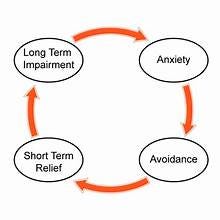
The primary clinical concern is no longer gender identity itself but Jo's profound developmental arrest. When an intervention is followed by a trajectory of increasing withdrawal, educational failure, social isolation and physical deterioration, it is incumbent upon clinicians to ask whether the current formulation remains adequate. Good clinical practice requires us to reconsider our understanding when a child continues to deteriorate, not simply intensify the assumptions that have guided treatment to date. The immediate priority is therefore restoring Jo's developmental trajectory rather than further consolidating an identity around which his life has progressively narrowed.
I would not recommend puberty blockers in Jo's case. In addition to the broader concerns about their evidence base and developmental effects, they do not address his profound social withdrawal, educational disengagement, physical deconditioning, dependence or developmental arrest. They act on the body while leaving the central psychological and developmental difficulties unresolved.
I believe the immediate clinical task is not to ask whether Jo should begin a medical pathway, but how he can be helped to resume ordinary childhood and adolescent development. Until he is able to return to school, rebuild friendships, participate in everyday life and engage with the developmental tasks of adolescence, the priority should be restoring his developmental trajectory. To focus treatment primarily on his body while these more fundamental difficulties remain unresolved risks mistaking the site of his distress for its source.
Jo’s presentation also illustrates why a descriptive psychological symptom may be clinically useful. Throughout this formulation I have described developmental arrest, identity foreclosure, secrecy, avoidance and social withdrawal. These concepts explain different aspects of Jo’s presentation. They do not, however, describe the persistent cognitive preoccupation with being, becoming, or identifying as another sex or gender identity that appears to characterise his current psychological life. A clinician attempting to formulate Jo therefore requires language not only for his developmental history, but also for the symptom he now appears to present with.
This symptom could be described as transgender ideation. By this I mean persistent or recurrent cognitive preoccupation with the idea of being, becoming, or identifying as another sex or gender identity. By the age of eleven, Jo appears to present with this pattern of cognition. Whether that preoccupation represents transgender ideation, gender dysphoria, or both would require careful assessment. The concepts are not interchangeable, but they may overlap in individual cases.
I will return to transgender ideation in a future essay, where I develop the concept in greater detail. For present purposes, I believe it offers a useful descriptive framework for understanding one important aspect of Jo’s presentation.
This formulation also raises a separate question concerning the psychology of the adults around Jo. The decision to socially transition a two-year-old necessarily reflects a set of beliefs held by parents, clinicians and other adults involved in his care. Those beliefs are analytically distinct from Jo’s own psychological presentation. In some cases, they may be better understood through the concept of the Extreme Overvalued Belief (EOB), in which a belief is shared and reinforced within a culture or subculture, becomes increasingly rigid, emotionally invested, resistant to contradictory evidence and capable of driving harmful behaviour in its service.
Jo’s possible transgender ideation and the adults’ beliefs are different psychological constructs operating in different people, although they may influence one another over time. The child's symptoms should not be conflated with the adults' belief systems.
My clinical work would begin by focusing primarily on Jo's parents and other adults in Jo's life rather than on working directly with Jo who is, after all, only eleven years old and would have limited capacity for mature analysis. I believe it would also be unhelpful to try to persuade or challenge Jo directly as he has spent the vast majority of his life, from the age of two to eleven, believing that he was born in the wrong body and that medicine existed to correct this.
Having worked with children presenting in similar ways, I have repeatedly found that meaningful change occurs most effectively when parents are supported to alter the relational environment around the child. Children often become trapped in family systems that unintentionally maintain anxiety and avoidance despite everyone’s best intentions.
The first therapeutic task would be to relieve Jo of the enormous psychological burden of carrying responsibility for maintaining a particular identity. Rather than encouraging continued concealment, I would support the family in gradually reducing the burden of secrecy. The therapeutic goal would not be to force Jo to abandon a transgender identity. Instead, it would be to create a context in which he could exist truthfully in the world as a boy who has identified as a girl since the age of two.
I would help Jo’s parents understand that the burden of secrecy has become too great for an eleven-year-old child to carry. It should not be Jo’s responsibility to preserve a complex social narrative created by adults. I would encourage them to take responsibility for changing this.
How this was done would depend upon the child, the family and the wider social context. In my clinical experience, this process is most successful when it is carefully planned rather than rushed. Many families have found it helpful to take an extended family holiday, allowing the child time to adjust to living without the previous social narrative before returning to school and everyday life. Some begin by speaking with close relatives and trusted friends before gradually widening the circle of people who know. Others proceed much more gradually, with different people learning about the earlier social transition over time. There is no single correct pathway, but the responsibility for managing this process should rest with the adults rather than the child.
They, not Jo, should decide how and when to speak to the important people in his life. Jo should no longer be expected to protect himself through secrecy or to protect the adults around him from difficult conversations. His parents would take on that responsibility so that he could return to the ordinary work of being an eleven-year-old child.
The success of this approach depends upon parental cooperation. If Jo's parents were unwilling to participate in the therapeutic process, unwilling to reconsider earlier decisions or unwilling to alter the relational environment around him, that would become the principal therapeutic challenge. Children do not create or sustain situations of this kind in isolation. The adults around them are central to both the maintenance of the child's difficulties and the possibility of change. Jo's social transition at the age of two should therefore be openly recognised as an adult decision made long before he possessed the developmental capacity to understand it or participate meaningfully in it.
Without meaningful parental engagement, the prospects for substantial change would be poor. Jo did not make the decision to socially transition at the age of two, nor does he have the developmental capacity to undo its consequences on his own.
Alongside this work, I would introduce a structured programme of psychoeducation for Jo and his parents. This would explore normal child and adolescent development, identity formation, psychological flexibility, maladaptive coping mechanisms, the distinction between symptoms and identities, and the benefits, limitations and uncertainties associated with both psychological and medical approaches to gender-related distress. The purpose would be to equip the family to make decisions grounded in reality rather than beliefs, fear or misplaced certainty.
Treatment would also prioritise gradual behavioural activation, distress tolerance, restoration of school attendance, increasing weight-bearing physical activity, rebuilding peer relationships, expanding Jo's identity beyond gender and reducing family accommodation of avoidance where appropriate. This would be a gradual therapeutic process, proceeding at a pace determined by Jo's developmental capacity and psychological wellbeing rather than by external expectations or urgency. Throughout this process, the family would be helped to understand that medical transition is not a single intervention but a lifelong medical pathway with significant psychological, social and physical implications.
The aim of the psychological approach in this context is to restore functioning and allow identity to develop over time rather than requiring it to be maintained. The therapeutic objective is therefore neither to affirm nor deny a particular identity. My work is psychologically-based rather than identity-based; it is organised around restoring psychological functioning, reducing distress and supporting normal development rather than consolidating any particular identity. While psychologically based therapies have a substantial theoretical and empirical literature, identity-based psychotherapy remains comparatively underdeveloped as a distinct clinical model.
The priority would be to restore Jo’s developmental trajectory. He has spent almost his entire conscious life living within a social narrative established before he possessed the cognitive maturity to evaluate it for himself. My task as a clinician would not be to replace one certainty with another, but to create the psychological conditions in which ordinary development can resume and genuine exploration becomes possible.
If, as an adult, Jo continued to identify as transgender after a period of restored functioning, psychological flexibility and ordinary adolescent development, that identity would rest on firmer developmental foundations than one maintained through adult decision-making, secrecy, avoidance, developmental arrest and early identity foreclosure.
Success would not be measured by whether Jo ultimately identified as male, female or transgender. It would be measured by whether he regained the opportunity to resume the ordinary experiences of childhood and adolescence, develop psychological flexibility, and engage in the developmental task of self-exploration. My responsibility as a clinician is not to determine that outcome, but to help create the conditions in which it can emerge.
And so, should an eleven-year-old’s chances of recovery be deemed “vanishingly remote”? My answer is no. An eleven-year-old child is not a finished psychological product. Childhood and adolescence are periods of extraordinary psychological development, during which identities, beliefs, relationships and ways of understanding the self continue to evolve. That is precisely why clinical formulation matters. Before we conclude that a child’s future recovery is “vanishingly remote”, we have a responsibility to understand what has happened psychologically, what is maintaining the child’s distress, and what conditions might allow development to resume.
Jo's developmental pathway was shaped by adults when he was two years old. The task of therapy is not to replace one predetermined answer with another, but to restore the freedom to explore, question and discover who he is for himself.
If you agree that children deserve psychologically-informed care grounded in development, please consider signing and sharing the Memorandum of Understanding on Protecting Puberty at protectingpuberty.com
Comments
Nothing yet. Say the first thing.
Sign in to join the conversation.