
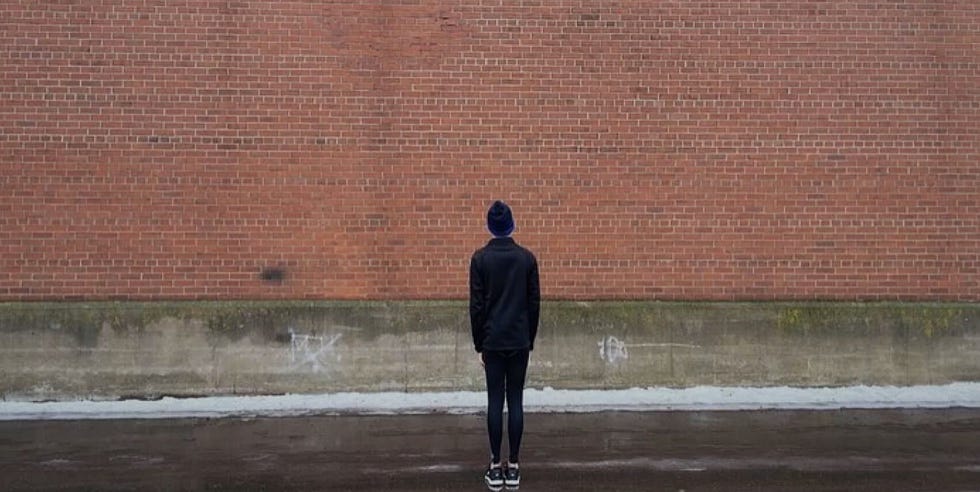
Climate change does not care if it is called a hoax. The soil does not need our belief to be depleted. The melting ice has no need for our conceptual approval. There is an order to the world that lies beyond human construction, too vast and too subtle to ever be fully known.
In the face of this, we are called not only to act, but to learn to see anew.
This is not about acquiring new facts or strategies. It is about transforming the very way we perceive. Our current perceptual habits—shaped by centuries of separation, abstraction, and commodification—are no longer adequate to the moment we are in. The climate crisis is not only a rupture in systems. It is a rupture in sensing—in how we make meaning, how we interpret what is real, and how we respond to it.
Maurice Merleau-Ponty, the French phenomenologist, insisted that perception is not a detached observing of the world but an embodied participation in it. We do not stand outside of nature, looking in. We are of it. Our eyes, our skin, our lungs—all tuned instruments within the symphony of the field. “The body is our general medium for having a world,” he wrote. And yet, we have forgotten this. We have trained ourselves to see the world as made up of objects—separate, static, inert.
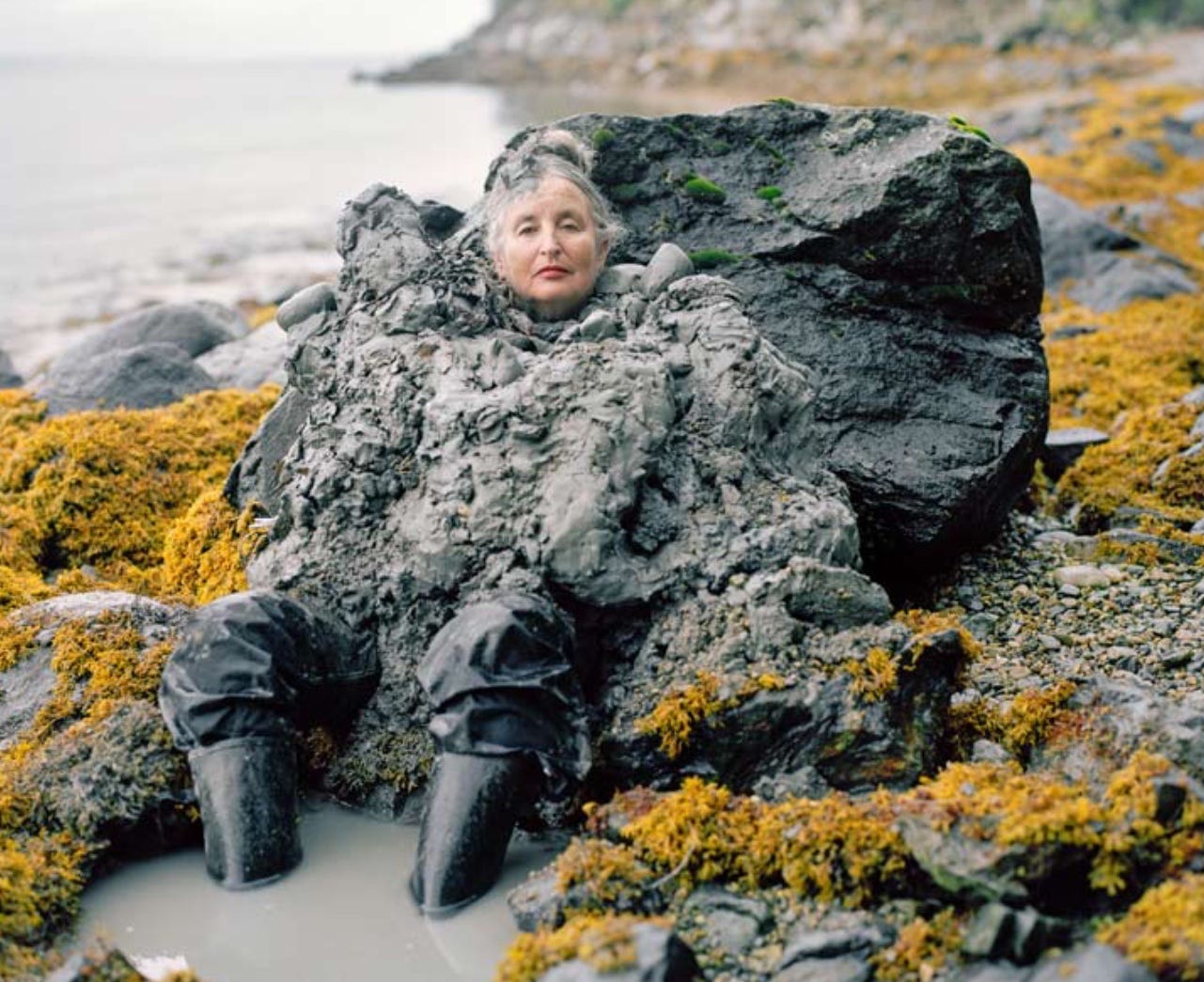
Brit. © Karoline Hjorth and Riitta Ikonen https://artaurea.com/2021/we-are-nature/
We may enter an office building with a story already running: this is where I work, this is what I do here, this is who I am in this space. We walk through the door focused on our calendar, our inbox, our goals. But our bodies register the tension in the air before a meeting, the way light falls too harshly in the corridor, the subtle dissonance in a colleague’s tone.
What we often fail to perceive is how our bodies are being choreographed—invited, constrained, or muted—by the arrangement of the furniture, the design of the room, the hum of the neon lights above. A boardroom table may divide and position us into roles before a single word is spoken. Fluorescent lighting may agitate our nervous systems, while airless spaces contract our capacity to listen.
Architecture participates in every meeting. The building is not neutral—it shapes how we speak, how we relate, how we breathe. Yet we walk in believing we are in control, that we are the sole authors of our choices, forgetting that perception is porous and the field is alive. In reclaiming our senses, we begin to notice these subtle forces—not to resist them, but to enter the room differently. More attuned. More awake.
The world, as David Abram reminds us in The Spell of the Sensuous, is alive. It is animate. It speaks—but not always in words. It speaks in textures, in movement, sensations, in the hush before rain. And we are losing the perceptual capacity to hear it.
Hearing it requires a kind of literacy we no longer teach our kids - a way of knowing that is not based on control, but on intimacy.
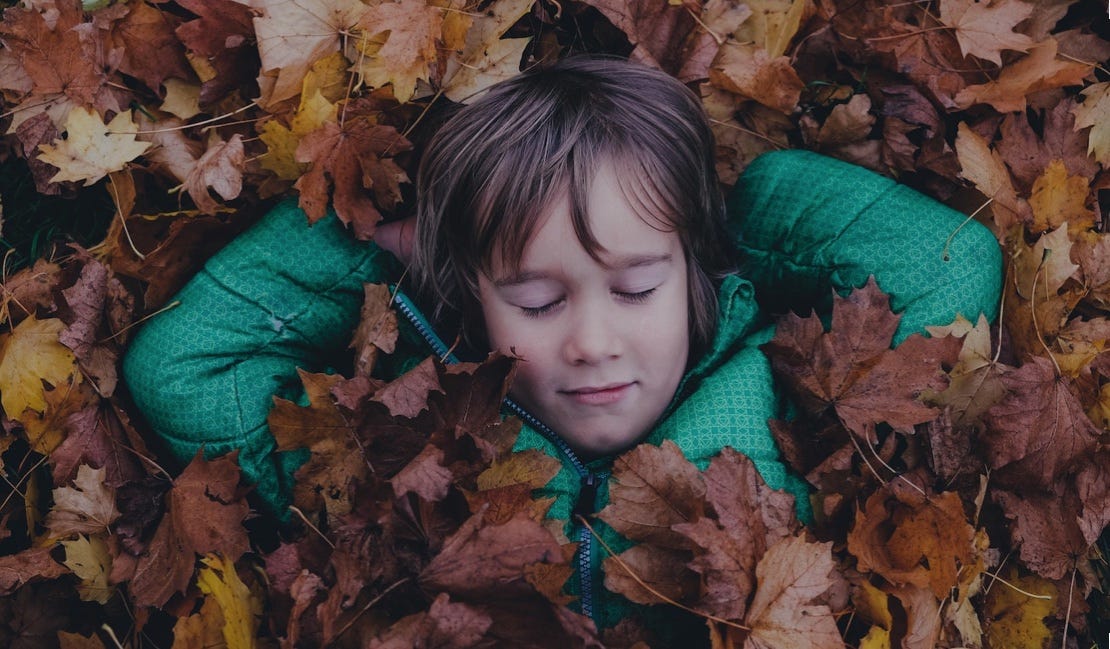
But of course our nervous systems never stop engaging sensually with the world. We just don’t tend to pay attention to the information that is readily available. To see anew is to begin to recover the intimacy that our nervous system is wired for. It is to recognise that perception is not simply a cognitive process—it is deeply sensual, experiential, emotional, relational. The touch of sun on skin. The weight of grief in the chest. The way the breath slows when we stand before an ancient tree. These are not distractions from “truth.” They are truth—truth as it is felt, lived, known through the body.
The modern self has become a spectator. many of us look at the world from behind glass—screens, windshields, institutional frameworks. But the world does not reveal itself to passive bystanders. It reveals itself to those willing to enter the encounter.
Phenomenology invites us to quieten the voice that tells us what we think about the world, and to bring conscious awareness to the manyfold ways the world reveals itself to us. Not with conclusions, but with contact: touching, tasting, marvelling in wonder.
But for most adults educated into the left hemisphere culture of Modernity, perception has become dulled, filtered through layers of language, ideology, and assumption. We see what we expect to see. We ignore what does not fit our frame. And we call it realism. But realism, untethered from lived experience, risks turning into blindness.
We tell ourselves stories like: “If I ask for help, no one will be there.” “The Earth would be better off without humans.” “Technology will save us.” But these are not perceptions—they are inherited constructs. They shape our responses before we even realise they’re at play. A belief like no one will help me may not feel reassuring, yet it still offers a strange kind of comfort: it protects us from the vulnerability of asking.
These stories shield us from discomfort, but they also cut us off from the aliveness of the field. To learn to see anew is not to erase these stories, but to loosen their grip on us. It seems important to recognise them as stories—and return, again and again, to the directness of experience, where a different kind of knowing becomes possible.
This shift is not abstract. It is practical. It changes how we walk through the world. It means noticing how the body reacts in different places. It means listening to the tone of the wind and letting it inform our choices. It means sensing when a meeting room feels “off” not because of the agenda, but because something in the relational field is being ignored. It means learning to trust dreams, metaphors, tears, silences.
To see anew is letting the field speak to us. It requires us to dismantle the illusion that we are separate from the world; to deconstruct not only the political and economic structures that have brought us here, but the perceptual habits that support them; the idea that language can capture everything; the belief that value is only what can be measured; he assumption that we must always be certain before we act.
The field does not wait nor care for our certainty. It speaks back—it may be time to listen.
To widen the field is not to become mystics or prophets (although you might!). It is to become present. To attend more fully. To rewild your perception until it becomes again what it once was: a doorway through which the world can reach you. This is not a metaphor. It is a practice.
Here are some ways to begin,—gentle returns to the body, to the breath, to the living field that surrounds you here and now.
Walk without naming.
Go outside and take a slow walk—ten minutes will do. As you move, resist the urge to label what you see. Don’t say “tree,” “car,” “sky.” Just let shapes, colours, textures, and movements meet you. Notice how perception changes when language softens. What happens when you allow the world to be unnamed, unknown, alive?
Listen beyond sound
Find a place, inside or out, and close your eyes. Let your hearing expand. Listen not just to sounds, but with them. Is there a rhythm, a pulse, a song that’s being played by the wind, the fridge hum, the distant sirens? What do you notice when you listen as if the world is speaking to you?
Touch with reverence
Place your hand on bark, or stone, or water. Or simply on your own skin. Don’t rush. Feel the temperature, the texture, the aliveness. Let the boundary between “you” and “it” blur a little. Let touch become a language.
Taste slowly
Eat something slowly today. An apple, a square of dark chocolate, a cup of herbal tea. Close your eyes if you like. Taste not just the food, but the history that brought it to your lips—the soil, the sun, the hands that harvested, the journey it took. Can tasting become an act of gratitude? A sensual prayer?
Track your body’s knowing
When you make decisions—big or small—pause and check in. What does your body say? Not your thoughts, but your breath, your gut, your spine. Is there expansion or contraction? Lightness or tension? Your body is not a machine. It is a sensitive instrument tuned to the field. Let it guide you.
Dream with the Earth
Before sleep, ask for a dream—not for answers, but for relationship. Upon waking, write or draw whatever comes, without judgment. Let the images stay with you through the day. Dreams are not private property. They may carry messages for more than just you.
These are not techniques to master. They are thresholds, that help us return to the directness of experience—not to bypass action, but to root it in deeper contact. Because action without perception is just more noise. But perception that has been widened—felt, sensed, honoured—becomes the ground from which truly regenerative responses can grow.
In this time of unraveling, may we learn to see again. To feel. To listen. To be touched. Not just for our own sake—but for the wider field that is always reaching toward us, waiting to be met
.
No posts
Comments
Nothing yet. Say the first thing.
Sign in to join the conversation.