
Dear Readers,
Read in Italian/Leggi in italiano
A few days ago I read an Instagram post by the Museum of Modern Art in New York. It depicts a rabbit fashioned from rabbit dung by artist Dieter Roth. The museum presents it as artwork. See here:
Before I say anything else, let me clarify that I am not by any length an expert on art. My knowledge of art history is very modest, I approach art as a poet and lay individual does: with curiosity, gratitude and wonder. I have chosen paintings for the covers of many of my books because I believe poetry and painting have always spoken the same language. They are two ways of expressing thought, emotions and soul.
I do not feel any need to define what is art and what is not art - not even in poetry - but this time I found myself asking that question, and even being irritated at myself for asking it.
I told myself that art is elusive to define as it has many expressions and faces. It can be realism or abstraction. Convey beauty or horror. It can be religious, devotional, political protest, conceptual experimentation, quiet contemplation, trascendental ecstasy, erotism, desperation and all of them together. It challenges conventions, overturns traditions and expands our imagination. Every generation has inherited a definition of art only to reshape it.
Art is not defined by expensive materials, technical perfection or realism. It can be abstract, conceptual, disturbing or deeply ordinary. But, always, it asks us to encounter reality by revealing something that was hidden before we looked. It transforms matter into meaning.
The rabbit made from dung leaves me unconvinced. I understand that its purpose may be provocation. It may question our assumptions. It may be commenting on value, on museums, on artistic institutions, on the boundaries of contemporary art.
Stretching thought further and beyond the object’s age - as the piece is from 1968 - it could be interpreted as a source of reflection on AI art by means of an irreverent and perishable material and a basic theme.
These can be legitimate interpretational ambitions but - to me - a rabbit shaped from dung remains exactly what it appears to be: dung arranged into the outline of a rabbit. Provocation alone does not automatically become artistic achievement. Not every object displayed in a museum acquires artistic value simply because it is framed as artwork.
Perhaps others will see something profound that escapes me. Art has always invited disagreement. But I cannot persuade myself that intention alone is sufficient.
We live in a time when artificial intelligence is capable of producing astonishing images in seconds. Perhaps the intention of the museum in displaying an object like this is to remind us that human creativity is rooted in physical matter, in the hand, in the body, in the tangible world. If that is part of the conversation, then it is an interesting one.
Yet even then I find myself asking: what has been transformed? Has the material become something greater than itself? Has anything changed in my understanding of beauty or humanity? Have I come away with any new thought or feeling?
Or is the museum’s decision to exhibit this object an implicit invitation to debate whether it deserves to be called art at all, and, in doing so, simply to generate attention? (An invitation, I should add, that I have by now accepted completely.)
As a poet, I cannot separate art from its capacity to enlarge our inner world. Beauty is not a requirement. Art may disturb us, frighten us, even offend us. Some of the greatest masterpieces in history are profoundly unsettling, but they reveal something, they allow us to see what we could not previously see.
That is why the paintings I have chosen for my own books matter so deeply to me.
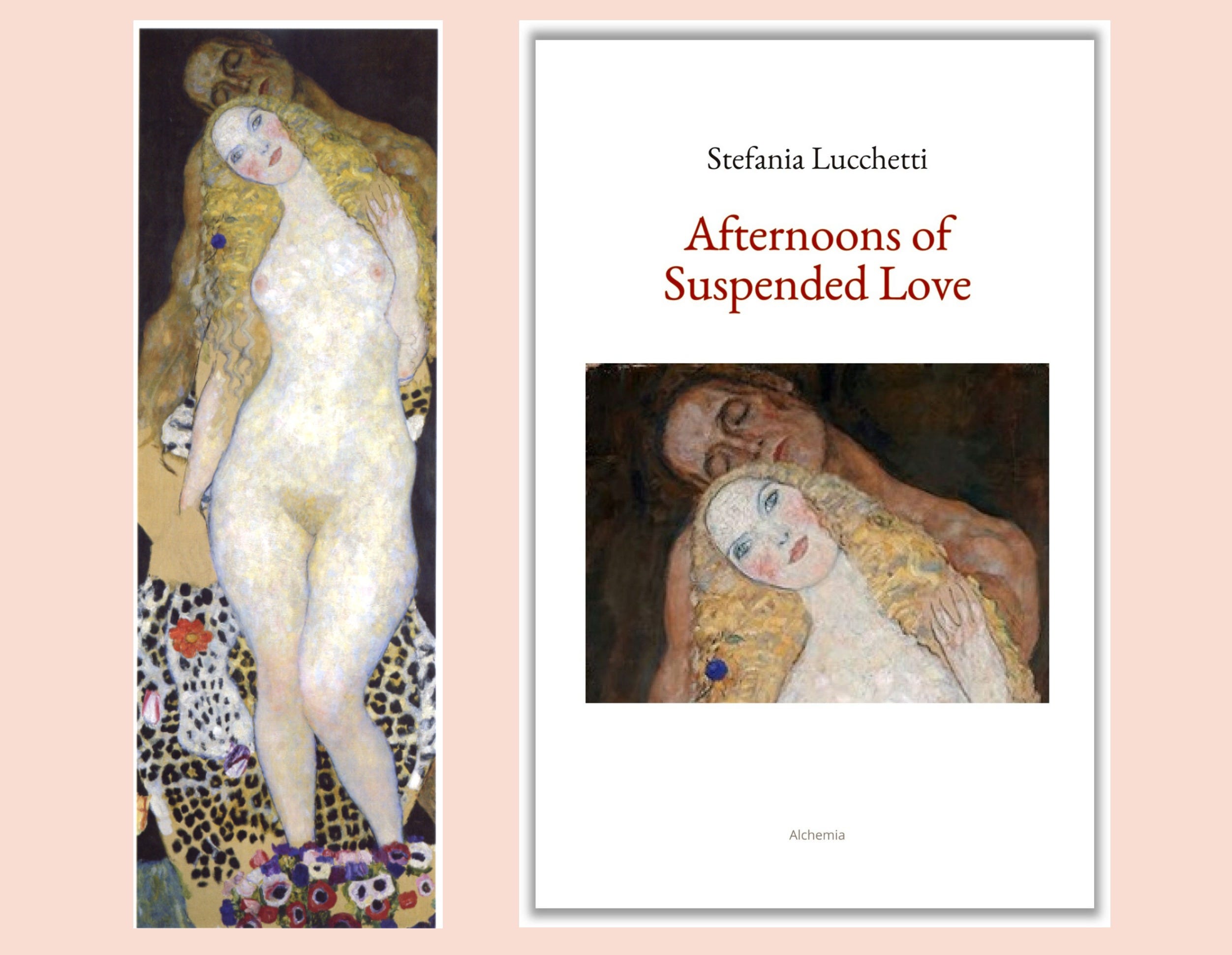
For AFTERNOONS OF SUSPENDED LOVE, I chose Gustav Klimt’s Adam and Eve (1916-1918, hosted at the Belvedere Museum)
Only a portion of the original painting was included in the cover as the painting depicts a naked Eve and unfortunately many distribution platforms (including Amazon) sadly consider the painting a violation of their content policy.
(https://commons.wikimedia.org/wiki/File:Adam_and_Eve_Gustav_Klimt.jpg)
Few painters have expressed with such intensity the union of eroticism, beauty, and spiritual intimacy. Klimt’s Adam and Eve (1916-1918 at the Belvedere Museum) is far more than a reinterpretation of the biblical narrative. Eve, luminous and self-possessed, dominates the composition with confidence, while Adam appears drawn toward her in contemplation and desire. Their proximity evokes both physical attraction and emotional communion, suggesting that love is born from the meeting of two complete yet complementary persons.
The painting also reflects Klimt’s lifelong fascination with the inseparability of sensuality and transcendence. Gold, colour, ornament, and the beautiful modelling of the human body create an atmosphere in which erotic love is neither diminished nor vulgarised. Instead, it is elevated as one of the highest expressions of our humanity.
This vision resonates deeply with AFTERNOONS OF SUSPENDED LOVE. The poems embrace the physical dimension of love without apology, as genuine passion is never separate from tenderness, trust, and mutual self-giving.
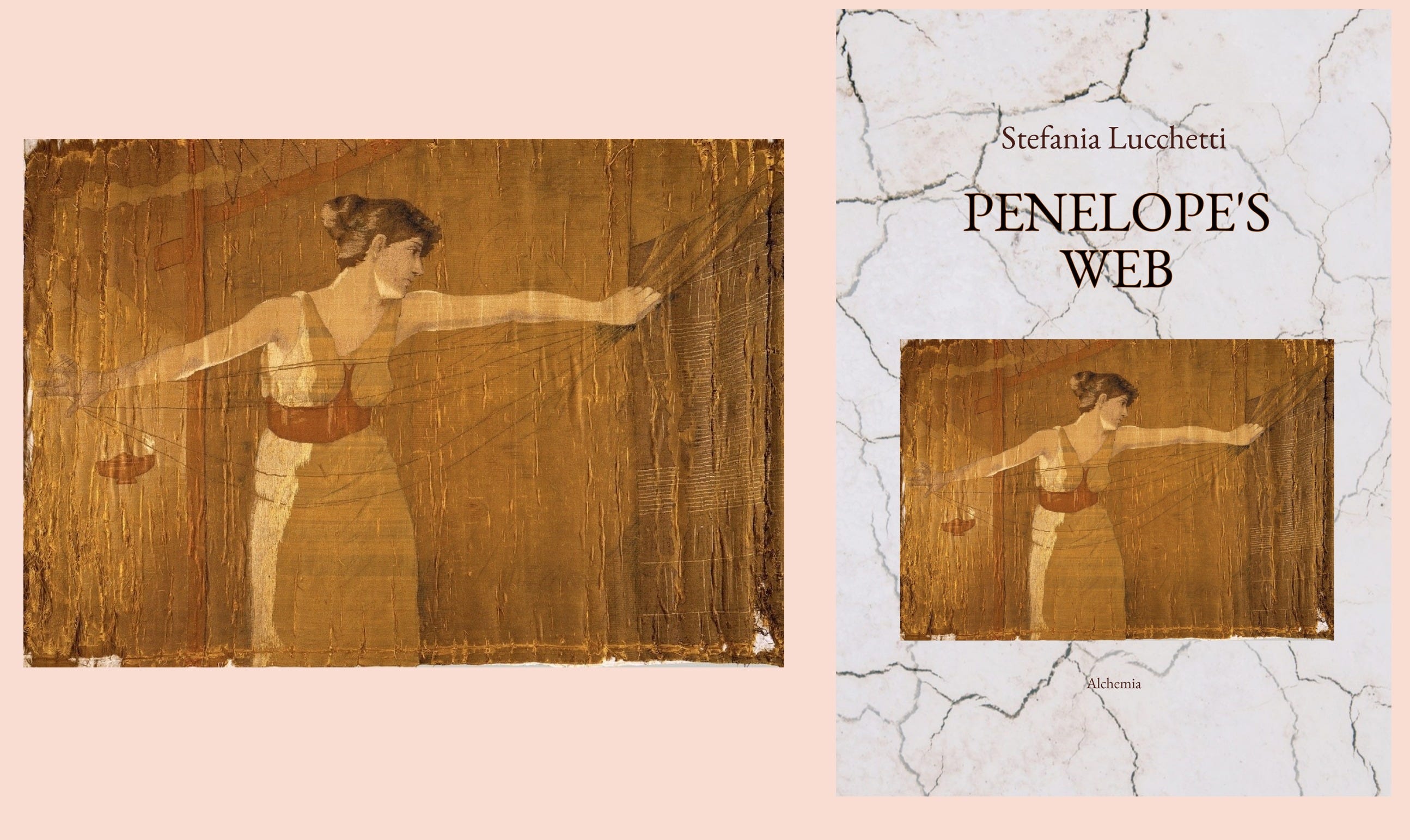
For PENELOPE’S WEB, I chose Dora Wheeler’s Penelope Unraveling Her Web at Night (Silk embroidered with silk thread), in the collection of the Metropolitan Museum of Art. As I wrote in a previous newsletter, I have always loved Penelope because she is so often misunderstood. She is remembered as the woman who waited, yet waiting is perhaps the least interesting thing about her. Wheeler’s painting captures something far more important: intelligence, discipline and resistance. Every thread Penelope removes is an act of freedom. Every night she refuses to surrender her future to someone else’s timetable. It is exactly the Penelope I hoped to explore in my poems.
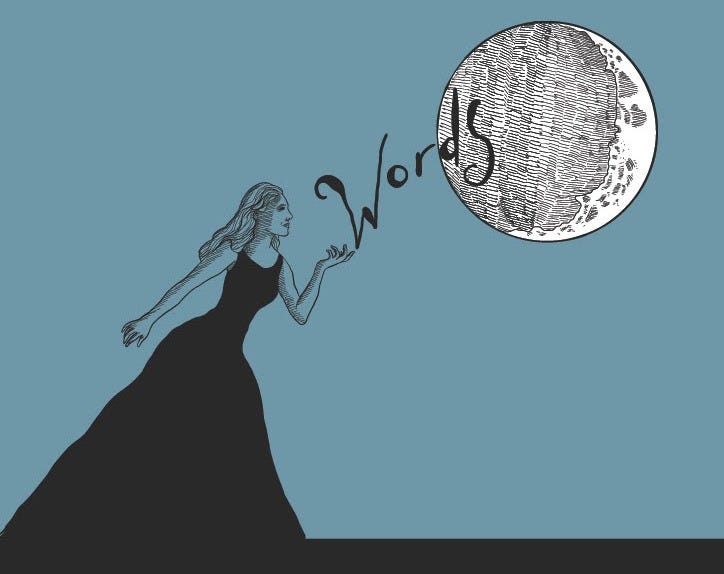
COFFEE STAINS ON MY BOOKS includes on the cover and within its pages original drawings made especially for me by the witty Italian artist Gianluca Biscalchin
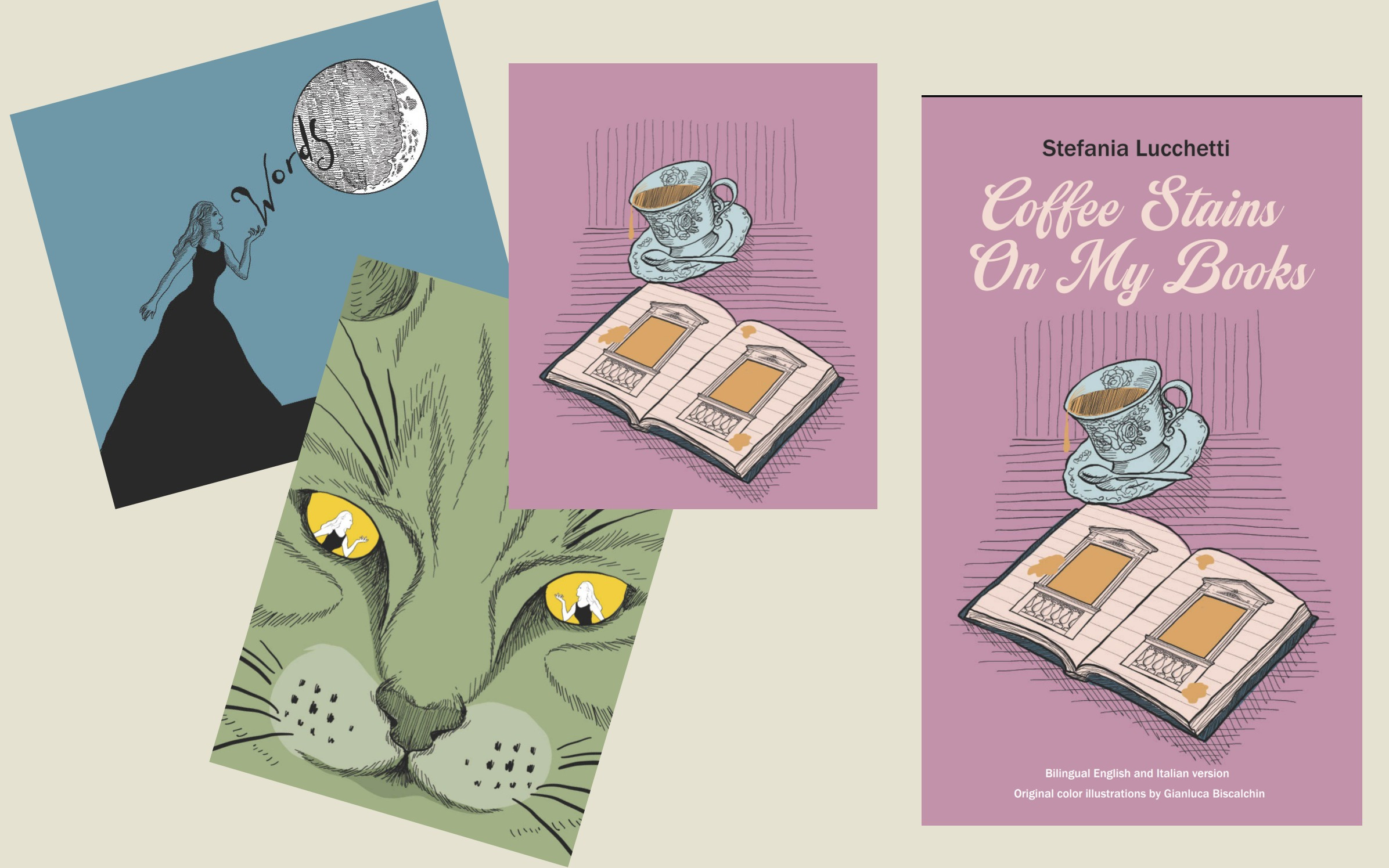
The collection explores life's imperfections through poems on identity, memory, love, mythology, loss and transformation. Biscalchin’s illustrations, featured both on the cover and throughout the book, do not simply accompany the poems: they enter into dialogue with them, adding wit, delicacy and another layer of interpretation. Together, words and images create a reading experience in which poetry and drawing illuminate one another, inviting the reader to linger over both the written page and the visual imagination it inspires.
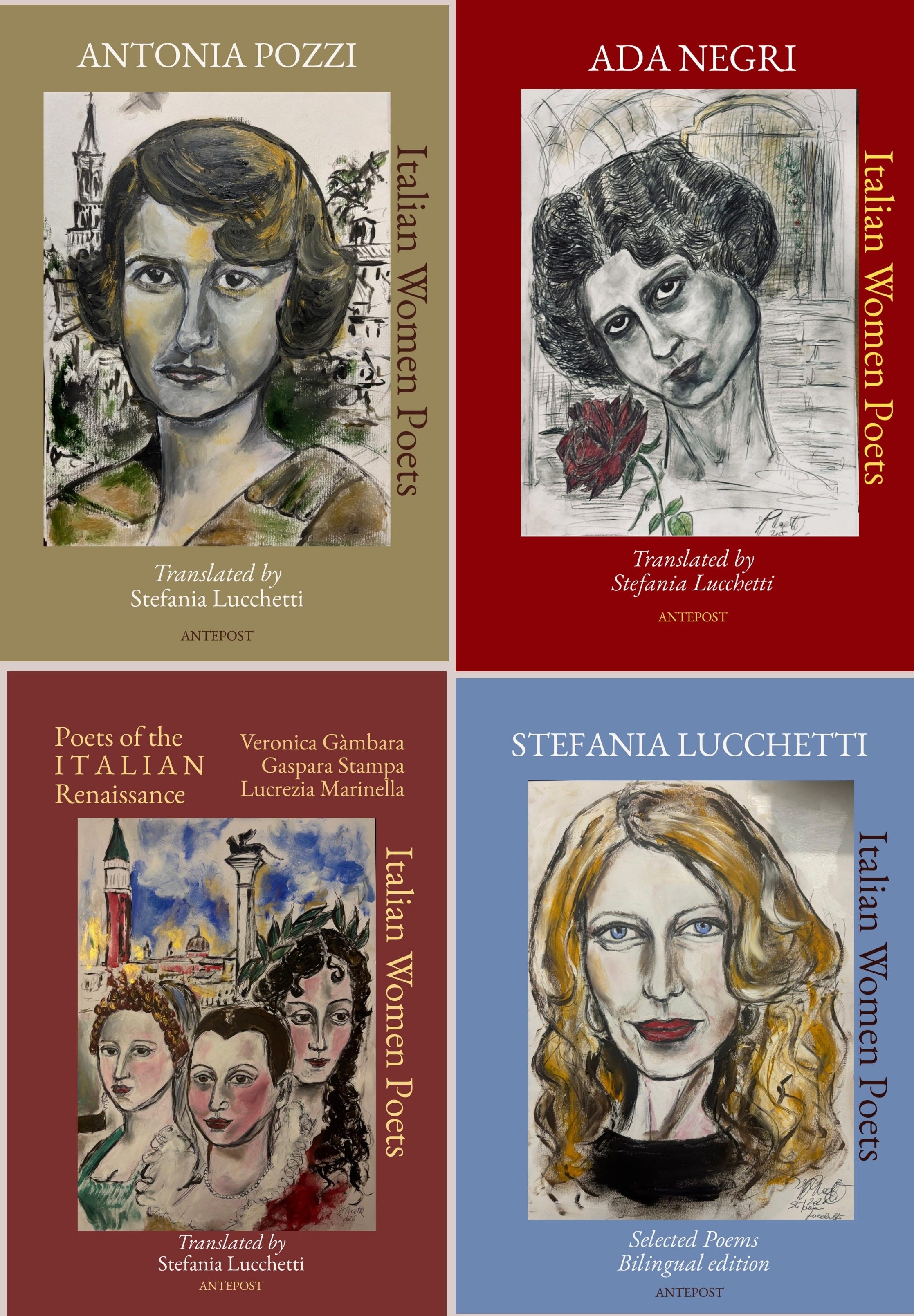
The Italian Women Poets collection carry portraits painted by the contemporary Italian artist Francesca Draetta. A painted portrait is never simply a record of someone’s features. It is another person’s interpretation of a life. It is an encounter between two imaginations: the artist’s and the subject’s. That dialogue fascinates me because poetry attempts something similar. We do not describe reality exactly as it is. We try to reveal what lies beneath it.
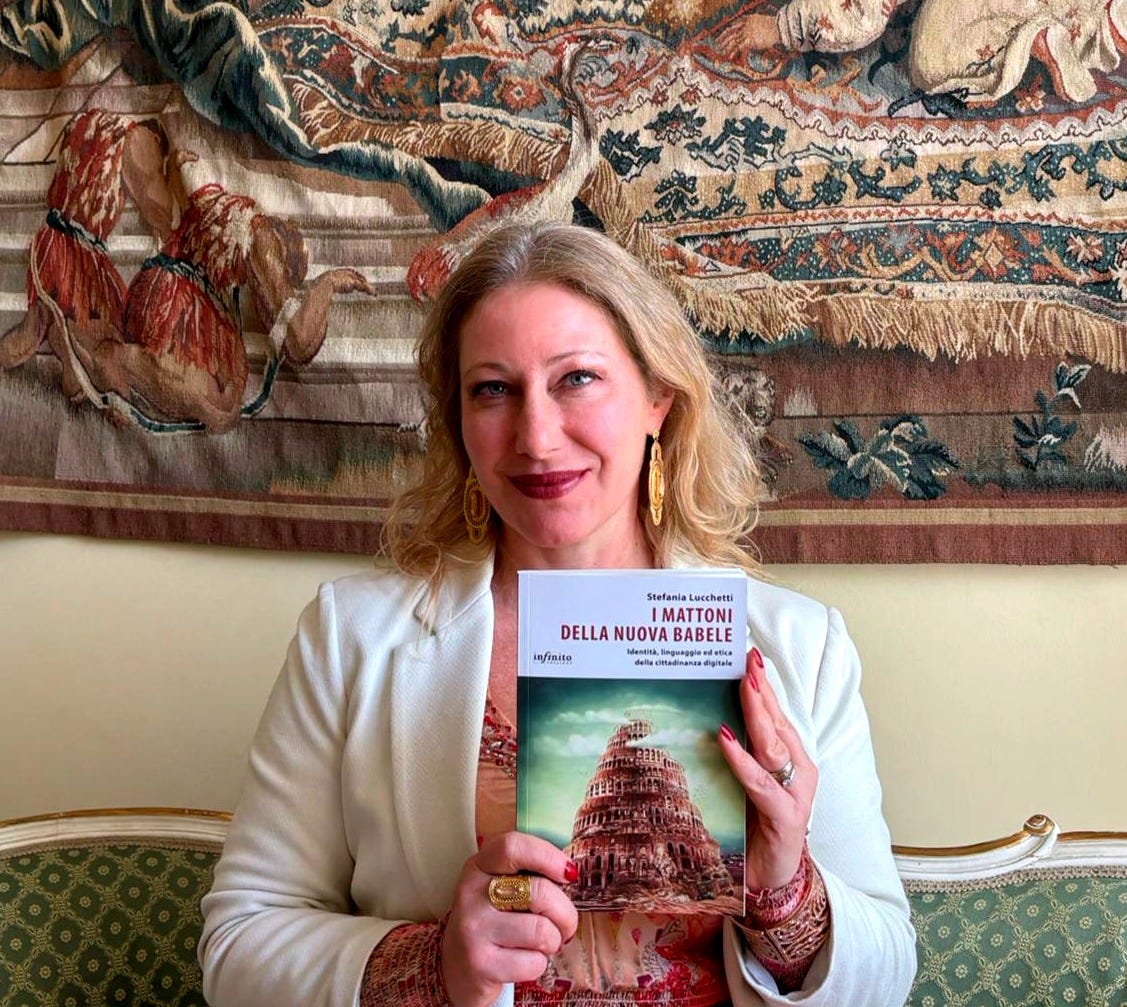
And finally, for The Bricks of the New Babel I chose the famous painting The Tower of Babel by Pieter Bruegel the Elder
Comments
Nothing yet. Say the first thing.
Sign in to join the conversation.