Modern computer systems are quite fascinating. They are highly complex, run a lot of software, and their performance characteristics are hard or impossible to predict.
At this year’s ECOOP, the Institute for System Software will be attending with the almost complete team and we’re going to present on a variety of topics. Come and talk to us at ICOOOLPS, MPLR, the Demo Track, DEBT, ECOOP Academy, and at the poster session!
It’s February! This means I have been at the JKU for four months. Four months with teaching Compiler Construction and System Software, lots of new responsibilities (most notably signing off on telephone bills and coffee orders…), many new colleagues, and new things to learn for me, not least because of the very motivated students and PhD students here. And when I say motivated, yes, I am very…
Over the past years, two major players invested into the future of Python. Microsoft’s Faster CPython team has pushed ahead with impressive performance improvements for the CPython interpreter, which has gotten at least 2x faster since Python 3.9. They also have a baseline JIT compiler for CPython, too. At the same time, Meta is worked hard on making free-threaded Python a reality to bring classic…
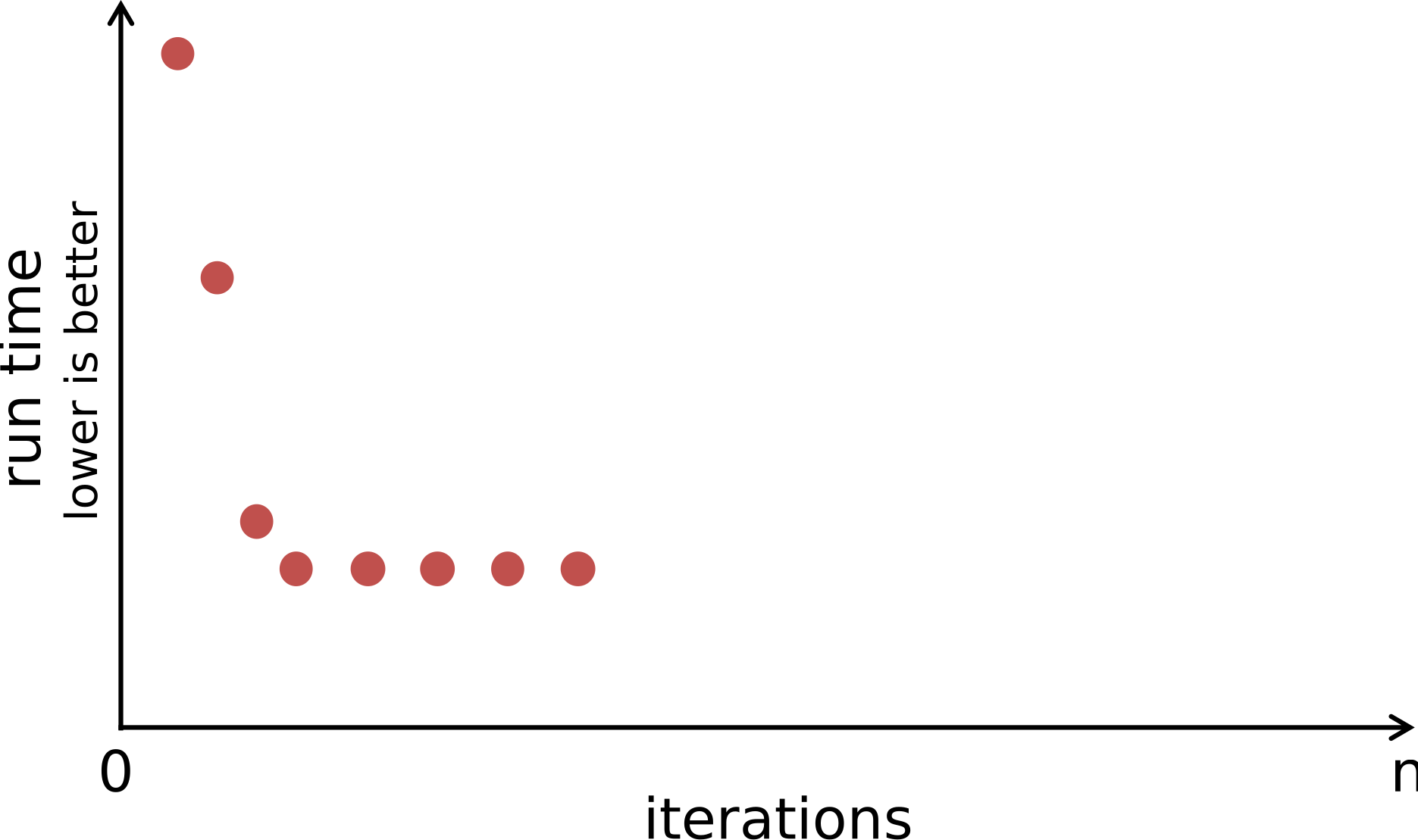
Modern CPUs, operating systems, and software in general do lots of smart and hard-to-track optimizations, leading to warmup behavior, cache effects, profile pollution and other unexpected interactions. For us engineers and scientists, whether in industry or academia, this unfortunately means that we may not fully understand the system on top of which we are trying to measure the performance impact…
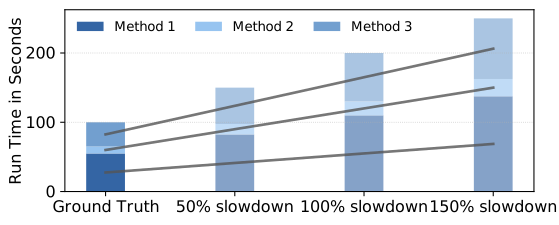
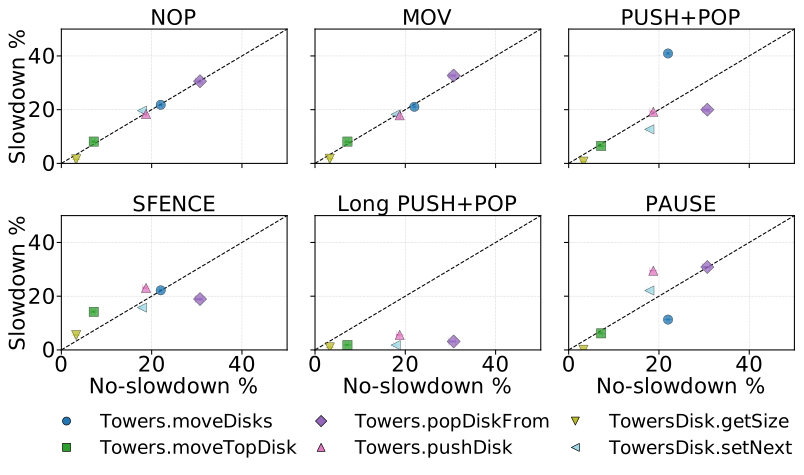
If you have been following the adventures of our hero over the last couple of years, you might remember that we can’t really trust sampling profilers for Java, and it’s even worse for Java’s instrumentation-based profilers.
It’s Wednesday. Is this important? It’s my first day in a new position. So, perhaps the real question is: what’s going to be important to me from now on?
Most research on programming language performance asks a variation of a single question: how can we make some specific program faster? Sometimes we may even investigate how we can use less memory. This means a lot of research focuses solely on reducing the amount of resources needed to achieve some computational goal.
Last year, we looked at how well sampling profilers work on top of the JVM. Unfortunately, they suffer from issues such as safepoint bias and may not correctly attribute observed run time to the correct methods because of the complexities introduced by inlining and other compiler optimizations.