
This post was adapted from my annual keynote presentation at the Energy Impact Partners annual meeting in June 2026. It has been formatted to fit your screen.
I should begin by saying that a few years ago, I promised myself I would never focus my entire annual meeting talk on “AI”. (I’m grateful I get the chance to give one of these talks about the future every year.) But here we are in 2026… so, buckle up.
There are a lot of smart people who believe that AI is leading us into the next industrial revolution, and they may be right. This has led me to think a lot about the idea of “industrial revolutions”. And relatedly, I’ve also been thinking a lot about… well… the meaning of life — or as a great man once called it, “the art of life itself”.
You may be wondering what these two things have in common.
The answer to that question is, of course, the same as the answer to so many questions in life: The famous economist John Maynard Keynes.
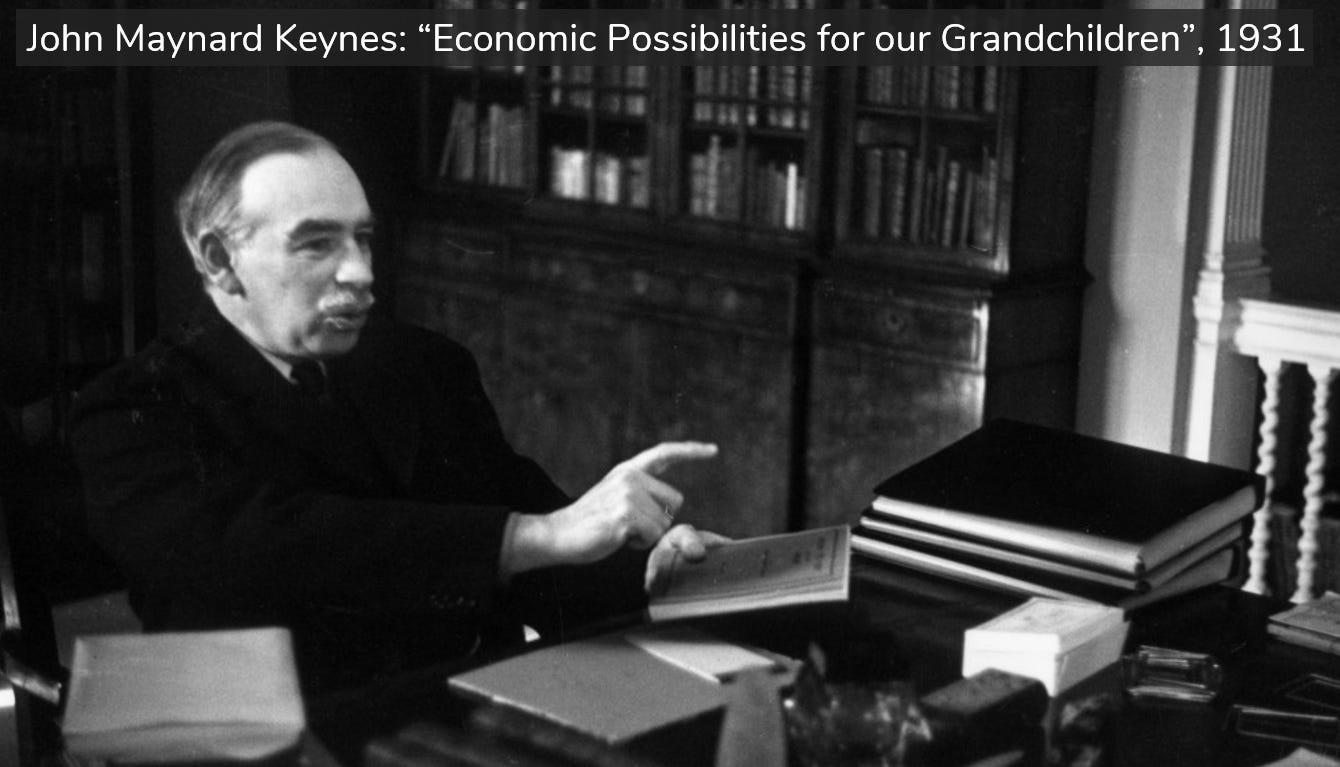
I first read Keynes’ 1931 essay, “Economic Possibilities for our Grandchildren” as a grad student over fifteen years ago. I recently decided to give it another read, because I recalled that Keynes was writing about the impact of rapid technological progress on economic productivity and employment, the resulting impact on how we go about our lives, and our sense of purpose — in other words, “the meaning of life”.
I was taken aback by how timeless this essay felt to read. Nearly a century ago, Keynes was asking himself practically all of the same questions about the future that nearly everyone I know is asking today. Seriously, go read “Economic Possibilities for our Grandchildren”. It might as well have been written yesterday.
So I thought I’d share some wisdom from Keynes, all the way back in 1931, and from other periods of rapid technological change throughout human history. And I’m going to hone in on a few lessons from these periods that ought to be applicable to whatever comes next.
According to Keynes, British society in 1931 was suffering from a form of “economic pessimism”. But he argued that this pessimism was not solely a function of the Great Depression, which felt so crushing at the time.
We are suffering not from the rheumatics of old age, but from the growing-pains of over-rapid changes, from the painfulness of readjustment between one economic period and another. The increase of technical efficiency has been taking place faster than we can deal with the problem of labour absorption; the improvement in the standard of life has been a little too quick…
…We are being afflicted with a new disease of which some readers may not yet have heard the name, but of which they will hear a great deal in the years to come—namely, technological unemployment.
Imagine writing in the middle of the Depression, and arguing that living standards were improving too quickly… Clearly, Keynes was taking a long view.
But Keynes didn’t despair — in fact, quite the opposite — I’m now convinced he was the original utopian tech bro.
The course of affairs will simply be that there will be ever larger and larger classes and groups of people from whom problems of economic necessity have been practically removed.
…Thus for the first time since his creation man will be faced with his real, his permanent problem — how to use his freedom from pressing economic cares, how to occupy the leisure, which science and compound interest will have won for him, to live wisely and agreeably and well.
In this essay, Keynes made two predictions — or at least, speculations — about the distant future. The first of these speculations turned out to be eerily correct, while the second turned out completely wrong.
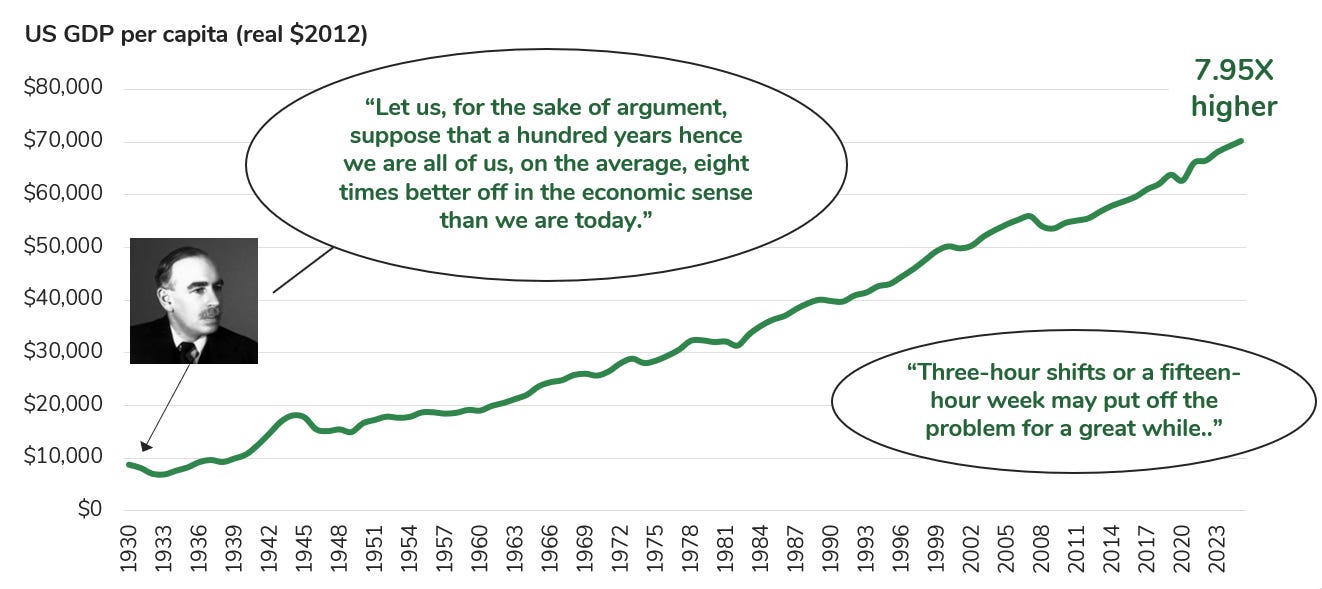
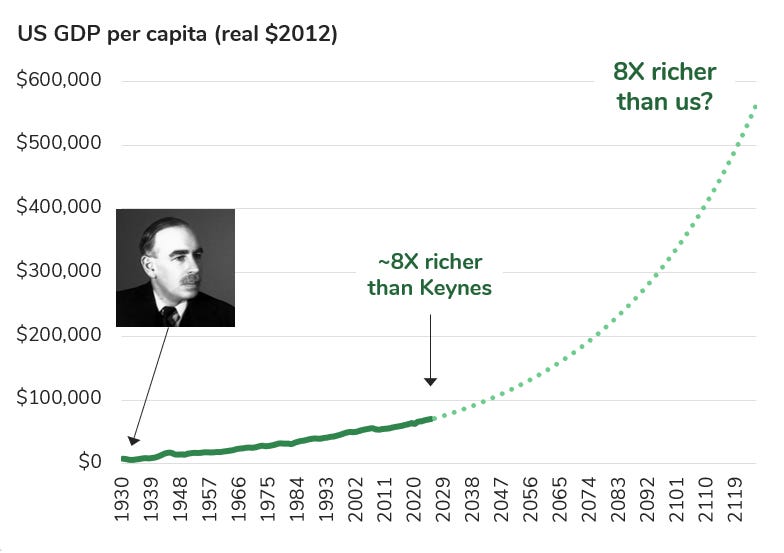
Keynes’ first speculation was that “a hundred years hence”, the average person would be “eight times better off in the economic sense” than he or she was in 1931. On this point, history has proven Keynes to be remarkably prescient. Here we sit, nearly a hundred years later, and the average GDP per capita in the United States has grown by 7.95 times.
But Keynes’ second prediction was way off the mark. He assumed that because of this tremendous increase in productivity, people would find themselves overwhelmed by abundance. (Yes, abundance.) We wouldn’t know what to do with ourselves. We would be dreadfully bored. Restless.
There is no country and no people, I think, who can look forward to the age of leisure and of abundance without a dread. For we have been trained too long to strive and not to enjoy. It is a fearful problem for the ordinary person, with no special talents, to occupy himself, especially if he no longer has roots in the soil or in custom or in the beloved conventions of a traditional society. To judge from the behaviour and the achievements of the wealthy classes today in any quarter of the world, the outlook is very depressing!
(I mean, can you believe the sense of humor this guy had? For an economist???)
Keynes predicted that “three-hour shifts or a fifteen-hour week” were the only possible solutions to this problem. At least, they might “put off the problem for a great while”.
So, why did he get this so wrong?
Keynes’ mistake was assuming that our appetite could not possibly keep pace with our increased productivity. He assumed that we would reap the reward of our increased output in the form of increased leisure time, rather than increased consumption.
Essentially, he was wrong about a fundamental economic variable: humanity’s elasticity of demand, which is a measure of how much more of some good or service we want to buy as it becomes cheaper. (Or how much less, as it becomes more expensive.) But in this case, Keynes misjudged our elasticity of demand for consumption in aggregate, across all goods and services we could possibly dream up. It turns out that our aggregate elasticity of demand is extremely high. In fact, we have yet to find the ceiling — our appetite has always grown to meet our productive capacity.
“Industrial revolutions” are usually defined as periods of sweeping technological change which transform our productive capacity. (Or something along those lines.) But if you study the industrial revolutions of the past, you’ll find that there are really two major branches of transformation that are worth distinguishing.
Increasing resource productivity, which leads to more efficient production processes.
Developing new capabilities, which lead to complete paradigm shifts in human life.
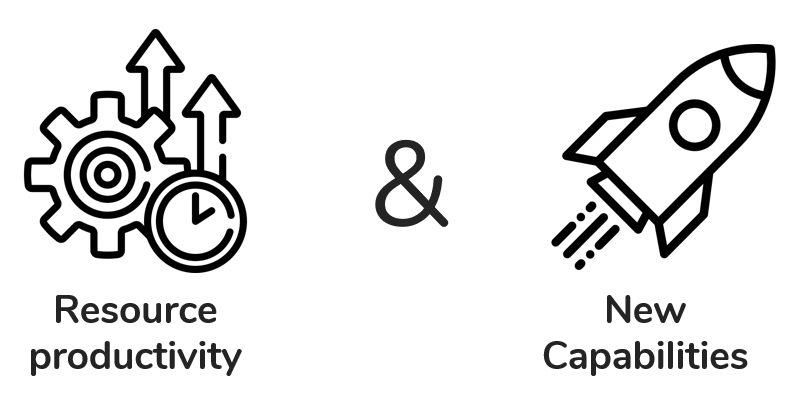
Of course, there’s no fine line between “increasing resource productivity” and “developing new capabilities”. Sometimes, for example, productivity improvements can be so radical that they lead to a complete break from the processes of the past. And on the other side of the spectrum, new capabilities often require decades of incremental efficiency improvements before they become economically viable.
Still, I’m convinced this is a helpful dichotomy for making sense of the industrial revolutions of the past, and for thinking about how the next revolution might unfold. The reason is that increasing resource productivity and developing new capabilities have very different downstream impacts on society. The former primarily improves economic efficiency, while the latter has more potential to create entirely new paradigms for how we go about our lives.
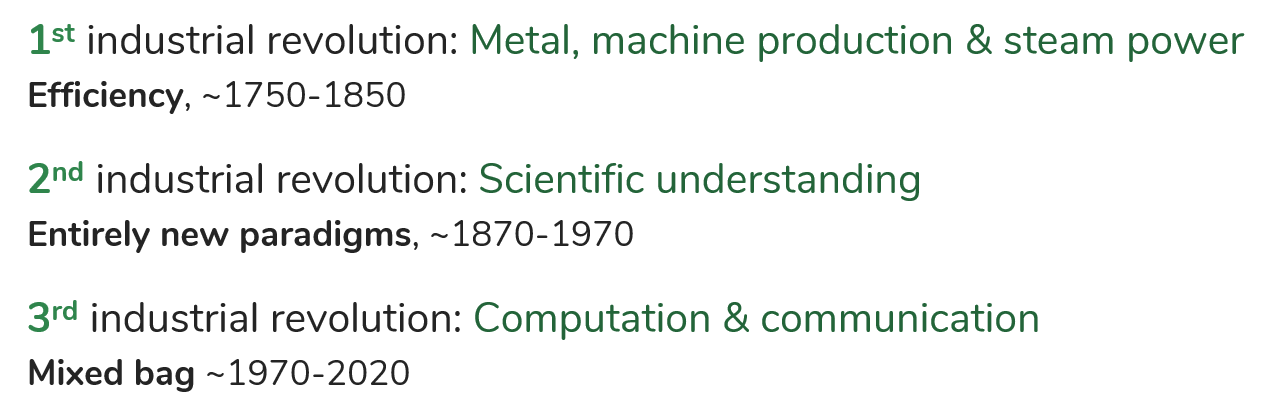
There are many ways of segmenting history into periods of technological progress. But I believe at the highest level, it’s fair to say there have been three major industrial revolutions over the past three hundred years.
The 1st industrial revolution (~1750-1850) was a revolution in metal working, machine production, and steam power. Primarily, the effect of this revolution was an extraordinary increase in resource productivity.
The 2nd industrial revolution (~1870-1970) was a revolution in scientific understanding. This revolution also involved continuous improvements in process efficiency. But the much bigger story of this era was the development of entirely new capabilities… which led to paradigm changes in nearly every aspect of human life.
The 3rd industrial revolution (~1970-2020) was a revolution in computing and communications. I’d argue that this revolution was more of a mixed bag — roughly equal parts productivity boost and paradigm shift — but overall much less impactful than the prior two revolutions.
And now we may be on the cusp of a 4th industrial revolution, driven by the rapid evolution of AI. The more I think about it, the more I’m convinced that the question of our time is: Which kind of revolution will this be? Will it be like the first — mostly a huge leap forward in labor productivity? Or more like the second — a period of foundational discovery which opens up entirely new frontiers and changes the course of our lives? Or will it be more like the third, a hodge-podge with more questionable impacts on society?
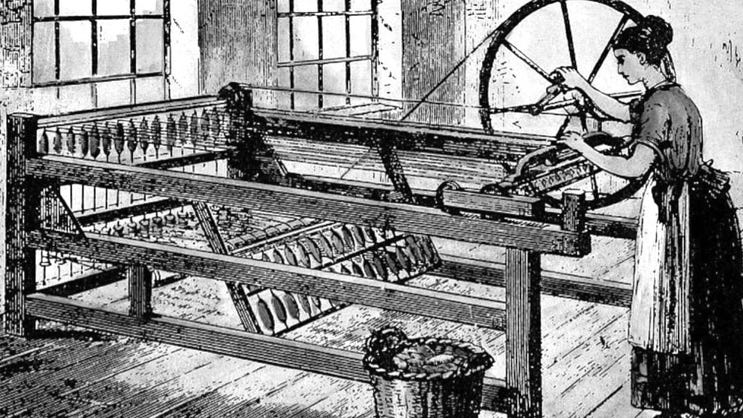
The first industrial revolution began as a very narrow revolution in just one sector of the economy: fabric production. Back in the day, producing even a single article of clothing was a daunting endeavor. Just spinning enough thread to make a shirt took hundreds of hours on a spinning wheel.
Then famously, in 1764, in Lancashire, England, a man named James Hargreaves invented a machine called the “spinning jenny”. In the centuries since, the spinning jenny has come to be known as “the industrial revolution in miniature” — an ur-machine from which all future machines evolved. And it truly was a remarkable machine. Right from the start, the spinning jenny allowed a single person to do the same amount of “spinning” as eight people toiling on individual wheels. That’s an 8X increase in labor productivity!
Right away, Hargreave recognized the economic power of his new machine. He also recognized that it might be frightening for many of his neighbors in the surrounding communities, whose livelihoods were partially dependent on income from spinning thread.
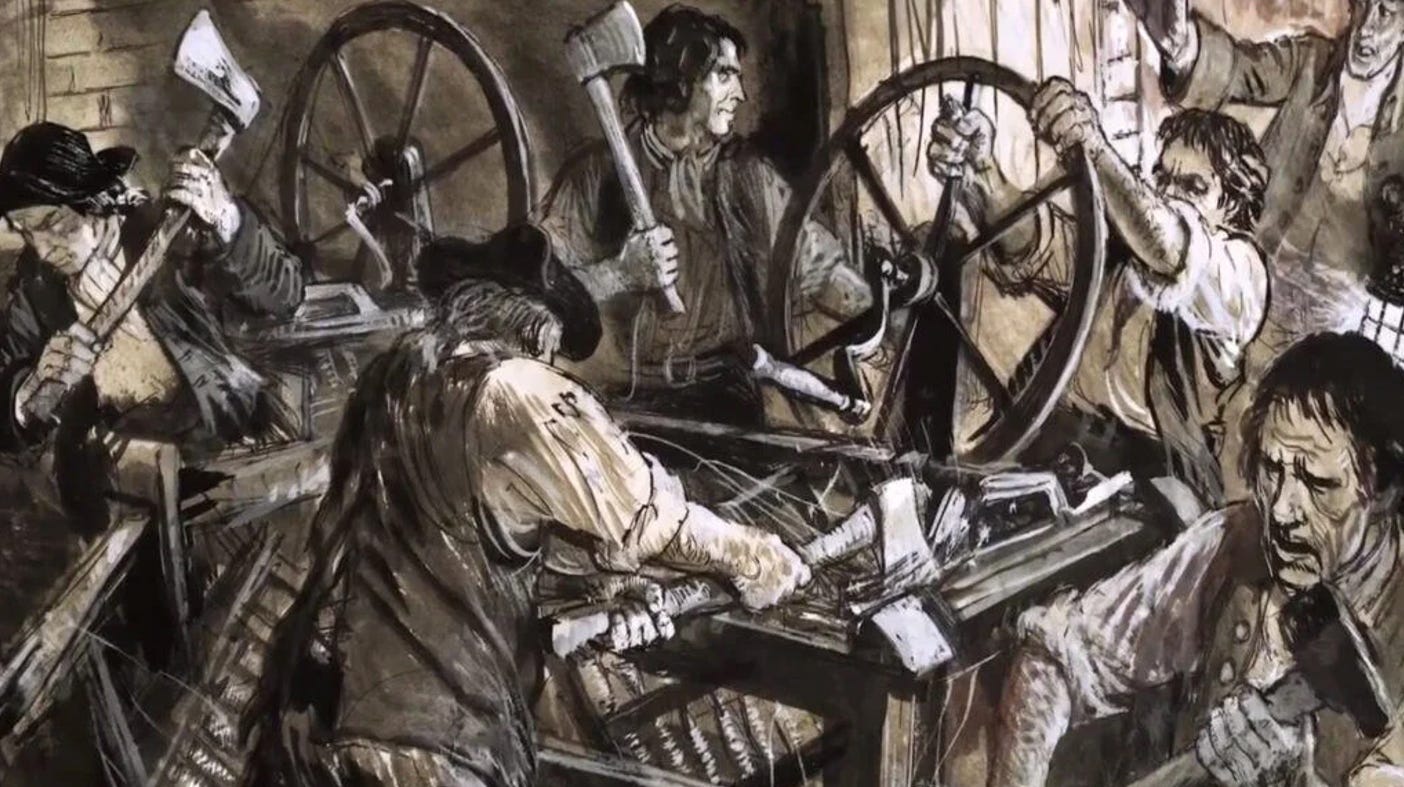
What happened next is one of those stories that sounds like it must be apocryphal, but it’s actually true. Anticipating resistance from his neighbors, Hargreaves tried to keep the spinning jenny out of the public eye for as long as he could. But word got out, and before too long, an angry mob assembled at Hargreaves’ house. They stormed in and smashed many of the original machines to bits.
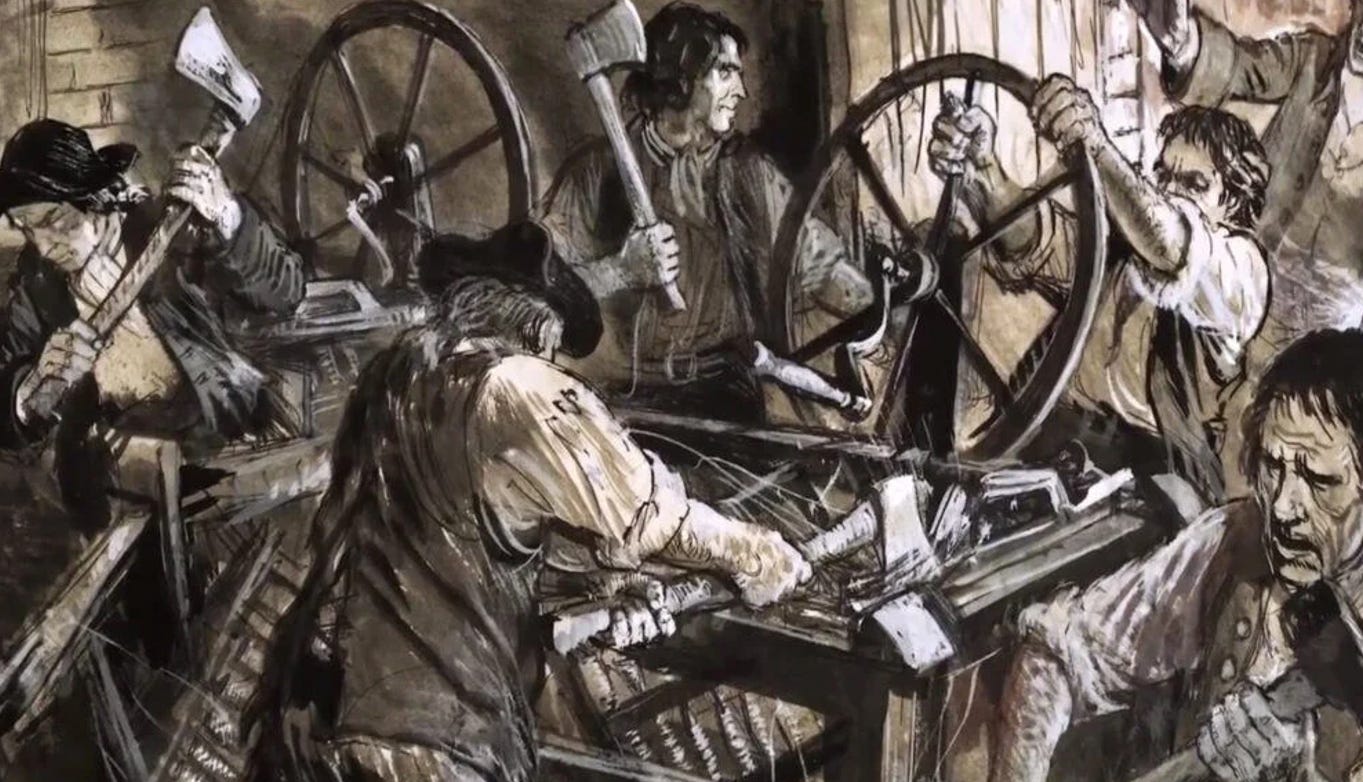
Fortunately, progress didn’t end there. The spinning jenny continued to evolve. By 1800, the latest iteration of the machine was a much larger machine, driven by the power of a running river: The Arkwright Water Frame. The efficiency of this new machine was off the charts — 100X as productive as an individual spinning wheel.
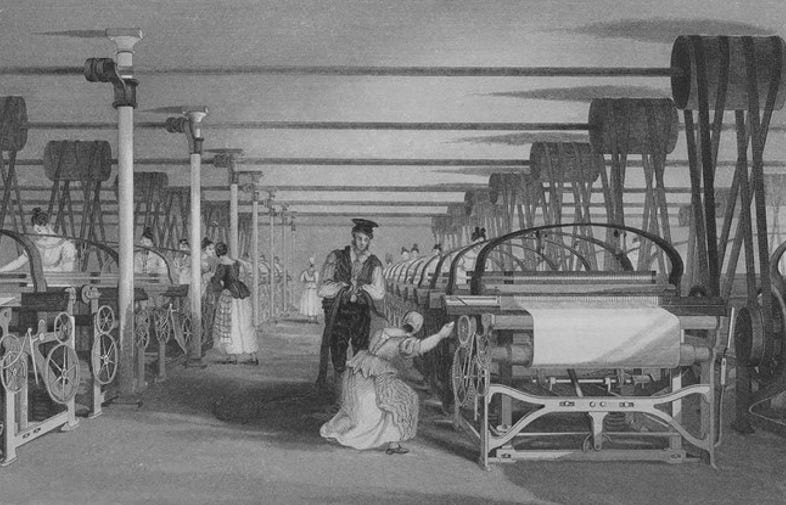
I want to emphasize just how incredible this is. Think of a few discrete tasks in your job today, and imagine how difficult it would be to improve the productivity of those tasks by a hundred times. Actually, I challenge you to come up with any task out there in the modern economy which you can imagine making 100X more efficient with some new machine.
You know what happened next, right? More smashy smashy. The famous “Luddite” rebellion was short-lived (1811-1816) but left an enduring impression in our collective memory.
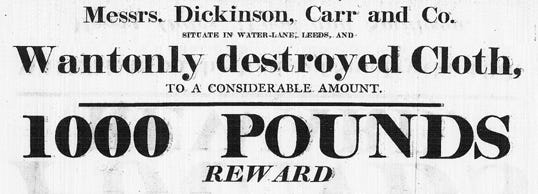
In my view, the reason the Luddites left such a big impression is that they epitomized such a primal human instinct: When something threatens your livelihood, fight back! In fact, this is the first lesson I’d take away from the original industrial revolution.
Lesson #1: People naturally resist technology which appears to threaten their livelihood.
Obviously.
But there’s a second lesson from this period which is a bit more subtle.
Lesson #2: Major improvements in one factor of production can unlock bottlenecks on demand for other factors of production, which can lead to cascading effects throughout the economy.
The best example from this period is cotton.
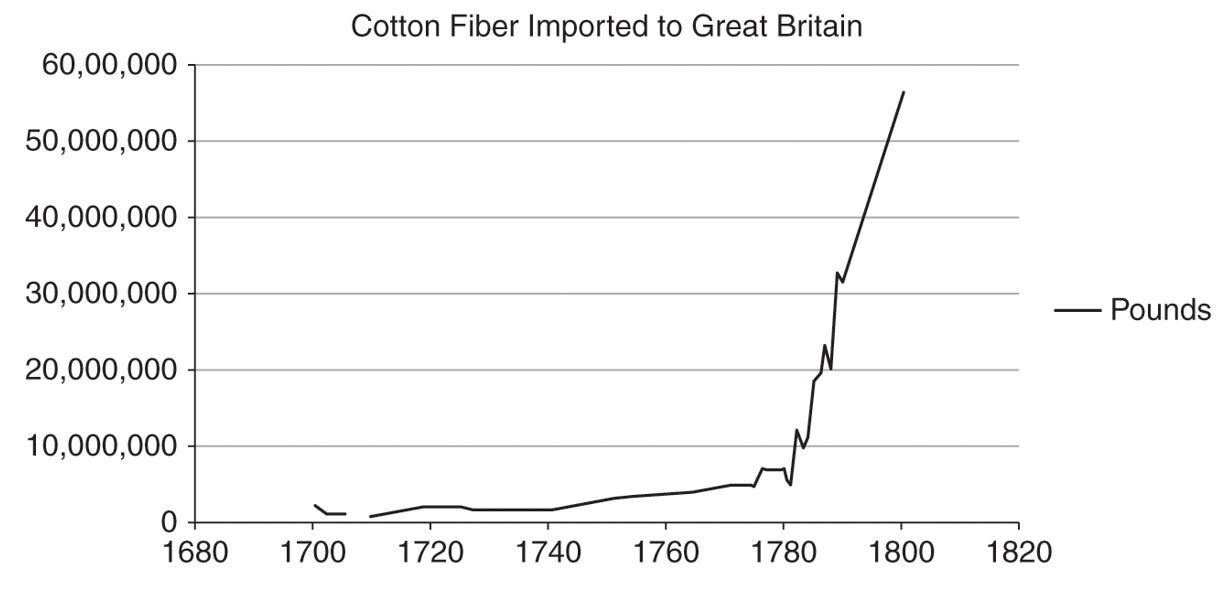
As the cost of manufacturing fabric plummeted in Great Britain, the demand for all of the key inputs to fabric manufacturing skyrocketed. Britain began importing fiber from anywhere in the world it was available. Demand reached all the way across the ocean to the fledgling American republic, where cotton was already an important economic resource for the agrarian economy of the Southern states.
Of course, this resource also played a tragic role in American history, because the cotton harvest was dependent on chattel slavery — a terrible sin which continues to haunt our society to this day.
But also, many years later, the American cotton harvest produced Levi’s jeans, which came to become a symbol of independence and innovation — and famously helped break the grip of repressive totalitarianism.
It’s impossible to predict these sorts of ripple effects in advance. Who at the time would have predicted that the spinning jenny would eventually play a role in abetting one of America’s greatest sins, and also one of our greatest triumphs, centuries later?
This leads me to Lesson #2b: We need to be extremely humble about our ability to predict the second and third order impacts of new technology.

Comparing the first industrial revolution with the second (~1870-1970) is a study in contrast.
As I’ve outlined, the first industrial revolution was primarily a revolution in efficiency — most notably, labor productivity. The second industrial revolution also involved a tremendous increase in “technical efficiency”, as Keynes observed back in 1931. But when we look back on this period, it’s not the improvements in efficiency that people remember best. Instead, we remember the paradigm shifts which had such unmistakably positive impacts on our day-to-day lives.
Let’s consider some examples, beginning with an invention that’s near and dear to so many of us in this room: electric power and its first “killer app”, electric light.
In one sense, you could call electric light a “productivity improvement” for people who wanted to read in the evening. Back in the 1850s, before electricity came around, it cost over $400 (in today’s dollars) for an hour a day of light from candles — which is why only wealthy people could afford to read after sunset. Today, it costs a tenth of that to light up an entire household for hours after the sun goes down.
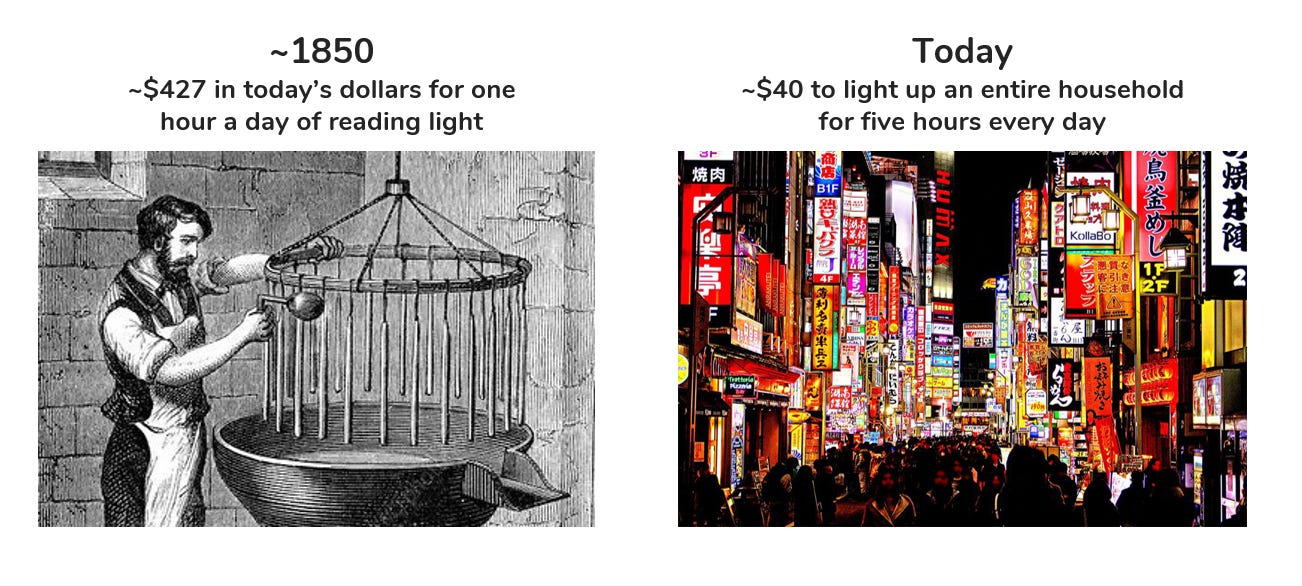
But clearly, electric light is not just a productivity improvement. It has done much more than make it cheaper to read at night. It has reshaped our society in so many ways we can hardly contemplate them all. It has completely transformed how we build our cities. It has reconfigured the rhythms of daily life. Arguably, electric light has altered our very sense of time.
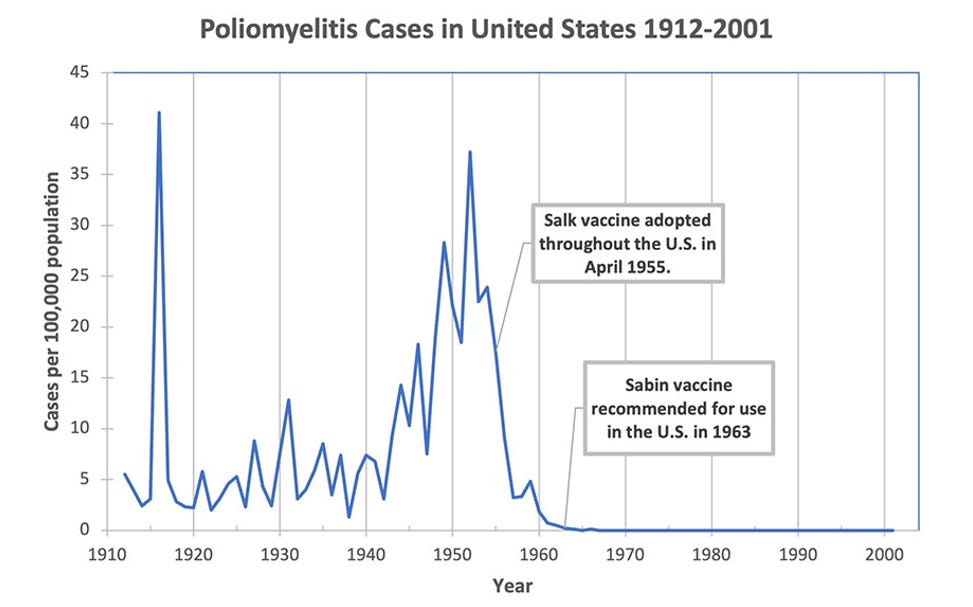
In the same way, vaccines are not just a “productivity improvement” for medicine. We all know, intuitively, that’s a ridiculous notion. Vaccines are a paradigm shift for human health. Back in the 1950’s, thousands of children every year were being sickened, crippled, and killed by the polio virus. Then, Dr. Jonas Salk invented a vaccine, and made it widely available to the world (for free, by the way). Within a decade, kids were no longer dying from polio.
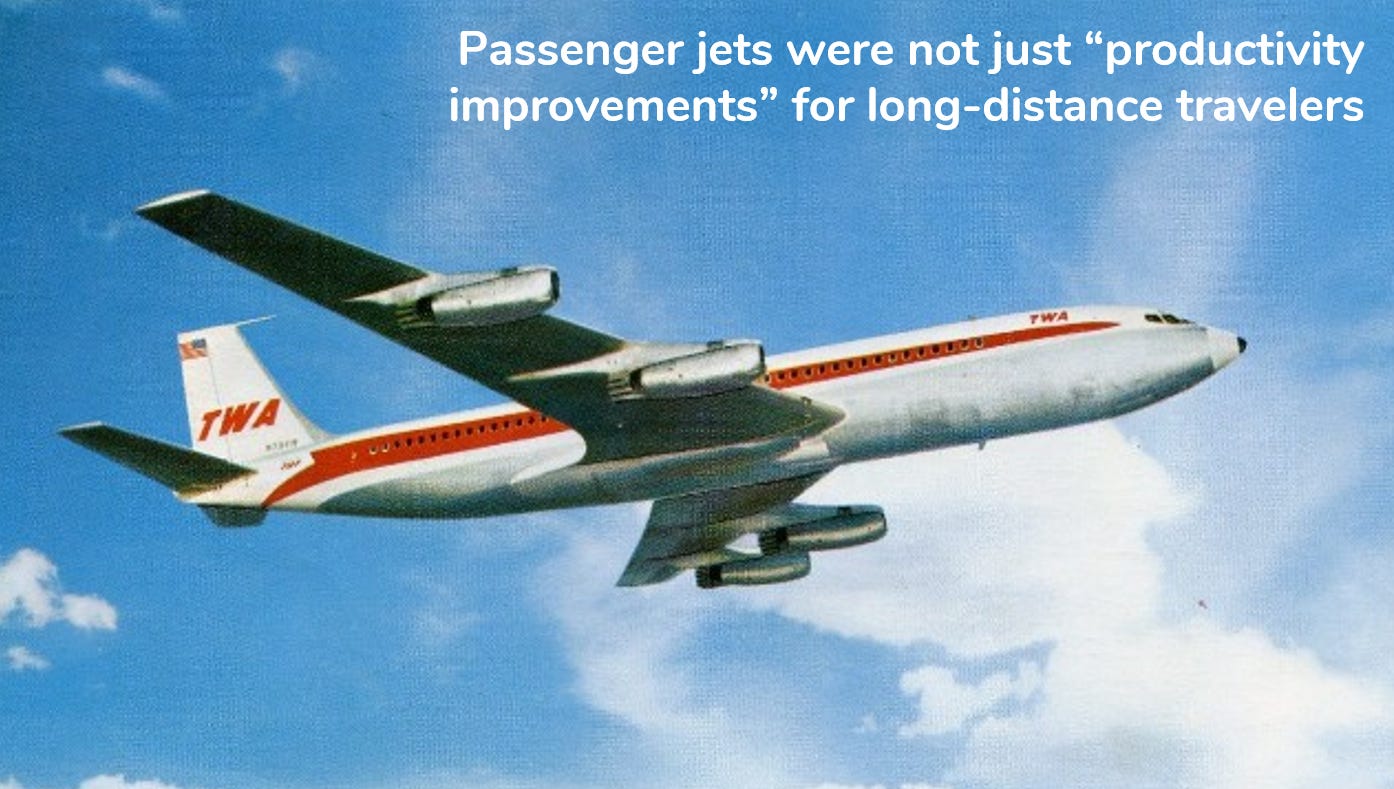
Passenger jets were not just “productivity improvements” for long-distance travelers.
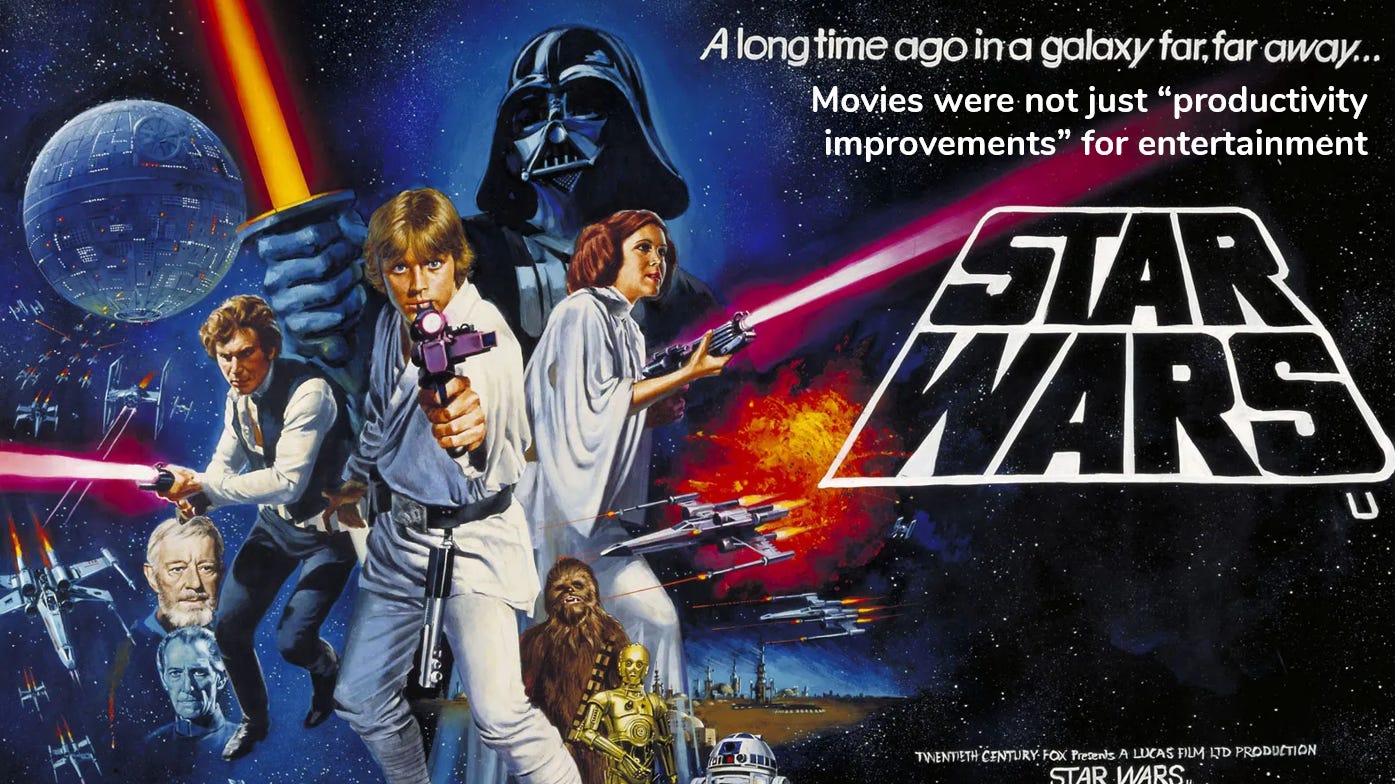
Movies were not just “productivity improvements” for entertainment.
I could go on and on, but for me the lesson from this period is simple. There’s a reason there were a lot fewer angry mobs storming around the countryside smashing machines during this second industrial revolution.
Lesson #3: The technology we love most is much more than just a “productivity improvement”. It’s technology that allows us to do things which were previously impossible. It’s technology that doesn’t need to be explained. It’s technology whose applications and benefits are self-evident — which doesn’t require a tedious search for “use cases”. (In case you’re missing the subtext: I’m talking about AI…)
This is, admittedly, a very high bar to clear. In fact, there’s a possibility that humanity might never experience this kind of industrial revolution again. As a civilization, we’ve already plucked a great deal of low-hanging fruit from the tree of technological discovery; and we’ve already satisfied essentially all of our basic needs (and then some) on Maslow’s famous hierarchy.
So maybe it’s declining marginal returns from here on out?
There’s no way to know. But AI is certainly not asking to be graded on a curve. If AI is really going to be the propellant of the next industrial revolution, I have high hopes that it can do a lot more for humanity than increase labor productivity. I hope it truly does what its most fervent boosters suggest that it can do: radically accelerate progress in medicine, materials, and beyond…
This one I experienced firsthand, as the revolution in communications and computing technology kicked off just about a decade before I was born, and has continued throughout my entire life.

As I noted, this “digital” revolution has been more of a mixed bag than the prior two. So far, digitization has led to a combination of productivity improvements and paradigm changes which were collectively much less impactful than the transition to machine production during the 19th century, or the scientific discoveries of the early 20th century.
However, we still need to pay close attention to the lessons from the digital revolution, because AI is its offspring.
So I want to begin by examining what I’d call the “spinning jenny” of digital technology — or the “spinning jenny” of data analysis — which was, in my opinion, the electronic spreadsheet.
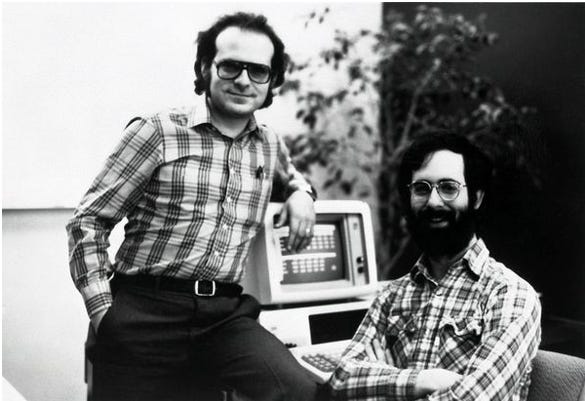
The electronic spreadsheet was first introduced in 1979 in the form of a software program called VisiCalc. Of course, today its most common manifestation is Microsoft Excel, which we all know and love.
Much like the original spinning jenny, electronic spreadsheets also prompted some hand-wringing about their potential impact on employment. (Hand-wringing, but thankfully no angry mobs I’m aware of.) That’s because, at the time, there were a fair number of people in professional roles who spent a lot of their time making spreadsheets by hand. I remember when I first learned how to use Excel, my dad recounted to me what a terrible pain this was. He worked in commercial real estate appraisal, which involved using spreadsheets for financial modeling. Whenever he made an error in any one ‘cell’, he needed to start over practically from scratch.
Indeed, following the introduction of the electronic spreadsheet, employment in jobs involving manual data entry and the grunt work of financial modeling began to decline almost immediately. Today there are roughly half as many people working in basic bookkeeping and accounting jobs as there were forty years ago.
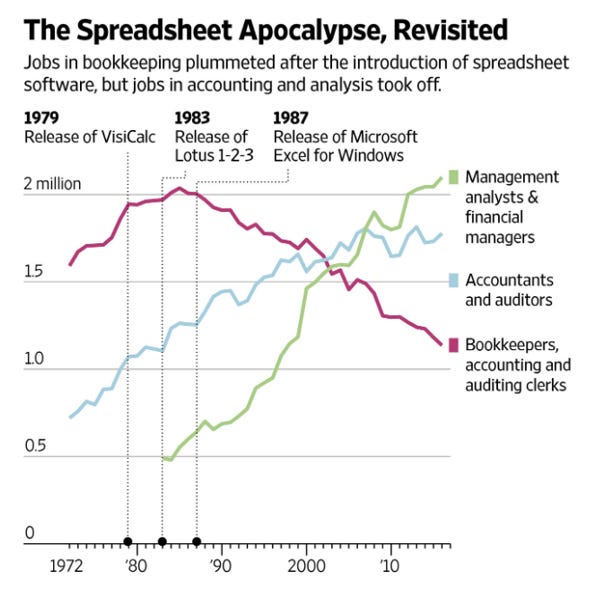
But I imagine most people in this room have been heavy excel users at some pont in their careers — and I’ll bet you have an intuitive sense that the electronic spreadsheet has enabled the rise of many more jobs than it automated away.
Why? I think it’s worth going back to economic fundamentals to answer this question.
In my view, there are two key variables which explain a lot about the impact of automation on employment and wage growth in any given industry. Each of these variables comes with a fairly simple question. But these questions tend to be very difficult to answer a priori.
The elasticity of demand (which I discussed in my introduction of Keynes). As the cost of producing something falls, how much more demand for that good or service is unleashed?
The complementarity of human labor. Even if you can automate a substantial share of the work involved in production, is there still significant value in having humans involved?
In the case of the electronic spreadsheet — “the spinning jenny of data analysis” — it turned out that demand for data analysis was unbelievably elastic. As the cost of making spreadsheets plummeted, we discovered thousands more ways to put spreadsheets to work in nearly every nook and cranny of the economy. Businesses that would have never considered paying for employees to build complex spreadsheets by hand started relying on spreadsheets for mundane tasks. People began building spreadsheets to manage their personal household budgets. A close friend of mine actually considered getting the Excel launch screen, pictured above, tattooed on his chest. (Hey Mike!)
What about the complementarity of human labor? Spreadsheets automate lots of basic calculation functions, but they don’t tell us the right way to architect any given model, or what assumptions to use. They don’t suggest what questions we should be trying to answer with a spreadsheet in the first place! So it turns out, humans are a spreadsheet’s best friend.
There’s another great illustration of these economic principles, which is the classic tale of the bank teller.
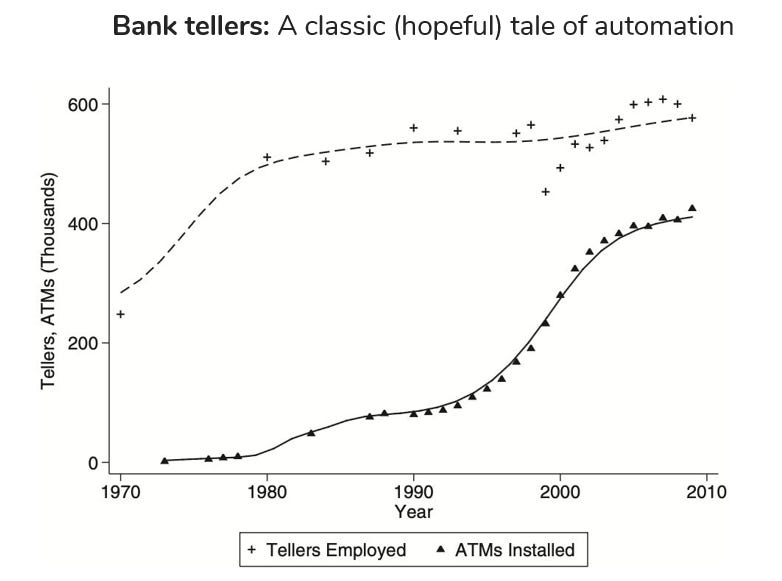
Around the same time as the electronic spreadsheet burst onto the scene, there was another labor-saving machine developed for a much narrower purpose: the “Automatic Teller Machine”, or “ATM”. In this case, the potential threat to employment is right there in the name. ATMs were designed to automate many of the basic money-changing tasks that bank tellers were performing at the time.
But over the next few decades, as ATMs became commonplace, bank teller employment remained robust. In fact, the number of tellers continued to rise. Why?
Yet again, the answers to this question are high elasticity of demand, and high complementarity of human labor.
As the ATM caused the cost of basic-money changing tasks to fall, banks found that they could afford to open more small, local branches outside of major cities and towns. And it turned out that there was a lot of pent up demand for these local branches, as bank customers were eager to pop into a bank and take out some cash while they were out doing other errands. And as they were taking out some money from the ATM, it also turned out that they might want to speak to a teller at the bank about a more complicated financial service — maybe a personal loan, or a business loan, or a new savings account… Maybe they wanted to drop a new document into their safety deposit box. All of these services made human labor highly complementary to the ATM.
But for bank tellers, I’m sorry to say there is a second act to this play. As David Oks pointed out in a brilliant essay (which gave me a lot of great ideas for this talk), “ATMs didn’t kill bank tellers, but mobile banking did”.
Mobile software — the pinnacle of the last industrial revolution — made a whole slew of additional financial services cheaper to offer and more convenient to access. So far, demand elasticity has held up — there continues to be growing demand for banking (along with much more exotic financial services…) which can be offered to us while we’re lounging in our living room. The trouble for bank tellers is, human labor is not very complementary with smartphone apps.
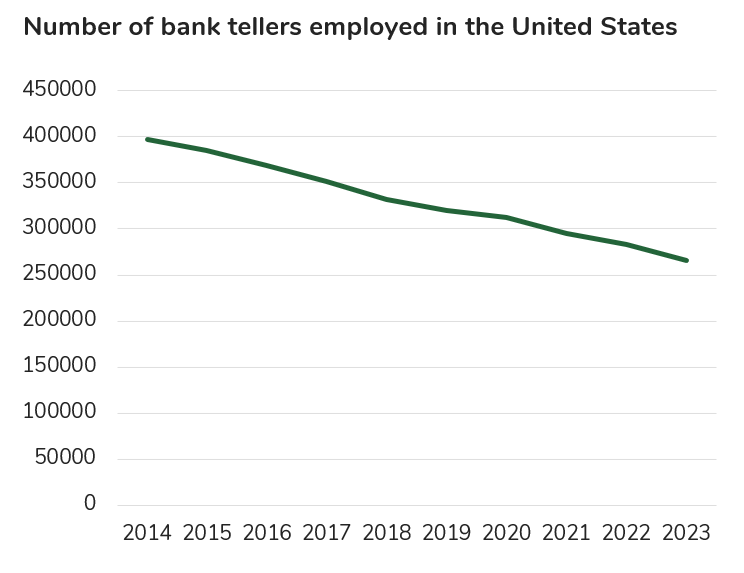
This brings me to Lesson #4: The most important question for employment is not “how much human labor can be automated”, but instead “how complementary is human labor to automation”.
Lastly, there’s one final point I want to make about the 3rd industrial revolution, which is the reason that it has not reached the same level of impact as the first two revolutions. So far, “digital” technology has consistently struggled to achieve escape velocity beyond the reach of computer screens. This means that the 3rd industrial revolution has been largely confined to “desktop jobs” and a handful of service sectors in which digital marketplaces could improve aggregate efficiency (e.g. Uber and Airbnb).
You can see this very clearly in data on “Total Factor Productivity” for various sectors of the US economy. While productivity has taken off in professional services, passenger transport (Uber), and accomodations (AirBnB), productivity has been pretty much flat in construction, manufacturing, and infrastructure. That includes the utility infrastructure that’s near and dear to so many people in this room.
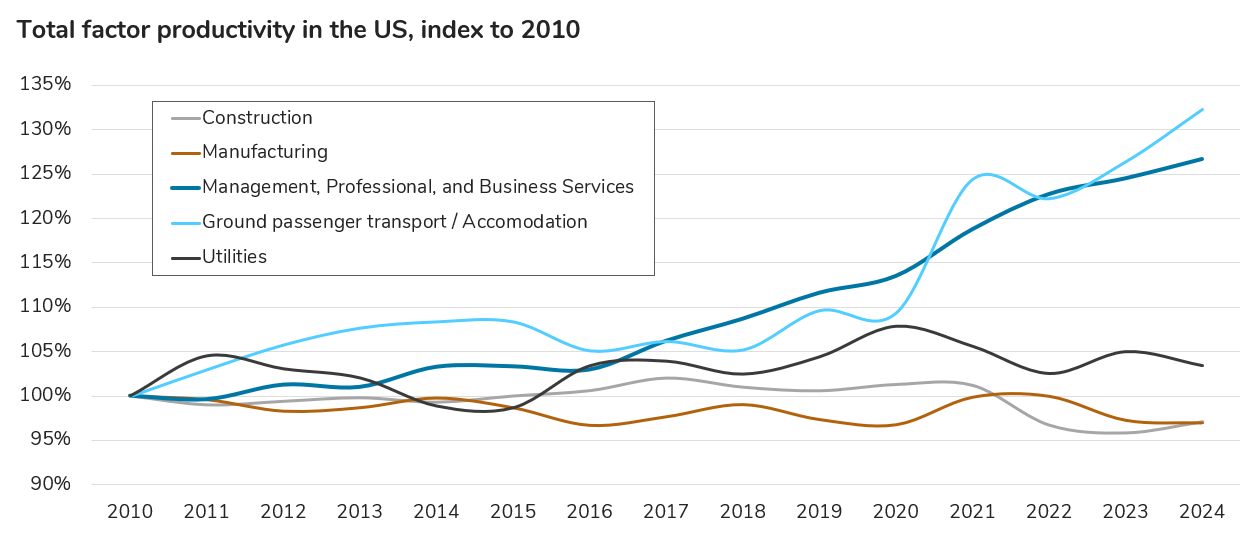
I should note that there’s one major exception to this historical trend — in my opinion, it’s an exception that proves the rule. It’s a tough, physical sector of the American economy in which “hard-tech” innovation unleashed incredible productivity over the past fifteen years: oil & gas production. The combination of horizontal drilling and hydraulic fracturing technology — aka “fracking” — led to the second greatest increase in productivity out of all sectors tracked by the US Bureau of Labor Statistics over the past fifteen years. (The greatest productivity increase, unsurprisingly, was in computer systems.)
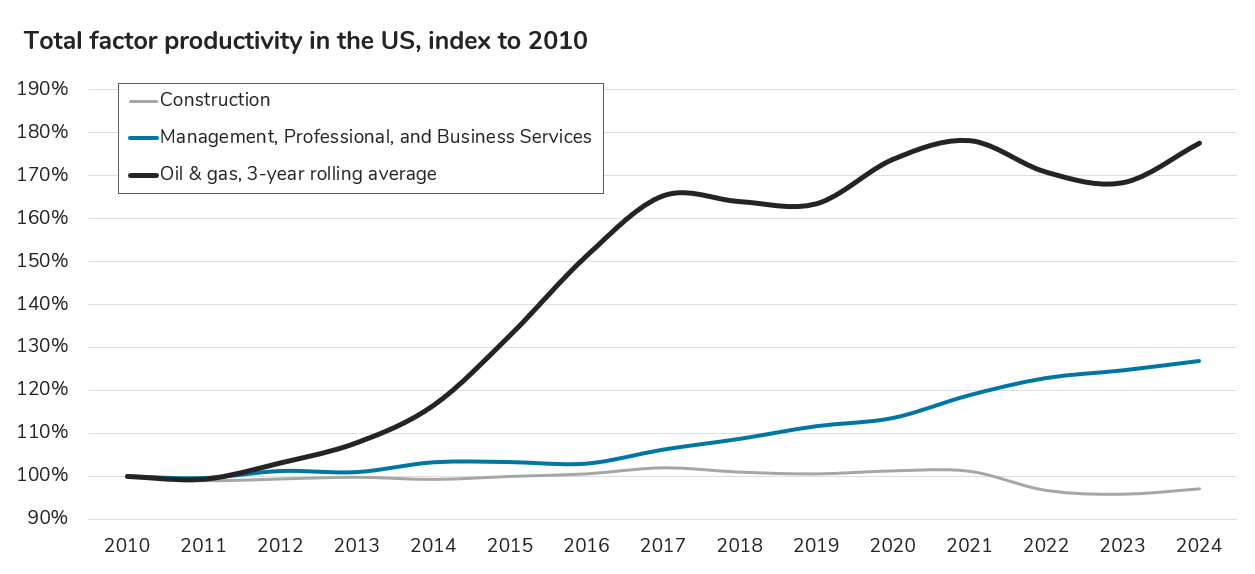
This leads me to Lesson #5: Transforming the physical world requires innovation in the physical world. It turns out that the more an industry is constrained by the stubborn, physical workings of electrons and molecules, the more difficult it is to disrupt with FLOPS alone. (See my prior piece “So you want to revolutionize the energy system”.)
In my opinion, the jury is still out on the question of whether AI ends up being an evolutionary stage in the development of digital technology — call it “industrial revolution 3-b” — or a distinct revolutionary force unto itself. But like most people, I’m leaning towards “next industrial revolution” at this point, for a few reasons.
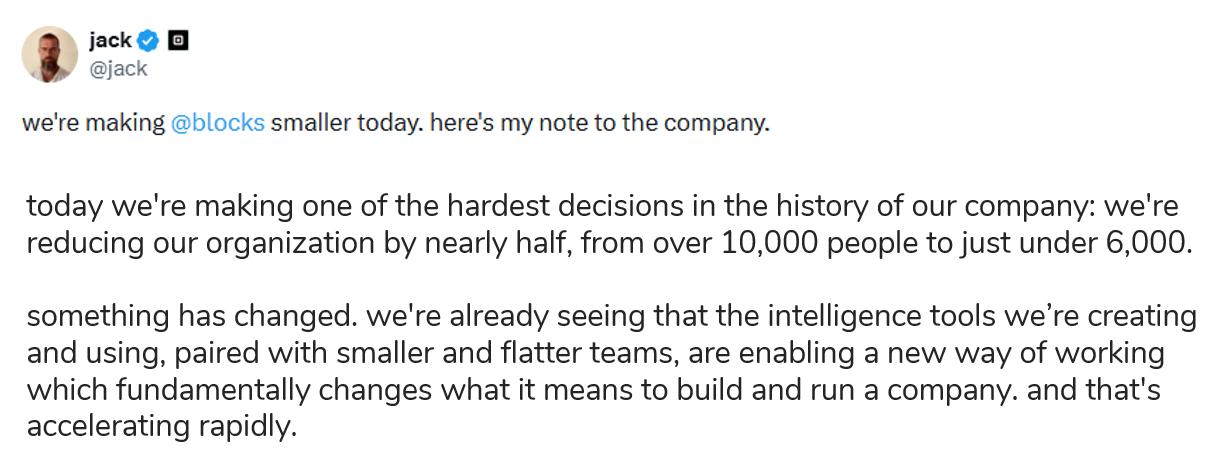
For starters, we’re already beginning to see a sharp increase in labor productivity for certain forms of “knowledge work”, with software development at the vanguard. There are plenty of anecdotes out there, like this recent announcement from Jack Dorsey laying off 40% of the employees at Block:
We’re also beginning to see evidence of AI’s growing impact in macroeconomic data. I recommend paying close attention to the “professional and business service” sector, which is probably the sector with the second-most exposure to automation from AI (following software development). I’ve been following two key indicators in this sector, economic output and employment, which have nearly always grown in tandem — except, that is, during recessions.
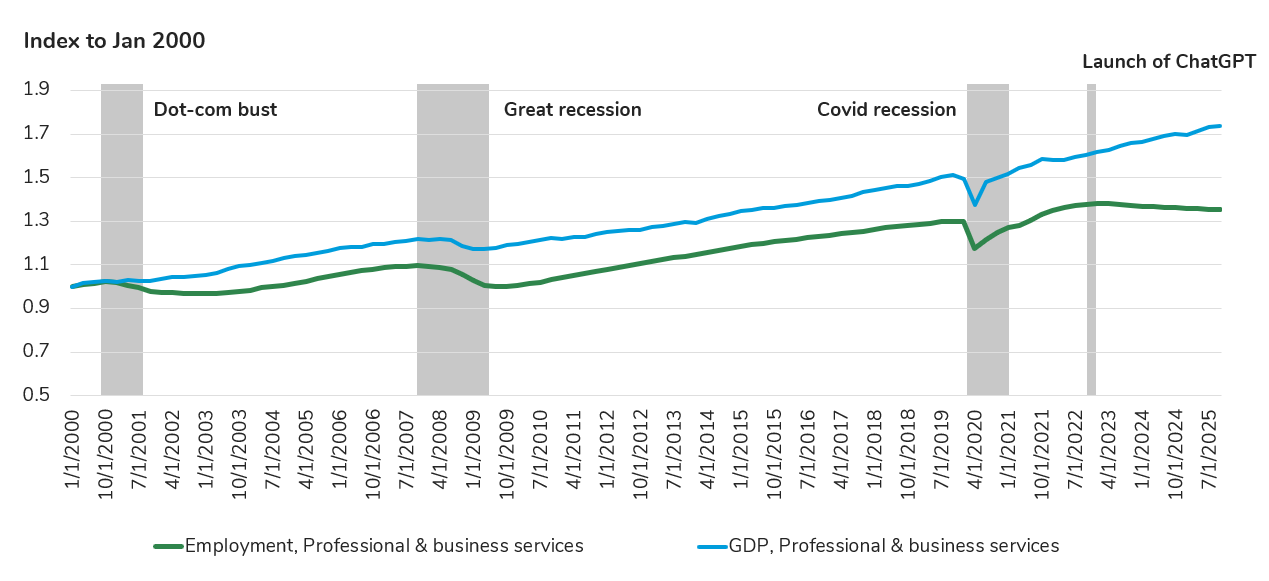
During each of the three big macroeconomic slumps of the past thirty years, these variables diverged; and in all three instances, economic output recovered faster than employment. It appears that economic downturns are an impetus for professional service businesses to discover that they can lay off a share of their professional staff, or slow their pace of hiring, and still generate the same amount of revenue.
But then, in November 2022, along came ChatGPT. Since then, for the first time in memory, the gap between these variables has grown during a period of economic expansion. Aggregate output from professional and business services is on the rise while employment is declining.
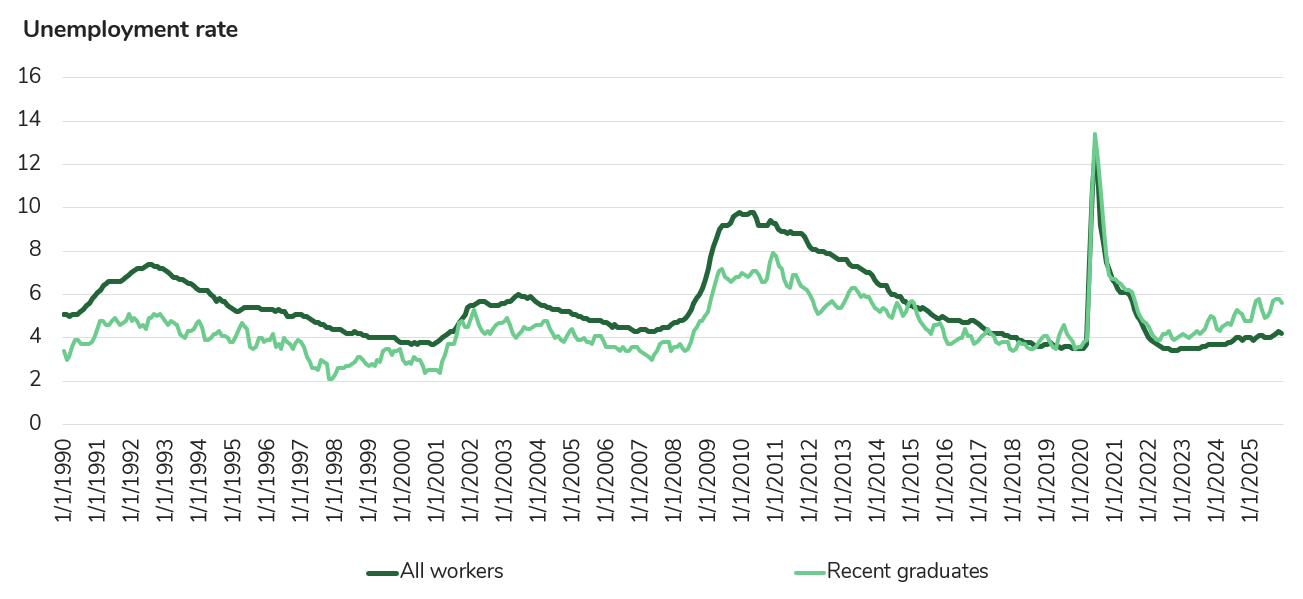
Speaking of which… the unemployment rate is clearly another indicator which might help illuminate AI’s impact on productivity. Specifically, I’ve been interested in the unemployment rate for recent college graduates, because the most junior employees in any organization are typically put to work performing the kinds of tasks at which AI already excels. For example: basic desktop research; note-taking; synthesizing information; and assembling first drafts.
As far back as anyone can remember, recent college graduates have always had a leg up over the average worker in the American economy — they’ve always had an easier time finding a job — that is, once again, until AI arrived on the scene. Since late 2022, these lines have flipped, and unemployment has been getting steadily worse for recent graduates relative to average workers.
Finally, I want to highlight one more way in which AI is poised to make a bigger economic splash than prior generations of “business productivity” software.
AI is already spilling over into the physical sectors of the economy which were mostly bypassed by the last industrial revolution. I’m seeing many of the same innovations which gave rise to large language models also being applied to the development of “Physical AI” — an emerging term which refers to AI embodied in physical systems capable of interacting with their environment. Unsurprisingly, this field is closely associated with robotics technology, which is one of the reasons I’ve developed such deep conviction that “the robots are coming”.
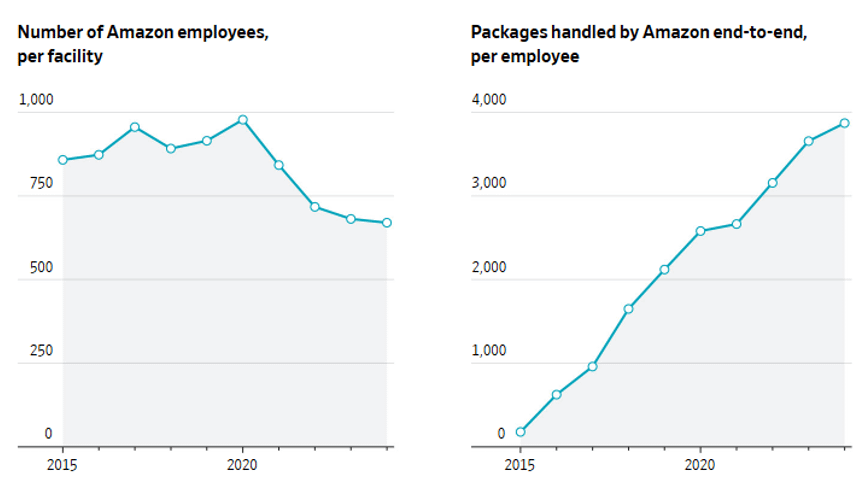
The best real-world example I’ve seen of this phenomenon so far is the robotics program at Amazon, which has been pushing the boundaries of “Physical AI” in its logistics centers since long before the launch of ChatGPT.
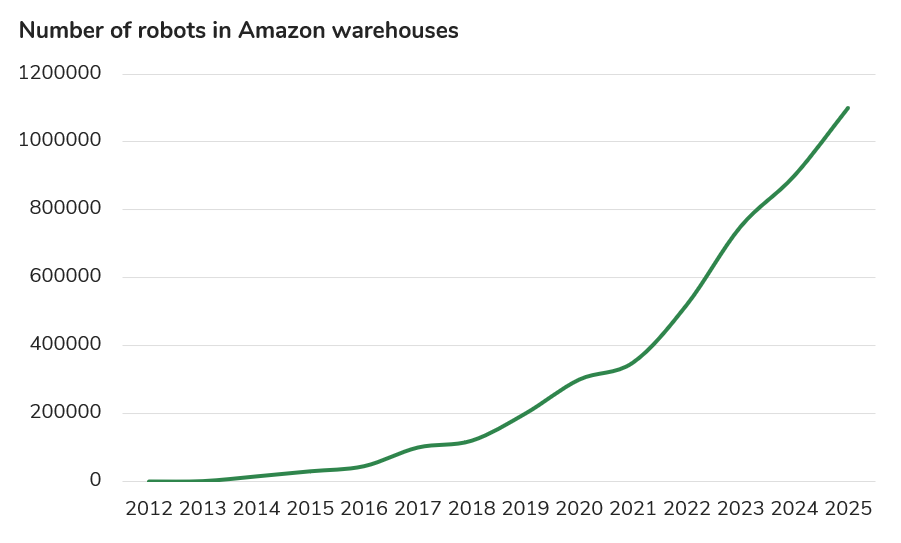
The results have been extraordinary. One data point that stands out to me is the number of packages handled per Amazon warehouse employee, which is essentially a measure of labor productivity. In just the past decade, this number has increased by roughly 40X. One Amazon worker today is moving the same number of goods as forty workers, just ten years ago.
I want to emphasize just how mind-boggling this kind of labor productivity improvement has become, in this day and age. This is more like the level of progress during the first industrial revolution.
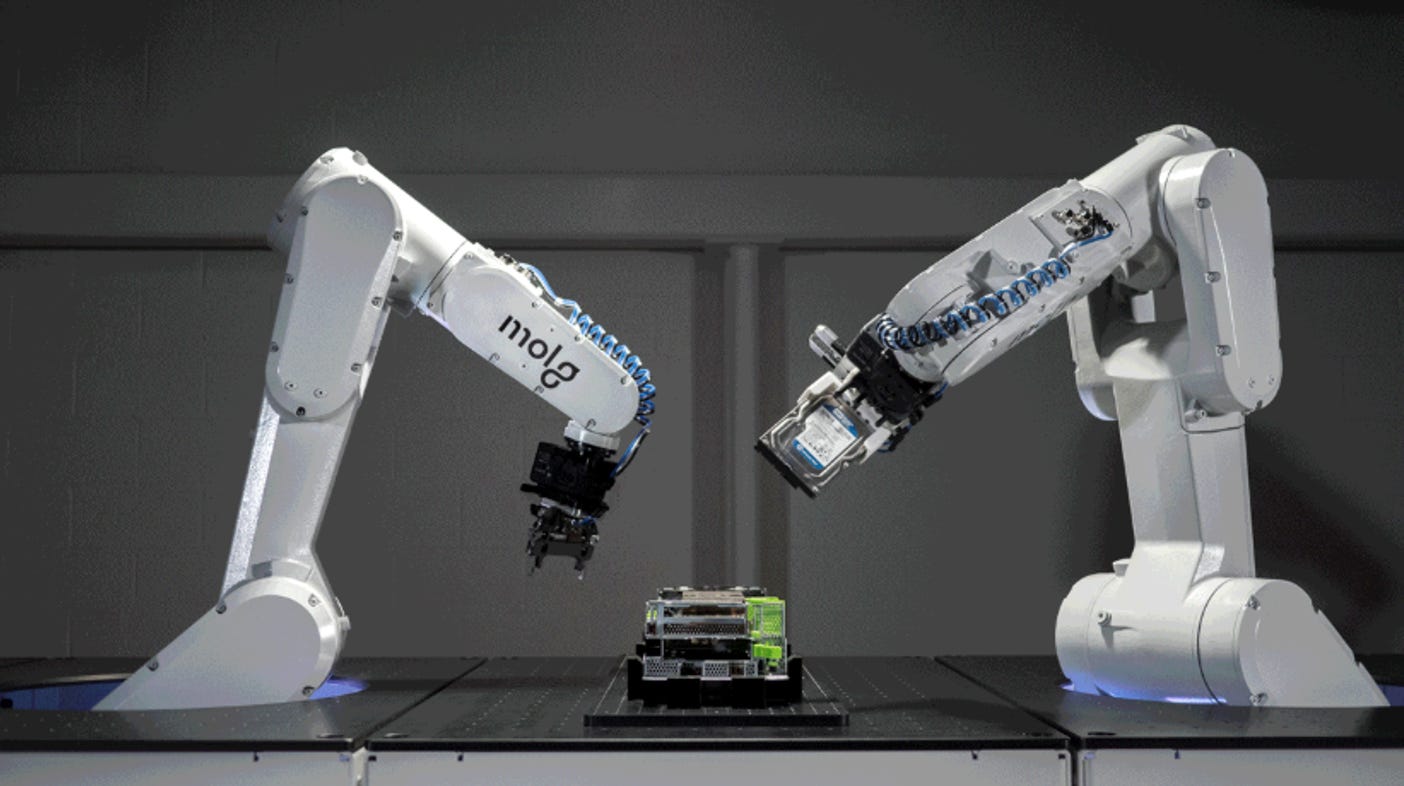
At Energy Impact Partners, this is a theme we’ve become increasingly excited about over the past few years, so I want to highlight just two of our recent investments at the intersection of AI and robotics.
MOLG is using robotics to disassemble end-of-life electronic equipment at data centers, in order to harvest valuable components and materials for re-use or recycling.
And Humble Robotics is developing a fully autonomous, electric semi-truck. This thing has been redesigned from a clean sheet of paper to be fully autonomous from the beginning. (For example, you’ll notice that there’s nowhere for a human driver to sit.)
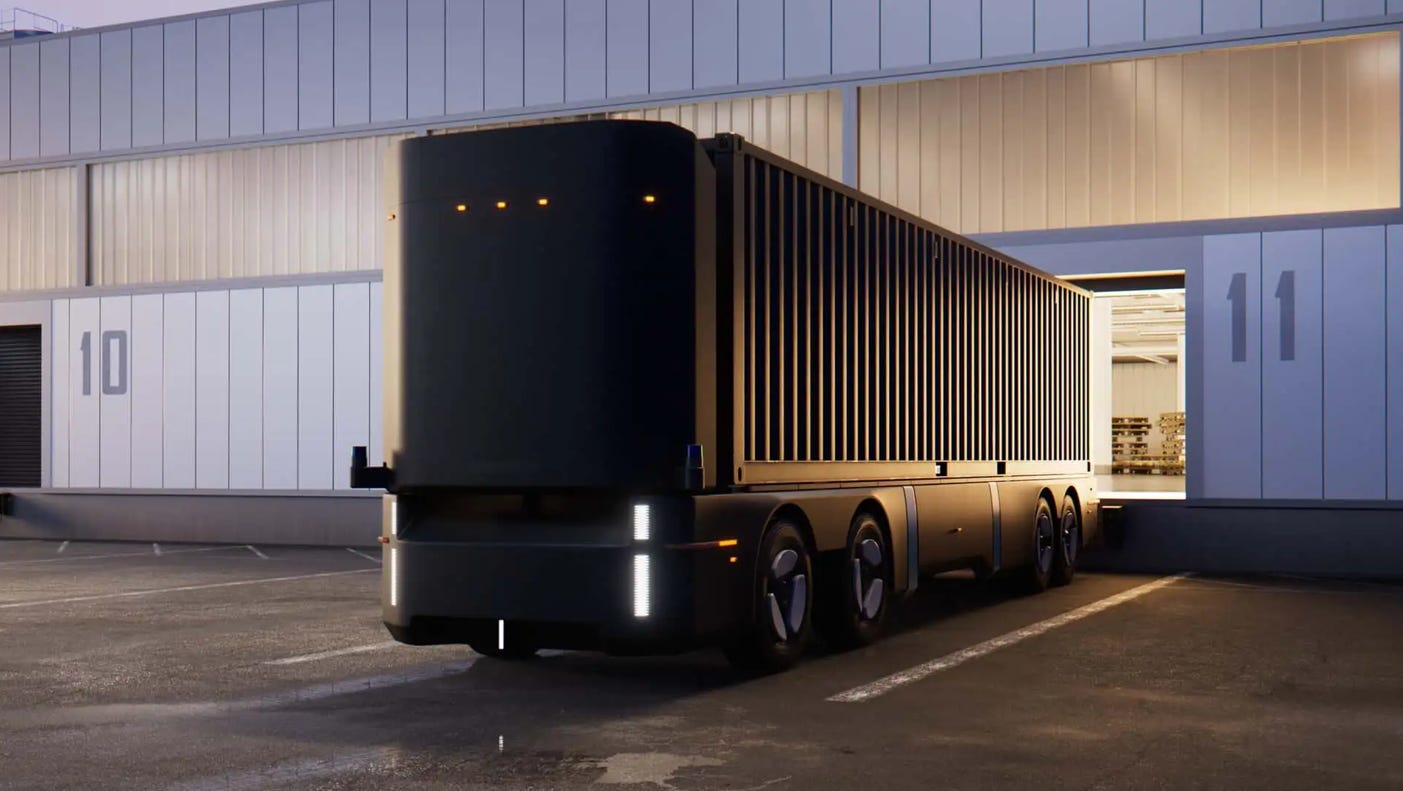
There are many reasons to be excited about this inflection point for “Physical AI”. However, we need to pay attention to the acute impacts that this kind of technology will probably have on society. For example: Driving various types of trucks has consistently been one of the top jobs for men without a college degree in America.1
So I hope all of the business leaders in the room are taking heed of the early lessons from that first industrial revolution: People naturally resist technology which appears to threaten their livelihood. Personally, I’m beginning to be worried that the adverse response to this next industrial revolution could be much more disruptive than the brief Luddite rebellion. In fact, we may already be seeing a form of this resistance in the aggressive pushback against data center development which seems to be accelerating across many parts of the US. (Hopefully we won’t see any angry mobs roaming around trying to break into data centers with hatchets.)
The fact is, many of us still have complicated feelings about AI. There’s a lot of variation in our personal opinions about this phenomenon — as anyone who has spoken with friends and family about AI can surely attest.
And according to data from Stanford’s most recent “AI Index Report”, there’s also a lot of variation from country to country. Some parts of the world are a lot more excited about AI than others, while some are much more nervous. I find it very interesting that the US, Canada, and most European countries are located in the top left quadrant of this chart, which means that on average, the people of those nations are more nervous than they are excited.
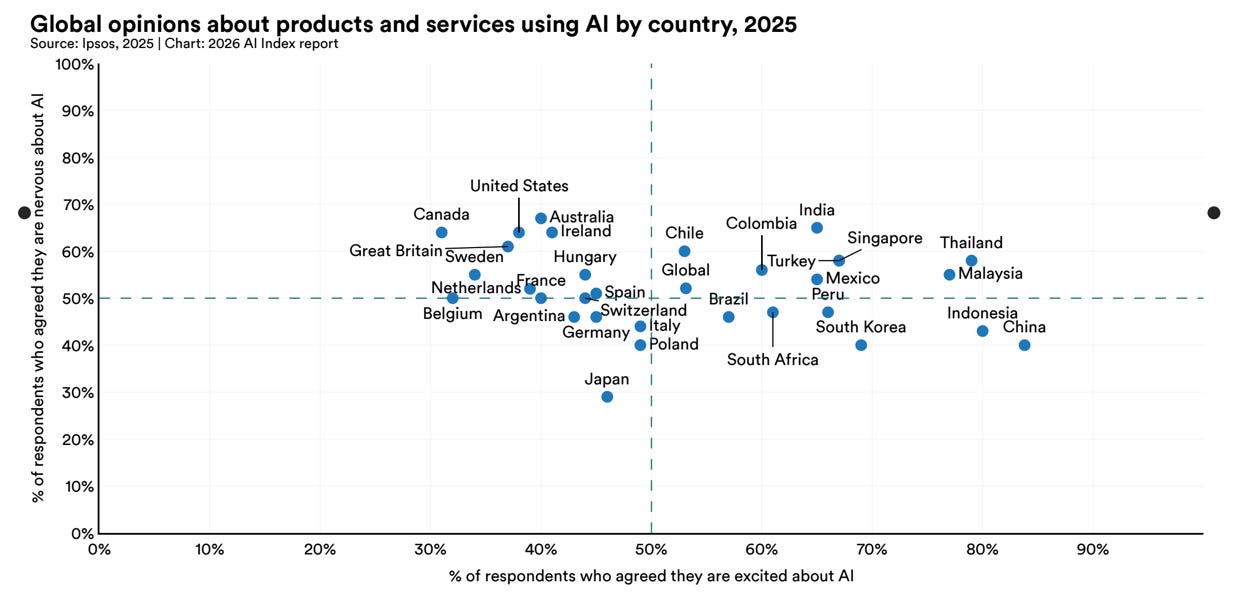
I’m not sure exactly what accounts for all this variation, but in my experience, the reason that so many people are nervous about AI is that there are still so many unanswered questions — so many unanswerable questions, really.
Ultimately, I keep coming back to the question I posed back at the beginning of this talk: Will AI be primarily a productivity boosting technology — enabling us to do more with less? Or will AI bring us entirely new capabilities which change the paradigm of our lives? Will it truly, as some people believe, allow us to make much more rapid progress towards curing cancer, or discover radical new materials which change the game for clean energy?
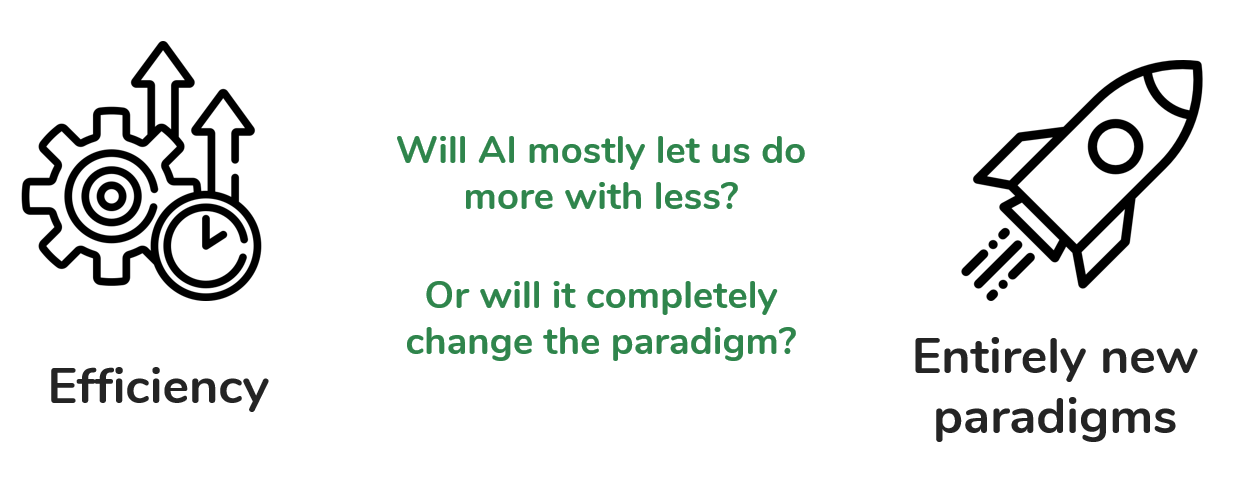
My own view is that this is the most important question, if AI is indeed going to lead us into the next industrial revolution.
There is one question we certainly can answer about AI’s impact on the economy. What is the “cotton” of this next industrial revolution? What secondary resource is benefiting the most from this enormous increase in the productivity of computing?
Why, it’s the electron, of course. (Hopefully the “clean electron”.)
Everyone knows that AI demands a lot more electricity, a lot faster. There’s still a lot of uncertainty about exactly how much more, but the consensus seems to be roughly 2-3X growth in data center power consumption by the end of this decade.
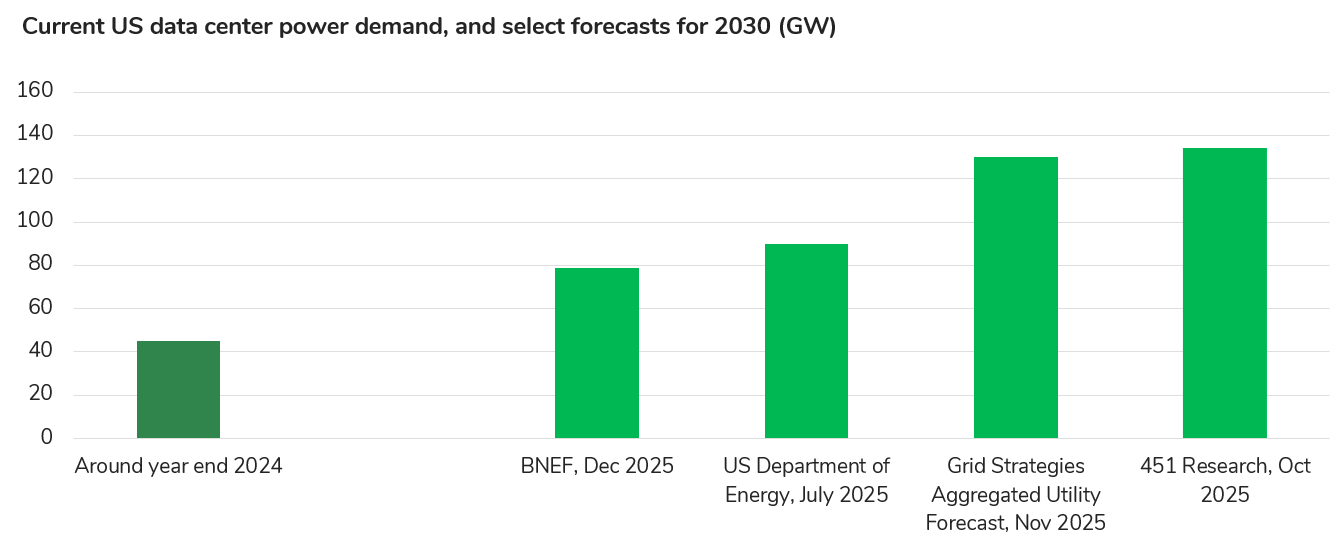
One of the reasons that there’s still so much uncertainty in the AI power demand curve is that there’s still so much uncertainty in the AI production process. For example, over the past ten years, we’ve seen tremendous efficiency gains in AI computing hardware — i.e. the flops per joule that leading AI chips can perform. (This translates pretty directly into tokens per joule.)
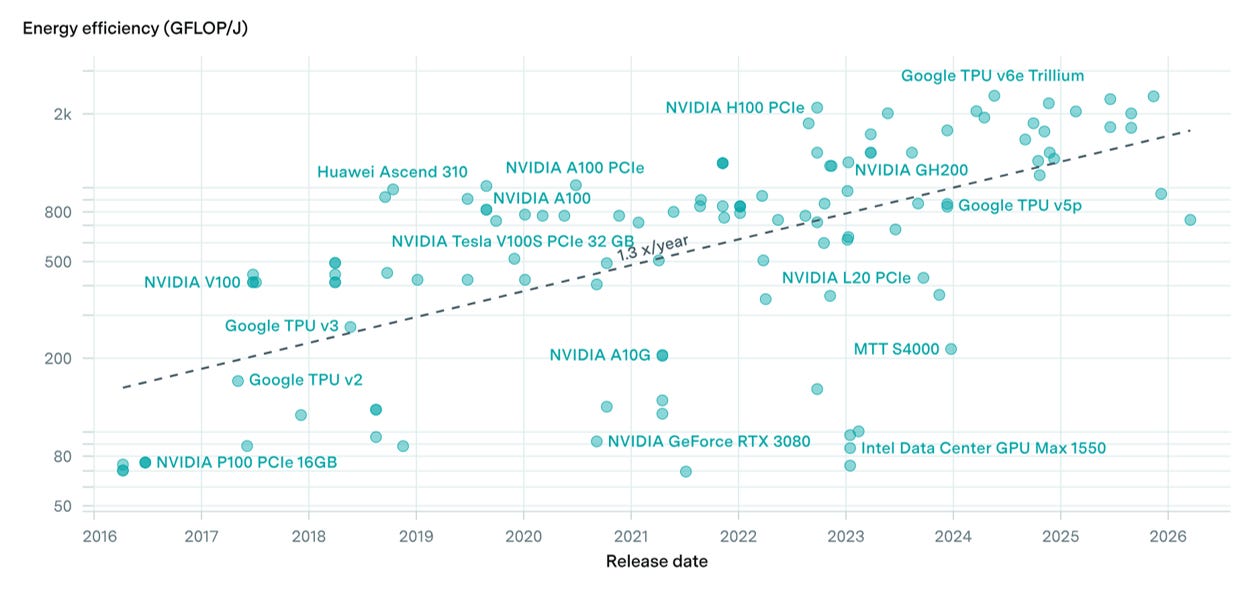
Yet if you focus on just the top performing chips (in this chart from Epoch AI), you can see that energy efficiency has mostly stalled out since around 2024. This makes it very difficult to project forward more than a year or two. It’s also very difficult to predict how much more efficient AI algorithms will become at turning flops into intelligence.
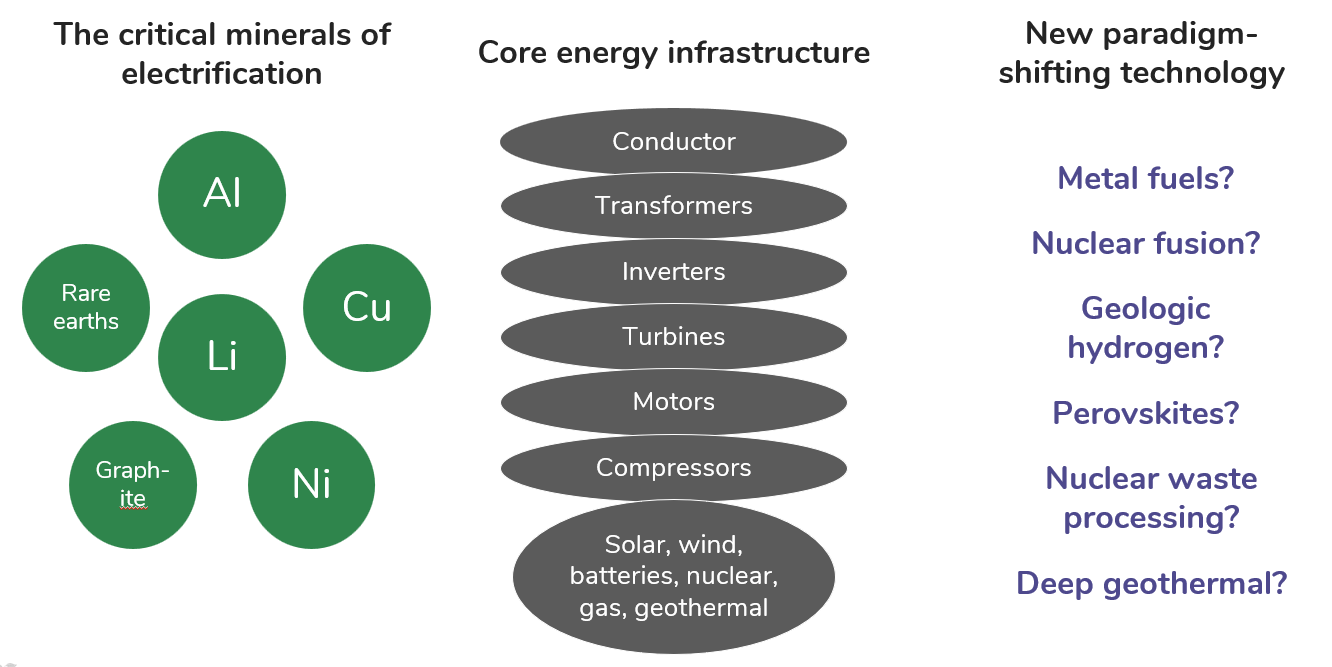
Regardless, we know there’s going to be a lot more demand for power, which means there are so many things we’ll need a lot more of — so many “cottons” of this fourth industrial revolution. We’ll need more of everything in the electric power supply chain, from critical minerals to mundane components. And I’m crossing my fingers that AI can accelerate us towards new paradigm-shifting technology in the energy sector, as well. We’re going to need it!
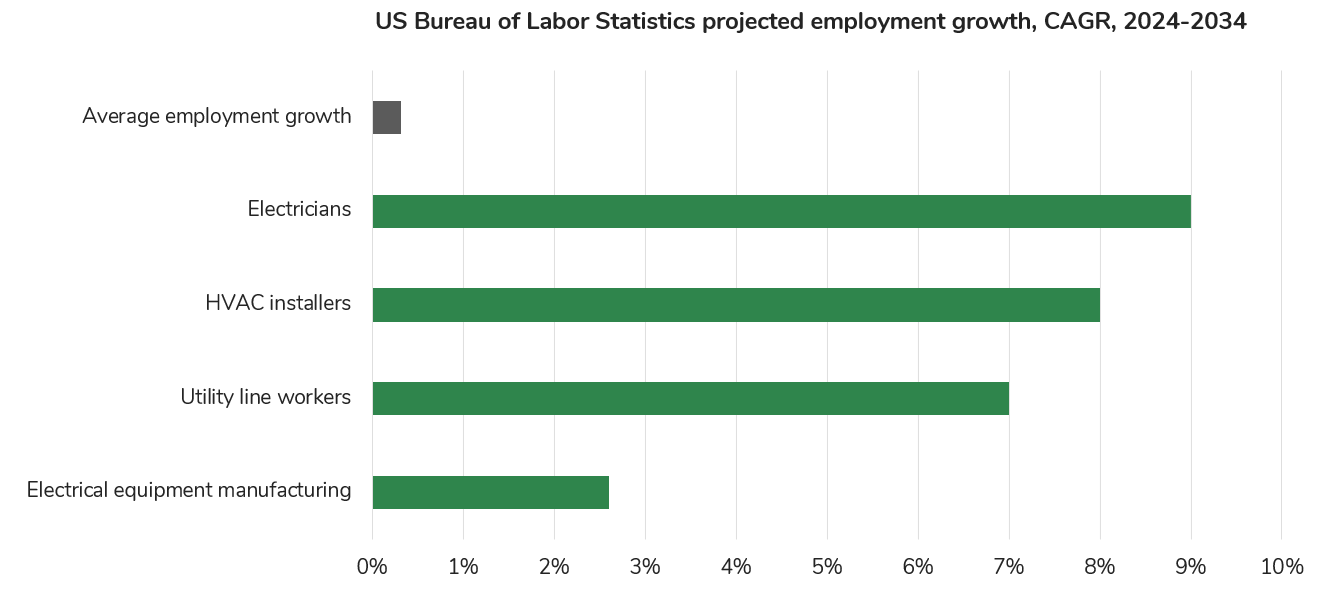
Lastly, we’re still going to need a lot of people — good old human hands & human brains — to engineer, manufacture, and deploy all of this new energy infrastructure. This is going to take a lot of people even in the most optimistic scenarios I’ve seen for the trajectory of AI. On average across the United States, the Bureau of Labor Statistics forecasts employment growing by about a third of a percent, on a compound annual basis, for the next decade — which is basically just keeping up with population growth. But for electricians, HVAC installers, and utility line workers, the BLS projects growth of 7-9% per year. That means approximately doubling the number of people in these jobs over a ten year period. Automation might take the edge off, but that’s still a lot of new jobs for humans.
I hope this talk has given you all a few new ways of thinking about the revolutionary period we’re living through. I’m sure I’ve left you with a lot more questions than answers. But I want to leave you with one more question, still. It’s the same question that Keynes was asking himself all the way back in 1931.
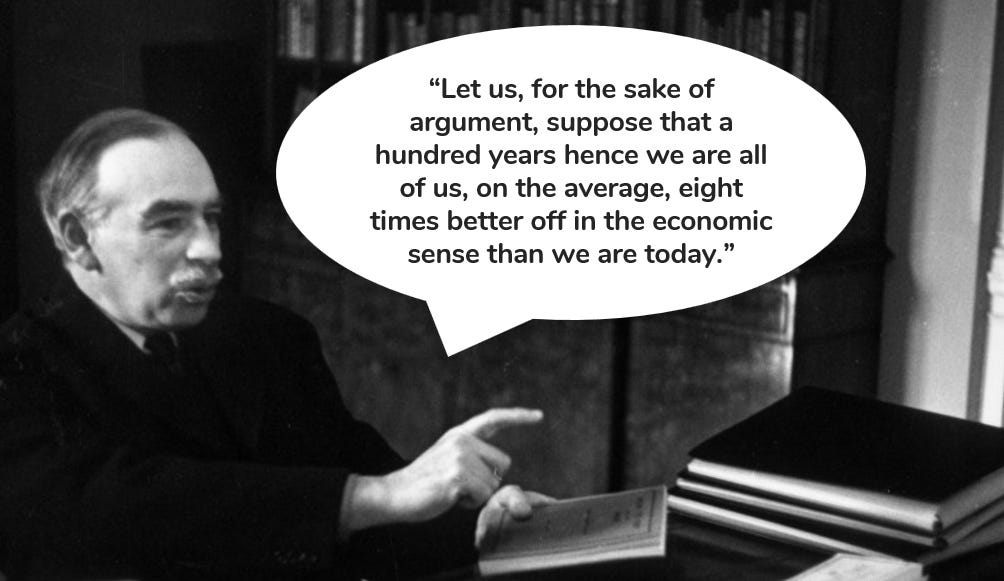
“Let us, for the sake of argument, suppose that a hundred years hence we are all of us, on the average, eight times better off in the economic sense than we are today.”
What if our children and grandchildren, a hundred years from now, have an average GDP per capita of over half a million dollars a year?
What will they do with their lives? How will they find purpose? Will they need to transition to three-hour shifts, or a fifteen-hour work week in order to “put off the problem for a great while”, as Keynes suggested?
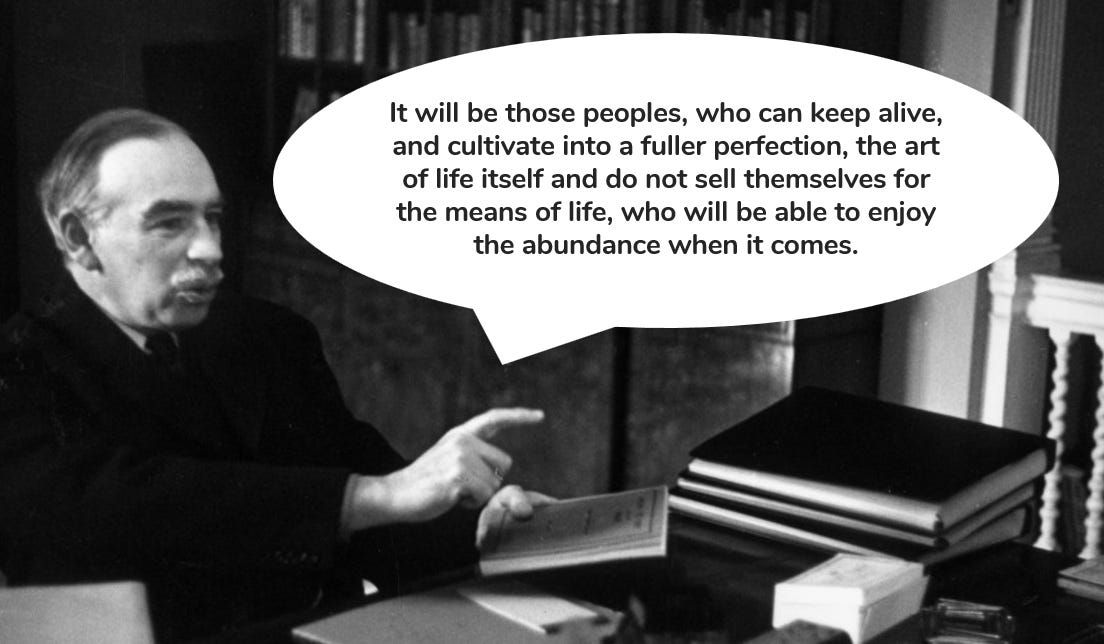
Keynes didn’t have the answer to this momentous question either, but he did have some wisdom I want to share. He said:
It will be those peoples, who can keep alive, and cultivate into a fuller perfection, the art of life itself and do not sell themselves for the means of life, who will be able to enjoy the abundance when it comes.
In fact, according to the US Census Bureau, “Driver/sales workers and truck drivers” is the #1 job for that demographic.
No posts
Comments
Nothing yet. Say the first thing.
Sign in to join the conversation.