

So many people, so many students, will ask me what I think about a particular stock, future, option etc. Every time, the answer is always, ‘it depends, what is your time horizon?’
Whether you are a short-term trader or a long-term investor, being true to your time horizon, being true to yourself matters. If you are a long-term investor, don’t let short-term noise around sentiment take you out of your investment. It will happen. Know it will happen, but know why you got in and what would get you out of the idea.
If you are a short-term trader, be true to yourself. I saw more people get fired because a trade became an investment. They went in for a short-term pop, and when it didn’t happen, backed up the truck and changed their horizon. I had drinks with another option market veteran, and he joked that when a volatility trade becomes a directional trade and then an investment, you know you are screwed. I know exactly what he means.
Whether you are a bull or a bear, whether a trader or an investor, to thy own self be true.
That is the long and the short of it.
The short-term trade
As I wrote last week, it is all about expectations - on the economy and on earnings.
The inflation data we received on CPI and PPI was objectively benign. The stories about the data that came out, showed confirmation bias everywhere you looked. Those that thought we would see sticky prices poked at the one-time nature of some of the drivers of the data. Those that see disinflation from AI, were more than happy to take credit for the data even though we didn’t see any evidence of disinflation from AI.
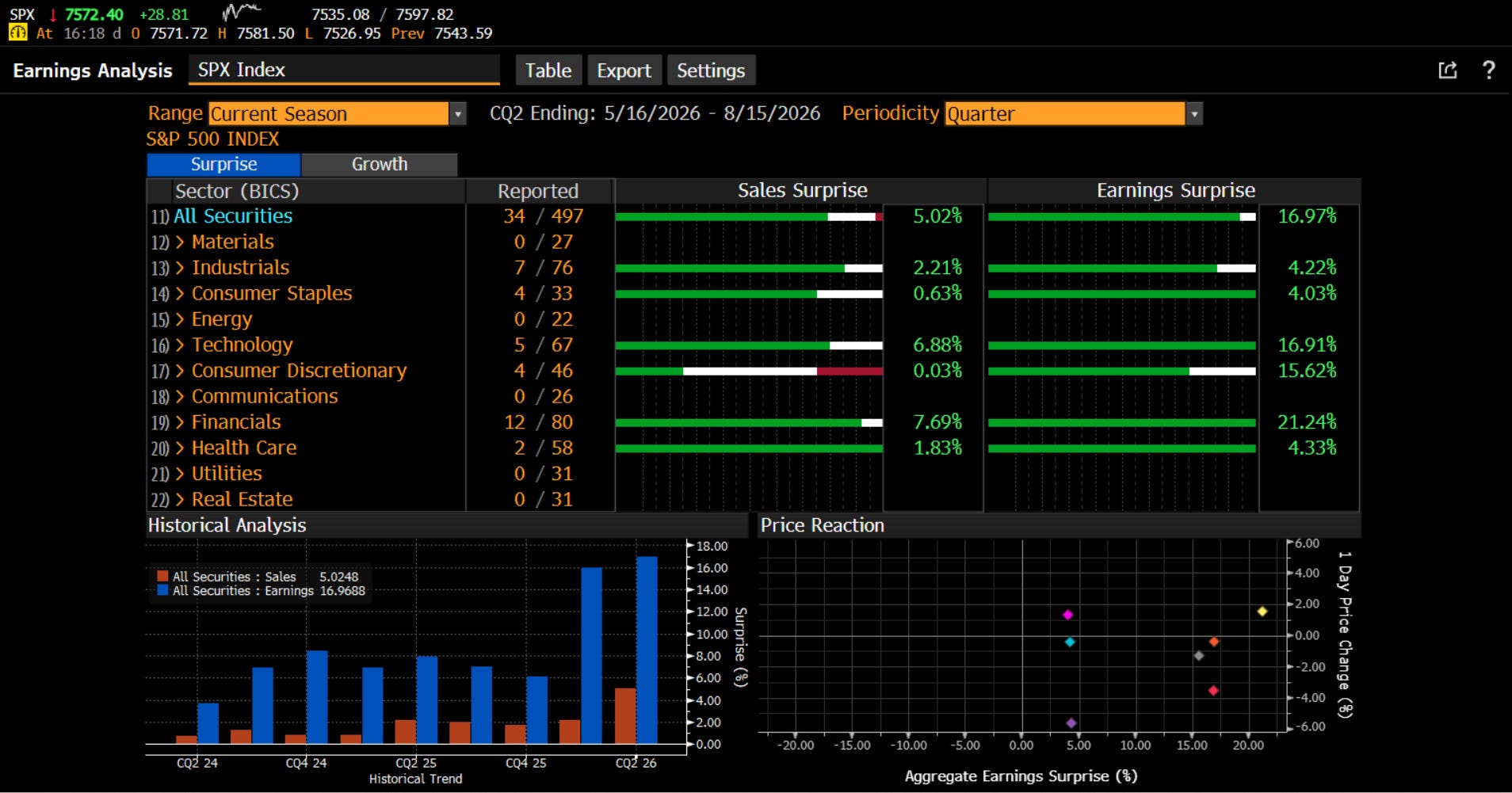
Earnings news so far, and it is very early, has been very good. Earnings surprises at the index level are better than last quarter, which was better than the previous 8 quarters. However, as I mentioned with the memory stocks, it is important to watch how the market responds to this good news.
With news coming out this week, I wrote the following on LinkedIn:
Chart of the Day - something's gotta give
Yesterday, watching the France vs. Spain match, it was a battle of two titans that arguably were the best in the World Cup so far. France, full of stars, with amazing scoring ability. Spain with some rising young stars and a defense that was on a historic pace
The match couldn't end with both stories still intact. Something had to give. In the end, Spain's defense won the day
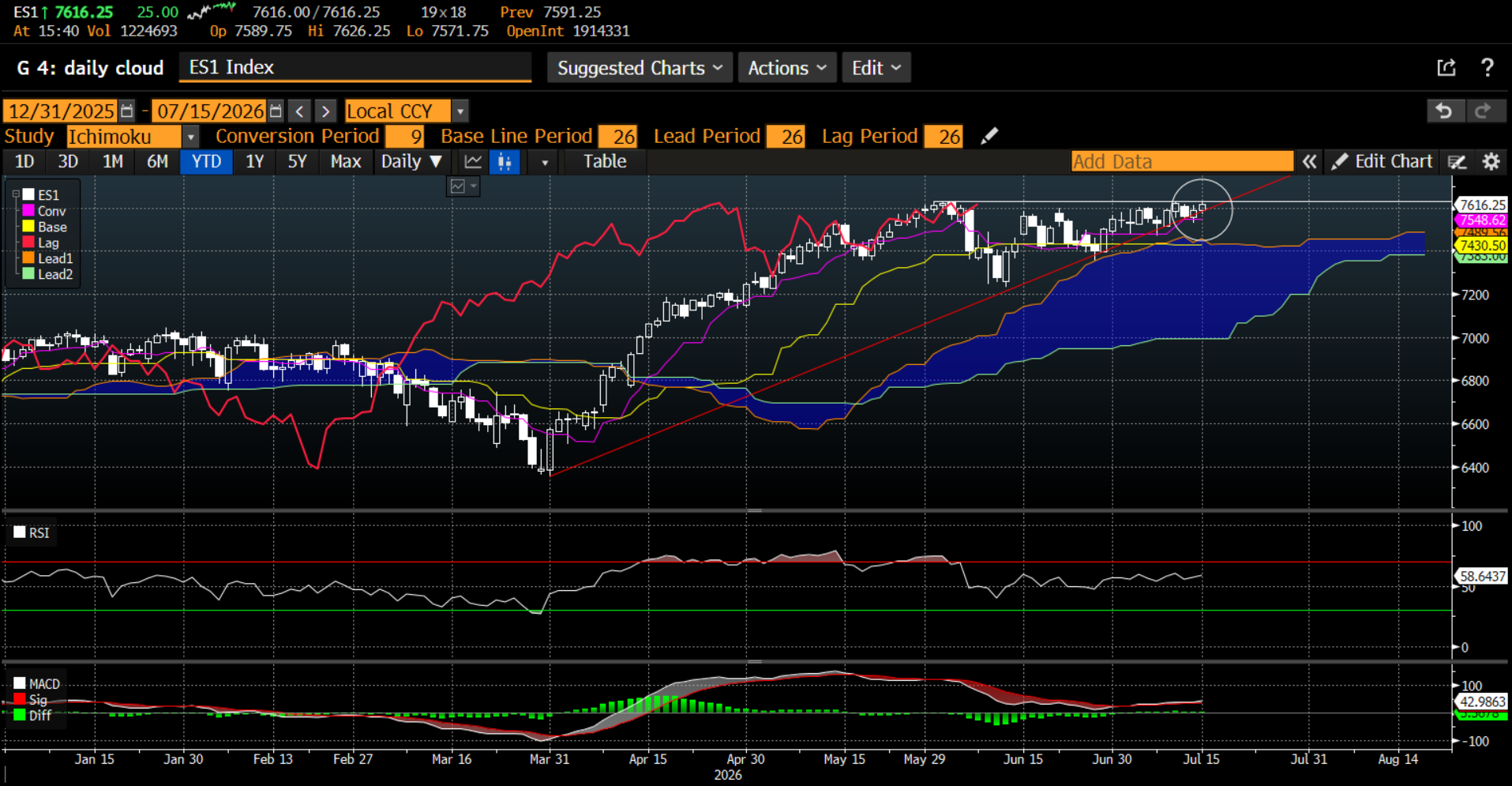
The same is true with S&P 500 futures. For the last 6 weeks, futures have been in a range. At times, those on offense feel good, citing AI demand and investor appetite and stocks move higher
Other times, those playing defense will cite valuations, a hawkish Fed or a slowing economy to suggest stocks need to move lower
You see this in the price action as there is an ascending triangle forming. There is resistance at the highs at 7645 that have been tested several times on optimistic days
There is a rising trendline, as the bearish days see the stocks fall less and less. They have largely tended to hold this trend line
We are at a point where we are at the confluence of those two lines. It won't take a big move in either direction to either break above resistance or break below the trend
Two things will be important. 1. Why are we having that move? Is it because of the Middle East conflict? Response to inflation numbers? Earnings (likely)? 2. What is the volume on that move? Right now, volume has been falling as we consolidate
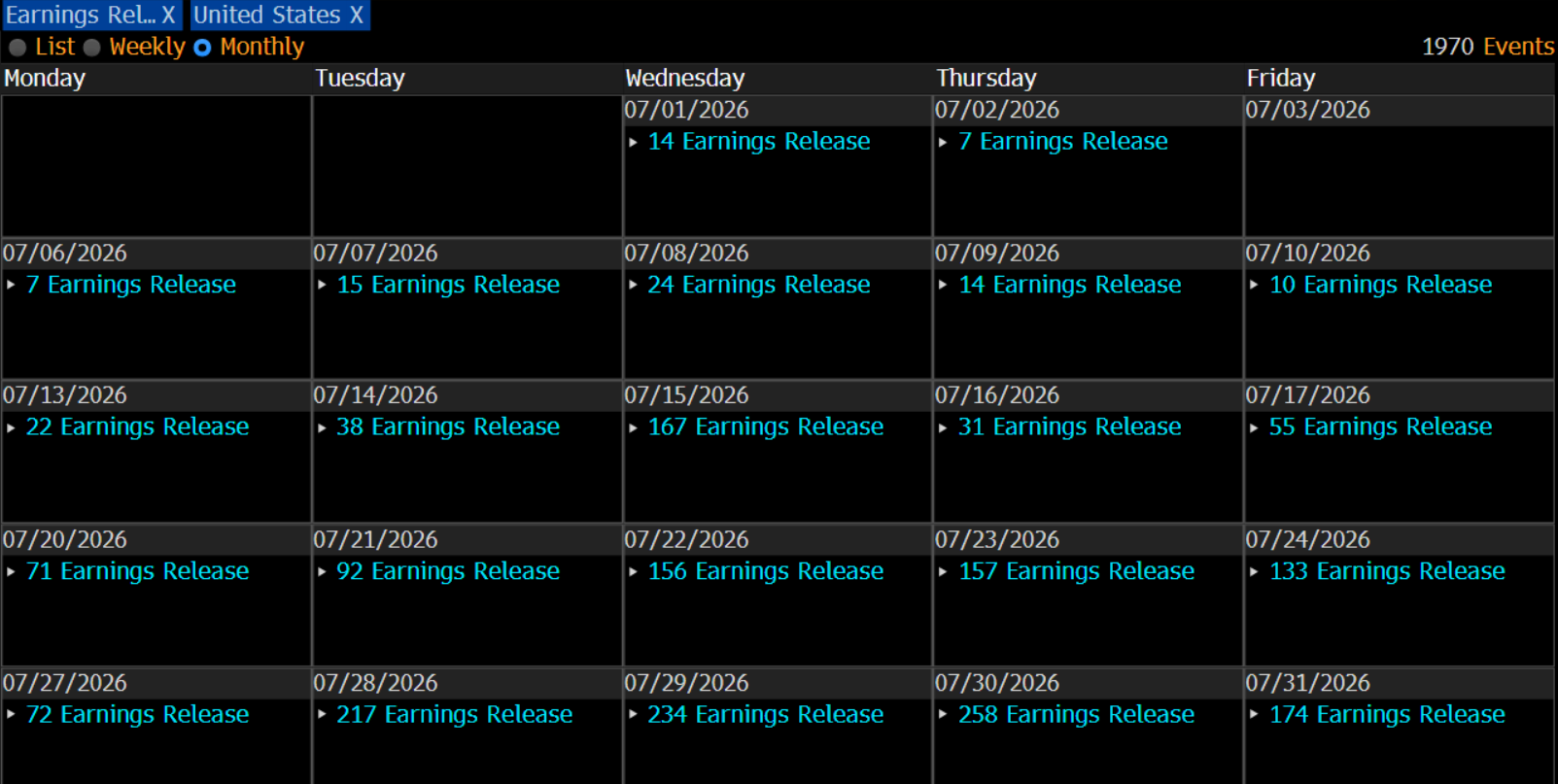
This week, so far, we have gotten better news on the economy (NFIB and CPI) and on earnings (Wall Street banks and ASML). Neither has been enough to see us establish a new trend. There is more economic data to come (PPI, retail sales, NAHB) and more earnings to come (250 companies from Wed-Fri this week)
By Friday, we will know in which direction of this pattern we have broken.
Somethings gotta give
So which way then?
Let’s say you do want to trade this market, which way is this likely to break? As you can see, we are going to move outside of this triangle by the end of the week.
My favorite short-term indicator is the put-call ratio, so I wrote about it on LinkedIn this week:
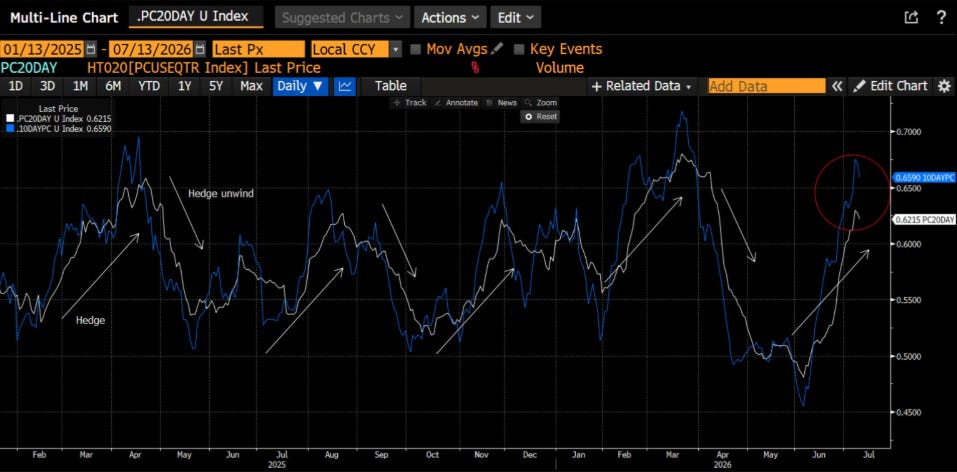
On Friday, I laid out the soliloquy going through many investors' minds as we start out earnings season this week with the big banks. To hedge or not to hedge? Today, I want to look at the Put-Call ratio from the Cboe to see what they are actually doing. This ratio is maybe my favorite short-term market guide because it looks at what options activity is occurring Since option premium can be a drag on returns, investors only do it when they are nervous. As soon as they feel the all-clear is about to be sounded, they will unwind or take-off the hedges, whether in the money or not To smooth out the flow, I take a 1-month (20 trading days) moving average. If you were to overlay the market returns, you would see the opposite lines - as hedging activity rises, the market moves south. As hedges are unwound, the market moves higher Notice the hedging periods correspond with the quarterly earnings cycle, and the demand is higher when there is also geopolitical noise like tariffs or Middle East conflicts The starkest example of this was the option flow dominated market-action at the end of March/early April. These big trades marked the market low and took us back to new highs What we see here is that hedging activity has been strong in June ahead of Micron earnings and some IPO issuance. Very recently, you can see in the circled areas, the hedges look like they may be starting to be unwound Are investors feeling the worst is over, in spite of the big fall in memory stocks in the US and Korea? Is the momentum factor selling coming to a close? Do investors feel as if earnings will prove to validate the moves we have seen in stocks? That certainly seems to be the case with Taiwan Semiconductor, whose earnings last night certainly signal the AI spending is continuing apace If these hedge unwinds continue as we go through the early days of earnings this week, that will help the market gain much-needed footing for a push to new all-time highs Don't listen to what the talking heads or investors are saying on TV or on The early tell is that people may be setting up for a rally to come on the back of earnings season
I also show a faster moving 10-day moving average which is noisier but gives an earlier read. You can see this regular cadence of demand for put option hedges driving the ratio higher, and then those hedges being unwound
Don’t lose sight of the big picture
Most people are investors, however, even if they like to dabble in short-term trading. Even though my career was in trading, I find it harder and harder to commit to the 8+ hours really needed in front of the screen to be an effective trader. Swing trading, sure. However, real short-term trading with 0 DTE options or futures products? You need to stare at the screens. If this is you, stop reading here. If this is not you, read on.
What matters in the long-term for investors? I wrote about that on LinkedIn following a DM discussion with a former colleague and active Stay Vigilant follower (hat top MC).
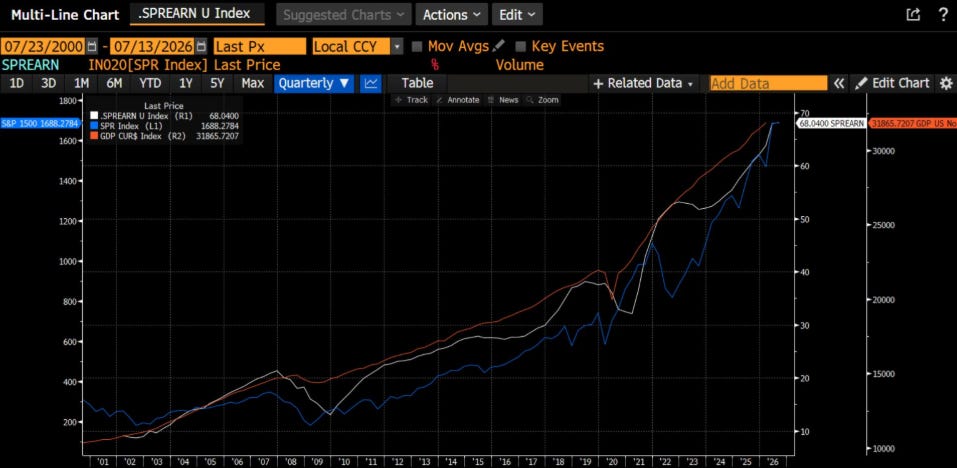
TL;DR - earnings drive stock prices Sure, P/E matters but it doesn't matter as much as most people think. How many times has someone told you the market is going to crash because the Shiller CAPE (Cyclically-adjusted P/E) is at a record high? Maybe instead, you have seen the record in the Buffet Ratio (Total market cap to GDP)? Of course, none of these valuation arguments ever take into account the differences in index composition nor the differences in demographics, interest rates or just about anything else compared to the 'other bubbles' they reference You see, the market anticipates earnings in the short-term. This moves P/E. Ultimately, a stock either grows into earnings or doesn't, and when it doesn't it is because the expectations got too high Valuation measures are investor sentiment Statistically, valuation (namely P/E) has no statistical significance (zero) with short-term (12 months or less) stock performance. Expensive stocks can go higher and cheap stocks can get cheaper This doesn't mean fundamental analysis doesn't matter, but good fundamental analysis is about far more than valuation. It is about the direction of revenues, margins, earnings and EBITDA over time. It is about earnings revisions relative to expectations The chart today is of the S&P 1500 total stock market since 2000. I have the index price, the index earnings and GDP on here You see, while earnings drive stocks in the long-run, the economy drives earnings. Of course GDP lags which is why we approximate it with surveys like ISM etc. However, you can see that having a view on the economy, which will drive earnings (and knowing what sectors have the highest beta to the economy matters) which will drive stocks 75% of a stock's performance will come from these 'macro' factors'. However, we tend to hear so much more discussion about valuation Unless you are trying to day-trade and make money from the changes in investor sentiment, a focus on the economy and earnings should be what matters for your investing Keep that in mind as you see stocks moving around earnings which are beginning in earnest this week
So, what is the long and the short of it?
There are still those that want to talk about geopolitics as driving the market. For one, that is almost never the case when we are in the middle of the earnings season. However, even before the earnings season, I don’t think it mattered anymore other than to those who have a bad case of TDS and always want to focus on his missteps. I acknowledge entering a war in the Middle East does not seem like a good idea. I acknowledge it is not going according to plan (though those that suggest that Iran is playing the US for a fool should check the facts too). I acknowledge US voters do not like a loser and we see in the Trump approval ratings, voters are not happy with the war or the outcome of it so far.
It just doesn’t matter anymore. As I commented on another’s post, it is a case of diminishing marginal concerns. We see this with all geopolitical events. If they continue on apace, the market loses interest. They have to ratchet to a new level for the market to care again. Case in point is Russia/Ukraine. That was HUGE news when it started. Now? It almost never comes up (unless you are a wheat trader this week).
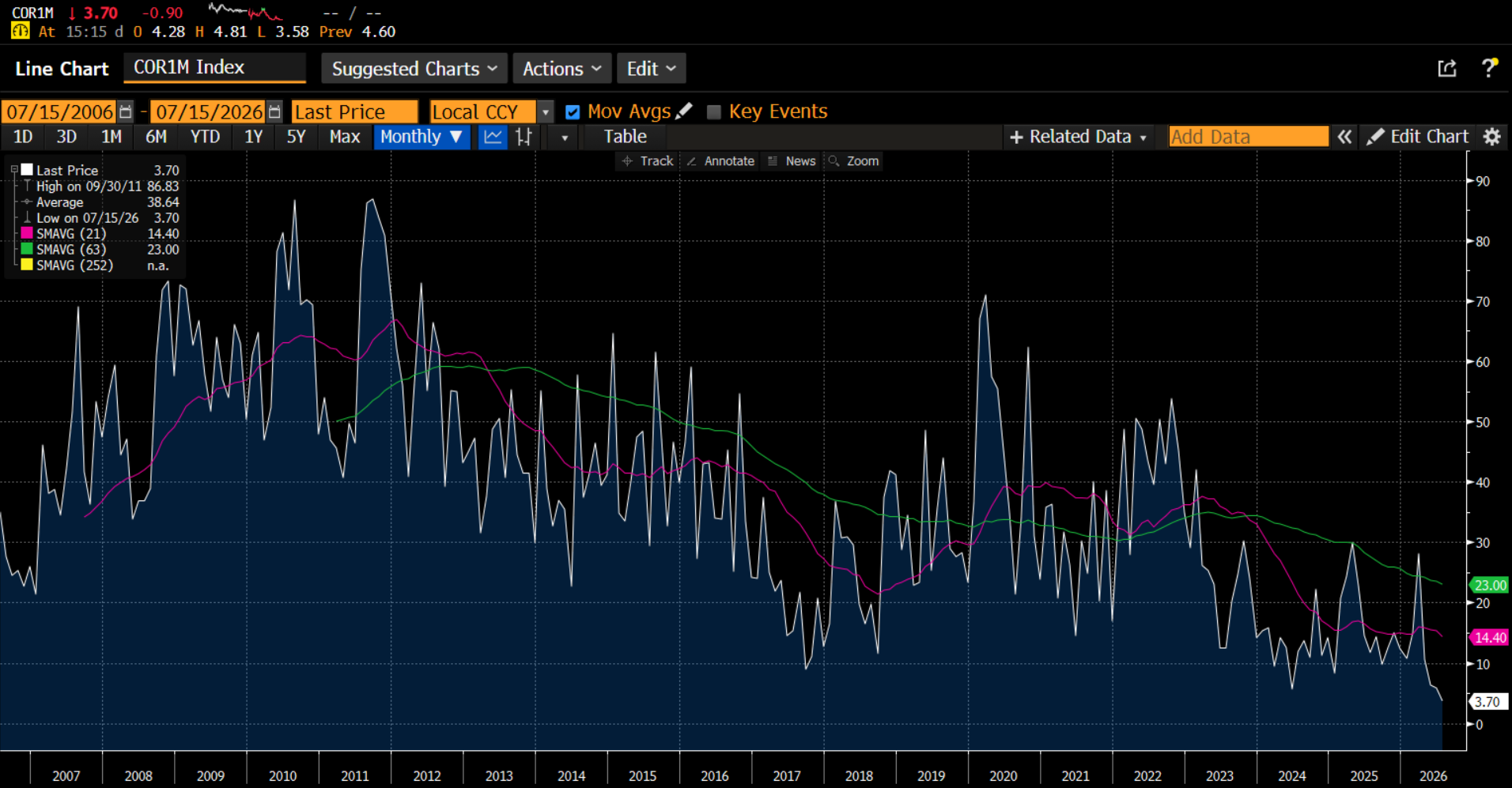
Is this just my view? No. The market is telling us it doesn’t care. How do I know? Look at the 1-month implied correlation in the options market. This measure tells us how much stocks are moving together as one, as a market versus how much it is about idiosyncratic stories. We see spikes around macro events like GFC, Covid, Ukraine, Liberation Day and Iran. The spikes are lower and lower. Now, the latest reading is the lowest in the history of the data. It isn’t just the US either. It looks the same in Europe. Macro stories get a lot of press, but the market just doesn’t care. If you think it should care more, get long this index. You will never see better reward to risk in your career. Just buy S&P 500 options and sell single stock options (top 10 companies) against it on a vega neutral basis.
I think the market cares about earnings, even in the short-term. It cares if the idiosyncratic stories are still intact.
Fundamental - NFIB and Empire Manufacturing data tell us growth is fine; CPI and PPI data tell us inflation may be improving. If nothing else, this all suggests the FOMC is likely on hold.
Earnings data have been exceptional. It is less than 10% of names that will report, so we are a long way from determining the trend. The early results are positive.
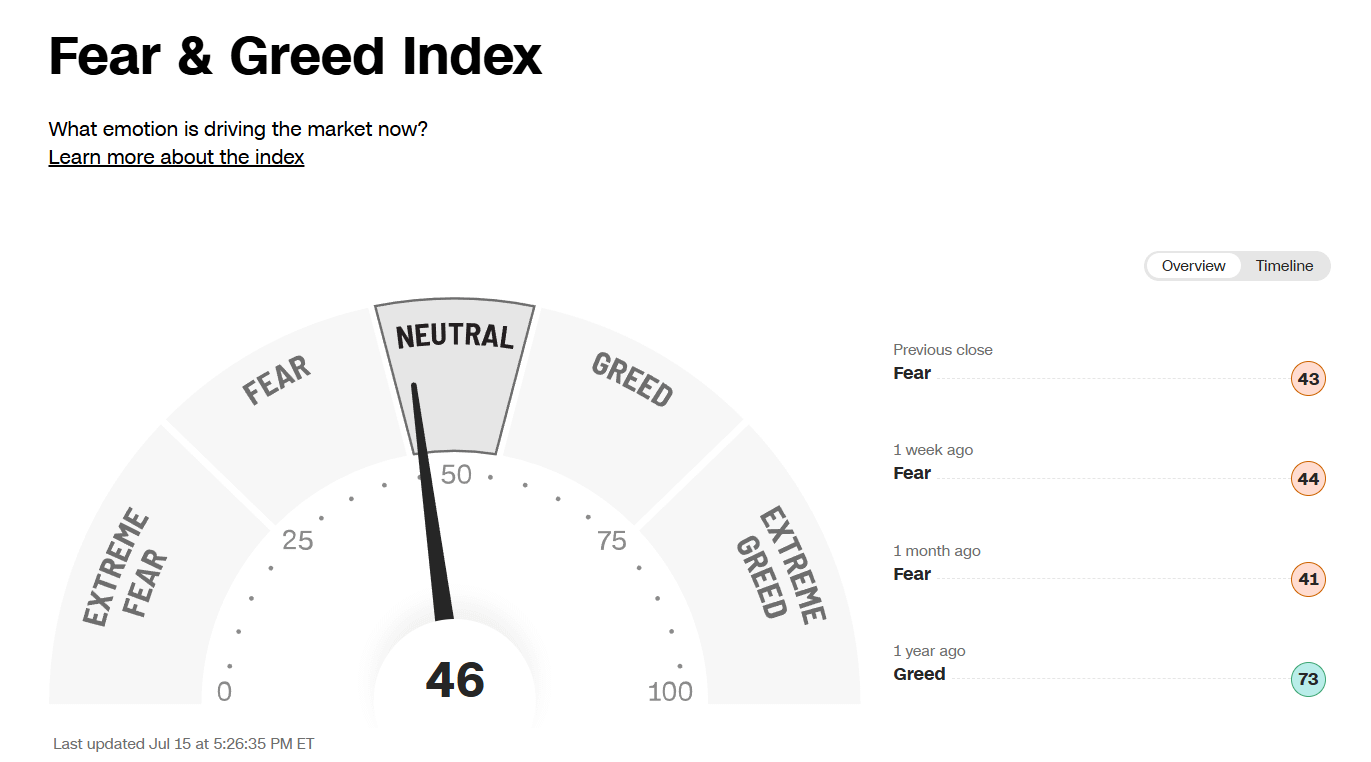
Behavioral - traders had hedged the last month and are starting to unwind hedges. This will continue as we get through expiration. Bond traders are starting to slowly take down their rate hike bets, though there is still some meat on the bone in the SOFR trade. This means multiples likely don’t get hit any more. With investors taking off hedges already, we could see a continuation of the same being the catalyst to get us to breakout on the upside. The coiled spring that is the SPX chart tells us to pay attention. We are coming out of fear and headed toward greed, but not there yet.
Catalyst - data. It is what we see. I think geopolitics does not matter unless we ratchet to some new level. Doubt that happens because why ratchet an unpopular war. It is more than likely to try to get a quick easy win in Cuba like in Venezuela, than to ramp up. Expect the status quo in Iran. As a result, it will be data and on that front, we are going into the heart of earnings season. This is where you need to focus. The last 2 weeks of the month is when it matters the most.
What is the trade?
First, let’s follow-up on last week. There is still room to run a little higher on the SOFR trade and it has not decayed much yet. I would still hold onto the short volatility trade for at least another week because it is likely to see the rates market do very little in the next week or two.
The Nasdaq 1 by 2 put spread is interesting. If you are long it as a directional idea or as leverage on a short future position, you may want to add length if earnings continue apace this week and the SPX breaks out to the upside. If you are long it for a hedge, you may want to unwind. Again, I would use that SPX breakout as the key.
If you want to add some length, I think small caps are the better place to go. They are also holding the rising trendline and have more room to the all-time highs. In addition, as SOFR starts to work, and rate hikes are priced out, small caps will be a bigger beneficiary.
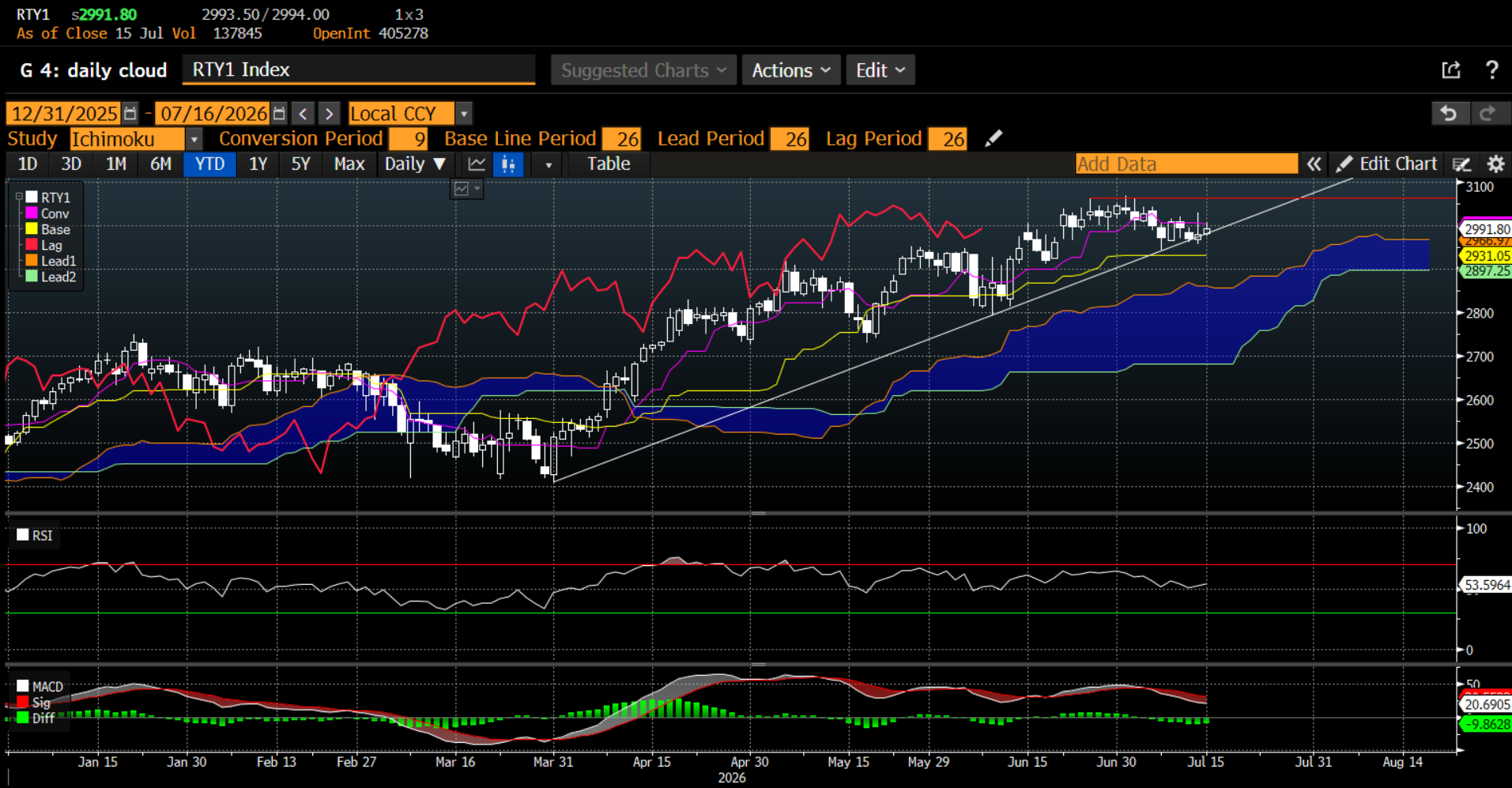
If you prefer the long-term time horizon, 2026 has been a pivotal year for small caps on a relative basis vs. large caps. They broke above a 5-year trendline, threw back and held the level as support, and are now pointing higher again. With tailwinds from the lagged effects of monetary policy, plus capex spending, plus a strong economy, small caps are the place to be. Perhaps this is why the National Federation of Independent Business data just came out better than expected. Business owners are telling us things look good.
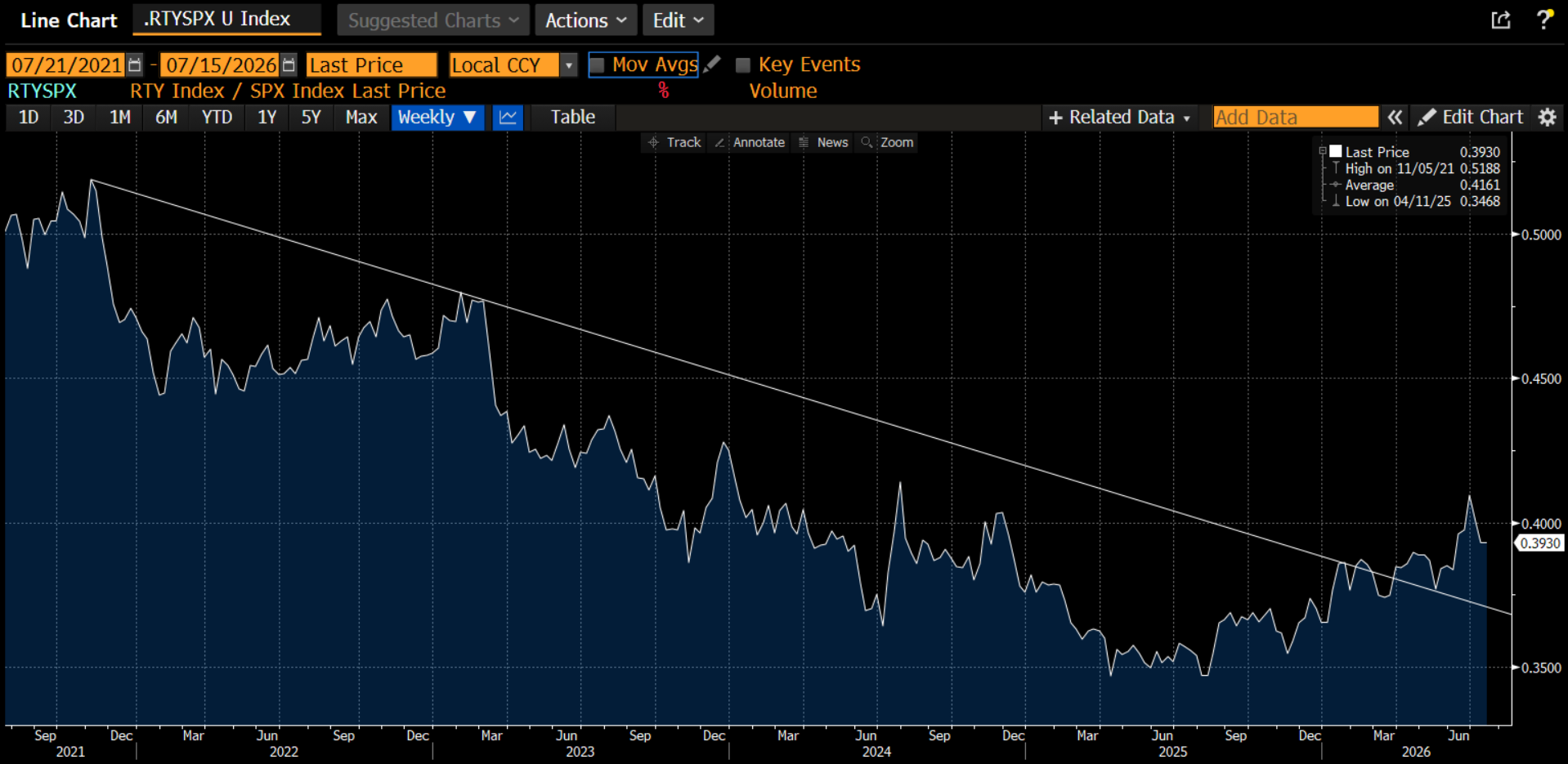
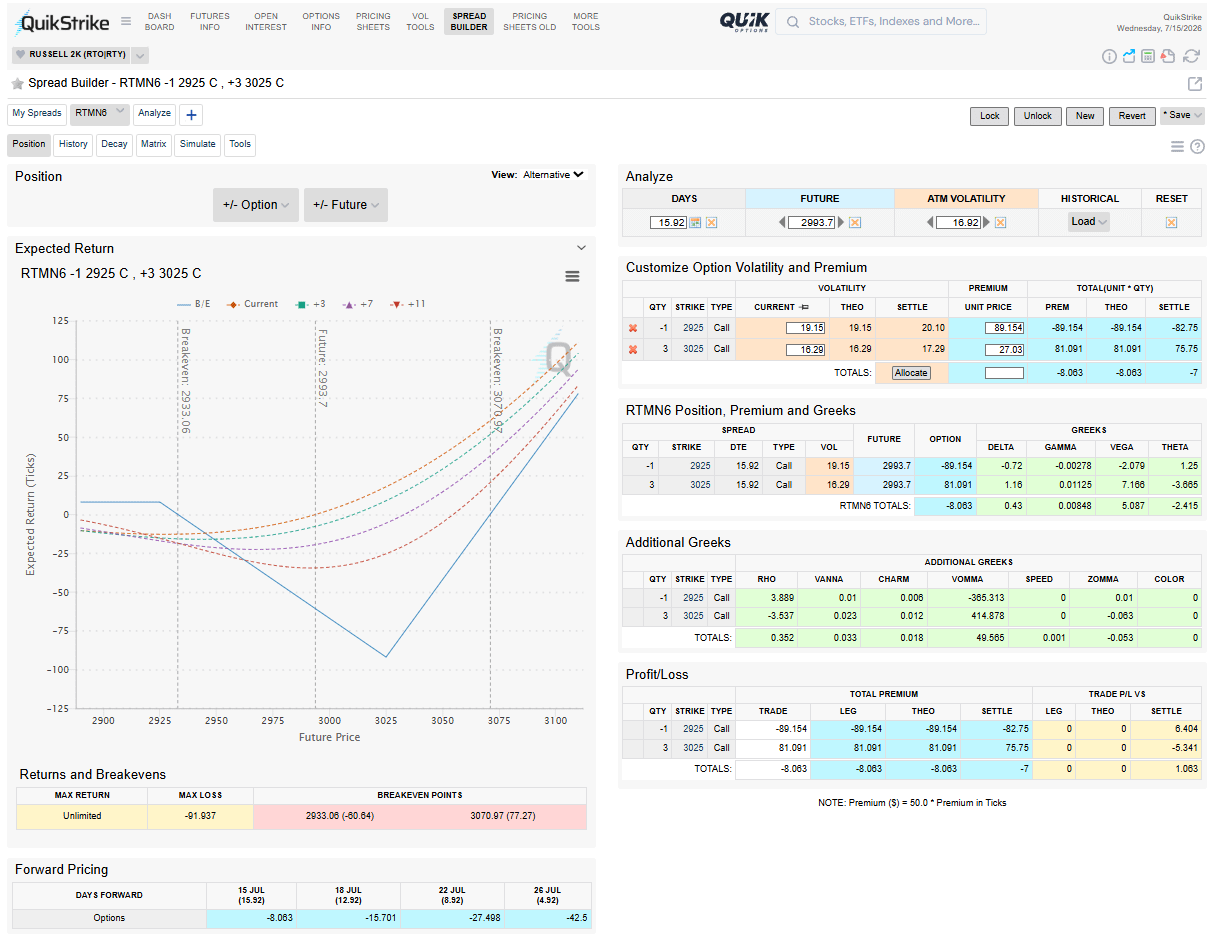
How do you play it? Small cap indices have a ton of stocks. It is hard to pick a handful. You can certainly go look for your favorites. However, as I showed before, with implied correlation low, that means index volatility is inexpensive. I would look for an options idea that gives leverage to the upside, but is not too costly. I prefer the end of July expiration 1 by 3 call spread using the 2925 and 3025 strikes. With futures near 3000, the upside breakeven is 3070 above which you make money on a 2 to 1 pace. The downside breakeven is 2933 below which you take in a bit of premium. So if we breakout, you make a lot. If we breakdown, you make a little. Where do you lose? If we sit.
That is the long and the short of it.

Thanks for reading Stay Vigilant! This post is public so feel free to share it.
No posts
Comments
Nothing yet. Say the first thing.
Sign in to join the conversation.