
PART 1: Signals & Patterns
We're six months into 2025.
How many New Year's resolutions have been kept around the world?
Maybe 2%?
It’s not about willpower.
It's the maze of uncertainties, health tips and biohacks that overwhelm our capacity rather than a commitment to holistic systems.
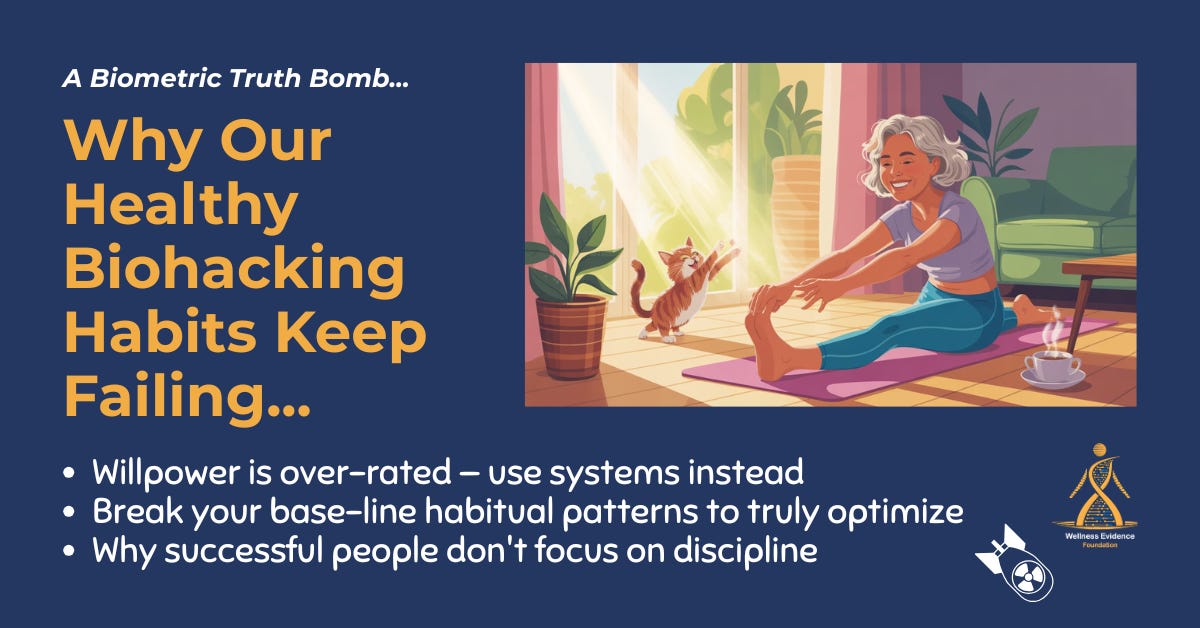
A subtle but significant shift is happening in wellness culture. While Instagram still celebrates extreme transformations and biohackers promote complex protocols, a counter-movement is emerging among people who actually maintain long-term health.
They're not trying harder. They're designing smarter.
Traditional approach: "Just be more disciplined, you already know what to do"
New approach: "Build systems so good that wellness happens even when you don't feel like it"
This represents a fundamental shift from maximization (doing more, pushing harder) to optimization (designing better, maintaining consistently).
Most people fail to maintain health because they optimize for motivation instead of systems. "I'll start when I feel motivated" is backwards thinking. Action creates motivation, not the other way around.
And your brain runs 45% of your daily behaviors on autopilot so willpower depletes throughout the day anyway—by 3pm, your resolve is running on fumes.
The point: Successful people don't have more discipline. They have better environmental design. They make good choices automatic and bad choices harder.
Instead of forcing new behaviors into your day in a thinly veiled attempt to leap ahead of your current habits, only add new habits if the others are chaining well together already.
Wake up → Don't check phone → Walk around the block for circulation and sunshine → Brush teeth and drink water with salt, lemon, apple cider vinegar and ginger → Take some deep breaths → Stretch → Write your priority cascade for the day → Have at it.
The flow of habits works for long-term maintenance. Trying to juggle a long list of randomly inter-related habits is not sustainable.
This shift from maximization to optimization reflects a broader pattern in how ambitious people are navigating an accelerating world. Rather than competing on intensity, they're competing on sustainability.
The more automatic your wellness becomes, the more freedom you actually have.
When morning routines run themselves, when healthy eating requires zero decisions, when movement feels natural—that's when you're truly free to focus on bigger picture opportunities.
Participate in Citizen Science: Wellness Evidence Foundation Research
Follow our updates at https://x.com/ReadyPatientOne

Thanks for reading Human First! This post is public so feel free to share it.
Part 2 reveals the psychological mechanisms behind why optimization beats maximization and the specific system design principles that create lasting change.
Comments
Nothing yet. Say the first thing.
Sign in to join the conversation.