
Sam Novey’s March 10 article in the State of the Student Vote Substack made a compelling argument: the students leading campus voter mobilization efforts today are the potential election administrators, advocacy organization directors, voting rights attorneys, and state legislators of tomorrow. Investing in their development isn’t just a nice add-on to the core work of increasing turnout; it may be one of the most durable things the movement for 100% student voter participation can do. Moreover, the research Allison Rank described in her article last August gives us reason to believe that the educational value of the student vote movement is real, even if we currently lack the assessment infrastructure to demonstrate it rigorously.
Students who lead voter engagement programs report developing skills in public speaking, critical thinking, and collaboration. The faculty and staff who oversee them say the same. The problem is that almost none of these programs have the capacity to move beyond anecdote and produce the documented long-term outcomes that can make the case stick.
So, the question becomes: what do we know about the professional impacts of student civic engagement experiences? And what can we reasonably infer?
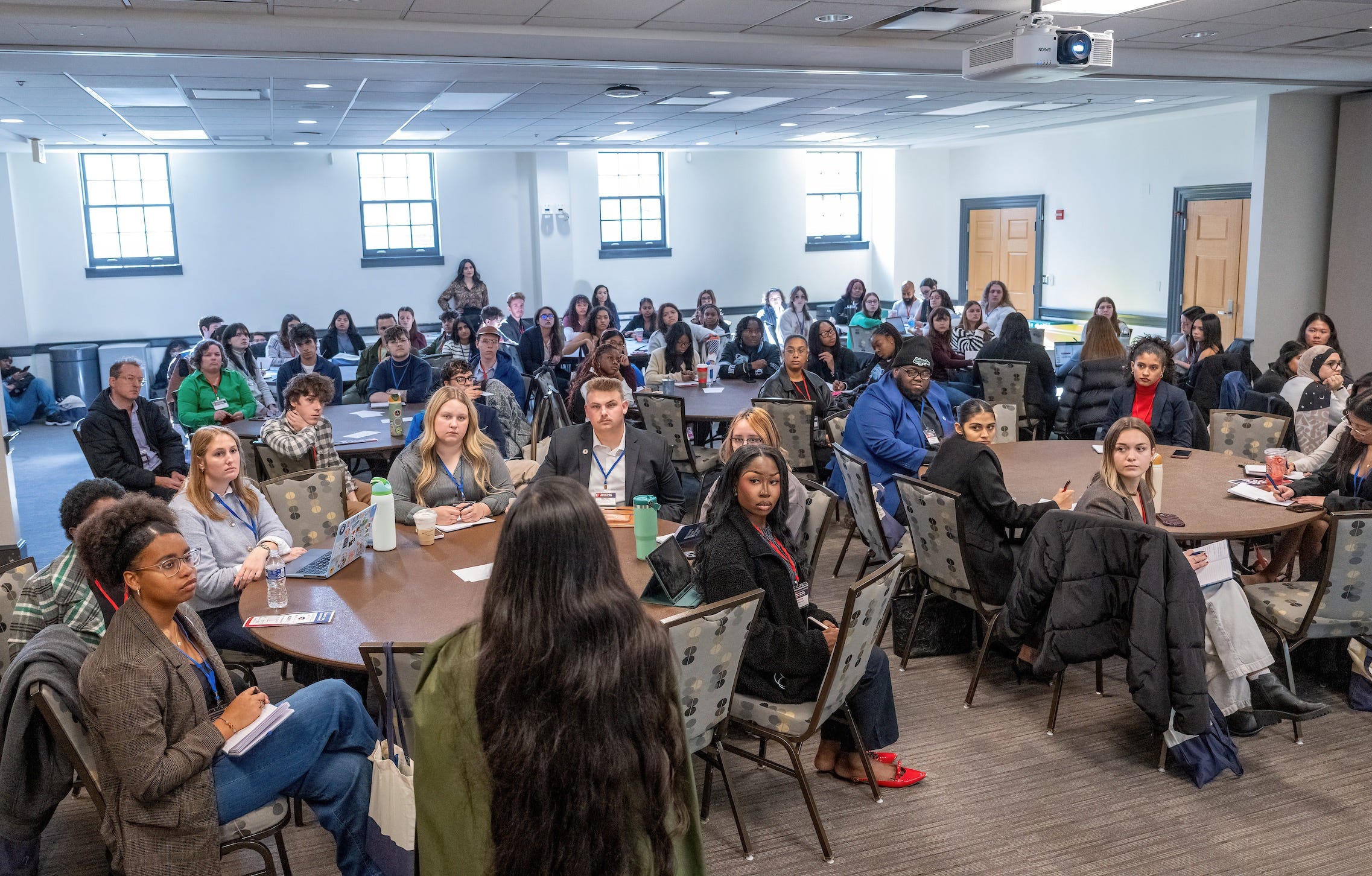
While there is no robust body of research tracking the long-term trajectories of students involved in the student vote movement specifically, meaningful efforts have been made to examine the pathways of young people who participate in service-learning and civic engagement programs more broadly.
The most foundational finding, replicated across multiple studies, is that high-quality service-learning experiences are positively associated with career choices in service-oriented fields. Judith Warchal and Ana Ruiz, in a landmark 2013 study tracking alumni outcomes across decades of postgraduation experience at a small Pennsylvania university, found that students who participated in service-learning were significantly more likely to receive and accept job offers from their placement organizations, and more likely overall to end up employed in service-related fields. Crucially, the quality of the service-learning experience mattered: alumni who rated their experience as very good were far more likely to accept service-related positions than those who rated it poorly. Warchal and Ruiz connect this finding to career development theory, which holds that students are more likely to pursue occupations in which they feel positively reinforced and see valued role models doing meaningful work.
Similarly, a 2016 longitudinal study by Barbara Moely and Vincent Ilustre at Tulane University, which followed students who had to complete public service as part of a graduation requirement, found that students who did more service work during college showed stronger civic outcomes at graduation across nearly every measure. This includes placing greater value on community engagement, having more positive attitudes toward social justice, and developing stronger leadership skills. Importantly, the study found that their service during college independently predicted these outcomes, meaning that these experiences were beneficial regardless of their initial predispositions toward civics. By the time they graduated, 56% of the students included in the study planned to incorporate a civic responsibility dimension into their careers!
Taylor and Raykov’s 2014 study of 525 former community service-learning students at the University of Alberta also found that more than half of those interviewed reported that their service-learning participation influenced their career plans, with the most common shift being toward increased interest in working in the nonprofit or public sector. Nearly two-thirds said the experience was beneficial for making career decisions, and perhaps most strikingly, almost a quarter of students continued to volunteer with their placement organizations after the course ended, with several transitioning into paid roles.
Finally, the most direct evidence of service-learning’s influence on career trajectories comes from Tania Mitchell and Colleen Rost-Banik’s 2019 qualitative study of 33 alumni from three sustained, multi-term service-learning programs, which were interviewed up to 15 years after graduation. Their findings are striking: alumni consistently credited the programs with shaping not just their career choices, but their entire orientation toward professional life. The researchers identified three mechanisms through which this happened: the development of self-awareness (including confidence and civic agency), the building of practical skills (teamwork, communication, community organizing), and what they call “choosing service,” the internalization of a values-based commitment to work that matters.
Importantly, alumni who ended up in careers outside the traditional public service sector, such as in medicine, business, and law, still described finding ways to enact their civic values through their work. These service-learning programs didn’t just produce public servants; they produced what scholars Boyte and Fretz call “civic professionals:” people who bring a sense of civic responsibility into whatever field they enter.
These studies offer a variety of promising takeaways, but there are some limits to the implications for the student vote movement. First off, none of these studies were conducted on students specifically engaged in nonpartisan voter mobilization work. The service-learning that many researchers investigated typically focused on course-based, credit-bearing experiences with structured reflection components, which are meaningfully different from the paid fellowships and staff roles that Rank found characterize most campus voter engagement programs. Additionally, the absence of faculty mentorship and intentional disciplinary connections that Rank identified as a gap in existing student voting initiatives is precisely the feature that appears to drive some of the strongest long-term outcomes in the existing research. A student who organizes a voter registration drive as part of a course and engages in structured reflection is, according to the current body of evidence, likely to have stronger long-term civic outcomes than a student doing the same work as an hourly employee of a partner organization with no academic scaffolding.
Another critical limitation is self-selection. Students who pursue service-learning and civic engagement experiences in college are not a random sample. They tend to be more civically inclined to begin with, which makes it difficult to isolate the causal effect of the experience itself from the pre-existing commitments students bring to it. Moely and Ilustre’s work attempts to bridge this gap, but most other studies in the field fail to do so.
That being said, Erin Nelson’s 2018 research on pathways into nonprofit careers does provide some hope that simply getting involved in any form of service can lead to social impact careers, regardless of prior attitudes or educational framing. In her study of Young Nonprofit Professionals Network members, nearly 30% of participants identified volunteering as the experience that sparked their interest in a nonprofit career, frequently because it was the first time they realized that paid work in the sector existed at all. Nelson frames this discovery through the lens of happenstance learning theory, which holds that career development is often shaped less by deliberate planning than by chance encounters that open doors people didn’t know were there. The implication for the student voting movement is significant and, while different, not in conflict with the research consensus chronicled above: young people who work on voter engagement efforts may be more likely to end up in democracy-related careers not because they set out to do so, but because the work itself becomes a window into possibilities they hadn’t previously imagined.
Novey previously identified a set of urgent questions for our field that remain unanswered: How many students are participating in formal fellowship programs? What financial and training support are they receiving? What do their civic and professional trajectories look like five, ten, and twenty years after college? How many are still working on democracy issues? What networks did they develop, and did those networks prove valuable?
These questions can be answered, and the broader service-learning research gives us both a model for how to approach them and a baseline against which to compare new findings. From longitudinal studies tracking students over decades to qualitative interviews with alumni, there are a variety of ways to surface the mechanisms through which voter engagement work shapes what students do and who they become.
Of course, securing the resources and access for such investigations is no easy feat. So, in the meantime, the student voting movement could lean into the practically actionable findings buried in the existing research. Notably, these studies on service-learning are consistent on one point: the quality and intentionality of the experience drives outcomes more than simple participation. Programs that build in structured reflection, faculty mentorship, and explicit connections to career and civic identity development produce more durable results than programs that don’t. If campus voter engagement programs want to maximize their long-term impact on the pipeline of democracy professionals and civic leaders, the design of those programs matters, not just the turnout numbers produced.
Ultimately, there is a plausible case that students who do serious voter engagement work in college are more likely to pursue civic and service-oriented careers, more likely to volunteer after graduation, and more likely to carry a sense of civic responsibility into whatever professional context they end up in. However, the specific evidence for nonpartisan voter engagement work is anecdotal rather than systematic, and, as Novey previously noted, most institutions and organizations lack the infrastructure to collect the necessary data.
Building that infrastructure must be a priority. Not just because funders and administrators want to see it, but because understanding what this work actually does to the people who do it is essential to doing it better. After all, the movement for 100% student voter participation can have an immediate positive effect on turnout each election season, but its most powerful potential impact comes from its ability to build a generation of leaders who believe, from experience, that democracy is worth working for.
No posts
Comments
Nothing yet. Say the first thing.
Sign in to join the conversation.