
I’m back from SF!
As I anticipated in my last issue, I went there to learn from the best startup ecosystem in the world, getting back their insights here in the old continent.
As anticipated, this is going to be a little longer than usual. I hope you enjoy it!
Let me paint you a picture.
I was at this AI Dinner in SF. Of course, we were talking about AI and agents (to be fair, that’s the standard conversation everywhere in SF). At some point, I casually mentioned I was interested in knowing more about AP2, the agent payment protocol released by Google, literally the day before. A guy on my left goes “oh yeah I worked on it.”
Same event, another conversation, different topic: Nano Banana, the new(-ish) model by Google. Three different guys told me “I was at the Nano Banana Hackathon last week!” (it was released just a couple of weeks earlier).
And all this at a random meetup.
You probably know where I’m heading: in SF, it’s extremely easy to stay at the bleeding edge of tech.
And that’s because it’s a bubble. A big, powerful one indeed. But not irreproducible.
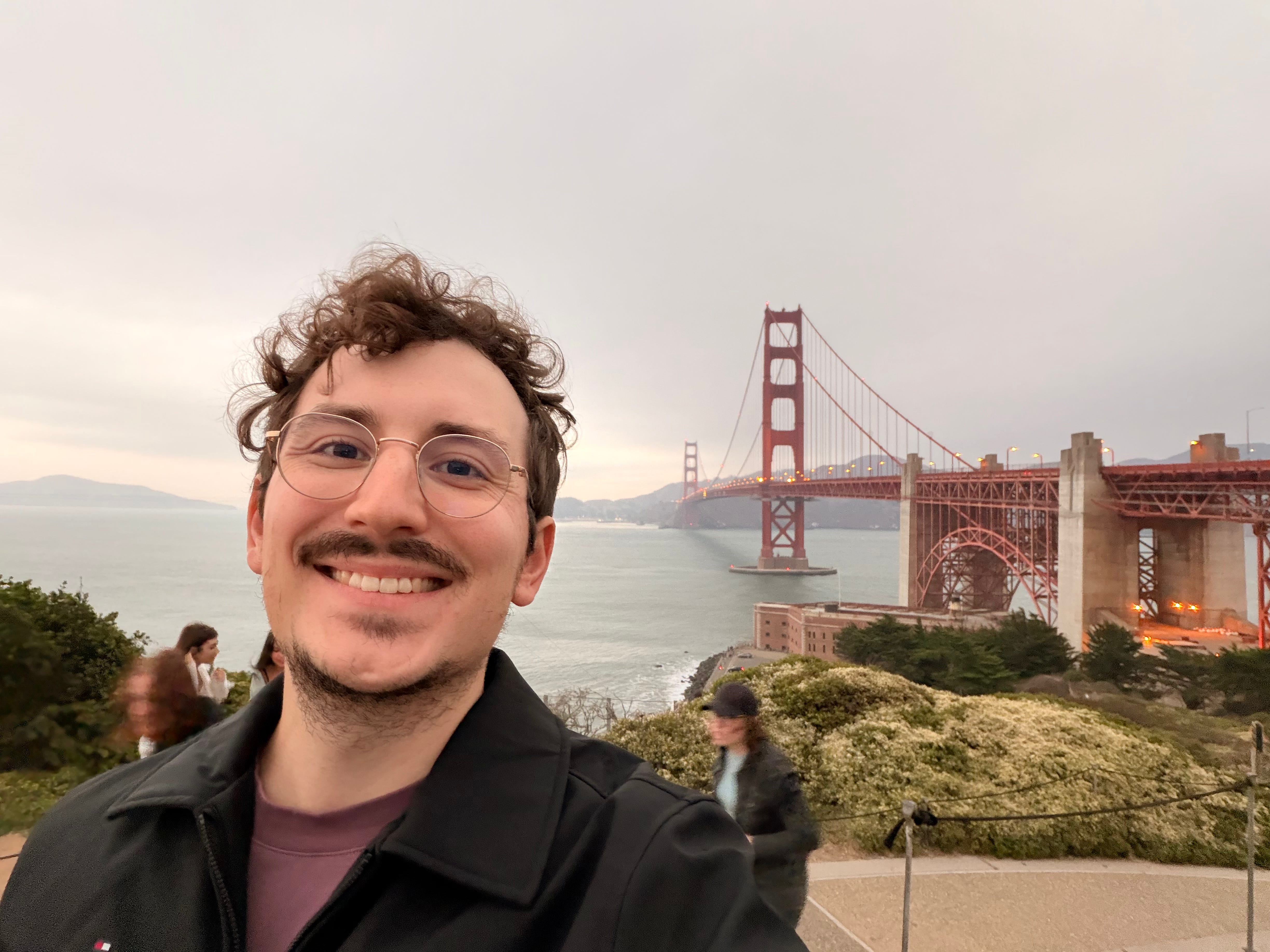
Before I break down what makes this bubble work, let me share the actual signals I picked up from being there. Because everyone’s building AI, sure, but what does that mean?
We’re all excited about AI agents, but agents are useless without the pipes. And I’m not just talking about compute and GPUs (and yes, they’re heavily working on that, too).
Think about it. An AI agent needs to:
Host itself somewhere (where?)
Authenticate with your systems (how?)
Get authorization to act on your behalf (with what permissions?)
Pay for things (using which protocol?)
Communicate with other agents (speaking what “language”?)
Every single one of these is still mostly unsolved. And in SF terms: a startup opportunity.
Most of our existing software wasn’t built for agents to use. It was built for humans to click buttons and input text.
Your accounting software? No API for the specific workflow an agent needs. Your CRM? The integration exists, but it’s missing half the features. That legacy system your enterprise runs on? Good luck.
Massive agent adoption isn’t waiting for better models. It’s waiting for the boring work: making every single existing system accessible as a tool.
The builders in SF get this. They’re not just building agents. They’re building the picks and shovels for the agent gold rush.
Now that you know what they’re building, let’s talk about WHY they can build it there and not (yet) everywhere else.
I’ll try to break it down into the main properties, immediately visible to anyone visiting the bay:
Talent density
Ingenuity
Capital
Method
Let’s be precise here. It’s not just “talent” density, it’s more like “talented-people-working-on-bleeding-edge-of-tech” density.
In SF, when you talk to people at events, meetups, or just randomly at a coffee (sometimes even with a barista or an Uber driver!), they talk as if what I consider the future has already arrived. They already take it for granted.
As an example, in Italy I never talked directly to anyone working with MCP servers. In SF, everyone I talked to built at least one (and building them was routine already, as they were trying to solve some of the problems mentioned above).
Another thing you notice about these conversations, is that they’re not waiting for someone else to solve their problems. They act.
Sometimes too early, and too scrappy, they don’t wait for protocols or standards to appear. They start acting, then they think about how to harmonize everything.
There are several reasons why that happens, but it’s often a natural way of filling the gaps they see in the market. And some of these gaps you see them only in SF, until you see them all around the world. But guess what? At that point SF already solved it, so why not using their solution?
This is true for many things (not everything). And it happens because they don’t wait for the future to happen: they build it, piece by piece. And it’s incredibly stimulating.
The English word “ingenuity”, although different in meaning, is very semantically close to the Italian word “ingenuità” (that is “naivety”).
And honestly? I think in SF you often find both ingenuity and naivety at the same time.
People here have this particular combination:
Technical brilliance to solve complex problems
Unshakable optimism, and just enough ignorance about why something “can’t be done”
You’ll meet someone casually saying “I want to disrupt the traditional finance by implementing agent-to-agent payments with stable-coin” and your first instinct is to laugh. Then you realize they’ve got funding, a working prototype and the right credentials to maybe succeed.
The ingenuity part is real. The creative problem-solving here is next level. But there’s also this beautiful, almost childlike belief that anything is possible. That the rules don’t apply to them. That they can actually change the world.
And sometimes... they’re right.
I was chatting with a founder who seemed disappointed. His story? “I couldn’t close the round at $3 million. I had to go up to $4.5 million to avoid diluting too much.”
“HAD TO.”
In another conversation, I heard how one founder was told by an investor “two million isn’t enough for what you’re building. You need to aim higher. Let’s go for twelve.”
“TWELVE.”
Pre-seed.
In Milan, we celebrate when someone raises €500k. In SF, that’s a weekend angel round that no one mentions on LinkedIn (I’m not exaggerating. In fact, angel tickets often go above $1M, easily.)
But then I realized it’s not really about the amounts. Such high tickets are justified by the extremely costly workforce they have there (one thing we always forget here: they’re competing with BigTech’s salaries).
So I’d like to focus on the mindset, because when capital is abundant, your thinking changes. You stop asking “How can I survive?” and start asking “How can I win?” You stop optimizing for efficiency and start optimizing for speed. Instead of minimizing burn, you maximize learning cycles per month.
Is it sustainable? Probably not, and many startups die because of failed expectations. Does it create unicorns? I don’t want to imply causality here, but for sure there’s a strong correlation.
And yes, I know, I KNOW: that’s turbo-capitalism at its best, and there’s a lot of justified criticism around that. So I’m not suggesting we should blindly apply it in the same way here, but I do believe that empowering founders with this mindset has its merits.
This one hit me the hardest.
In every conversation I had in SF, I didn’t have to explain what a startup was, or why validating the problem first is so important, or why talking to customers is paramount. No one questioned why I’d pivot after a month of research.
Actually, it was the opposite: I had much to learn!
They have playbooks for everything. Not theoretical frameworks from business school, but battle-tested methods from people who’ve actually done it, multiple times even.
Mentors are everywhere. Not “successful businessman” mentors who made money in real estate. Actual founders who’ve built and scaled tech companies. Who’ve dealt with your exact problem six months ago.
This accumulated experience creates a compound effect.
The reason SF is special isn’t the weather (it’s actually not great). It’s not the proximity to Stanford (although it surely helped). It’s the bubble they’ve cultivated over decades.
A bubble where:
Failure is a badge of honor, not shame
Crazy ideas get funded, not dismissed
Building the future is normal Tuesday conversation
And here’s the plot twist:
Talent? We have brilliant engineers. Our universities produce world-class technical minds. Ingenuity? Italian and European creativity and problem-solving is legendary. We literally invented half of everything (sorry Donald). Capital? We have it, and it’s growing. In the last decade it increased by 10x. We’re not SF levels, but it’s well enough to start.
A bit more naivety: we need to be a little more “ingenuous” (in the Italian sense). Less cynical about what’s possible. More willing to believe that yes, we can build the next big thing from here.
Experience and method: and the good news is that most of it can be learned! The playbooks exist. The frameworks are documented. The lessons are all online. Y Combinator’s entire curriculum is free. Every SF founder’s blog post about their mistakes is there for us to read.
Not having a mentor next door isn’t an excuse anymore. We have the internet. We have the knowledge. We just need to apply it. (And btw, we’re starting to have many success stories, and mentors, in the EU too).
The bubble isn’t built on geography. It’s built on mindset, method, and the courage to try.
The video below is probably the most famous speech by Julio Velasco, a legendary volleyball coach. He often talks about how we shouldn’t find any “alibi” to our failure. He talks about volleyball, but it’s actually a great life lesson.
I’ve been hearing so many times things like “if I wanted to be an employee I’d stay in Europe; if I wanted to be an entrepreneur I’d move to the US”, or “the EU is too regulated”, or “being an entrepreneur in Italy is too difficult.”
Although I see the merit in all the above statements, they are NOT alibi.
Being an entrepreneur is hard, everywhere. But it can be done. I’d even say it must be done.
In SF and the Silicon Valley they know they have no alibi, because if you don’t do certain things there, where then? And from what we’ve seen here today, that’s a BIG chunk of what keeps driving them to success.
We need to act despite of those roadblocks, and find a way through them. That’s the entrepreneurial mindset we desperately need.
Funnily enough, I had planned to write this before the Italian Tech Week. Then Jeff Bezos came and said the exact same thing. So, go check it out, and if you don’t want to listen to me, listen to him!
🎯 Events coming to Milan: I’m working on bringing regular builder meetups to the city. I don’t know about you, but the startup meetups I’ve been so far were quite underwhelming. If you’re interested in this or have some ideas on how to keep the level high, or what topics you’d like to bring, hit me up!
📚 The Method Series: The next few newsletter issues will dive deep into the startup method. The stuff they take for granted in SF but we need to explicitly learn here. Customer discovery, rapid prototyping, fundraising frameworks. Let’s build our shared playbook.
🫧 The Bubble Begins: Every tech hub started somewhere. This is our somewhere. And it starts with conversations like this one.
Stop finding alibi, and keep building.
Stay tuned for more!
No posts
Comments
Nothing yet. Say the first thing.
Sign in to join the conversation.