
with Ethan Siegel • August 22, 2026
Greetings readers,
Our cosmic picture of the Universe is one of the most important and profound developments of the last 100 years. A full century ago, we had only recently discovered other galaxies beyond the Milky Way. General relativity was barely a decade old, and quantum theory was still in its infancy: when we still didn’t understand the concept of a wavefunction. Today, we have the Standard Model, dark matter, dark energy, and the inflationary hot Big Bang model of cosmology, but we continue to push the frontiers forward, revealing details near and far about our Universe in profound ways.
A half century ago, we performed one of the most direct tests of relativity ever: by flying two clocks around the world in opposite directions. We recorded that they not only measured time differently from a clock on the ground, but from each other as well, depending on whether they flew with or against Earth’s rotation. The first solar storm we ever recorded occurred only in 1859 with the spectacular Carrington event. But through the forensic study of ancient trees, we’ve discovered larger solar storms that occurred 1000+ years even before that. We’ve found many “multi-lobed” objects in the asteroid and Kuiper belts, including our first three-lobed object, teaching us how our primordial Solar System has evolved over the past 4.6 billion years.
Meanwhile, on cosmic scales, there has been some evidence (albeit dubious) that the Universe may not be the same in all directions. If that were true, what would it mean for the expanding Universe, and could it change our ultimate fate from a “heat death” to something different? And finally, there’s a new anomaly that’s been appearing in the polarization data from the oldest light in the Universe: the CMB. That anomaly is known as cosmic birefringence, and it shows that the polarization of that ancient light is rotating by only a fraction of a degree, but that could be enough to point the way to new physics. With future observatories, like the Simons Observatory and BICEP3, coming online soon, we’ll be able to test the Universe as never before. Let’s keep going; the greatest cosmic truths about reality await!
All the best,
Ethan
TIME TRAVELERS
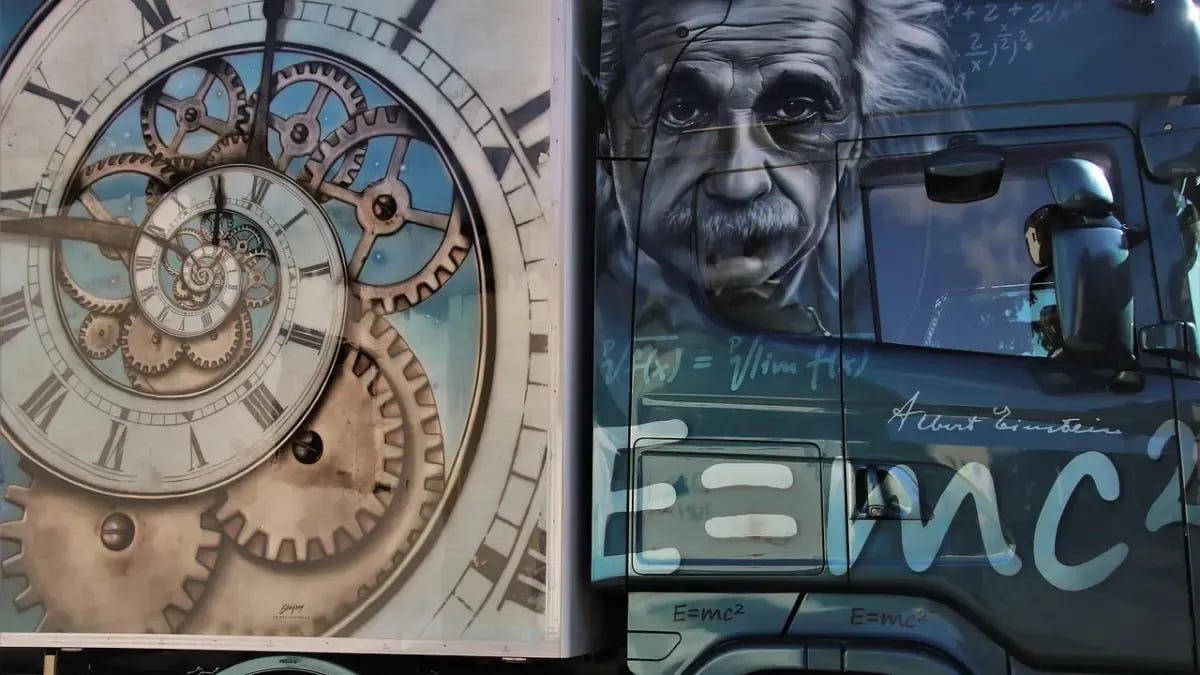
According to Einstein’s relativity, motion and gravity both affect how quickly time passes. Move relative to another observer and return, and you’ll have aged less; experience different gravitational conditions, and your clock will tick differently. By flying atomic clocks both with and against Earth’s rotation, then returning them to the same starting point, scientists put Einstein to a remarkable test. Here’s what they learned.
WRITTEN IN THE RINGS

One of the greatest threats to humanity’s electronic infrastructure is a powerful solar storm, which could trigger a multi-trillion-dollar disaster. Today, we remain largely unprotected against an event like the great Carrington storm of 1859. But in 774–775, an even more powerful cosmic event struck Earth. After a decade-long investigation, we’ve learned the Sun may be even more violent, and more threatening, than we ever imagined.
ASK ETHAN
If you can measure how fast the Universe is expanding today and how that rate has changed over time, you can learn what the Universe is made of and determine its ultimate fate. Our standard cosmological model is dominated by dark energy, pointing toward a likely heat death. But recent measurements suggest the Universe may not be expanding equally in all directions. Could that change our cosmic fate, and if so, how?
If you have a burning question about the Universe,
email startswithabang@gmail.com!
SPACE SNOWBALLS
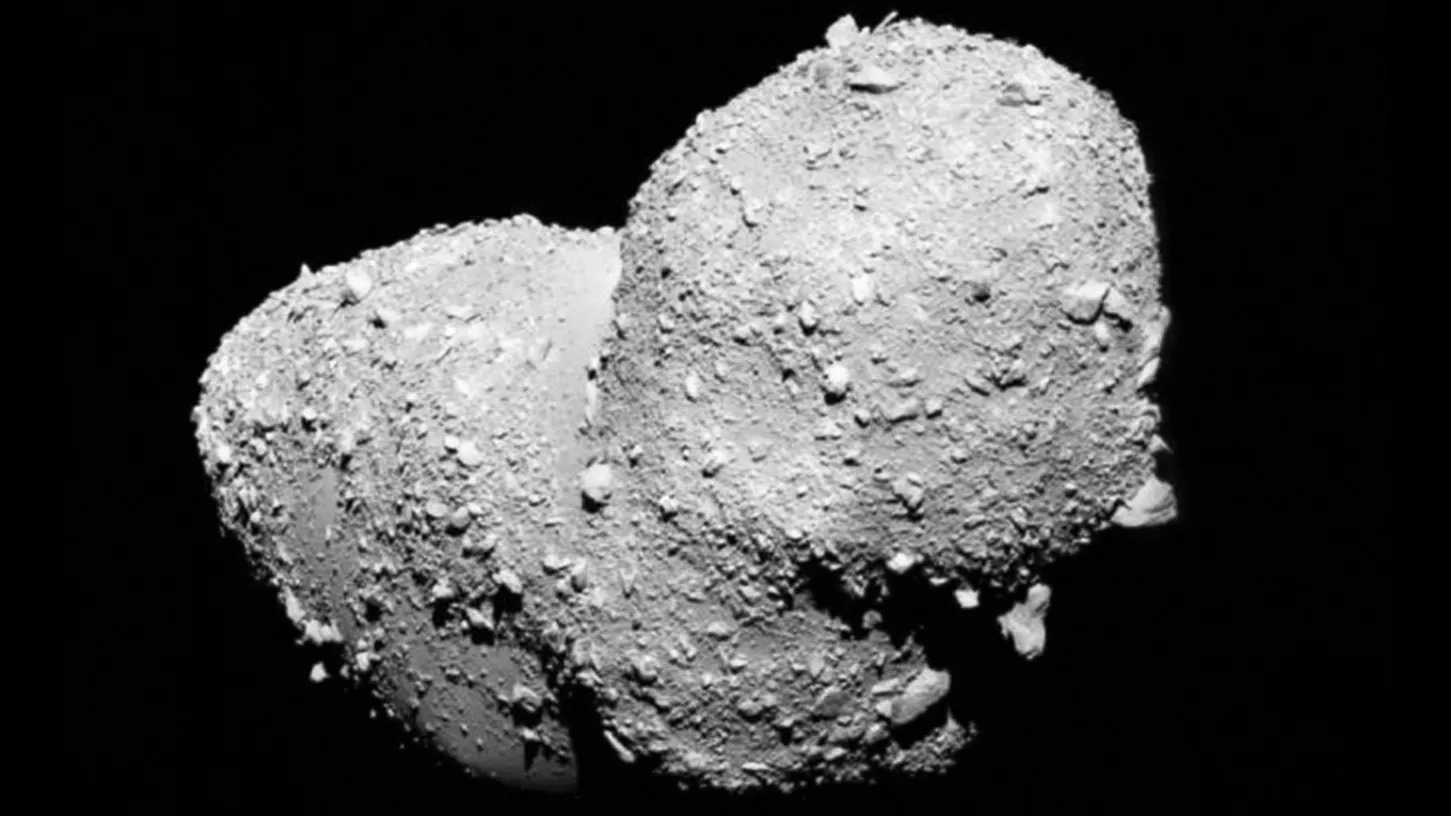
Although our Solar System is rich with objects today, we see only the survivors from 4.6 billion years of evolution. Small bodies like asteroids and Kuiper belt objects offer us the best window into its past, preserving primordial material from the era of planet formation. We’ve discovered many conjoined objects, including snowman-like contact binaries. Now, in 2026, we’ve found our first contact trinary: the asteroid Nysa. Here’s what it reveals about where we came from.
A COSMIC TWIST
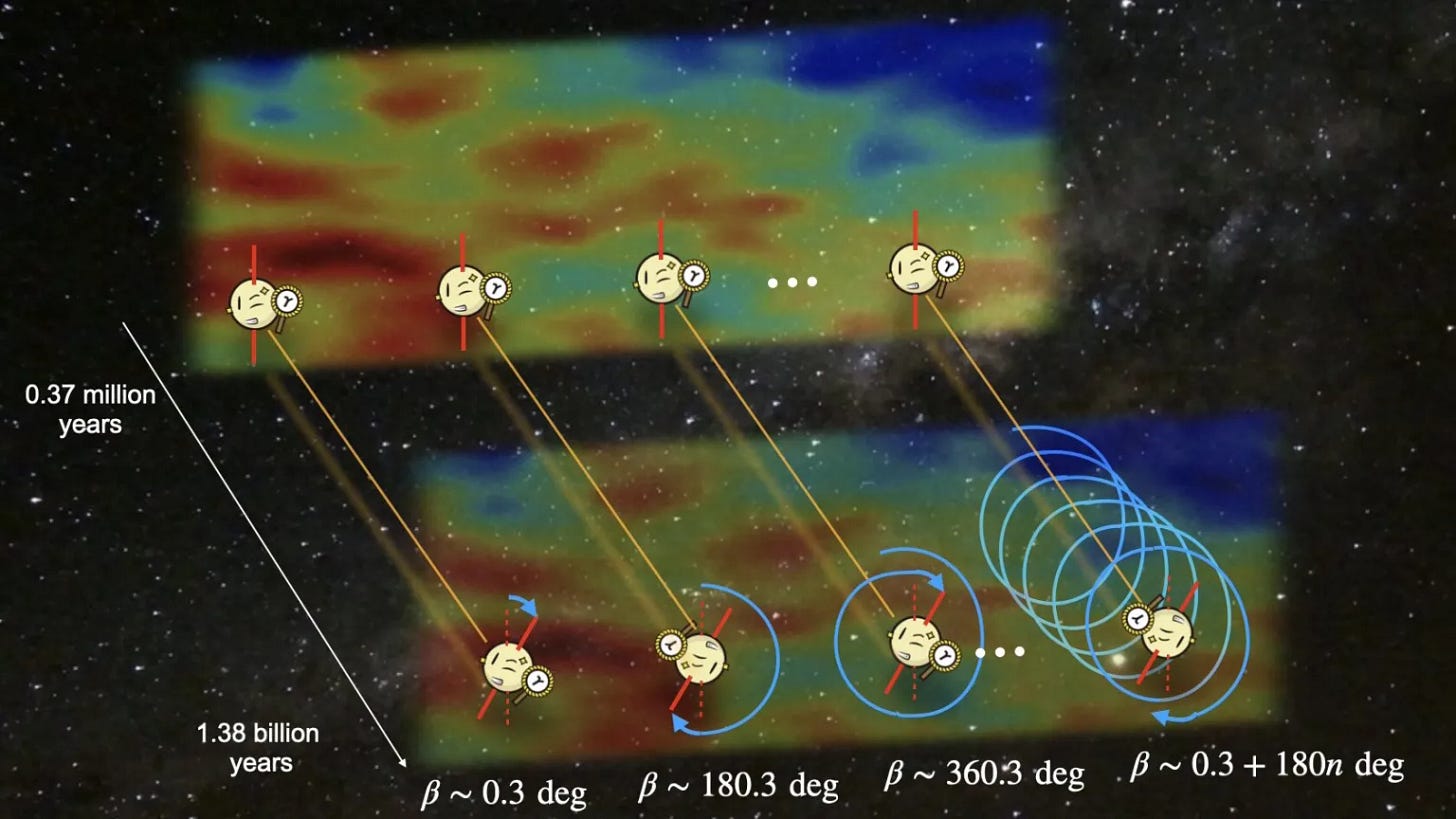
The foundational principle of cosmology is the Copernican principle: the idea that we occupy no special place in the Universe, whether in space, time, or orientation. We can test this by searching for preferred directions or asymmetries across the cosmos, including in the Big Bang’s leftover light, the CMB. If light’s polarization is inherently rotated, even by a fraction of a degree, it could reveal a preferred direction in the Universe, pointing to exotic new physics or even a flaw in our cosmic picture.

Ethan Siegel, Ph.D., is an award-winning theoretical astrophysicist who's been writing Starts With a Bang since 2008. You can follow him on Twitter @StartsWithABang.
No posts
Comments
Nothing yet. Say the first thing.
Sign in to join the conversation.