
Friends and Families,
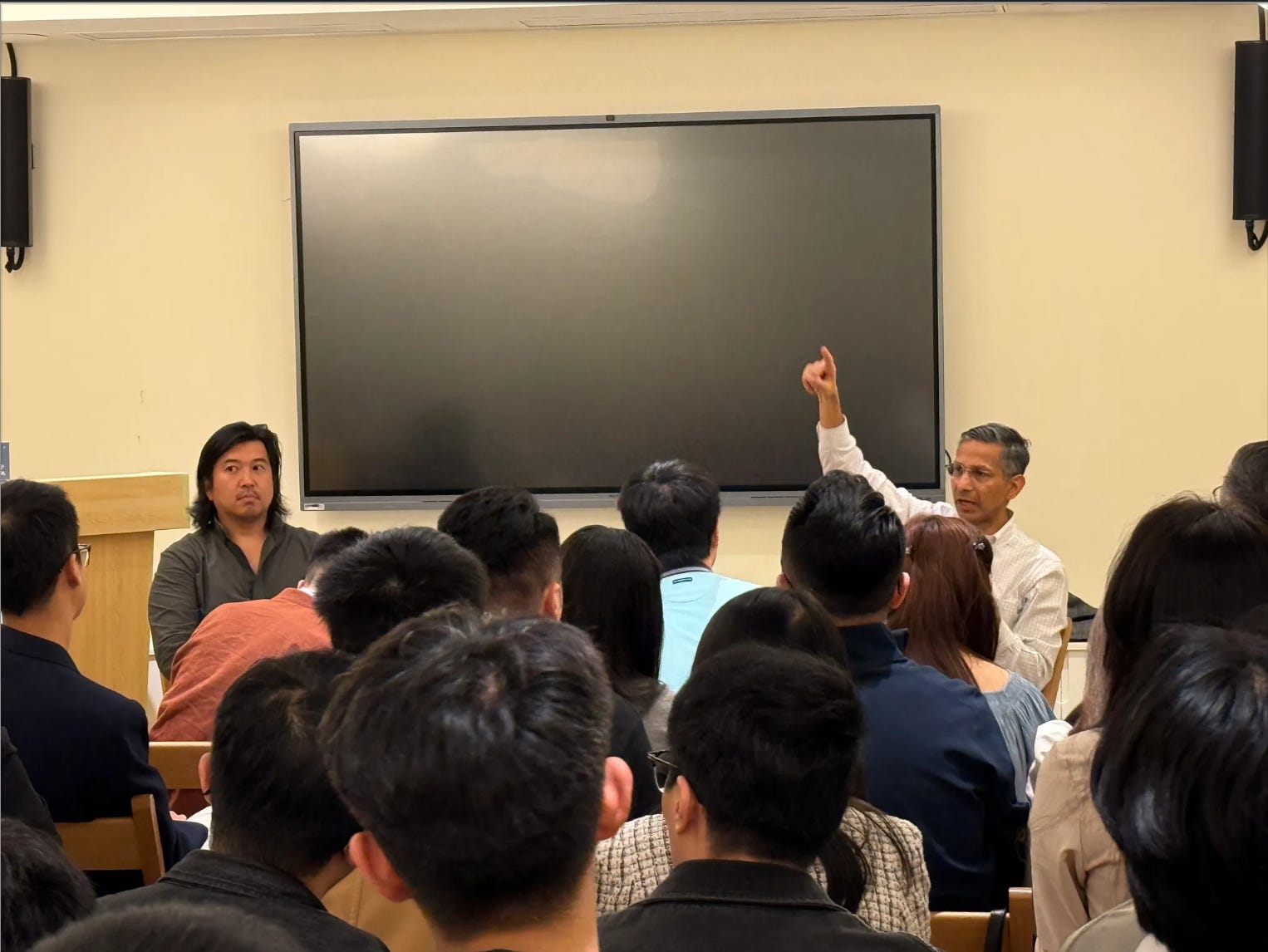
In May, Shinya had the honour of hosting a truly transformative session at Z Club in Shanghai, welcoming Nalanda Capital’s Pulak Prasad on his first-ever visit to China. For two hours, our community was captivated by his quiet wisdom, intellectual honesty, and the remarkable journey that shaped him into one of Asia’s most respected investors.
One comment in particular—“Don’t be lazy. Be very lazy.”—struck a chord with us. It’s a paradox that captures what long-term allocators are meant to do. In our world, we often mistake activity for progress: making too many decisions, chasing short-term performance, or micromanaging relationships. Pulak reminded us that real value is created not by doing more, but by doing less—deliberately. As allocators, our job is to identify exceptional managers through deep diligence, then step aside and give them the time and space to work. Constant check-ins and reactions to temporary underperformance don’t add value—they distract. What looks like laziness is in fact discipline, patience, and respect for the craft of long-term investing.
Pulak himself exemplifies this principle. While his brain is always working, he isn’t chasing every company or trading every day. He focuses on a few great businesses and holds them through thick and thin, as a “permanent owner.” His philosophy resonated deeply with our members, especially when Z Club’s scholar Jinhua Yang asked, “How do you become an independent thinker?” Pulak’s response—“You cannot think independently if you don’t think independently”—sparked a lively discussion. While tautological on the surface, it was a subtle provocation: independent thinking cannot be outsourced or taught—it must be lived.
We take an unreasonable approach to what a family office can be—not in the conventional sense, but in the way Will Guidara describes in Unreasonable Hospitality. Delivering strong investment returns is essential, but it’s only the beginning. What we aim to build is an experience that goes beyond numbers: one rooted in education, communication, and lasting partnership.
Every family is different. Our job is not to push products or host extravagant events. Private banks may invite families to exclusive dinners and glamorous functions. That’s not what we do. What sets us apart is the belief that families deserve more than access—they deserve understanding. At Star Magnolia Capital, families are not “clients.” They are partners—partners who are willing to learn, engage, and prepare future generations.
Investor education is at the heart of our mission. We’ve developed our own learning tools—including a manga-style comic series—to help families, especially second and third generations, connect with the investment process in an accessible and engaging way. We organize research trips with family members and their office professionals. We visit managers together. We ask hard questions, listen closely, and sometimes laugh over shared meals. These experiences are as much about growth as they are about trust.
In June, I attended the Capital Allocators’ SDM Summit in Half Moon Bay, where Will Guidara reminded us that people rarely remember the food—they remember how they were made to feel. In investing, returns may be remembered, but what endures is the relationship. That’s where we choose to be unreasonable: in the care we take, the attention we give, and the belief that families deserve more than just performance.
We don’t aim to scale. We’re not building a large platform. We’re building a small, intimate community of families who believe that investing is not just a technical process—it’s a human one.
The House of Mulans had another busy and productive quarter, continuing our commitment to deep, thoughtful research and long-term relationship building.
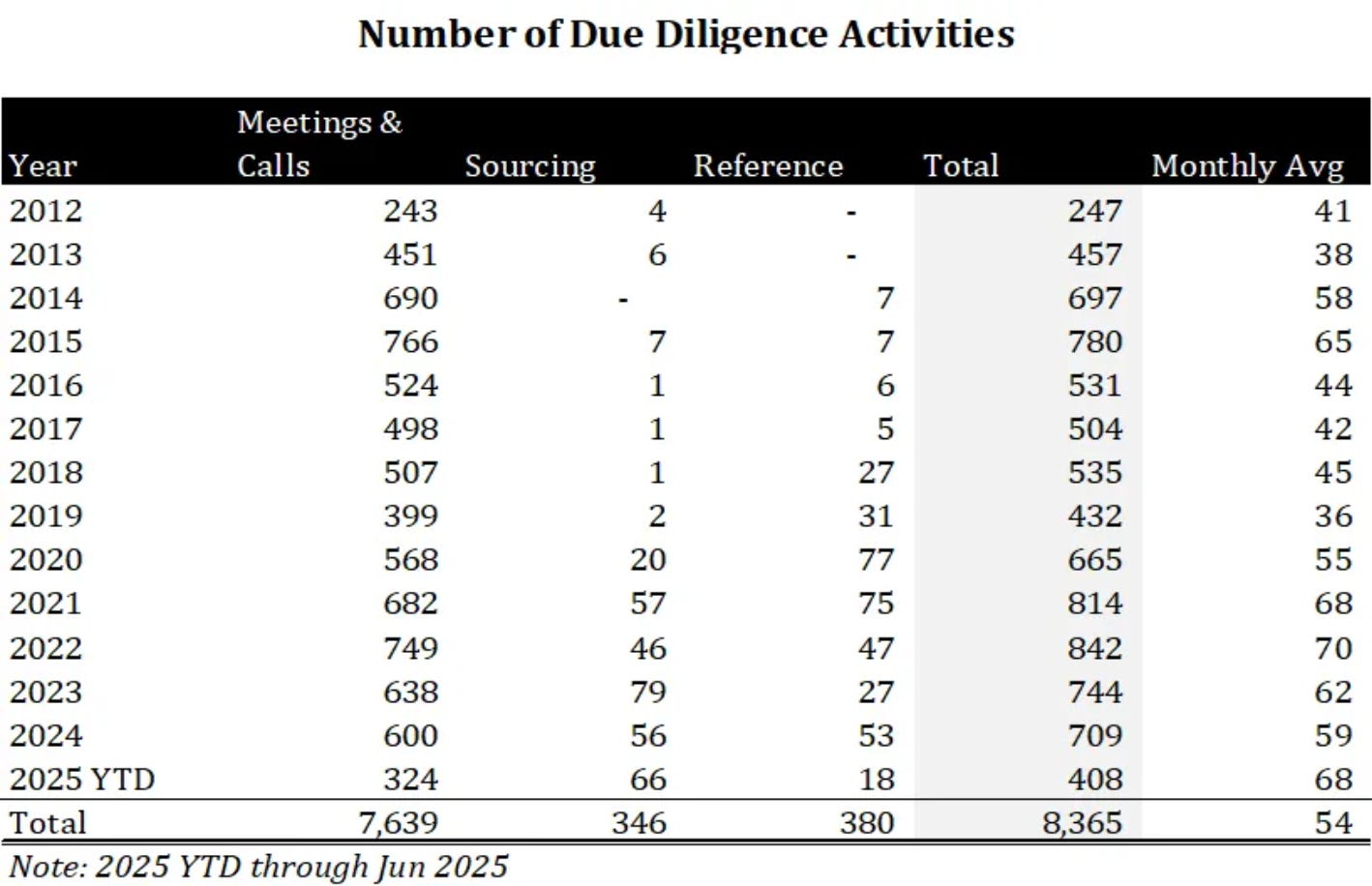
Over the first two quarters of 2025, we conducted 408 due diligence activities, including 324 meetings and calls, alongside numerous reference checks. These activities supported several important approvals and re-underwritings of our existing managers. We take pride in the rigor of our process: we don’t just evaluate performance—we evaluate people, culture, decision-making frameworks, and alignment.
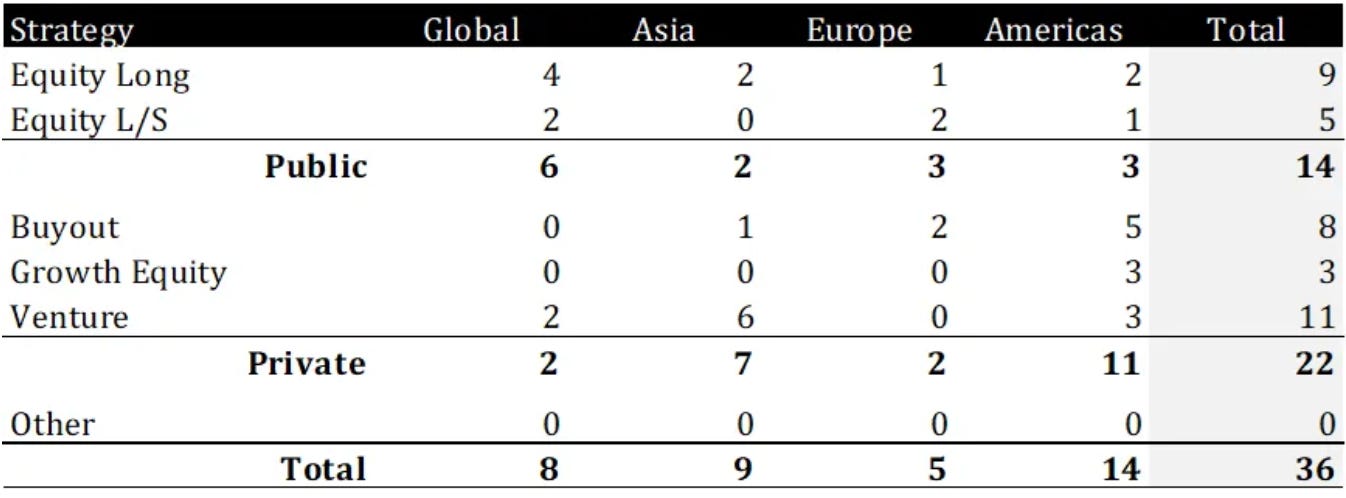
In 2025, we approved three new investment managers. While that number might seem modest, it is very meaningful for us. Historically, we have approved just 3.1 managers per year. As a result, we now have 36 approved managers, including 14 public market managers and 22 private market managers.
Maintaining globally diversified relationships is critical for us. As a result, 22% of the approved managers are focusing on the global markets, 25% on Asia, 14% on Europe and 39% on the Americas. Our current pipeline indicates we will be adding a few more in Asia and Europe in the coming years.
This past quarter, our investment team travelled to New York City, San Francisco, Austin, and Mexico City to deepen our understanding of allocators, managers, and local economic dynamics. One of the highlights of the trip was Shinya’s participation in the Capital Allocators Senior Decision Makers Summit, held in Half Moon Bay, just outside San Francisco. The summit, a flagship event by Capital Allocators, brought together a high-quality group of senior allocators (invitation-only) and investment managers. It featured a series of small-group discussions—no panels, no keynotes, no marketing decks.
June - Mexico
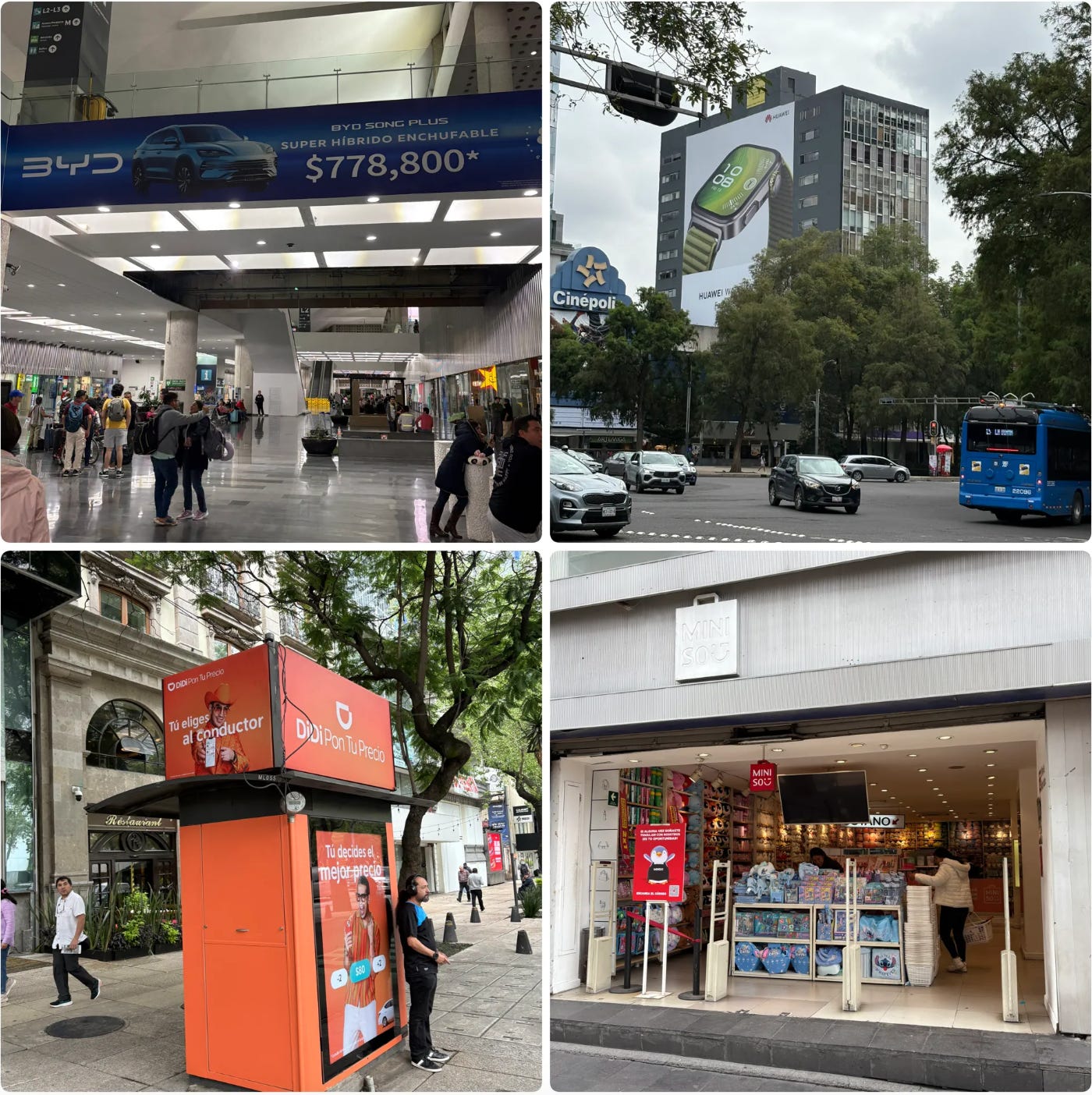
In Mexico City, Shinya met with local families, investment managers, and operating companies. What stood out immediately was the conspicuous presence of Chinese businesses: Didi, Meituan, Huawei, BYD, and even Miniso. It felt, in his words, like China is Eating Mexico.
But perhaps more intriguing was what was missing—a local investor ecosystem. In the public markets, most managers are large mutual fund groups, and in the private markets, there is a surprising lack of both venture capital and buyout firms. Local allocators generally avoid illiquid strategies, leaving early- and mid-stage companies without risk capital. This vacuum creates both undervaluation in the market and open lanes for foreign entrants.
For Chinese companies, Mexico presents an unusually fertile ground: limited domestic competition, modern infrastructure, and a relatively wealthy consumer base. Compared to Southeast Asia—where many early Chinese entrants encountered low purchasing power—Mexico is more developed. It is the 10th largest country globally by population (larger than Japan) and has a nominal GDP per capita nearly three times that of Indonesia. Yet, it remains undercapitalized and underfollowed.
This asymmetry between market fundamentals and capital availability may represent an overlooked opportunity. Whether as investors, partners, or observers, we plan to spend more time understanding Mexico’s evolving role at the intersection of capital flows, consumer behavior, and geopolitical shifts.
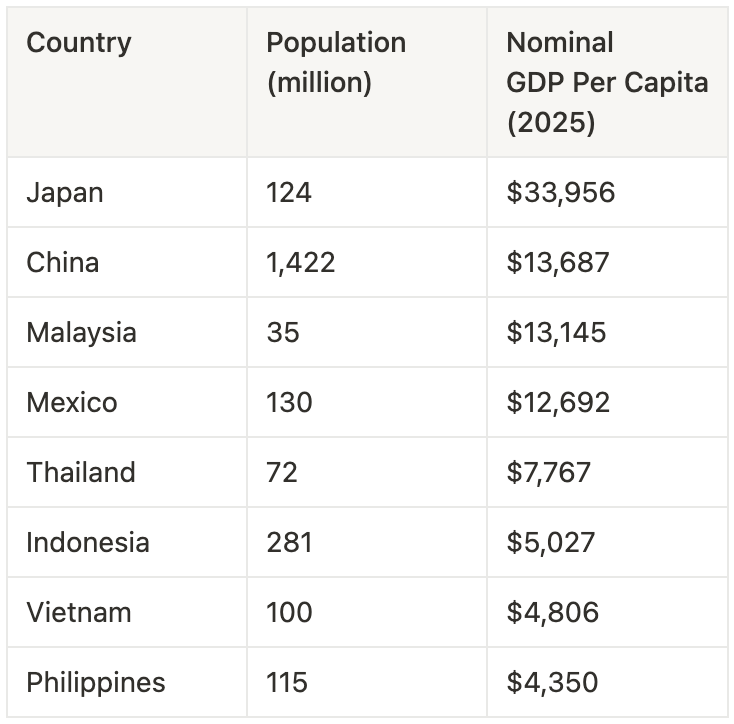
Source: Population (United Nations), Nominal GDP Per Capital (IMF)
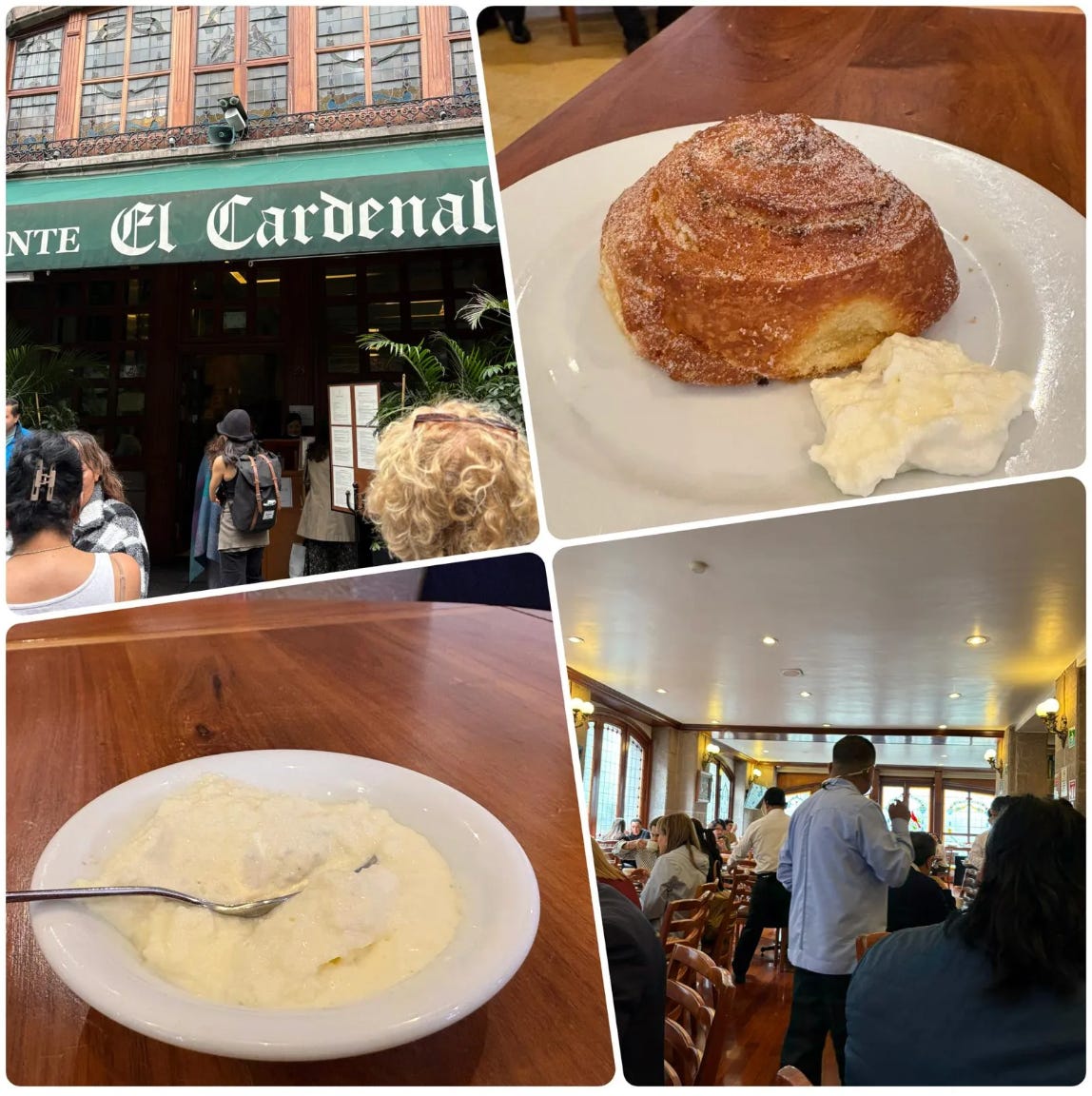
Eighteen years ago, in the midst of the Lehman crisis, Shinya drove 2,400 kilometers across Mexico—from Xalapa to Oaxaca to Palenque and back to Mexico City. On the last day, he had breakfast at El Cardenal, where he first tasted nata: a rich, naturally sweet cream that forms atop boiled milk. Delicate and rare, it paired beautifully with Mexico’s sweet breads and black coffee—a memory that lingered long after. During his recent visit, he returned to the restaurant. The building stood unchanged. Locals still laughed over breakfast. And the nata still tasted the same. The world has moved on, but some things—quiet, beautiful, enduring—remain. That is legacy. Something worth holding onto, and passing forward.
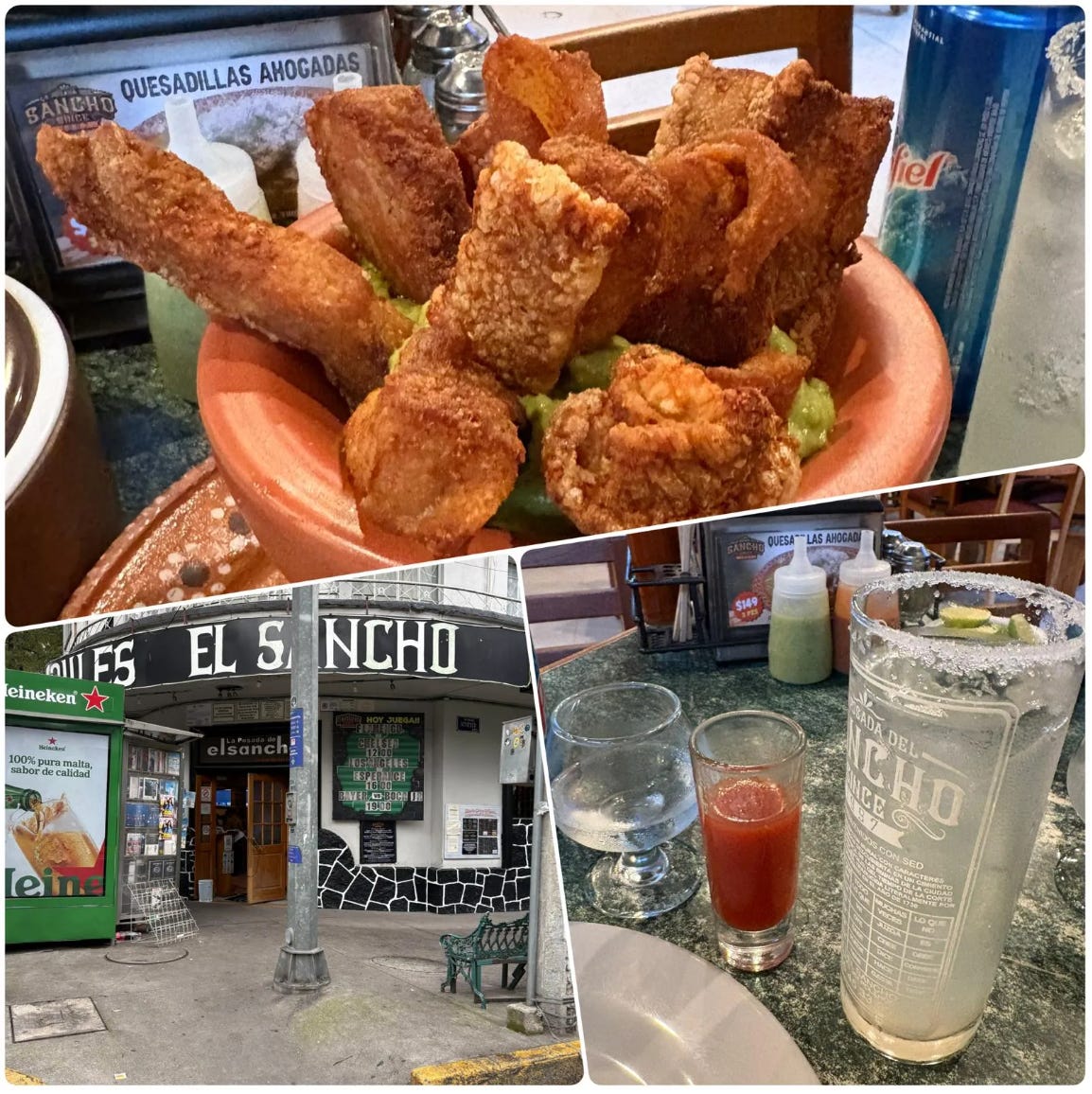
After a formal lunch meeting, a local family took Shinya to La Posada del Sancho, a true cantina—the kind of place no tourist guide would dare mention. Hidden from view and full of character, it offered a window into the rhythm of real Mexico City life. This was their second lunch of the day, starting casually at 3 p.m., just as the locals do. Six rounds of tequila marked the beginning, with no expectation of returning to the office—nor any real ability to function if they did. They ordered the Orden Guacamole con Chicharrón: creamy guacamole crowned with golden, crispy pork rinds that dissolved like butter on the tongue. It was decadent, unapologetic, and perfect. No one mentioned calories. No one cared. With each sip of tequila and bite of chicharrón, time slowed down. It wasn’t just a meal; it was a celebration of leisure, indulgence, and friendship—the kind of experience that makes you forget the rules and remember the moment.
Kayla Bai, who became part of our team in 2024, has decided to leave us to pursue new opportunities in Wuhan. During her time with us, she brought warmth, dedication, and a thoughtful presence to everything she did. We are deeply grateful for her contributions and wish her all the very best as she embarks on this next chapter.
Thank you very much for your continuous support. If you have plans to visit Singapore or Shanghai, please don’t hesitate to send us an email anytime. We would be delighted to take you to our favourite local spots to enjoy delicious (and affordable) cuisines while sharing great food and conversation.
Comments
Nothing yet. Say the first thing.
Sign in to join the conversation.